Level Switch Hs Code
Level Switch Hs Code
In the global landscape of industrial automation and process control, the accurate classification of equipment is paramount for seamless international trade, regulatory compliance, and cost management. For procurement managers, engineers, and logistics specialists, understanding the level switch hs code is not merely a clerical necessity but a strategic component of supply chain efficiency. This guide provides a comprehensive technical overview of level switch technologies, their measurement principles, and the specific Harmonized System (HS) classifications that govern their movement across borders.
Understanding Level Switch Technologies and Principles
Before determining the correct classification, it is essential to understand the underlying measurement principles of the instruments. Level switches are point-level sensors used to detect the presence or absence of a medium (liquid or solid) at a specific height within a vessel. Unlike continuous level transmitters, which provide a constant signal of the level, switches provide a discrete output—typically a relay or transistor signal—when a setpoint is reached.
1. Float and Magnetic Level Switches
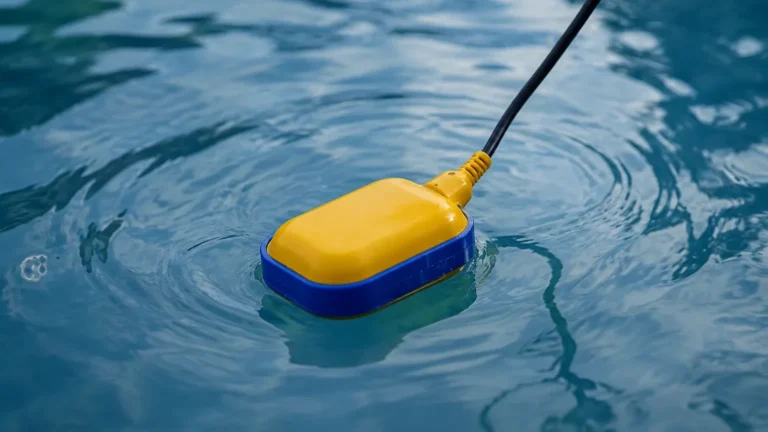
These instruments operate on the principle of buoyancy. A float, containing an internal magnet, moves with the liquid level along a stem. When the float reaches a predetermined point, the magnetic field actuates a hermetically sealed reed switch located inside the stem. These are widely used in water treatment and simple chemical storage due to their reliability and low cost.
2. Vibrating Fork (Tuning Fork) Level Switches
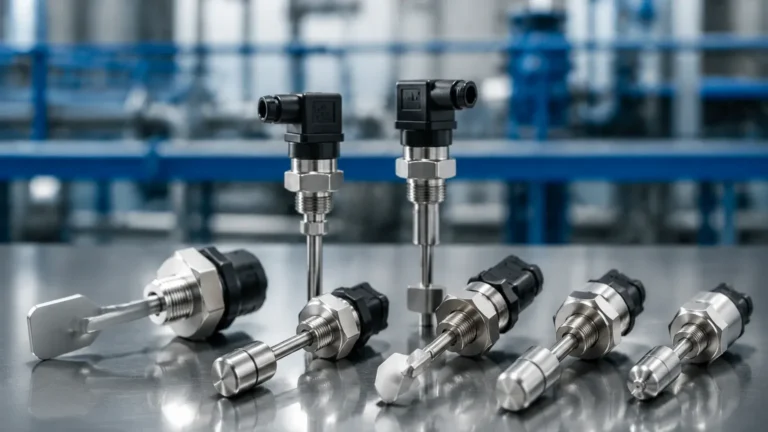
The sensing element of a vibrating fork switch consists of two tines that are vibrated at their natural resonant frequency by a piezoelectric crystal. When the tines are immersed in a medium, the frequency of vibration changes. The internal electronics detect this frequency shift and convert it into a switching signal. These are highly versatile and suitable for both liquids and granulated solids.
3. Capacitance Level Switches
Capacitance switches utilize the electrical property of capacitance to detect level changes. The sensor probe and the tank wall (or a reference electrode) act as the two plates of a capacitor. As the medium fills the space between them, the dielectric constant changes, thereby altering the capacitance. This technology is effective for corrosive materials and high-temperature applications.
4. Ultrasonic Level Switches
Ultrasonic switches employ high-frequency sound waves. A transducer emits an ultrasonic pulse that travels across a gap in the sensor head. If the gap is filled with liquid, the pulse is transmitted; if the gap is empty (filled with air or gas), the pulse is attenuated. This non-mechanical approach is ideal for hygienic applications.
5. Radar and Optical Switches
While less common as simple switches, radar technology can be configured for point-level detection using microwave pulses. Optical switches use the reflection or refraction of light within a prism to detect the presence of liquid. These are often used in leak detection and small-vessel applications.
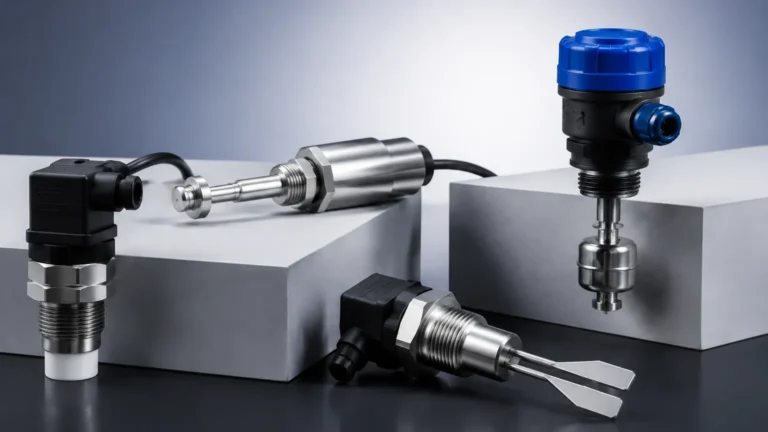
When sourcing industrial-grade Level Switches, selecting the appropriate technology is the first step toward ensuring a reliable installation and correct customs documentation.
The Harmonized System (HS) Framework for Level Switches
The Harmonized Commodity Description and Coding System, commonly known as the HS, is an internationally standardized system of names and numbers to classify traded products. For level measurement instruments, the classification usually falls under Chapter 90 of the HS nomenclature.
Primary Heading: 9026
Most industrial level switches are classified under Heading 9026: "Instruments and apparatus for measuring or checking the flow, level, pressure or other variables of liquids or gases."
* 9026.10: Specifically covers instruments for measuring or checking the flow or level of liquids.
* 9026.10.21 / 9026.10.29: Depending on the specific national tariff schedule (such as the HTSUS in the United States or the TARIC in the European Union), these subheadings differentiate between electronic and non-electronic instruments.
Alternative Heading: 8536
In some specific cases, a very simple mechanical float switch might be classified under Heading 8536: "Electrical apparatus for switching or protecting electrical circuits… for a voltage not exceeding 1,000 V." However, for professional industrial applications, customs authorities generally prefer Heading 9026 because the primary function is the measurement or checking of a process variable (the level), rather than general electrical switching.
Importance of the Level Switch HS Code
Correctly identifying the level switch hs code is critical for several reasons:
* Duty Rates: The code determines the percentage of import duty applied to the shipment. Misclassification can lead to overpayment or underpayment, the latter resulting in fines.
* Regulatory Compliance: Certain codes trigger requirements for specific certifications, such as ATEX/IECEx for hazardous areas or FDA compliance for food-grade sensors.
* Trade Statistics: Governments use these codes to monitor trade flows and implement economic policies.
Selection Criteria for Level Switches
Choosing the right level switch involves matching the technology to the process conditions. The following table provides a practical reference for selection based on common industrial parameters.
| Technology | Suitable Media | Viscosity Limit | Max Pressure (Approx.) | Typical HS Category |
| :— | :— | :— | :— | :— |
| Float Switch | Clean liquids, oils | Low (< 500 cP) | 40 bar (4.0 MPa) | 9026.10 |
| Vibrating Fork | Liquids, powders, slurries | High (< 10,000 cP) | 64 bar (6.4 MPa) | 9026.10 |
| Capacitance | Corrosive, conductive/non-conductive | Medium (< 2,000 cP) | 100 bar (10.0 MPa) | 9026.10 |
| Ultrasonic | Clean liquids, hygienic | Low (< 500 cP) | 10 bar (1.0 MPa) | 9026.10 |
| Optical | Clear liquids, leak detection | N/A | 50 bar (5.0 MPa) | 9026.10 |
Installation and Engineering Considerations
Proper installation is as important as correct classification. Failure to follow engineering best practices can lead to false triggers or sensor failure.
Mounting Orientation
* Top Mounting: Common for float switches and ultrasonic sensors. Ensure the probe length is correctly specified for the desired switching point.
* Side Mounting: Often used for vibrating forks and horizontal float switches. The sensor must be positioned so that material does not build up on the sensing element.
Process Conditions
* Turbulence: In tanks with agitators or high inflow rates, stilling wells may be required for float switches to prevent mechanical damage and erratic switching.
* Coating and Buildup: For viscous or sticky media, vibrating forks or capacitance switches with "active shield" technology are preferred to prevent false positives caused by material clinging to the probe.
* Temperature and Pressure: Always verify that the wetted materials (e.g., 316L Stainless Steel, PTFE, PP) and the seal types are rated for the maximum process temperature and pressure.
Electrical Integration
Level switches typically offer various output options, including SPDT relays, PNP/NPN transistors, or two-wire loop-powered signals. Ensure the power supply and load requirements are compatible with the site's PLC or control system.

Common Risks in HS Code Misclassification
When importing or exporting level measurement equipment, several risks arise from incorrect use of the level switch hs code:
1. Customs Delays: If a customs officer determines that the declared HS code does not match the technical description of the goods, the shipment may be held for inspection, leading to project delays.
2. Retroactive Duties: Customs authorities can audit trade records for several years. If misclassification is discovered, the importer may be liable for back-dated duties plus interest.
3. Ineligibility for Trade Agreements: Many Free Trade Agreements (FTAs) require specific HS codes to qualify for preferential (zero or reduced) duty rates. An incorrect code may disqualify a shipment from these benefits.
To mitigate these risks, always provide a detailed technical data sheet and a commercial invoice that clearly describes the function and technology of the instrument. For example, instead of writing "Switch," use "Electronic Vibrating Fork Level Switch for Liquid Detection."
Limitations of Level Switches
While highly effective, level switches have inherent limitations compared to continuous measurement technologies like radar level meters:
* Point Detection Only: They cannot provide information on the volume or percentage of the tank contents between switching points.
* Mechanical Wear: Technologies with moving parts, such as float switches, are subject to wear and tear over time, especially in abrasive media.
* Sensitivity to Media Changes: Capacitance switches may require recalibration if the dielectric constant of the process fluid changes significantly.
Frequently Asked Questions (FAQ)
What is the most common 6-digit HS code for a level switch?
The most universally accepted 6-digit code is 9026.10, which covers instruments for measuring or checking the level of liquids.
Does the HS code change if the switch is used for solids instead of liquids?
Yes. If the switch is specifically designed for solids (e.g., a rotating paddle switch or a vibrating fork for grain), it may be classified under 9026.80 (Other instruments or apparatus) or even 9031.80 (Other measuring or checking instruments), depending on the specific jurisdiction's interpretation of Heading 9026.
How do I verify the HS code for a specific country?
You should consult the national tariff database of the importing country. For example, the United States uses the HTSUS, the European Union uses the TARIC, and China uses the Customs Import and Export Tariff of the People's Republic of China.
Is a level switch considered an "automatic regulating controller" (HS 9032)?
Generally, no. Heading 9032 is reserved for instruments that automatically control a variable to a setpoint (like a thermostat). A level switch is a detection instrument that provides an output to a separate controller, placing it more accurately under 9026.
What documentation is needed to support the HS code declaration?
A technical specification sheet, a clear photograph of the device, and a description of the operating principle (e.g., ultrasonic, magnetic, or thermal) are usually sufficient for customs verification.
By carefully evaluating the technical requirements of the application and aligning them with the correct level switch hs code, industrial professionals can ensure both the operational success of their level control systems and the regulatory compliance of their international procurement activities.