G Switch Level 2
G Switch Level 2
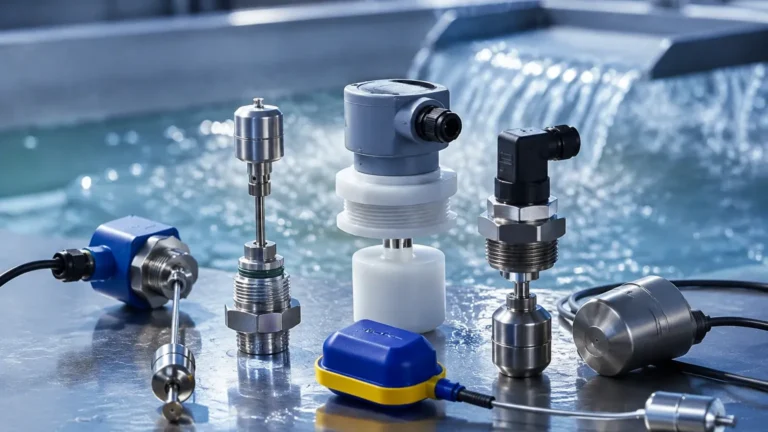
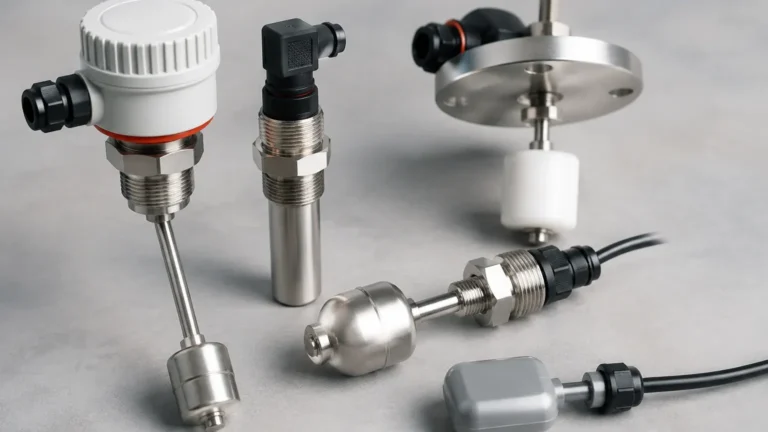
In industrial process control, point level detection serves as the critical line of defense for overfill prevention, pump protection, and automated inventory management. Among the various configurations used in modern facilities, the concept of a "G Switch Level 2" configuration—referring to the second setpoint in a multi-point switching system or a specific gravity-dependent secondary alarm—is essential for maintaining operational safety and efficiency. Understanding how these Level Switches operate, particularly when calibrated for specific gravity (G) and secondary (Level 2) logic, is vital for any plant engineer or system integrator.
Measurement Principles of Point Level Detection
Before selecting a specific switch configuration, it is necessary to understand the physical principles that govern how these devices interact with the media. Level switches are designed to provide a discrete output (on/off) when a material reaches a predetermined height. Unlike continuous level transmitters, which provide a constant stream of data, switches are primarily used for control logic and safety interlocks.
Buoyancy and Specific Gravity (The "G" Factor)
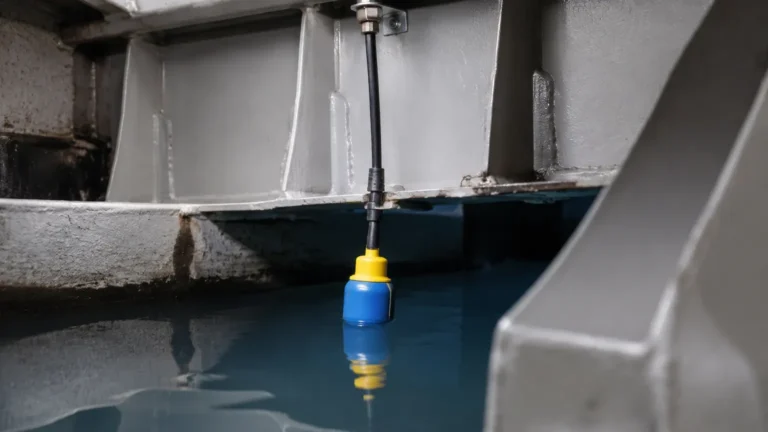
For float-based level switches, the principle of buoyancy is the primary driver. According to Archimedes' principle, the buoyant force exerted on a body immersed in a fluid is equal to the weight of the fluid that the body displaces. In technical specifications, the "G" often refers to the Specific Gravity of the liquid.
A float switch must be engineered so that its density is lower than the specific gravity of the process liquid. If a switch is designated for a "Level 2" alarm in a high-density liquid, the float must be weighted differently than one intended for a low-density hydrocarbon. If the specific gravity (G) of the media changes due to temperature fluctuations or chemical composition shifts, the switch may fail to actuate at the correct "Level 2" height.
Vibrating Fork Technology
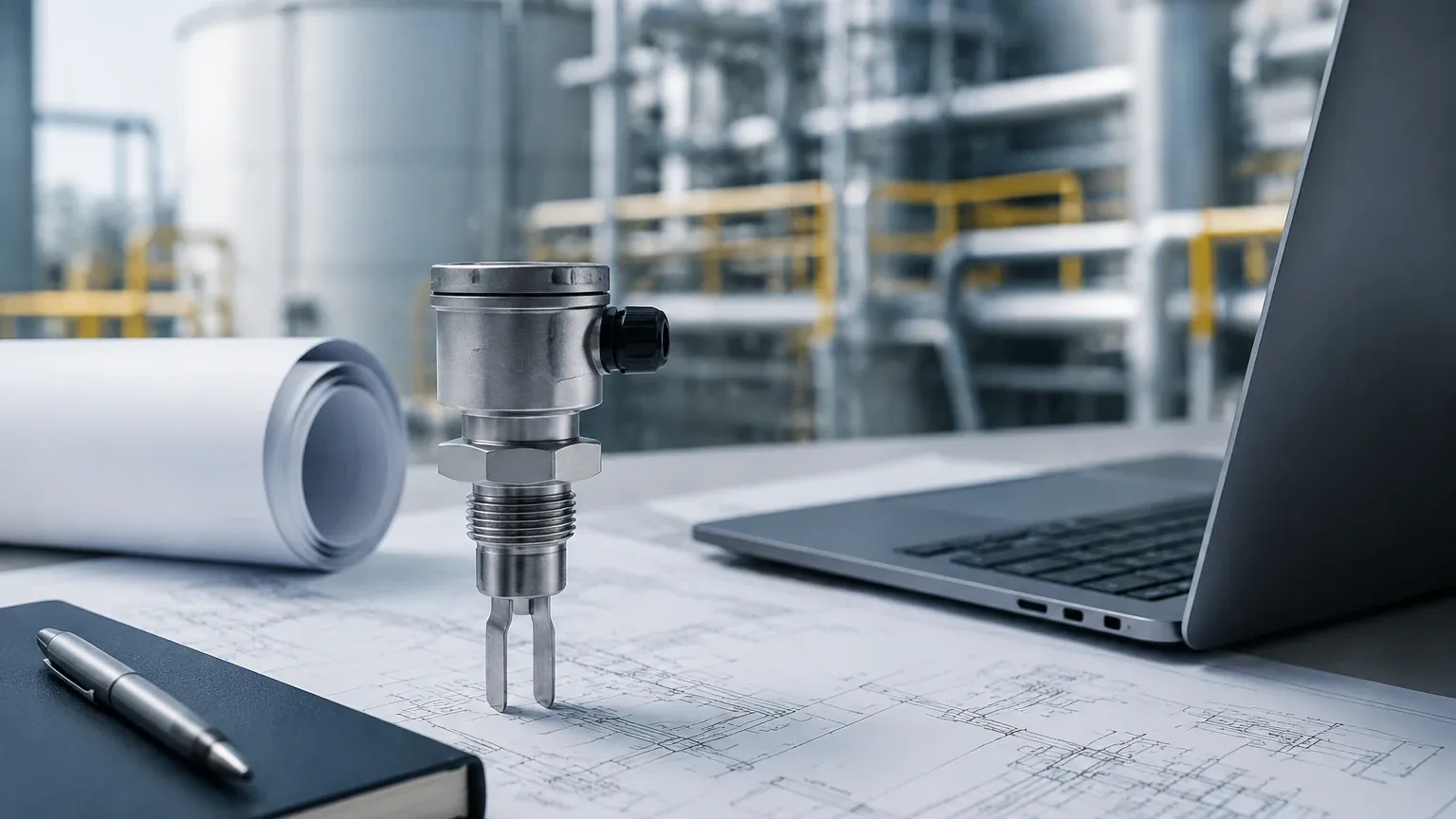
Vibrating fork switches operate on the principle of frequency shift. An electronic circuit excites a tuning fork to its resonant frequency in air. When the fork is submerged in a liquid, the frequency drops. This shift is detected by the electronics and converted into a switching signal. This technology is largely independent of the liquid's specific gravity, making it a robust alternative for applications where "G" values are inconsistent.
Capacitance and Dielectric Constants
Capacitive switches measure the change in capacitance between an electrode and the tank wall (or a reference probe). As the liquid level rises and covers the probe, the dielectric constant changes, triggering the switch. This is particularly useful for solids or liquids with consistent electrical properties.
Defining the G Switch Level 2 Configuration
In a B2B industrial context, "Level 2" typically refers to the secondary stage of a multi-point detection system. For example:
1. Level 1 (Low/High): The primary control point used to start or stop a pump.
2. Level 2 (Low-Low/High-High): The emergency or safety point that triggers an alarm or an Emergency Shutdown (ESD) system.
When we discuss a "G Switch Level 2," we are often looking at a dual-point float switch where the second switch point (Level 2) is specifically calibrated for the specific gravity (G) of the medium to ensure that even in turbulent or aerated conditions, the safety alarm triggers reliably. This is common in oil-water separators, chemical storage tanks, and boiler feedwater systems.
Technical Selection Criteria
Choosing the correct switch requires a thorough analysis of the process environment. The following table outlines the primary considerations for selecting Level Switches for Level 2 safety applications.
Selection Table: Level Switch Technologies
| Feature | Float (Buoyancy) | Vibrating Fork | Capacitance | Ultrasonic Gap |
| :— | :— | :— | :— | :— |
| Primary Principle | Buoyancy (G-dependent) | Frequency Shift | Dielectric Constant | Sound Attenuation |
| Media Type | Clean Liquids | Liquids & Powders | Liquids, Solids, Slurries | Clean/Aerated Liquids |
| Specific Gravity (G) | Critical (>0.45) | Not Critical | Not Critical | Not Critical |
| Pressure Range | Up to 100 bar | Up to 64 bar | Up to 100 bar | Up to 40 bar |
| Temperature Range| -40°C to 250°C | -50°C to 150°C | -50°C to 200°C | -40°C to 150°C |
| Viscosity Limit | Low to Medium | Up to 10,000 cP | High | Medium |
| Coating Concern | Moderate | Low | High | Moderate |
Application Scenarios for Level 2 Switching
1. High-High Alarm in Chemical Storage
In tanks containing hazardous chemicals, a Level 1 switch might control the filling valve. The "G Switch Level 2" acts as the redundant safety layer. If the primary valve fails to close, the Level 2 switch—calibrated for the specific gravity of the chemical—activates a secondary isolation valve. Because these chemicals can have high specific gravities (e.g., Sulfuric Acid at G=1.84), the buoyancy of the Level 2 float must be precisely calculated to prevent delayed activation.
2. Pump Protection (Dry Run Prevention)
In wastewater treatment, a Level 2 Low-Low switch is used to protect expensive submersible pumps. If the liquid level drops below the Level 1 "stop" point and continues to fall, the Level 2 switch cuts power directly to the motor starter. In these environments, the "G" factor is often close to 1.0 (water), but the presence of suspended solids may require a non-contact or vibrating fork switch to avoid mechanical fouling.
3. Interface Detection in Oil & Gas
Level 2 switching is frequently used to detect the interface between oil and water. A float switch can be weighted to sink through the oil (G ≈ 0.8) but float on the water (G = 1.0). In this scenario, the Level 2 point indicates that the water level has reached a critical height, necessitating a dump valve cycle.
Installation and Engineering Considerations
Proper installation is the difference between a reliable safety system and a frequent source of nuisance alarms. When implementing a Level 2 switch, consider the following:
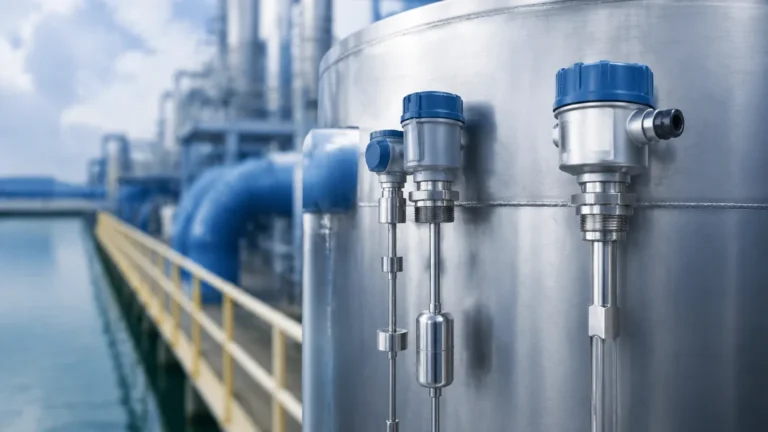
* Mounting Orientation: Side-mounted switches are ideal for point detection at specific heights, but they require tank penetration. Top-mounted multi-point switches (where Level 1 and Level 2 are on a single stem) reduce the number of tank openings but must be long enough to reach the desired depths (often up to 3,000 mm or 3 meters).
* Stilling Wells: In tanks with high turbulence or agitation, a stilling well (a vertical pipe surrounding the switch) should be used. This prevents the "G Switch" from bouncing, which could cause rapid cycling of the Level 2 alarm relay.
* Wiring Logic: For safety applications, Level 2 switches should be wired in a "Normally Closed" (NC) configuration. This ensures that if a wire breaks or power is lost, the system fails into an alarm state (Fail-Safe).
* Insertion Length: Ensure the insertion length (L) is calculated from the process connection flange face to the center of the float or sensing element. For Level 2 points, this measurement must be precise to within ±2 mm to meet engineering tolerances.
Limitations and Common Risks
While Level Switches are highly reliable, they are not universal solutions. Engineers must be aware of the following limitations:
1. Material Build-up: In sticky or crystallizing fluids, material can accumulate on the float or the tines of a vibrating fork. This can "trap" the float in one position or dampen the vibration, leading to a false Level 2 signal.
2. Specific Gravity Fluctuations: If a float switch is calibrated for a fluid with G=1.0 and the process changes to a fluid with G=0.7, the float may never rise, and the Level 2 high alarm will never trigger.
3. Turbulence and Foam: Mechanical switches can be affected by surface foam, which may not have enough density to lift a float but could trigger an ultrasonic or capacitive switch prematurely.
4. Electromagnetic Interference (EMI): Electronic switches (Capacitance/Ultrasonic) must be properly shielded to prevent interference from nearby high-voltage motors or variable frequency drives (VFDs).
Maintenance and Functional Testing
To ensure the Level 2 safety function is always available, a regular maintenance schedule is required.
* Proof Testing: Periodically manually lift the float or submerge the sensor to verify that the Level 2 relay actuates and the control system receives the signal.
* Cleaning: For applications involving wastewater or heavy oils, remove the switch annually to clean any accumulated debris or scale.
* Seal Inspection: Check the process seals and cable glands for signs of ingress or corrosion, particularly in outdoor or wash-down environments.
Frequently Asked Questions (FAQ)
Q: Can I use a single switch for both Level 1 and Level 2?
A: While some sensors offer dual-output capabilities, safety standards (such as SIL 2 or SIL 3) often require physical redundancy. This means using two separate switches or a multi-point switch with independent reed switches for Level 1 and Level 2.
Q: How does temperature affect the "G" in G Switch Level 2?
A: As temperature increases, most liquids expand and their specific gravity (G) decreases. If a float switch is marginally buoyant, a significant temperature rise could cause the float to sink, failing to trigger a high-level alarm.
Q: What is the best switch for a Level 2 alarm in a pressurized vessel?
A: Magnetic level switches or high-pressure vibrating forks are preferred. Magnetic switches keep the electrical components isolated from the process pressure by using a magnetic coupling through a non-magnetic pressure tube.
Conclusion
Implementing a "G Switch Level 2" strategy is a fundamental aspect of industrial risk management. By selecting the appropriate technology based on the specific gravity of the media and the requirements of the Level 2 safety setpoint, operators can ensure long-term reliability. Whether utilizing the buoyancy of a float or the sophisticated electronics of a vibrating fork, the goal remains the same: provide a definitive, repeatable signal when it matters most. For those designing new systems or retrofitting existing tanks, consulting with a professional manufacturer of industrial level measurement instruments ensures that the chosen Level Switches are perfectly matched to the application's physical and chemical demands.