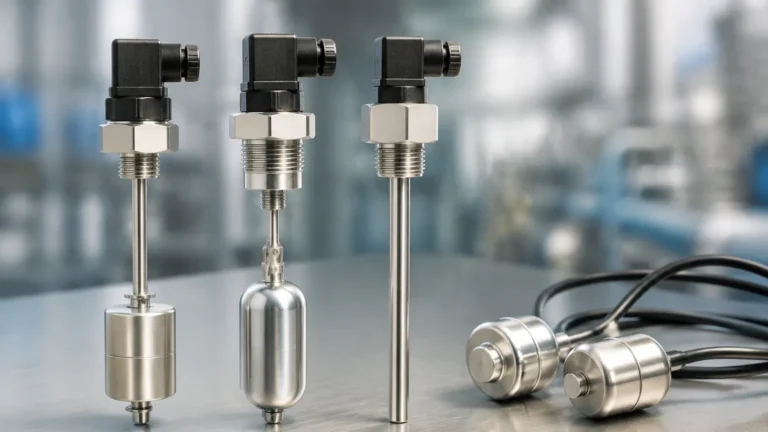
Level Switch Explosion Proof
Level Switch Explosion Proof
In industrial environments where flammable gases, vapors, or combustible dusts are present, the selection of instrumentation is governed by rigorous safety standards. A level switch explosion proof design is not merely an optional feature but a critical safety requirement for preventing catastrophic ignition. These devices are engineered to operate reliably within hazardous zones, ensuring that point-level detection—whether for high-level alarms, low-level protection, or pump control—does not become a source of thermal or electrical ignition.
For engineers and plant managers, understanding the intersection of sensing physics and explosion protection methodologies is essential. This guide examines the principles of various level switch technologies, the standards governing their use in hazardous areas, and the practical considerations for selecting and installing these critical components.
Measurement Principles of Level Switches
Before evaluating explosion-proof ratings, it is necessary to understand the underlying measurement principles. Each technology interacts differently with the process medium and the environment, influencing its suitability for specific hazardous applications.
Tuning Fork (Vibrating) Level Switches
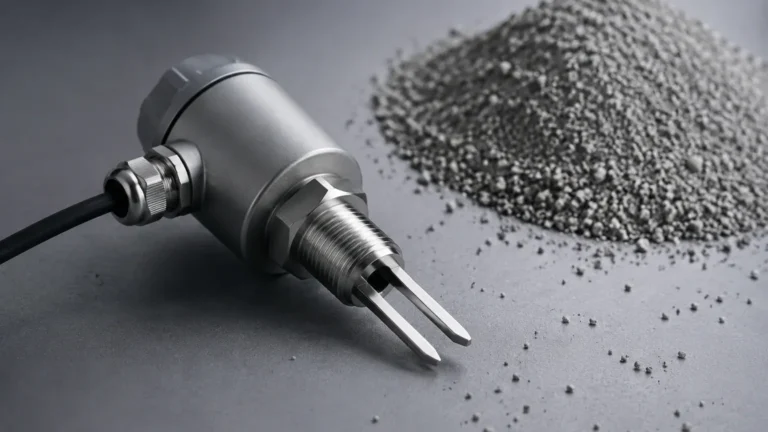
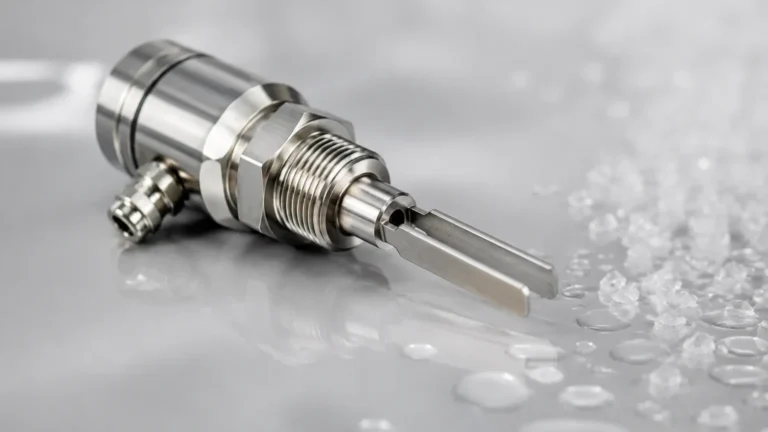
This technology utilizes a tuning fork-shaped sensing element that is vibrated at its resonant frequency by internal piezoelectric crystals. When the fork is immersed in a liquid or solid, the frequency changes. The internal electronics detect this shift and trigger the switch output. Because they have no moving parts subject to wear and are largely unaffected by flow, turbulence, or bubbles, they are a preferred choice for high-reliability applications.
Float and Magnetic Level Switches
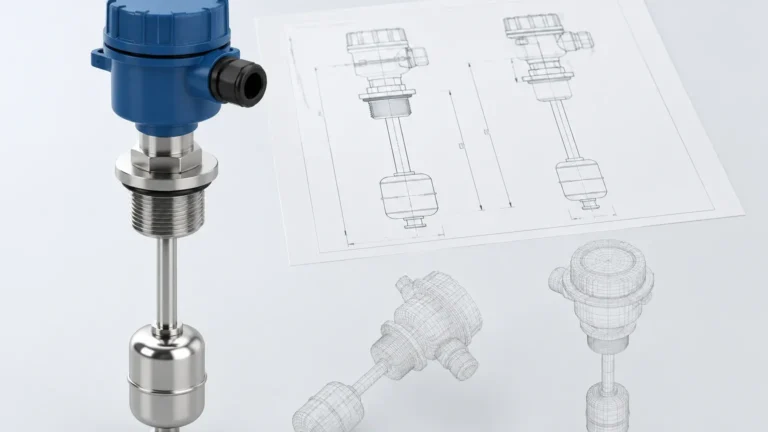
Float switches operate on the principle of buoyancy. A float containing a permanent magnet moves with the liquid level along a stem. Inside the stem, a reed switch is positioned at a specific set point. When the magnet approaches the reed switch, the circuit closes (or opens). In explosion-proof versions, the reed switch is hermetically sealed, and the housing is designed to contain any internal spark.
Capacitance Level Switches
Capacitance sensors treat the probe and the tank wall (or a reference electrode) as two plates of a capacitor. The medium acts as the dielectric. As the level rises and covers the probe, the capacitance increases because the dielectric constant of the medium is higher than that of air. This change is converted into a switching signal. These are effective for both liquids and solids but require calibration based on the material's dielectric properties.
Rotary Paddle Level Switches
Primarily used for bulk solids, a low-speed motor rotates a paddle. When the material reaches the paddle, it creates a mechanical resistance that stalls the motor. This torque shift activates a microswitch. In hazardous dust environments (such as grain silos or chemical powder processing), the motor and switch assembly must be housed in a dust-ignition-proof enclosure.
Explosion Protection Methodologies
When searching for a level switch explosion proof solution, two primary protection methods are commonly encountered: Flameproof (Explosion-Proof) and Intrinsic Safety.
Flameproof/Explosion-Proof (Ex d / XP)
This method assumes that an internal explosion *will* occur. The device is housed in a heavy-duty enclosure (usually cast aluminum or stainless steel) designed to withstand the internal pressure of an explosion without deforming or allowing flames to escape into the surrounding atmosphere. The joints and threads of the enclosure are engineered to cool escaping gases below the ignition temperature of the external atmosphere.
Intrinsic Safety (Ex ia/ib / IS)
Intrinsic safety focuses on prevention rather than containment. The electrical energy within the circuit is limited to such a low level that it cannot generate a spark or thermal effect capable of igniting a specific hazardous atmospheric mixture. This requires the use of an associated apparatus, such as a Zener barrier or galvanic isolator, located in a non-hazardous area.
Key Evaluation Criteria for Selection
Selecting the correct Level Switches for hazardous areas requires a multi-faceted evaluation of the process and the environment.
1. Hazardous Area Classification: Determine the Zone (0, 1, or 2) or Division (1 or 2) where the switch will be installed. Zone 0/Division 1 requires the highest level of protection, often mandating intrinsically safe equipment.
2. Medium Compatibility: The wetted parts (e.g., 316L stainless steel, Hastelloy, or PTFE coating) must resist corrosion from the process fluid. For explosion-proof applications, ensuring the chemical integrity of the seal is paramount to prevent leaks into the electronics housing.
3. Temperature and Pressure: Standard explosion-proof housings have specific temperature ratings (T-codes). If the process temperature exceeds the T-code rating, the device itself could become an ignition source. Common ratings range from T1 (450°C) to T6 (85°C).
4. Output Requirements: Decide between relay outputs (SPDT/DPDT), transistor outputs (PNP/NPN), or two-wire NAMUR signals. NAMUR signals are frequently used in intrinsically safe circuits.
Selection Table: Technology Comparison
| Technology | Suitable Medium | Pressure Limit (Typical) | Temperature Limit (Typical) | Best For |
| :— | :— | :— | :— | :— |
| Tuning Fork | Liquids / Fine Powders | Up to 64 bar (6.4 MPa) | -50°C to +150°C | Overfill protection, pump dry-run |
| Float | Clean Liquids | Up to 40 bar (4.0 MPa) | -40°C to +200°C | Simple tank level control |
| Capacitance | Liquids, Slurries, Solids | Up to 100 bar (10 MPa) | -100°C to +250°C | High-pressure/High-temp applications |
| Rotary Paddle | Bulk Solids/Grains | Atmospheric | -20°C to +80°C | Silo high/low level |
Installation Considerations for Explosion-Proof Switches
The safety of a level switch explosion proof installation is only as strong as its weakest link. Proper installation is mandatory to maintain the certification integrity.
* Conduit Seals: For flameproof (Ex d) installations, a certified conduit seal (pouring seal) must be installed within a specific distance (usually 450 mm or 18 inches) of the enclosure. This prevents the passage of flames or gases through the conduit system.
* Cable Glands: If using cable instead of conduit, the cable glands must be certified for the specific protection type (Ex d or Ex e). They must provide an environmental seal and a flameproof path.
* Grounding and Bonding: Proper earthing is essential to prevent the buildup of static electricity, which is a common ignition source in hazardous areas. Both internal and external grounding points should be utilized.
* Thread Engagement: For NPT or Metric threaded entries into explosion-proof housings, a minimum number of threads (typically five full threads) must be engaged to ensure the flame-path integrity.

Limitations and Common Risks
While explosion-proof level switches are robust, they are not infallible. Awareness of their limitations prevents operational failures.
* Material Build-up: In capacitance and tuning fork switches, heavy coating or "bridging" of material can cause false triggering. While some Welk tuning forks feature coating rejection logic, extreme buildup remains a risk.
* Mechanical Fatigue: Float switches and rotary paddles have moving parts. In high-vibration environments, mechanical fatigue can lead to failure. For such cases, non-mechanical technologies like tuning forks are preferred.
* Improper Enclosure Opening: A critical risk occurs during maintenance. Opening an explosion-proof enclosure while the circuit is energized in a hazardous atmosphere voids the protection. Always de-energize the device or ensure the area is known to be non-hazardous (via gas "hot work" permit) before opening.
* Environmental Sealing: If the O-rings or gaskets of an Ex d housing are damaged, moisture can enter, leading to corrosion of the electronics and potentially compromising the flame-path.
Frequently Asked Questions (FAQs)
Q: Can I use an intrinsically safe level switch without a barrier?
A: No. An intrinsically safe (Ex ia) level switch is only safe when used in conjunction with a certified intrinsically safe barrier or isolator. Without the barrier, the energy levels in the hazardous area are not limited, and the system is not safe.
Q: What is the difference between ATEX and IECEx?
A: ATEX is a mandatory European Union directive for equipment used in explosive atmospheres. IECEx is an international certification scheme. While they share many technical requirements (based on IEC 60079 standards), ATEX is a legal requirement in Europe, whereas IECEx facilitates global trade by harmonizing standards.
Q: How do I choose between a T5 and T6 temperature rating?
A: The T-code represents the maximum surface temperature the device will reach. T6 is 85°C and T5 is 100°C. You must choose a rating that is lower than the auto-ignition temperature of the gases present in your environment. A T6 rating is safer than T5 because it ensures a cooler maximum surface temperature.
Q: Are all stainless steel level switches explosion-proof?
A: No. Stainless steel refers to the material of construction for chemical compatibility. Explosion-proof refers to the design of the electronics housing and the internal electrical components. A switch can be made of stainless steel but only rated for general-purpose use.
Conclusion
Implementing a level switch explosion proof solution is a fundamental aspect of industrial risk management. By selecting the appropriate measurement principle—whether it be the vibration of a tuning fork or the buoyancy of a magnetic float—and ensuring the protection method aligns with the site's hazardous area classification, engineers can maintain both safety and process efficiency.
Welk provides a comprehensive range of level measurement instruments designed to meet the rigorous demands of the chemical, oil and gas, and water treatment industries. When specifying equipment, always verify the certification markings on the device and consult the manufacturer’s documentation to ensure compliance with local safety regulations. For detailed specifications and to find the right technology for your application, you may Review product options and application support to ensure your facility remains both productive and protected.