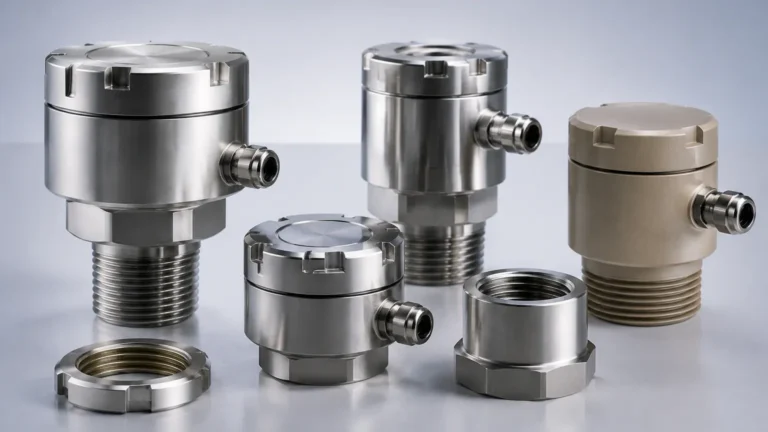
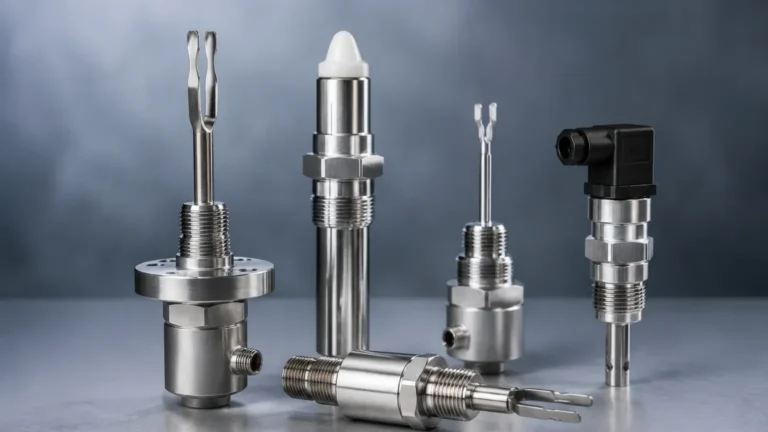
Jlevel Switch
Jlevel Switch
In the landscape of industrial process control, point level detection serves as the primary line of defense against vessel overfills, dry-run pump damage, and inventory inaccuracies. The jlevel switch, a specialized category of level instrumentation, provides the critical binary feedback—on or off—required to automate these safety and operational functions. Whether managing aggressive chemicals in a processing plant or monitoring water levels in municipal treatment facilities, selecting the correct level switch technology is fundamental to system reliability.
Industrial Level Switches are designed to detect the presence or absence of a medium at a specific height. Unlike continuous level transmitters that provide a constant data stream of the current level, a jlevel switch acts as a sentinel, triggering an electrical signal when the material reaches a predetermined set point. This article explores the engineering principles, selection criteria, and installation best practices for these essential devices.
Measurement Principles of Level Switches
Understanding the physics behind level detection is the first step in specifying the right instrument. Different media and environmental conditions require different sensing methodologies. The following are the most common principles utilized in modern jlevel switch designs.
1. Vibrating Fork (Tuning Fork) Principle
The vibrating fork switch is one of the most versatile technologies for liquid level detection. The sensor consists of a two-pronged fork that is vibrated at its natural resonant frequency by a piezoelectric crystal. When the fork is immersed in a liquid, the frequency of vibration changes or the amplitude is dampened. The internal electronics detect this shift and convert it into a switching signal.
* Advantages: Unaffected by flow, turbulence, bubbles, or foam. It requires no calibration and has no moving parts to wear out.
* Best For: General liquid detection, overfill protection, and pump protection.
2. Float and Magnetic Principle
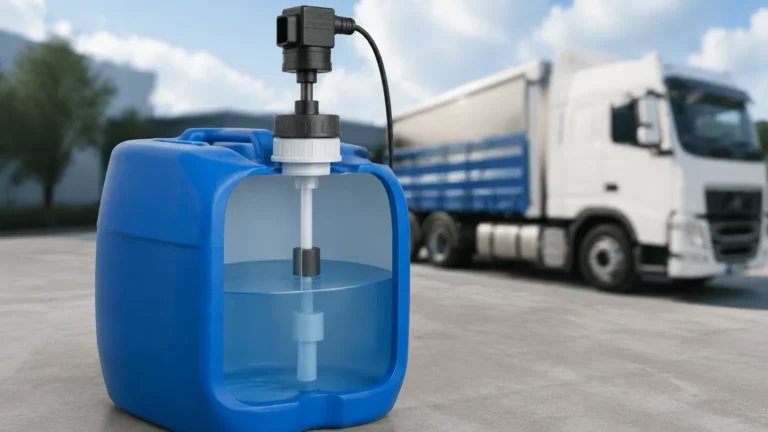
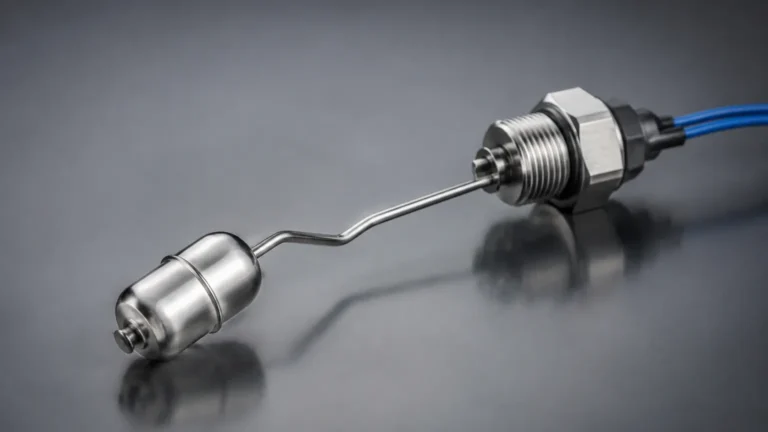
This traditional mechanical method relies on buoyancy. A float containing a permanent magnet moves up and down a stem in response to the liquid level. Inside the stem, a reed switch is positioned at the set point. As the float’s magnet approaches the reed switch, the magnetic field causes the contacts to close (or open).
* Advantages: Simple, low-cost, and requires no power to operate the switch itself (passive sensing).
* Best For: Clean liquids, water tanks, and oil-water separators.
3. Capacitance Principle
A capacitance level switch treats the sensor probe and the vessel wall (or a reference probe) as two plates of a capacitor. The material being measured acts as the dielectric. As the level rises and covers the probe, the capacitance increases because the dielectric constant of the medium is higher than that of air. Once the capacitance reaches a threshold, the switch is activated.
* Advantages: Can handle high temperatures and pressures; suitable for both liquids and solids (powders/granules).
* Best For: Corrosive chemicals and bulk solids.
4. Hydrostatic Pressure Principle
While often used for continuous measurement, hydrostatic pressure can also be used for point level switching. A diaphragm senses the pressure exerted by the liquid column above it. When the pressure reaches a specific limit (corresponding to a specific height), the switch trips.
* Advantages: Robust and capable of measuring heavy or viscous liquids.
* Best For: Deep wells and large storage tanks.
Key Features of the Jlevel Switch
When evaluating a jlevel switch for a specific project, several technical features determine its suitability for the environment. Engineering teams must look beyond the basic measurement principle to the physical construction of the device.
Material Compatibility
The wetted parts of the switch—those that come into direct contact with the medium—must be chemically compatible. Common materials include:
* 316L Stainless Steel: The standard for water, food processing, and general industrial use.
* PTFE/PFA Coatings: Required for highly aggressive acids or bases where stainless steel would corrode.
* Hastelloy or Titanium: Used in extreme chemical environments or high-salinity applications.
Output Options
The switch must communicate with the control system, typically a PLC (Programmable Logic Controller) or a local alarm. Common outputs include:
* Relay (SPDT/DPDT): Provides a dry contact for switching high-current loads or providing isolation.
* Transistor (PNP/NPN): Ideal for high-speed switching and direct connection to digital PLC inputs.
* Two-wire Contact: Often used in loop-powered systems.
Fail-Safe Modes
A critical safety feature of the jlevel switch is the ability to select a fail-safe mode.
* High Fail-Safe (MAX): The switch remains energized when the level is low and de-energizes when the level is high or if power is lost. This is standard for overfill prevention.
* Low Fail-Safe (MIN): The switch remains energized when the level is high and de-energizes when the level is low, providing protection against dry-running pumps.
Practical Selection Table
Choosing the right jlevel switch requires balancing technical requirements with budget constraints. The following table provides a general guideline for technology selection based on common industrial parameters.
| Criteria | Vibrating Fork | Float Switch | Capacitance | Ultrasonic (Point) |
| :— | :— | :— | :— | :— |
| Medium Type | Liquids / Slurries | Clean Liquids | Liquids / Solids | Liquids |
| Max Temperature | Up to 150°C | Up to 120°C | Up to 250°C+ | Up to 80°C |
| Max Pressure | Up to 40 bar | Up to 20 bar | Up to 100 bar | Up to 3 bar |
| Viscosity Limit | High (up to 10,000 cP) | Low | Medium | Medium |
| Coating/Buildup | Good Resistance | Poor | Moderate | Poor |
| Cost | Moderate | Low | Moderate | High |
Installation Considerations
Even the highest quality jlevel switch will fail if installed incorrectly. Proper placement and orientation are vital for long-term accuracy.
1. Avoid the Fill Stream: Never install a level switch directly under the inlet pipe where falling material can strike the sensor. This causes "chatter" (rapid switching) and premature mechanical failure.
2. Orientation: Vibrating forks should be installed with the tines oriented vertically (if mounted on the side) so that liquid can drain off easily and not get trapped between the tines.
3. Turbulence and Agitators: In tanks with heavy agitation, use a stilling well or choose a technology like the vibrating fork that is less sensitive to surface turbulence.
4. Wiring and Grounding: Ensure the instrument housing is properly grounded to prevent electrical noise from interfering with the switching signal. Use shielded cables for long runs back to the control room.
5. Cable Glands: Always point cable entries downward and use drip loops to prevent moisture from entering the housing via the conduit.

Limitations and Common Risks
While jlevel switches are robust, they are not universal solutions. Engineers should be aware of the following risks:
* Material Buildup: In applications involving sticky or viscous media, material can accumulate on the sensor. While some switches (like vibrating forks) can ignore a thin film, heavy buildup can eventually lead to false readings.
* Specific Gravity Changes: Float switches are highly dependent on the density of the liquid. If the process involves different liquids with varying specific gravities, a float may fail to rise or sink as expected.
* Gas Bubbles and Foam: Ultrasonic and some capacitance switches can struggle with heavy foam layers, either triggering too early or failing to detect the liquid surface beneath the foam.
* Mechanical Wear: Float-based systems have moving parts. Over time, the pivot points or the float itself can become encrusted with minerals or debris, leading to a stuck switch.
Frequently Asked Questions (FAQ)
Q: Can a jlevel switch be used for both high and low-level detection?
A: Yes, but typically not with a single unit. Most point level switches are installed at a specific height. To monitor both a high-level alarm and a low-level alarm, you would usually install two separate switches at the respective heights.
Q: How do I test the switch without filling the tank?
A: Many modern electronic switches, such as vibrating forks, include a "test" magnet or a button on the housing that simulates a wet condition, allowing you to verify the loop and alarm logic without a full process cycle.
Q: What is the difference between a NEMA 4X and an IP67 rating for these switches?
A: Both ratings indicate that the switch housing is protected against dust and water. IP67 specifically means the unit can withstand temporary immersion in water, while NEMA 4X also implies protection against corrosion, making it suitable for marine or chemical environments.
Q: Are there jlevel switches suitable for hazardous (explosive) areas?
A: Yes. For environments with flammable gases or dust, you must specify a switch with ATEX, IECEx, or UL hazardous area certifications. These units are designed to be intrinsically safe or explosion-proof.
Conclusion
The jlevel switch remains a cornerstone of industrial safety and automation. By understanding the specific demands of your application—including the chemical properties of the medium, the physical constraints of the vessel, and the required safety integrity—you can select a Level Switches solution that provides years of maintenance-free service. Always consult the manufacturer's technical data sheets to confirm that the pressure and temperature ratings of the chosen device align with your process's worst-case scenarios.