Fluid Level Switches
Fluid Level Switches
In industrial process control, fluid level switches serve as the primary line of defense for overflow prevention, dry-run protection of pumps, and automated tank filling. Unlike continuous level transmitters that provide a constant stream of data regarding the exact volume or height of a liquid, a level switch is a point-level detection device. It operates by changing its electrical state—typically via a relay or a transistor output—when a liquid reaches a specific predetermined height.
Reliable point-level detection is critical across sectors such as water treatment, chemical processing, and oil and gas. Choosing the correct technology requires a deep understanding of the fluid’s physical properties, the environmental conditions of the process, and the electrical requirements of the control system. This guide provides an engineering-focused overview of the principles, selection criteria, and installation requirements for modern Level Switches.
Core Measurement Principles and Technologies
To select the appropriate fluid level switches for an application, engineers must first understand the physics behind the different sensing technologies. Each principle offers specific advantages depending on the viscosity, conductivity, and turbulence of the medium.
Float-Type Level Switches
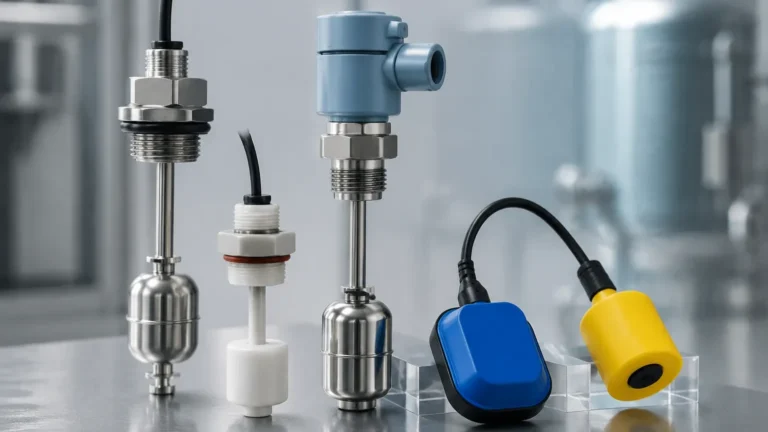
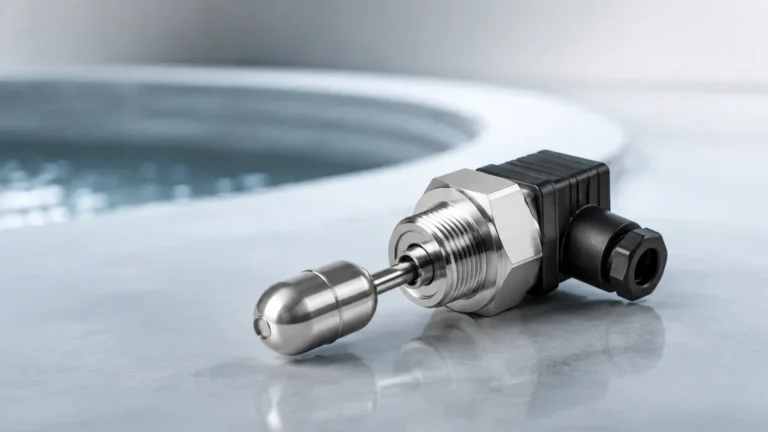
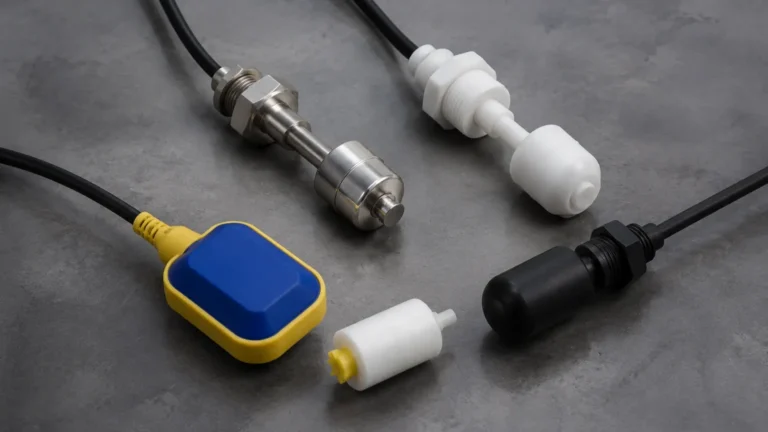
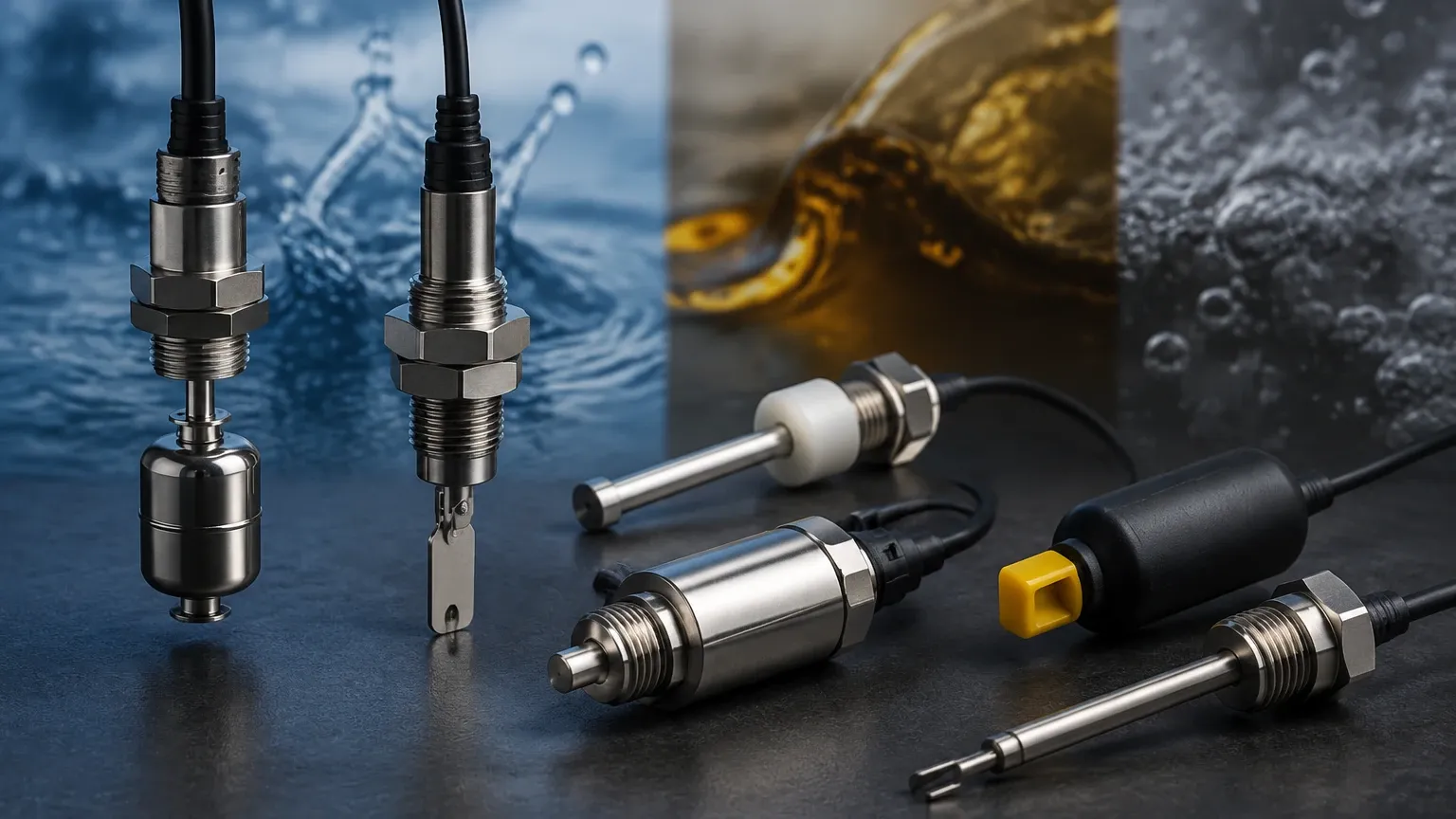
Float switches are among the most established technologies due to their simplicity and cost-effectiveness. They operate on the principle of buoyancy. A float, containing a permanent magnet, moves along a stem as the liquid level rises or falls. Inside the stem, a hermetically sealed reed switch is positioned at the set point. When the magnet in the float approaches the reed switch, the magnetic field causes the contacts to close (or open), completing the circuit.
* Advantages: No power supply required for the sensing element itself; highly reliable for clean, non-coating liquids.
* Limitations: Susceptible to mechanical jamming if the fluid contains solids or high-viscosity contaminants.
Vibrating Tuning Fork Switches
Vibrating level switches utilize a tuning fork-shaped sensing element that is vibrated at its resonant frequency by internal piezoelectric crystals. When the fork is immersed in a liquid, the frequency of vibration shifts significantly due to the change in mass loading. The internal electronics detect this frequency shift and trigger the output.
* Advantages: Highly resistant to foam, bubbles, and external vibrations. They are often considered "universal" switches because they are largely independent of the liquid's dielectric constant or density.
* Limitations: Not suitable for extremely high-viscosity fluids that might bridge the gap between the forks.
Capacitance Level Switches
Capacitive sensors treat the probe and the tank wall (or a reference electrode) as two plates of a capacitor. The liquid acts as the dielectric material. As the fluid level rises and covers the probe, the capacitance increases because the dielectric constant of the liquid is higher than that of air.
* Advantages: Excellent for detecting sticky or coating-prone liquids, as modern units often include "active shield" technology to ignore build-up on the probe.
* Limitations: Requires the dielectric constant of the fluid to remain relatively stable for consistent switching.
Ultrasonic Level Switches
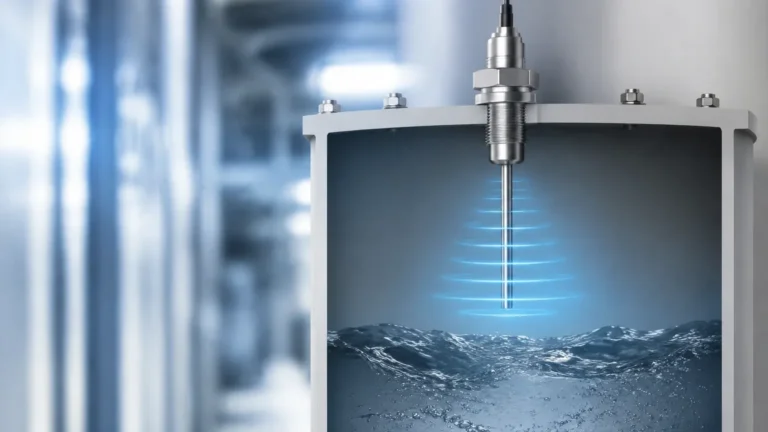
Ultrasonic point-level switches typically use a gap-sensing method. A transmitter and receiver are located on opposite sides of a small gap in the probe. When the gap is filled with air, the ultrasonic signal is attenuated and does not reach the receiver. When liquid fills the gap, the signal is transmitted across, triggering the switch.
* Advantages: No moving parts; suitable for hazardous areas where mechanical sparks must be avoided.
* Limitations: Performance can be degraded by heavy aeration or high concentrations of suspended solids in the fluid.
Optical Level Switches
Optical sensors use an infrared LED and a light receiver housed within a triangular prism. When the sensor is in air, the infrared light is reflected internally within the prism back to the receiver. When liquid covers the prism, the light is refracted into the fluid, and the receiver detects a loss of signal.
* Advantages: Extremely compact; ideal for leak detection in tight spaces or small laboratory equipment.
* Limitations: Not suitable for fluids that leave a thick, opaque coating on the prism.
Technical Selection Criteria for Industrial Applications
Selecting the right fluid level switches involves more than just choosing a technology; it requires matching the instrument's specifications to the process environment. The following factors are the most critical for long-term reliability.
Media Properties
* Density (Specific Gravity): Float switches require the float to be less dense than the liquid. Most industrial floats are designed for liquids with a density of 0.7 g/cm³ or higher.
* Viscosity: High-viscosity fluids (above 10,000 cP) can impede the movement of mechanical floats or cause false triggers in tuning fork switches due to material bridging.
* Conductivity: Conductivity switches are inexpensive but only work with conductive liquids like water or acids. They will not function with oils or hydrocarbons.
Process Conditions
* Temperature: Standard switches often handle up to 80°C (176°F). For steam applications or high-temperature chemical reactors, specialized sensors with cooling fins or ceramic seals are required to withstand temperatures exceeding 250°C (482°F).
* Pressure: In pressurized vessels, the switch must be rated for the maximum operating pressure. Float switches are particularly sensitive here, as high pressure can crush a hollow float. Ratings of 10 bar to 40 bar are common for standard industrial units.
* Corrosivity: The wetted materials must be compatible with the fluid. Common materials include Stainless Steel 316L, Polypropylene (PP), Polyvinylidene Fluoride (PVDF), and PTFE (Teflon) for aggressive acids.
Electrical and Output Requirements
* Output Type: Engineers must choose between SPDT/DPDT relays (for high-power switching) or solid-state outputs like PNP/NPN (for PLC integration).
* Power Supply: Most industrial level switches operate on 24V DC, though 110V/220V AC versions are available for older infrastructure.
Comparative Analysis of Switch Technologies
The table below provides a quick reference for comparing the suitability of different fluid level switches based on common industrial challenges.
| Technology | Foam Resistance | Solids Handling | Coating Resistance | Moving Parts | Typical Application |
| :— | :— | :— | :— | :— | :— |
| Float | Good | Poor | Poor | Yes | Water tanks, bilge pumps |
| Tuning Fork | Excellent | Moderate | Good | No | Chemical processing, food/beverage |
| Capacitance | Moderate | Good | Excellent | No | Slurries, sticky resins |
| Ultrasonic | Poor | Moderate | Moderate | No | Clean chemical storage |
| Optical | Poor | Poor | Poor | No | Leak detection, OEM equipment |
Installation Best Practices and Engineering Considerations
Even the highest quality fluid level switches will fail if installed incorrectly. Proper placement ensures that the sensor does not experience premature wear or provide false readings.
1. Avoid Turbulence Zones: Do not install switches directly under a tank's fill pipe. The falling liquid can cause mechanical stress on floats or create air bubbles that interfere with ultrasonic and tuning fork sensors. If the tank is agitated, use a stilling well (a bypass pipe) to create a calm area for the sensor.
2. Orientation Matters: While many tuning fork and capacitive switches can be mounted horizontally (side-mounted) or vertically (top-mounted), float switches are usually design-specific. A vertical float switch should not be mounted at an angle, as this increases friction on the stem and leads to failure.
3. Nozzle Length: Ensure the "dead zone" of the sensor is considered. If a sensor is mounted on a long nozzle, the fluid may not reach the sensing element due to trapped air, or the nozzle may become clogged with sediment.
4. Wiring and Protection: Use shielded cables for electronic switches to prevent electromagnetic interference (EMI) from nearby motors or variable frequency drives (VFDs). For outdoor installations, ensure the housing is rated at least IP65 or IP67 to prevent moisture ingress.
Managing Risks: Limitations and Environmental Factors
Every technology has its "Achilles' heel." Identifying these risks during the design phase prevents costly downtime.
* Coating and Scaling: In wastewater or mineral processing, minerals can build up on the sensor. While capacitive switches handle this well, tuning forks may eventually "stall" if the coating becomes thick enough to dampen the vibration. Regular maintenance schedules should include a visual inspection of the sensing element.
* Ambient Temperature Fluctuations: Extreme cold can cause some fluids to thicken or freeze, while extreme heat can damage the electronics housed in the sensor head. In such cases, remote-mounted electronics (where the sensor head is separated from the sensing probe) are recommended.
* Gas Pockets: In closed-loop piping systems, air pockets can form at high points. If a level switch is installed at these points to detect fluid, it may give a false "dry" signal even if the rest of the pipe is full.
Frequently Asked Questions (FAQs)
Q: Can I use a fluid level switch for solids or powders?
A: While some technologies like tuning forks and capacitance sensors have versions designed for solids, standard fluid switches are calibrated for the density and flow characteristics of liquids. Using a liquid-specific float switch in a powder silo will result in immediate failure.
Q: What is the difference between a "Normally Open" (NO) and "Normally Closed" (NC) switch?
A: This refers to the state of the electrical contact when the switch is in its "shelf" state (usually when the tank is empty). For high-level alarms, an NC contact is often preferred because it provides a "fail-safe"—if a wire breaks, the system will trigger an alarm as if the tank were full.
Q: How often do fluid level switches need calibration?
A: Most point-level switches (floats, forks, optical) do not require calibration. Capacitance switches may require a one-time "empty/full" calibration during commissioning to account for the specific dielectric constant of the fluid and the tank geometry.
Q: Are there switches suitable for hygienic/food-grade applications?
A: Yes. Look for switches with 3-A or EHEDG certification. These typically feature Stainless Steel 316L construction with a high surface finish (low Ra) and Tri-clamp connections to prevent bacterial growth in crevices.
Conclusion
Selecting the right fluid level switches is a balancing act between cost, media characteristics, and process safety requirements. By prioritizing technologies like tuning forks for turbulent environments or capacitance sensors for coating media, engineers can significantly reduce maintenance overhead. Always verify the chemical compatibility of wetted parts and ensure that the electrical output is compatible with your control architecture before final procurement. For complex applications involving high pressure or hazardous chemicals, consulting with a manufacturer like Welk ensures that the selected instrument meets all regulatory and safety standards.