Level Switch Manufacturers in Pune
Level Switch Manufacturers in Pune
Pune, often referred to as the "Oxford of the East" and a premier industrial hub in India, hosts a dense ecosystem of engineering and manufacturing firms. For process engineers and procurement specialists, identifying reliable level switch manufacturers in pune is a critical step in ensuring the safety and efficiency of industrial operations. Whether for water treatment plants in Pimpri-Chinchwad or chemical processing units in Chakan, the choice of a level switch determines the reliability of overfill protection and pump control systems.
Level switches are fundamental components in industrial automation, providing point-level detection to prevent tank overflows, dry-running of pumps, and inventory mismanagement. This guide explores the technical landscape of level measurement, the specific considerations for sourcing from the Pune industrial corridor, and the engineering principles required to select the right instrument for diverse applications.
Understanding Level Switch Measurement Principles
Before evaluating specific manufacturers, it is essential to understand the physics behind the various types of Level Switches available in the market. Each technology has distinct advantages and limitations based on the physical properties of the media being measured.
1. Float Level Switches
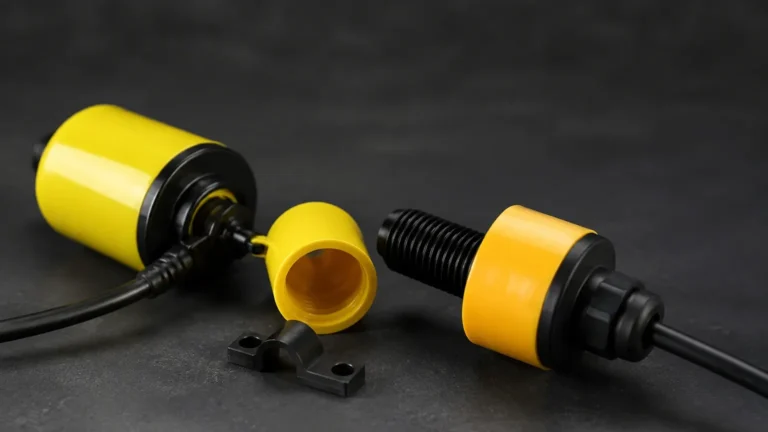
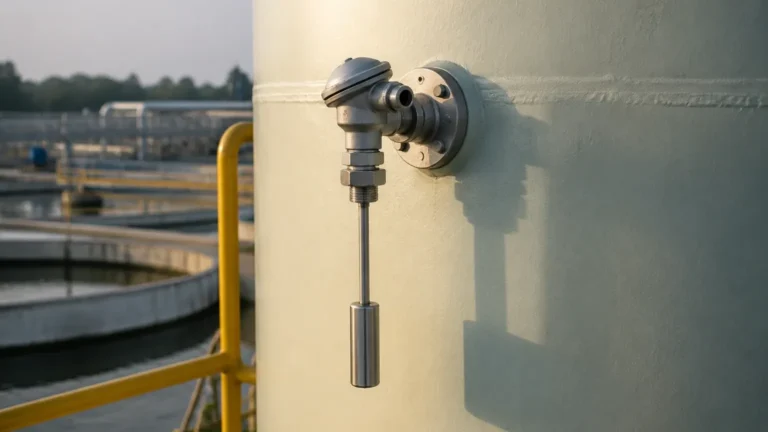
Float switches operate on the principle of buoyancy. A float containing a magnet moves with the liquid level. When the float reaches a predetermined point, the magnetic field actuates a reed switch located inside the stationary stem.
* Best for: Clean liquids, water tanks, and simple oil-level monitoring.
* Advantage: Low cost and requires no external power for the sensing element.
2. Vibrating Tuning Fork Switches
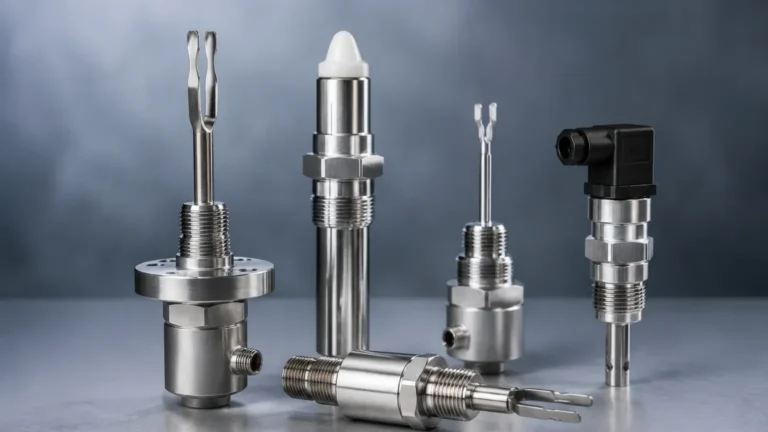
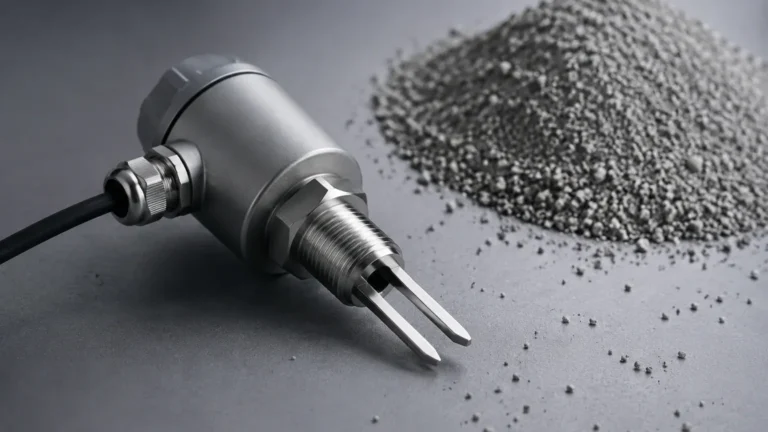
These switches utilize a piezoelectric crystal to vibrate a metal fork at its natural resonant frequency. When the fork is immersed in a liquid or solid, the frequency changes. The electronic circuit detects this shift and triggers the switch output.
* Best for: High-viscosity liquids, powders, and applications where turbulence is present.
* Advantage: Unaffected by bubbles, foam, or suspended solids.
3. Capacitance Level Switches
Capacitance switches measure the change in electrical capacitance between a probe and the tank wall (or a reference probe). As the level rises, the dielectric constant of the medium replaces that of air, changing the measured capacitance.
* Best for: Corrosive chemicals and non-conductive liquids.
* Advantage: No moving parts, making them suitable for high-pressure environments.
4. Conductive Level Switches
These rely on the electrical conductivity of the liquid. When the liquid touches the electrode, a low-voltage circuit is completed between the probe and the tank wall (or a ground electrode).
* Best for: Highly conductive liquids like acids, lye, and water-based solutions.
* Advantage: Extremely robust and simple for multi-point detection in a single probe.
Evaluating Level Switch Manufacturers in Pune
Pune's industrial zones, including Hadapsar, Bhosari, and the Talegaon MIDC, are home to numerous instrumentation providers. When vetting level switch manufacturers in pune, technical buyers should look beyond the price point and focus on engineering support and compliance.
Material Science and Compatibility
In the chemical and pharmaceutical sectors prevalent in Pune, material compatibility is paramount. Manufacturers should offer a range of wetted parts, including Stainless Steel 316L, Polypropylene (PP), Polyvinylidene Fluoride (PVDF), and PTFE coatings. A manufacturer’s ability to provide Material Test Reports (MTR) is a key indicator of quality control.
Customization and OEM Services
Many Pune-based manufacturers specialize in OEM services, allowing for custom stem lengths, specific flange sizes (ANSI, DIN, or JIS), and specialized electrical connections (M12, DIN 43650, or integral cables). For global projects, ensuring that the manufacturer can meet international standards such as IP67/IP68 for ingress protection or ATEX/IECEx for hazardous areas is vital.
Technical Support and Calibration
Proximity to the manufacturer allows for faster site visits and troubleshooting. However, the depth of their technical team is what matters most. Reliable manufacturers provide detailed wiring diagrams, sensitivity adjustment guides for tuning fork models, and assistance with calculating the dielectric constant for capacitance-based systems.
Selection Table: Choosing the Right Technology
| Technology | Suitable Media | Max Pressure (Typical) | Max Temp (Typical) | Key Limitation |
| :— | :— | :— | :— | :— |
| Float | Clean Water, Oils | 20 bar (2.0 MPa) | 150°C | Prone to fouling in dirty liquids |
| Tuning Fork | Slurries, Powders | 40 bar (4.0 MPa) | 150°C | Material buildup between forks |
| Capacitance | Chemicals, Solids | 60 bar (6.0 MPa) | 200°C | Requires calibration for different media |
| Conductive | Acids, Effluents | 10 bar (1.0 MPa) | 100°C | Only works with conductive liquids |
| Optical | Clear Liquids | 25 bar (2.5 MPa) | 125°C | Sensitive to coating and ambient light |
Installation Considerations and Best Practices
Correct installation is as important as selecting the right switch. Even the highest quality level switches from top manufacturers can fail if improperly mounted.
1. Avoid Turbulence: Do not install switches directly under a fill pipe or near an agitator. If turbulence is unavoidable, use a stilling well or a switch with a built-in time delay (e.g., tuning fork models).
2. Mounting Orientation: Float switches are typically side-mounted or top-mounted. For side-mounting, ensure the pivot point is clear of any internal tank structures. For top-mounting, ensure the stem is perfectly vertical to prevent the float from sticking.
3. Cable Protection: In the humid and often dusty industrial environments of Maharashtra, ensure that cable glands are tightened to maintain the IP rating. Use conduit for outdoor installations to protect against UV degradation and mechanical damage.
4. Nozzle Length: For tuning fork and ultrasonic switches, the nozzle length must be kept short enough so that the sensing element extends fully into the tank. If the sensor is recessed inside a long nozzle, it may give a false high reading due to material buildup or internal reflections.
Limitations and Common Risks
While level switches are robust, they are not universal solutions. Engineers must account for the following risks:
* Coating and Buildup: In applications involving wastewater or sticky resins, material can accumulate on the probe. Tuning forks and capacitance switches are particularly sensitive to this. Selecting a switch with "active shield" technology or a self-cleaning vibration frequency can mitigate this risk.
* Specific Gravity Changes: Float switches are calibrated for a specific liquid density. If the process fluid changes (e.g., switching from water to a light oil), the float may no longer function correctly.
* Electromagnetic Interference (EMI): In large industrial plants with heavy motors and VFDs, electronic switches (Capacitance/Ultrasonic) can suffer from signal noise. Ensure the manufacturer provides shielded cables and proper grounding instructions.
Why Quality Matters in Point Level Detection
In the context of Pune's rapid industrial expansion, the cost of a level switch is negligible compared to the cost of a system failure. A failed high-level switch in a chemical storage tank can lead to environmental contamination, regulatory fines, and significant cleanup costs. Similarly, a failed low-level switch can cause a pump to run dry, leading to mechanical seal failure and expensive downtime.
Global manufacturers like Welk provide a bridge between cost-effective production and high-end engineering standards. By offering a comprehensive range of Level Switches—including radar, ultrasonic, and magnetic variants—they ensure that the specific needs of the water treatment, oil and gas, and automation industries are met with precision.
Frequently Asked Questions (FAQ)
Q: How do I choose between a mechanical float switch and an electronic tuning fork switch?
A: Choose a float switch for simple, clean liquid applications where budget is a primary concern. Choose a tuning fork switch if the liquid is dirty, turbulent, or if you need a solid-state device with no moving parts for higher reliability.
Q: Can level switches be used for continuous level measurement?
A: No, level switches are designed for point-level detection (on/off). For continuous measurement (0-100%), you would require a level transmitter, such as a radar or hydrostatic pressure sensor.
Q: What is the significance of the "Fail-Safe" mode?
A: Fail-safe refers to the state the switch enters if power is lost. A "Fail-Safe High" switch will signal a full tank if the power fails, preventing an accidental overfill during a blackout.
Q: Are Pune-manufactured switches compatible with international PLC systems?
A: Yes, most modern switches provide standard outputs such as PNP/NPN transistors, SPDT relays, or 4-20mA loops (for some electronic versions), making them compatible with PLCs from Siemens, Rockwell, ABB, and others.
Conclusion
Navigating the market for level switch manufacturers in pune requires a balance of local logistical advantages and global quality standards. By understanding the underlying measurement principles—whether buoyancy, vibration, or capacitance—and adhering to strict installation guidelines, industrial operators can ensure long-term process stability. As Pune continues to grow as a center for industrial excellence, the integration of high-quality level instrumentation remains a cornerstone of safe and efficient manufacturing.