What Is Level Switches
What Is Level Switches
In the field of industrial automation and process control, ensuring that tanks and vessels do not overflow or run dry is a critical safety and operational requirement. To achieve this, engineers rely on point-level detection devices. If you are researching "what is level switches," it is essential to understand that these instruments are sensors designed to detect the presence or absence of a liquid, powder, or granulated solid at a specific height. Unlike continuous level transmitters that provide a constant reading of the fluid level, a level switch acts as a binary trigger—providing an "on" or "off" signal when the material reaches a predetermined point.
Level Switches are fundamental components in high-level alarm systems, low-level protection for pumps, and automated filling processes. As a professional manufacturer, Welk provides a variety of these instruments to suit diverse industrial environments, ranging from simple water treatment facilities to complex chemical processing plants.
Measurement Principles of Level Switches
Understanding the underlying physics of different level switches is the first step in selecting the right tool for an application. Each technology interacts with the process media differently, making some more suitable for viscous liquids and others for dry bulk solids.
Buoyancy (Float Switches)
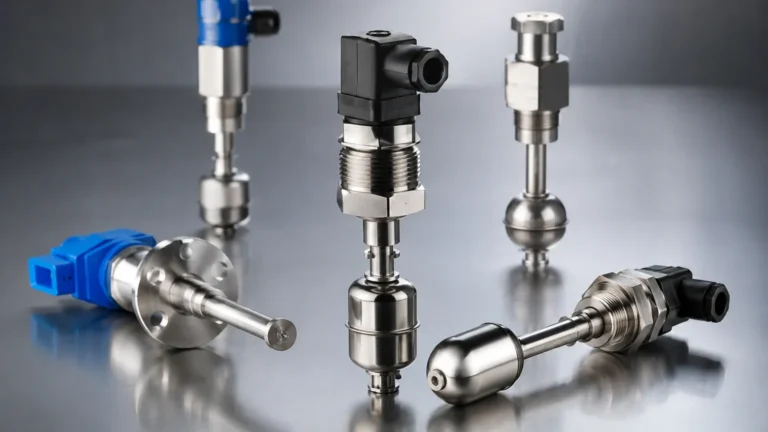
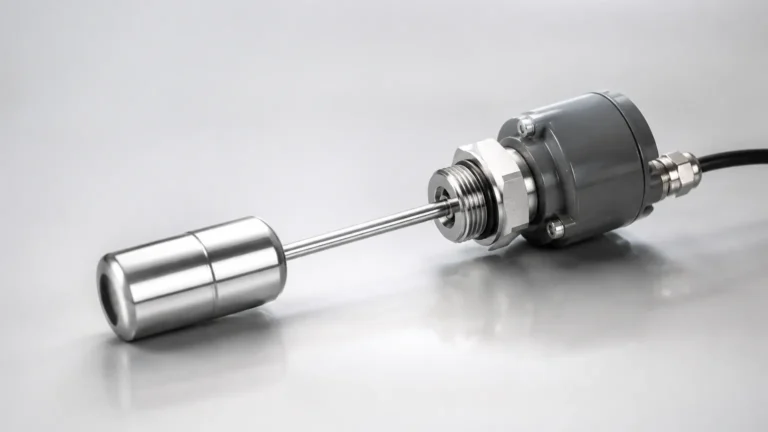
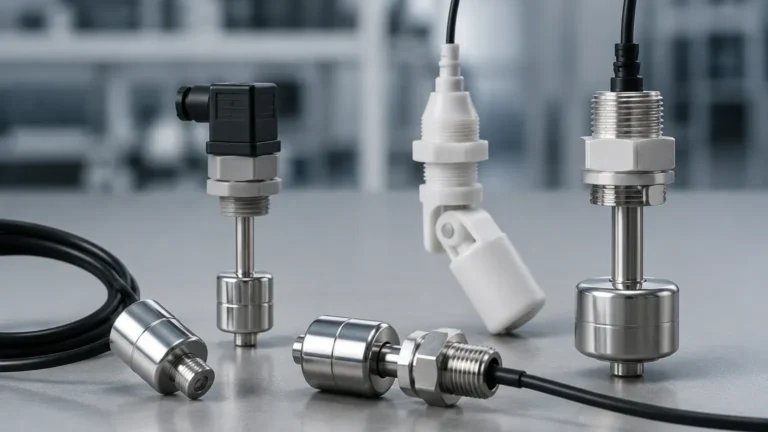
Float switches are among the most common and cost-effective methods for point-level detection. They operate on the principle of buoyancy. A float containing a magnet moves with the liquid level. When the float reaches a specific position, the internal magnet actuates a reed switch or a microswitch. This mechanical movement is simple and reliable for clean liquids like water or light oils.
Vibrating (Tuning Fork) Principle
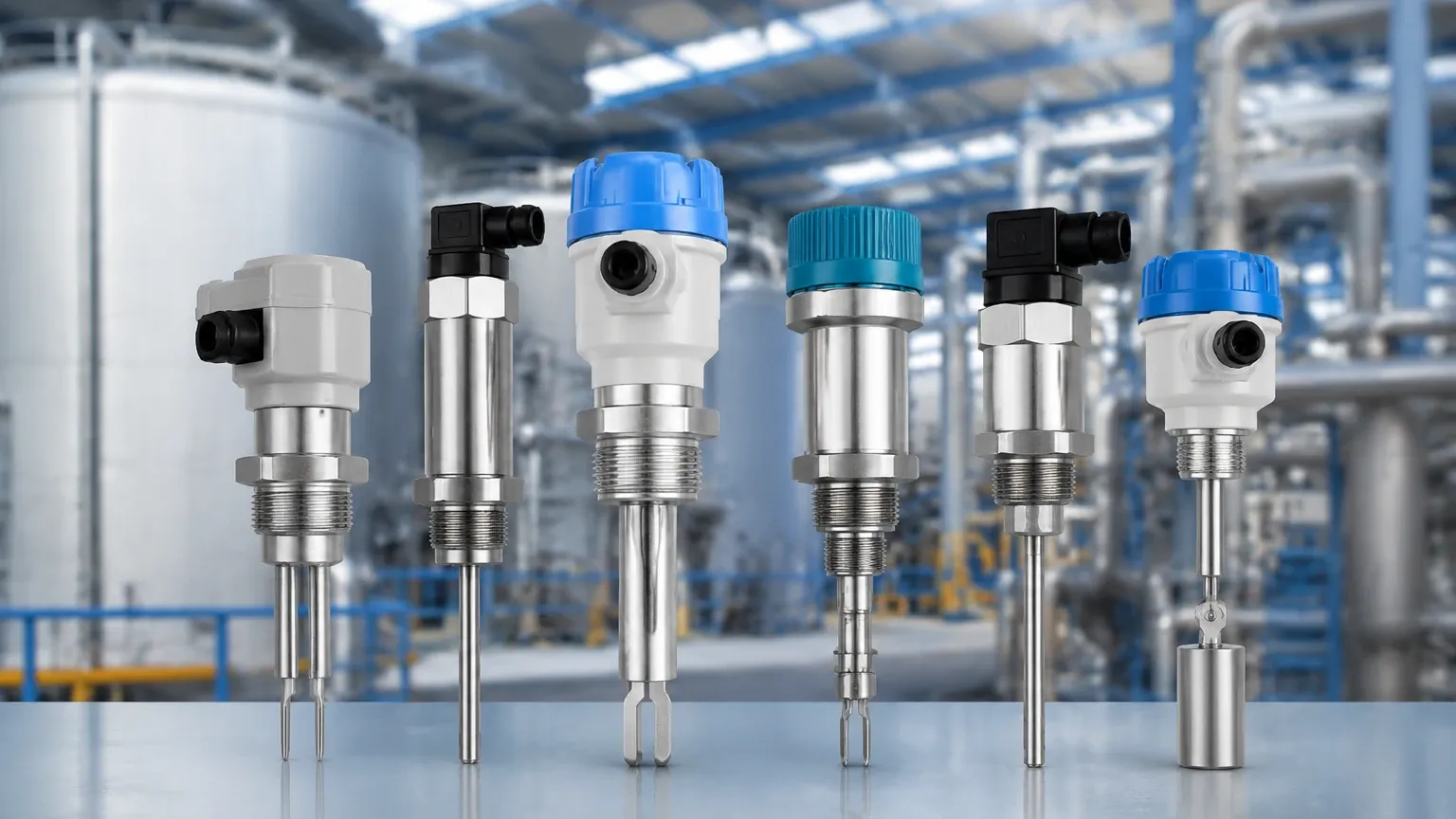
Vibrating level switches, often referred to as tuning forks, utilize a piezoelectric crystal to vibrate the fork at its natural frequency in the air. When the fork is immersed in a liquid or solid, the frequency of vibration changes or stops. The internal electronics detect this frequency shift and trigger the switch output. This technology is highly resistant to changes in pressure, temperature, and dielectric properties, making it ideal for various industrial fluids.
Capacitance Principle
Capacitive level switches measure the change in electrical capacitance between two electrodes (or one electrode and the tank wall). As the process media covers the probe, the dielectric constant changes, causing a shift in capacitance. This change is converted into a switching signal. These are excellent for detecting levels in powders, granules, and liquids, though they may require calibration based on the specific material's dielectric properties.
Rotary Paddle Principle
Specifically designed for dry bulk solids, rotary paddle switches use a low-speed motor that rotates a paddle. When the material reaches the paddle, it creates resistance, causing the motor to tilt and activate a switch. Once the material level drops, a spring returns the motor to its original position, and rotation resumes. This is a robust solution for silos containing grain, sand, or plastic pellets.
Ultrasonic and Optical Principles
Ultrasonic switches use high-frequency sound waves to detect the presence of media. A gap in the sensor is filled with liquid, allowing the sound waves to pass through and trigger the switch. Optical switches, on the other hand, use an infrared LED and a phototransistor. When the sensor tip is immersed in liquid, the light is refracted into the liquid rather than reflecting back to the transistor, signaling a level change.
Technical Selection Criteria
When determining what is level switches' best fit for your facility, several technical parameters must be evaluated. Selecting the wrong switch can lead to false alarms, sensor failure, or dangerous overflows.
Media Characteristics
* Viscosity: High-viscosity fluids (like heavy oils or syrups) can coat mechanical parts, causing float switches to stick. In these cases, vibrating forks or non-contact sensors are preferred.
* Corrosivity: Chemical applications require wetted parts made from stainless steel (316L), PTFE, or PP (Polypropylene).
* Density: Float switches must be calibrated to the specific gravity of the liquid. If the liquid is too light, the float will not rise.
* Dielectric Constant: Critical for capacitive switches; materials with low dielectric constants (like certain oils) require more sensitive probes.
Process Conditions
* Pressure: Standard switches might handle up to 10 bar (145 psi), but high-pressure vessels may require specialized housings capable of 40 bar (580 psi) or more.
* Temperature: Standard operating ranges often span from -40°C to 150°C (-40°F to 302°F). For cryogenic or high-heat furnace applications, specialized cooling fins or remote electronics are necessary.
* Turbulence and Foam: Agitators and splashing can cause "chatter" in float switches. Vibrating forks or time-delay electronics can help mitigate false triggers caused by foam or surface waves.
Comparison Table: Level Switch Technologies
| Technology | Suitable Media | Pros | Cons |
| :— | :— | :— | :— |
| Float | Clean Liquids | Low cost, simple installation | Prone to sticking, mechanical wear |
| Vibrating Fork | Liquids, Powders | Reliable, no calibration needed | Can be affected by heavy coating |
| Capacitance | Liquids, Solids | No moving parts, versatile | Requires dielectric constant > 1.5 |
| Rotary Paddle | Dry Bulk Solids | Robust for heavy materials | Moving parts, mechanical wear |
| Ultrasonic | Clean Liquids | Non-contact options available | Affected by bubbles or heavy foam |
Installation and Engineering Considerations
Proper installation is as important as selecting the right technology. Even the highest quality Welk level switch will fail if positioned incorrectly within the process vessel.
1. Orientation: Most switches can be mounted either horizontally (from the side of the tank) or vertically (from the top). Vertical mounting is often preferred for low-level protection to ensure the probe remains submerged as long as possible.
2. Avoid Dead Zones: Ensure the switch is not placed directly under a fill pipe. The falling stream of material can cause premature wear or false triggering.
3. Nozzle Length: For side-mounted switches, the nozzle length should be kept short to prevent material from building up inside the nozzle, which might prevent the sensor from "seeing" the actual tank level.
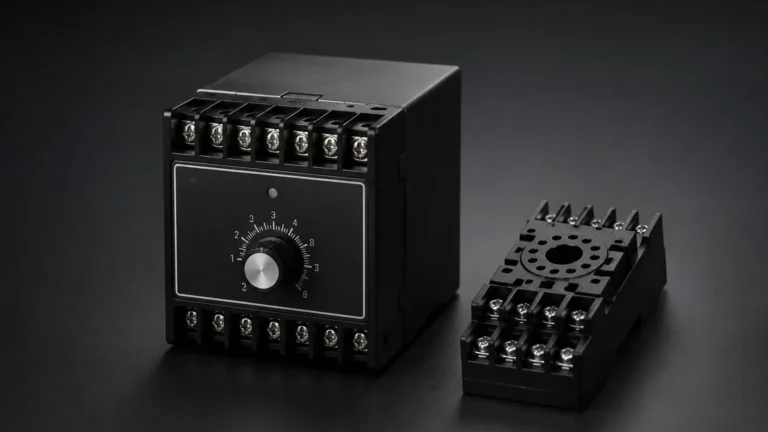
4. Wiring and Power: Most industrial level switches offer SPDT (Single Pole Double Throw) or DPDT (Double Pole Double Throw) relay outputs. Ensure the power supply matches the instrument (e.g., 24V DC or 110/220V AC).
5. Grounding: For capacitive and electronic switches, proper grounding to the metal tank wall or a grounding rod is essential to prevent electrical interference.
Limitations and Common Risks
While level switches are indispensable, they are not universal solutions. Engineers must be aware of the following limitations:
* Point Detection vs. Continuous Monitoring: A level switch cannot tell you if a tank is 40% or 60% full; it only knows if it has reached the 50% mark. If you need volume data, a radar or ultrasonic transmitter is required.
* Material Buildup: In sticky or crystallizing media, material can accumulate on the sensor. While some vibrating forks have "self-cleaning" properties due to their vibration, heavy buildup will eventually cause a false positive.
* Mechanical Failure: Any device with moving parts, such as float or rotary paddle switches, has a finite lifespan. Regular inspection intervals are necessary to ensure the mechanical linkages have not seized due to corrosion or sediment.
Maintenance and Troubleshooting
To maintain the integrity of a safety system, level switches should be part of a routine maintenance schedule. For float switches, this involves manually lifting the float to ensure the relay clicks. For electronic switches, many modern units include a "test" button or a magnetic test point that simulates a high-level condition without needing to fill the tank.
If a switch fails to trigger, check for:
* Power Supply Issues: Verify the voltage at the terminals.
* Coating: Clean the probe or fork of any residual material.
* Relay Contact Wear: Over time, the internal relay contacts may weld together if switching high-inductive loads without a snubber circuit.
Frequently Asked Questions (FAQs)
Q: Can a level switch be used for pump control?
A: Yes. By using two switches (one for high level and one for low level) connected to a controller or PLC, you can automate a pump to turn on when the tank is full and off when it is empty.
Q: What is the difference between N.O. and N.C. contacts?
A: N.O. (Normally Open) means the circuit is open when the switch is not activated. N.C. (Normally Closed) means the circuit is closed. Most industrial switches allow you to choose the configuration based on whether you want a "fail-safe" logic (e.g., the circuit breaks if power is lost).
Q: Are level switches suitable for hazardous areas?
A: Yes, but you must select a switch with the appropriate certifications, such as ATEX or IECEx for explosive atmospheres. These often use intrinsically safe barriers or explosion-proof housings.
Q: How do I choose between a vibrating fork and a float switch?
A: Choose a float switch for simple, clean water applications where budget is a primary concern. Choose a vibrating fork for more demanding applications involving turbulence, varying densities, or where mechanical reliability is paramount.
By understanding what is level switches' role in your specific process, you can implement a more reliable and safer automation strategy. Whether you are managing water treatment or chemical storage, selecting the appropriate point-level technology ensures long-term operational efficiency.