Level Switch 120v
Level Switch 120v
In the landscape of industrial automation and process control, point level detection remains a fundamental requirement for safety, efficiency, and inventory management. A level switch 120v refers to a point level sensor designed to operate on a 120V AC power supply, a standard voltage for control circuits in North America and many industrial facilities worldwide. These devices are critical for preventing tank overflows, protecting pumps from dry running, and triggering automated filling or emptying sequences.
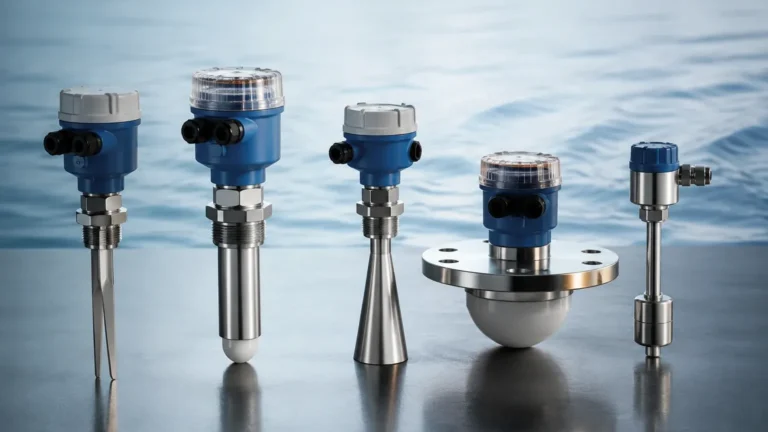
Selecting the correct Level Switches involves understanding the physical properties of the medium being measured, the environmental conditions of the installation site, and the electrical requirements of the existing control architecture. This guide explores the various technologies available for 120V level switching, their operating principles, and the engineering considerations necessary for successful deployment.
Measurement Principles for Point Level Detection
Level switches operate on several distinct physical principles. The choice of technology depends heavily on whether the medium is a liquid, a slurry, or a solid (powder/granules), as well as its conductivity, density, and viscosity.
Mechanical Float Switches
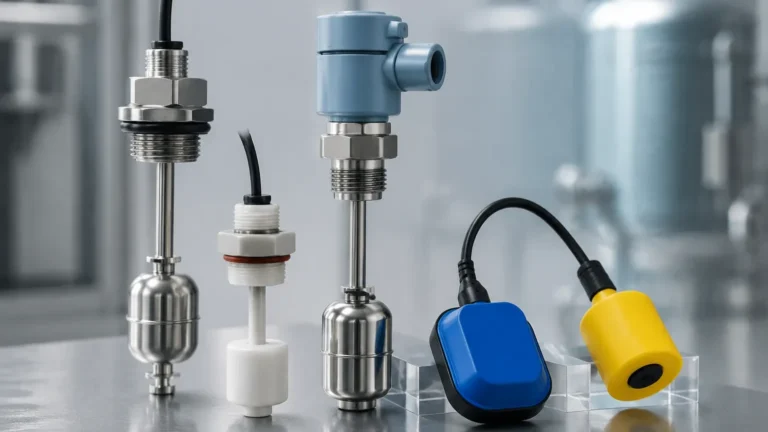
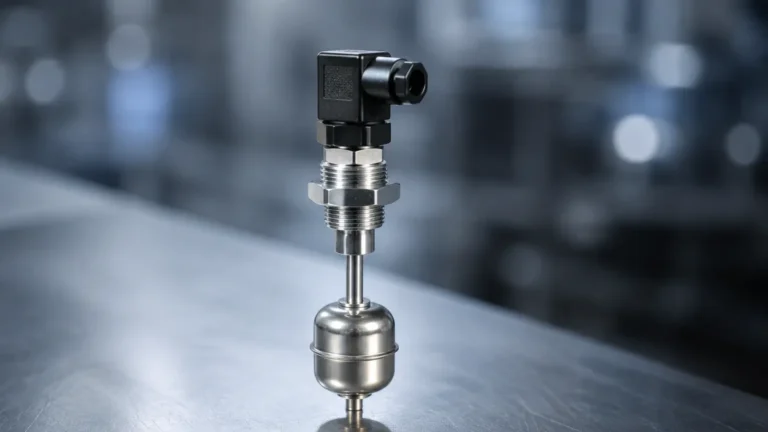
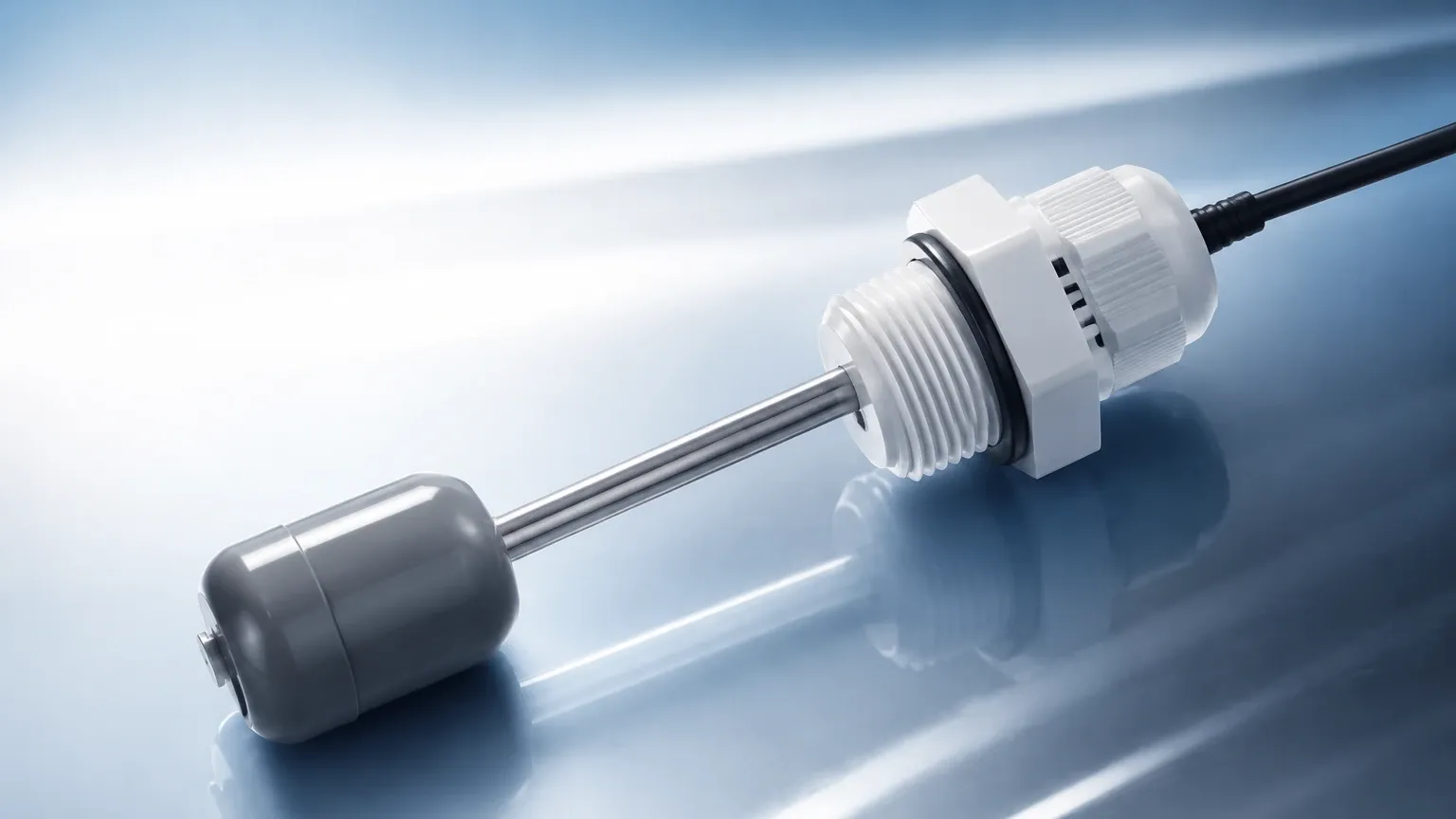
The most traditional form of level detection is the float switch. It relies on the principle of buoyancy. A float, typically made of stainless steel or plastic, moves with the liquid level. When the liquid reaches a predetermined point, the float’s movement triggers a mechanical microswitch or a reed switch. In a level switch 120v configuration, the internal contacts must be rated to handle the 120V AC load, which often allows them to drive small pumps or solenoid valves directly without the need for an intermediate relay.
Vibrating Tuning Fork Switches
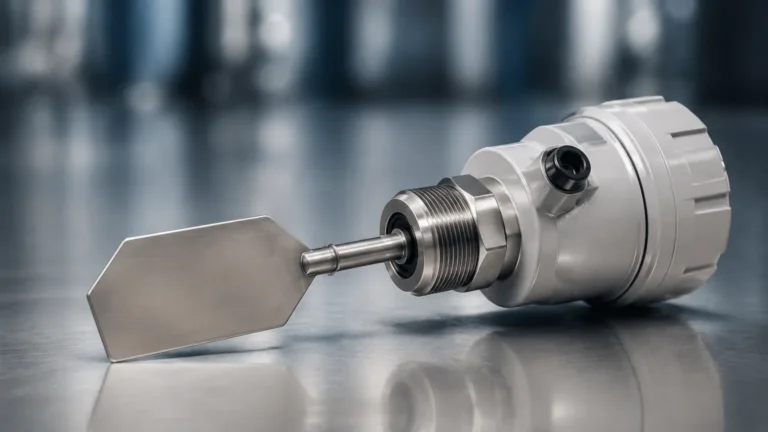
Vibrating level switches utilize a tuning fork-shaped sensing element that is piezo-electrically energized to vibrate at its natural resonance frequency in air. When the fork is covered by a liquid or solid, the frequency changes or the vibration is damped. The electronics detect this shift and switch the output. These are highly reliable because they are largely unaffected by flow, bubbles, or foam.
Capacitance Level Switches
Capacitance switches treat the sensor probe and the tank wall (or a reference probe) as two plates of a capacitor. As the medium displaces air around the probe, the dielectric constant changes, altering the measured capacitance. This technology is versatile but requires calibration for the specific dielectric constant of the material being measured.
Ultrasonic Level Switches
Ultrasonic point level switches use a pair of piezoelectric crystals separated by a gap. One crystal transmits an ultrasonic signal, and the other receives it. When the gap is filled with liquid, the signal transmits efficiently; when filled with air, the signal is attenuated. This "gap-style" detection is excellent for clean liquids and is often used in high-level alarm applications.
Conductivity Level Switches
For conductive liquids like water or acids, conductivity switches use low-voltage electrodes. When the liquid touches the electrode, a small current flows through the medium to the tank wall or a ground electrode, completing the circuit. While the sensing circuit is low voltage for safety, the controller is often powered by 120V AC and provides a 120V relay output.
Technical Specifications and Selection Criteria
When specifying a level switch 120v, engineers must look beyond the input voltage. The following table summarizes key selection criteria for common industrial level switch types.
| Technology | Typical Media | Viscosity Limit | Pressure Range | Temperature Range |
| :— | :— | :— | :— | :— |
| Float Switch | Clean Liquids | Low (< 500 cP) | Up to 40 bar (4.0 MPa) | -40°C to 150°C |
| Vibrating Fork | Liquids/Solids | Up to 10,000 cP | Up to 64 bar (6.4 MPa) | -50°C to 250°C |
| Capacitance | Liquids/Solids | Moderate | Up to 100 bar (10.0 MPa) | -100°C to 400°C |
| Ultrasonic (Gap) | Clean Liquids | Low (< 100 cP) | Up to 60 bar (6.0 MPa) | -40°C to 150°C |
| Conductivity | Conductive Liquids | Low | Up to 20 bar (2.0 MPa) | -20°C to 100°C |
Electrical Considerations
For a 120V application, the output type is critical.
1. Relay Output (SPDT/DPDT): Most 120V level switches feature a Single Pole Double Throw (SPDT) or Double Pole Double Throw (DPDT) relay. This allows the switch to be wired as "Normally Open" (NO) or "Normally Closed" (NC).
2. Contact Rating: Ensure the contact rating (measured in Amps) exceeds the inrush current of the device being controlled. For example, a 120V switch with a 5A relay can directly control a small solenoid valve, but a high-horsepower pump will require an external motor starter.
3. Wiring Distance: 120V AC signals are robust against electrical noise but are subject to voltage drop over very long distances (e.g., over 300 meters or 1,000 feet).
Installation and Mounting Guidelines
Proper installation is essential to ensure the longevity and accuracy of a level switch 120v. Incorrect mounting is the leading cause of premature failure in point level instrumentation.
Mounting Orientation
* Top Mounting: Common for float switches and ultrasonic gap switches. Ensure the probe length is correctly calculated to reach the desired switching point.
* Side Mounting: Ideal for high or low-level alarms where the switch is installed through the side wall of the tank. Vibrating forks should be oriented so that the tines are vertical (side-by-side) to prevent material buildup between the forks.
Turbulence and Agitation
If the tank contains an agitator or significant turbulence from an inlet pipe, the sensor should be protected. For float switches, a stilling well (a pipe with vent holes) can be installed to dampen the liquid movement. For vibrating forks, ensure the tines are not placed directly in the path of a high-velocity fill stream.
Wiring and Conduit
Since the device operates at 120V, electrical safety codes must be strictly followed:
* Conduit Seals: Use proper conduit seals to prevent moisture or hazardous gases from entering the electronics housing.
* Grounding: Ensure the instrument housing is properly grounded to the facility's electrical ground system.
* Drip Loops: When wiring, create a drip loop in the cable before it enters the conduit or cable gland to prevent rainwater from running down the cable and into the sensor.
Application Scenarios for 120V Level Switches
Water and Wastewater Treatment
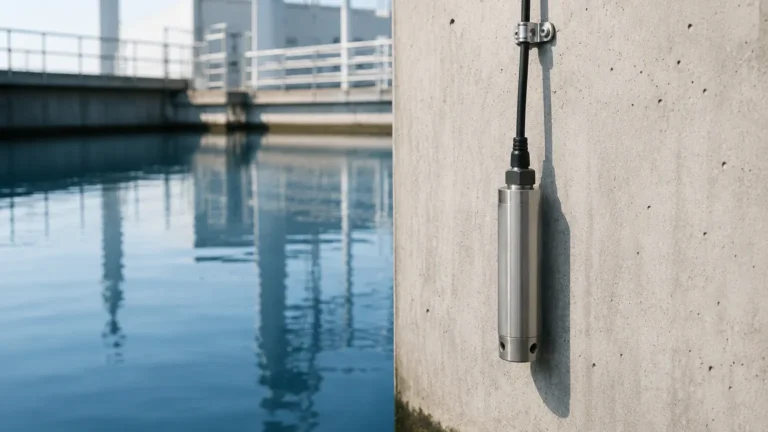
In pump lift stations, 120V level switches are used to start and stop submersible pumps. Because these environments are often damp and prone to surges, switches with high ingress protection (IP68) and robust relay contacts are preferred. Float switches are the standard here due to their simplicity and cost-effectiveness.
Chemical Processing
For corrosive chemicals, a level switch 120v must be constructed from compatible materials such as PTFE (Teflon), PVDF, or high-grade stainless steel (316L). Capacitance or ultrasonic switches are often preferred because they can be designed with no moving parts, reducing the risk of mechanical failure due to corrosion.
Food and Beverage
Hygiene is the priority in food processing. Level switches must feature "tri-clamp" or other sanitary fittings and be capable of withstanding Clean-in-Place (CIP) cycles, which involve high-temperature caustic washes. Vibrating tuning forks are widely used here because they can detect the interface between liquid and foam, which is common in fermenters and mixing tanks.
Limitations and Potential Risks
While 120V level switches are versatile, there are limitations to consider:
1. Coating and Buoyancy: In applications with sticky or viscous fluids, material can build up on the sensor. A float switch may become stuck, or a capacitance probe may give a false reading. In such cases, a vibrating fork with "active shield" technology or a self-cleaning ultrasonic sensor is a better choice.
2. Hazardous Areas: If the tank contains flammable liquids or gases, a standard 120V switch may pose an explosion risk. In these environments, you must use an intrinsically safe (IS) barrier with a low-voltage sensor or an explosion-proof (Ex d) housing rated for the specific Class and Division of the area.
3. Contact Arcing: Repeated switching of inductive loads (like motor coils) at 120V can cause arcing across the relay contacts, eventually leading to contact welding or failure. Using an RC snubber circuit or a varistor can help suppress these arcs and extend the life of the switch.
Frequently Asked Questions (FAQ)
Q: Can I use a 120V level switch for a 240V application?
A: Generally, no. While the mechanical contacts might be rated for higher voltages, the internal electronics that power the sensor (in the case of ultrasonic or vibrating types) are voltage-specific. Always check the manufacturer's data sheet for the allowed voltage range.
Q: What is the difference between NPN/PNP and Relay outputs?
A: NPN and PNP are transistor outputs typically used with 24V DC systems for high-speed switching and PLC integration. A level switch 120v almost always uses a relay output, which provides a physical contact closure capable of handling AC loads.
Q: How do I test a 120V level switch?
A: For most mechanical switches, you can manually lift the float or damp the vibration of the fork while measuring continuity across the output terminals with a multimeter. For 120V powered units, ensure the power is on and observe the status LED (if equipped) while simulating a level change.
Q: Is a stilling well necessary for all float switches?
A: No. A stilling well is only necessary if there is significant surface turbulence or if the tank has an agitator that could physically damage the float or cause it to bounce erratically.
Conclusion
The implementation of a level switch 120v is a practical solution for many industrial point level requirements. By matching the measurement principle to the specific properties of the medium and adhering to rigorous installation standards, engineers can ensure reliable operation and long-term stability. For a comprehensive range of options tailored to specific industrial needs, including various mounting and material configurations, you can Review product options and application support to find the ideal solution for your process environment.