Level Sensor Lpg
Level Sensor Lpg
Liquefied Petroleum Gas (LPG), primarily composed of propane and butane, presents unique challenges for industrial level measurement. Because LPG is stored under high pressure to maintain its liquid state, and because it is highly flammable and volatile, selecting the correct level sensor LPG solution is a matter of both operational efficiency and stringent safety compliance.
In industrial environments such as chemical processing plants, refineries, and large-scale distribution centers, accurate level monitoring prevents hazardous overfills, ensures steady supply chains, and optimizes storage capacity. This guide examines the measurement principles, technology options, and engineering considerations for implementing level sensing systems in LPG applications.
Understanding the LPG Environment
Before selecting a level sensor LPG, it is essential to understand the physical properties of the medium. LPG is typically stored in pressurized vessels—either horizontal "bullets" or large spherical tanks.
1. Low Dielectric Constant: LPG has a low dielectric constant (εr), typically ranging from 1.6 to 1.9. This affects how electromagnetic waves, such as those used in radar sensors, reflect off the liquid surface.
2. High Pressure: Storage pressures can range from 2 bar to 18 bar (0.2 MPa to 1.8 MPa) depending on the ambient temperature and the specific propane-butane mix.
3. Vapor Space Dynamics: The space above the liquid is filled with pressurized gas. Changes in temperature cause the gas to condense or the liquid to boil, creating a turbulent interface or heavy misting.
4. Hazardous Area Classification: Due to the explosive nature of LPG, all instrumentation must carry appropriate explosion-proof or intrinsically safe certifications, such as ATEX, IECEx, or UL/CSA.
Measurement Principles for LPG
Several technologies are utilized for LPG level measurement, each operating on different physical principles. Choosing the right one depends on the tank geometry, required accuracy, and budget.
Radar Level Measurement (Non-Contact and Guided)
Radar technology is widely considered the gold standard for LPG. It uses high-frequency electromagnetic pulses to measure the distance to the liquid surface.
* Non-Contact Radar: These sensors emit pulses (often at 26GHz or 80GHz) that reflect off the LPG surface. Because LPG has a low dielectric constant, 80GHz radar is preferred as it provides a more focused beam and stronger signal return. However, in very low-dielectric applications, a stilling well (a vertical pipe inside the tank) is often used to concentrate the signal and eliminate surface turbulence.
* Guided Wave Radar (GWR): GWR uses a physical probe (rod or cable) to guide the microwave pulse. This is highly effective for LPG because the probe ensures the signal reaches the surface and returns, even with low-reflectivity liquids. GWR is less affected by the high-pressure vapor phase than non-contact radar.
Magnetic Level Gauges (MLG)
Magnetic level gauges are a robust, mechanical solution. A bypass chamber is mounted to the side of the LPG tank. Inside the chamber, a float containing a high-strength magnet moves up and down with the liquid level. Outside the chamber, a visual indicator (flaps or a follower) shows the level.
For electronic integration, a reed-chain transmitter or a magnetostrictive sensor can be mounted to the outside of the chamber. This provides a continuous 4-20mA signal without the sensor ever coming into contact with the pressurized LPG.
Hydrostatic and Differential Pressure
This method measures the pressure exerted by the liquid column. In a pressurized LPG tank, a differential pressure (DP) transmitter is required. One side measures the total pressure at the bottom (liquid + gas), and the other side measures the gas pressure at the top. The transmitter subtracts the gas pressure to determine the liquid level.
While cost-effective, hydrostatic measurement is sensitive to density changes. Since LPG density varies significantly with temperature, temperature compensation is necessary for high accuracy.
The Role of Level Switches in LPG Safety
While continuous level sensors provide inventory data, safety protocols usually require independent point-level detection. Level Switches act as the primary safety barrier for overfill prevention (High-High alarm) and pump dry-run protection (Low-Low alarm).
In LPG applications, two types of switches are most common:
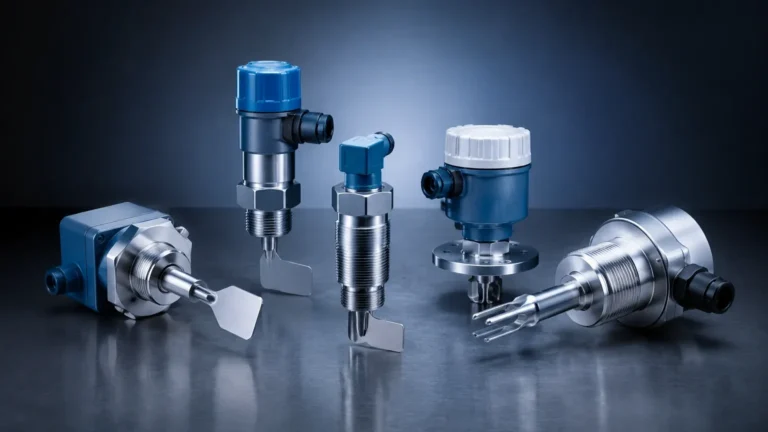
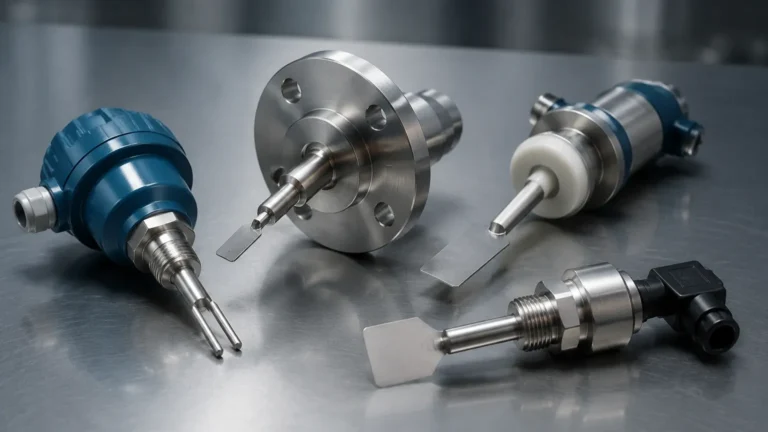
1. Vibrating Fork Level Switches: These utilize a tuning fork that vibrates at its resonant frequency in air. When the fork is submerged in LPG, the frequency shifts. This shift is detected by the electronics and triggers a switch output. They are highly reliable because they have no moving parts to wear out or clog.
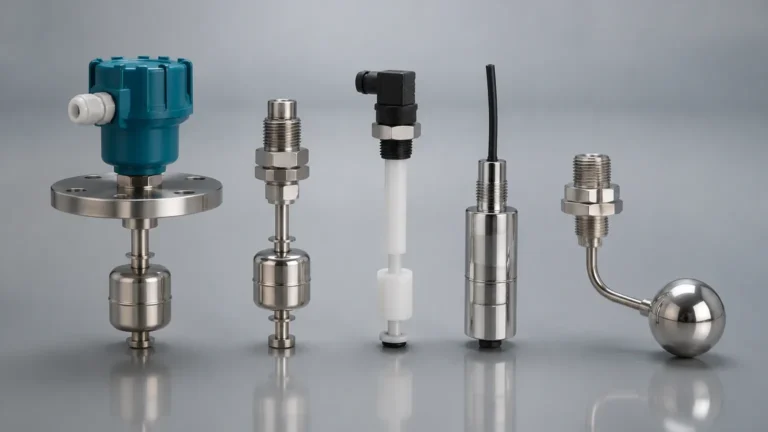
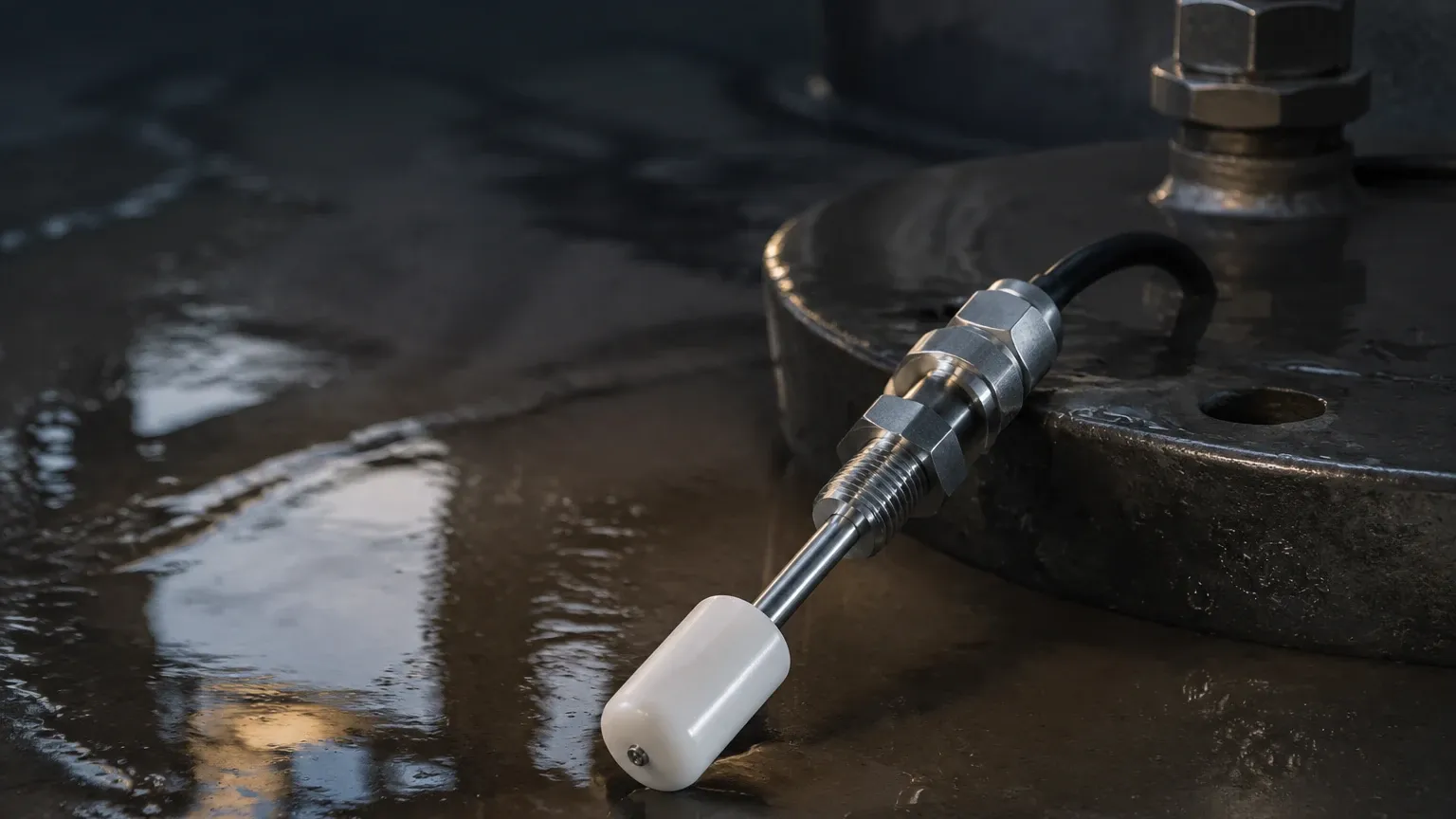
2. Magnetic Float Switches: Often used in bypass chambers or as side-mounted units, these use a magnetic float to actuate a reed switch. In LPG service, these must be designed with pressure-rated floats (often stainless steel or titanium) to prevent collapse under the high tank pressure.
For LPG storage, it is standard engineering practice to use a "2nd-out-of-3" (2oo3) or "1-out-of-2" (1oo2) voting logic for safety-instrumented systems (SIS), requiring high-reliability level switches that meet SIL 2 or SIL 3 standards.
Technical Selection Criteria
When specifying a level sensor LPG, engineers must confirm several parameters to ensure the device will function correctly and safely.
| Feature | Radar (80GHz) | Guided Wave Radar | Magnetic Gauge | DP Transmitter |
| :— | :— | :— | :— | :— |
| Accuracy | ±1 mm to ±3 mm | ±2 mm | ±5 mm to ±10 mm | ±0.1% of span |
| Pressure Limit | Up to 40 bar+ | Up to 400 bar | Up to 160 bar | Up to 400 bar |
| Installation | Top-mounted | Top-mounted | Side-mounted (Bypass) | Side/Bottom |
| Contact | Non-contact | Contact (Probe) | Contact (Float) | Contact (Diaphragm) |
| Maintenance | Very Low | Low | Moderate | Moderate |
| Dielectric Sensitivity | High | Moderate | None | None |
Density and Temperature Compensation
LPG is highly sensitive to temperature. As temperature increases, the liquid expands and its density decreases. If you are using a hydrostatic sensor or a float-based system, the indicated level may change even if the mass of the LPG remains constant. For commercial custody transfer, it is often necessary to combine level measurement with temperature and pressure data to calculate the "standard volume" or mass.
Installation and Maintenance Best Practices
Correct installation is critical for the longevity and accuracy of a level sensor LPG.
Nozzle and Stilling Well Considerations
For non-contact radar, the mounting nozzle should be as short as possible to prevent signal interference. If the tank has internal structures like heating coils or baffles, a stilling well is recommended. The stilling well must have vent holes at the top to ensure the gas pressure is equalized and the liquid level inside the pipe matches the tank level.
Sealing and Pressure Integrity
LPG is a "searching" gas, meaning it can leak through very small imperfections. Sensors must use high-quality process seals. For radar, a gas-tight feedthrough (often using a glass-to-metal seal) is essential to prevent LPG from entering the electronic housing if the primary seal fails.
Grounding and Lightning Protection
Large LPG storage tanks are often located in open areas and are susceptible to lightning strikes. Ensure that all level sensors are properly grounded to the tank structure and that signal lines are equipped with surge protection to prevent damage to the control system.
Calibration and Testing
Level switches used for safety should be tested regularly. Many modern vibrating fork switches include a "test" function that allows the operator to simulate a high-level condition from the control room to verify the loop integrity without filling the tank.
Limitations and Risks
Despite advances in technology, certain risks remain when measuring LPG:
* Boiling Surfaces: During rapid unloading or temperature spikes, LPG can boil. This creates a layer of bubbles and foam that can absorb radar signals or cause float-based systems to "chatter."
* Paraffin Build-up: In some LPG grades, heavy hydrocarbons or paraffin can deposit on probes or floats. Regular inspection is required if the LPG purity is low.
* Float Collapse: If a magnetic float is not rated for the maximum possible surge pressure of the tank, it can implode, leading to a total loss of measurement.
Frequently Asked Questions (FAQs)
Q: Can I use an ultrasonic sensor for LPG?
A: Generally, no. Ultrasonic sensors rely on the speed of sound, which changes significantly based on the composition and pressure of the gas in the vapor space. Furthermore, high-pressure gas can absorb ultrasonic waves, leading to signal loss. Radar is a much more reliable choice for pressurized LPG.
Q: What is the best sensor for a small LPG tank (e.g., for a forklift station)?
A: For small, stationary tanks, a magnetic level gauge or a simple float-based level switch is often the most cost-effective solution. For digital monitoring, a small-form-factor radar or a capacitive sensor may be used.
Q: How do I handle the low dielectric constant of LPG with radar?
A: Use an 80GHz radar which has a higher sensitivity, or use Guided Wave Radar (GWR). If using non-contact radar, installing a stilling well will significantly improve the signal-to-noise ratio by providing a stronger reflection surface.
Q: Is a level sensor LPG the same as a flow meter?
A: No. A level sensor measures the current volume or height of the liquid in the tank. A flow meter measures the rate at which LPG is being moved through a pipe. Both are often used together for full inventory management.
Conclusion
Selecting a level sensor LPG requires a balance of precision, safety, and durability. While radar technology offers the highest accuracy and lowest maintenance for continuous monitoring, the importance of redundant Level Switches cannot be overstated in protecting personnel and assets. By understanding the dielectric properties, pressure constraints, and installation requirements of LPG, engineers can implement a measurement solution that ensures safe and efficient operations for years to come.
Welk provides a comprehensive range of industrial level measurement instruments, including specialized radar and magnetic solutions designed specifically for the rigors of LPG service. When selecting your next system, ensure all components are rated for the specific pressure and hazardous area requirements of your facility.