Level Position Switch
Level Position Switch
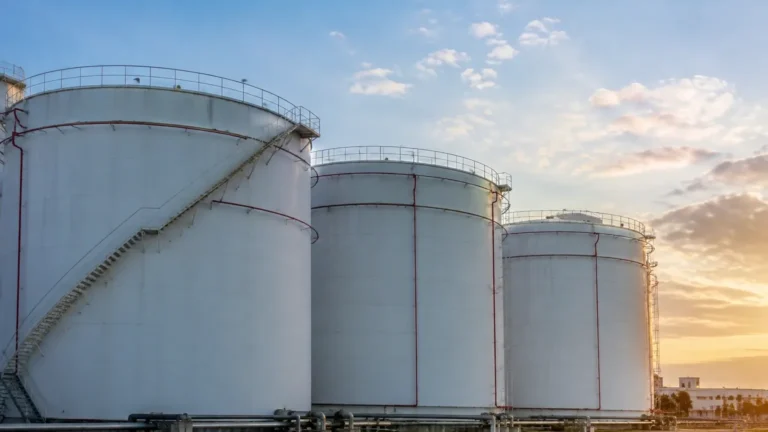
In the realm of industrial process control, the level position switch serves as a fundamental component for point-level detection. Unlike continuous level transmitters that provide a constant stream of data regarding the volume or height of a substance, a level position switch is designed to trigger a discrete electrical signal when a material reaches a specific, predetermined point in a tank, silo, or pipe. This functionality is critical for preventing tank overfills, protecting pumps from dry running, and automating the replenishment of process vessels.
Selecting the correct level position switch requires an understanding of the underlying measurement physics, the physical properties of the media, and the environmental conditions of the installation site. This guide provides a technical overview of the primary technologies used in level switching, selection criteria, and best practices for industrial implementation.
Measurement Principles of Level Position Switches
Before selecting a device, it is essential to understand how different sensing technologies interact with the process media. Each principle offers distinct advantages depending on whether the substance is a liquid, a solid, or a slurry.
1. Buoyancy-Based Switches (Float Switches)
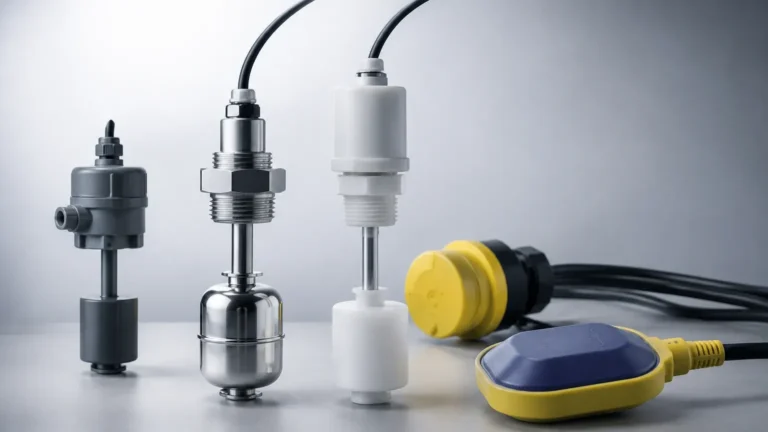
Float switches operate on Archimedes' principle. A float, typically made of stainless steel or plastic, contains a magnet and moves with the liquid level. When the float reaches a specific height, the internal magnet actuates a reed switch or a microswitch. These are among the most common types of Level Switches due to their simplicity and lack of power requirement for the sensing element itself.
2. Vibrating Point Level Switches (Tuning Forks)
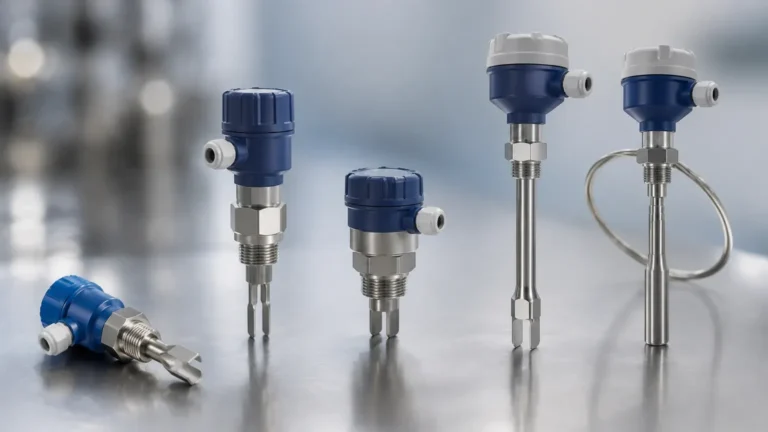
These switches utilize a sensing element shaped like a tuning fork, which is vibrated at its resonant frequency by piezoelectric crystals. When the fork is immersed in the media, the frequency of vibration changes or is dampened. The internal electronics detect this frequency shift and convert it into a switching signal. Tuning forks are highly versatile and are often used for both liquids and fine-grained solids.
3. Capacitance Level Switches
Capacitance switches measure the change in electrical capacitance between the sensor probe and the vessel wall (or a reference electrode). As the media covers the probe, the dielectric constant changes, increasing the measured capacitance. This technology is effective for powders, granules, and liquids, though it may require calibration to account for the specific dielectric properties of the material.
4. Conductive Level Switches
Used exclusively for conductive liquids, these switches utilize a low-voltage electrode. When the liquid touches the electrode, a circuit is completed between the probe and the tank wall (or a ground probe). This is a cost-effective solution for water-based applications but cannot be used with oils or non-conductive chemicals.
5. Ultrasonic Gap Switches
These devices feature a sensor head with a small gap. An ultrasonic signal is transmitted across the gap. When liquid fills the gap, the signal is transmitted efficiently; when the gap is filled with air or gas, the signal is attenuated. This provides a reliable non-contact sensing method for clean liquids.
Technical Selection Criteria
Choosing a level position switch is not a "one size fits all" process. Engineers must evaluate several variables to ensure long-term reliability and accuracy.
Media Characteristics
* State: Is the material a liquid, solid, or slurry? Solids require robust mechanical designs to withstand impact, while liquids may require resistance to turbulence.
* Viscosity and Coating: Highly viscous or "sticky" materials can cause build-up on probes. In such cases, vibrating forks or capacitance switches with "active shield" technology are preferred to ignore coating effects.
* Corrosiveness: The wetted parts must be compatible with the chemical composition of the media. Standard materials include 316L stainless steel, though PTFE or Hastelloy may be necessary for aggressive acids.
* Dielectric Constant: For capacitance switches, the media must have a sufficiently high dielectric constant (εr) to be detected reliably.
Process Conditions
* Temperature: Standard switches often handle up to 80°C (176°F), but high-temperature variants with cooling fins or ceramic insulators can operate in environments exceeding 250°C (482°F).
* Pressure: The switch housing and process connection must be rated for the maximum vessel pressure. High-pressure applications (e.g., 40 bar / 580 psi) typically require heavy-duty float or tuning fork designs.
* Turbulence and Foam: If the liquid surface is agitated or covered in foam, mechanical floats may bounce, causing "chatter" in the signal. Tuning forks or ultrasonic switches are generally more stable in these conditions.
Comparison of Level Switch Technologies
| Technology | Suitable Media | Pressure Range | Temperature Range | Key Advantage |
| :— | :— | :— | :— | :— |
| Float Switch | Clean Liquids | Up to 30 bar | -40°C to 150°C | Low cost; no power required for reed types. |
| Tuning Fork | Liquids / Solids | Up to 64 bar | -50°C to 250°C | Immune to bubbles and turbulence. |
| Capacitance | Powders / Slurries | Up to 100 bar | -100°C to 200°C | No moving parts; handles high pressure. |
| Conductive | Conductive Liquids | Low Pressure | Up to 100°C | Simple, multi-point detection possible. |
| Rotary Paddle | Bulk Solids | Atmospheric | Up to 80°C | Reliable for heavy grains and ores. |
Installation and Engineering Considerations
Correct installation is as vital as selecting the right technology. A poorly placed level position switch will result in false alarms or failure to trigger.
1. Avoid Material Inflow: Never install a switch directly in the path of the material filling the tank. The force of the falling material can damage the probe or cause false high-level readings.
2. Mounting Orientation: Some switches, like tuning forks, can be mounted horizontally or vertically. However, when mounted horizontally in a solids application, the fork should be oriented so that the flat surfaces are vertical, preventing material from resting on the blades.
3. Nozzle Length: Ensure the probe extends far enough into the vessel. If the mounting nozzle is too long, material may become trapped in the nozzle (dead zone), preventing the switch from resetting when the level drops.
4. Electrical Integration: Determine the required output. Most industrial switches offer a Relay (SPDT/DPDT), PNP/NPN transistor, or a two-wire NAMUR signal for hazardous areas. Ensure the power supply (e.g., 24V DC or 110/230V AC) matches the site infrastructure.

Limitations and Common Risks
While level switches are robust, they are subject to specific failure modes:
* Mechanical Wear: Float switches and rotary paddles have moving parts that can wear out over time, especially in abrasive environments. Regular inspection of the pivot points and seals is necessary.
* Build-up and Bridging: In solids applications, material can "bridge" across the gap of a tuning fork or coat a capacitance probe, leading to a permanent "full" signal. Choosing a switch with a coating-rejection feature is critical in these scenarios.
* Density Changes: Buoyancy-based switches depend on the density of the liquid. If a process switches from a heavy liquid to a light hydrocarbon, the float may no longer be buoyant enough to actuate the switch.
* Electromagnetic Interference (EMI): Electronic switches (capacitance and ultrasonic) can be affected by nearby high-voltage equipment or variable frequency drives (VFDs). Use shielded cabling and ensure proper grounding of the sensor housing.
Frequently Asked Questions (FAQ)
Q: Can a level position switch be used for continuous measurement?
A: No. A level switch only detects if the material is above or below a specific point. For continuous tracking (e.g., 0-100% volume), a radar or ultrasonic level transmitter is required.
Q: What is the difference between a "normally open" (NO) and "normally closed" (NC) switch?
A: This refers to the state of the electrical contact when the switch is in its "shelf" state (not actuated by media). For safety-critical applications like high-level alarms, a "normally closed" configuration is often used so that a power failure or wire break triggers an alarm (fail-safe).
Q: How do I handle foam in a liquid tank?
A: Foam can be difficult for many switches. Tuning forks tuned for liquid density will often ignore light foam, while capacitance switches can sometimes be adjusted to ignore the lower dielectric constant of foam compared to the liquid.
Q: Are level switches suitable for hazardous (Ex) areas?
A: Yes, many level position switches are available with ATEX, IECEx, or UL certifications. These typically use intrinsically safe (IS) circuits or explosion-proof housings to prevent ignition in flammable atmospheres.
Conclusion
The level position switch remains an indispensable tool for industrial safety and automation. By matching the sensing principle—whether buoyancy, vibration, or capacitance—to the specific needs of the process media and environmental conditions, engineers can ensure reliable point-level detection. Proper attention to installation geometry and electrical fail-safes will further enhance the longevity and performance of the measurement system. For specific application support and to explore various hardware configurations, technical teams should consult with experienced manufacturers to verify compatibility with their unique process requirements.