Level Sensor Suspension
Level Sensor Suspension
In industrial level measurement, the method of installation is as critical as the sensing technology itself. Level sensor suspension refers to the engineering practice of deploying instrumentation—such as hydrostatic pressure transmitters or cable-hung float switches—by suspending them from a cable, chain, or specialized wire into a vessel, well, or open body of water. This approach is often necessitated by the depth of the medium, the lack of accessible mounting points at the bottom of a tank, or the need for a portable and easily adjustable measurement solution.
Effective level sensor suspension requires a balance between mechanical stability, signal integrity, and environmental resistance. For engineers and facility managers, understanding the nuances of suspension systems is vital to ensuring long-term accuracy and preventing equipment failure in demanding B2B environments like water treatment, chemical processing, and oil and gas operations.
Measurement Principles and Suspension Methods
The choice of level sensor suspension depends heavily on the measurement principle of the instrument being deployed. Not all sensors are suitable for suspension; however, for those that are, the suspension system becomes an integral part of the measurement loop.
Hydrostatic Level Measurement
Hydrostatic sensors, often referred to as submersible level transmitters, are the most common instruments utilizing suspension. These sensors measure the liquid level by sensing the pressure exerted by the column of liquid above them. In a suspended setup, the sensor is lowered to a fixed depth. The suspension cable is a sophisticated component containing not only the electrical conductors but also a small-diameter vent tube. This tube allows the sensor to reference atmospheric pressure, compensating for changes in barometric pressure to ensure accurate depth readings.
Point Level Detection with Level Switches
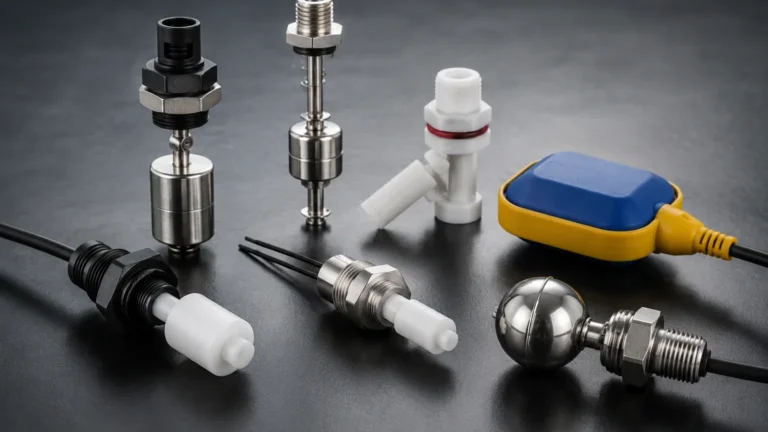
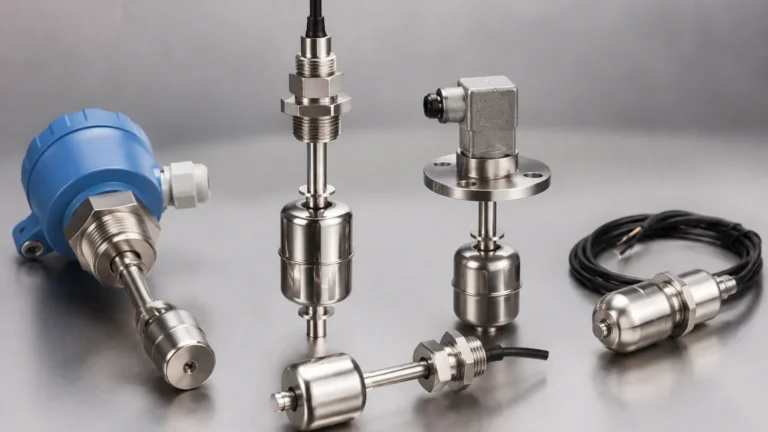
Level Switches are frequently deployed via suspension in wastewater sumps and lift stations. Cable-suspended float switches operate on a simple buoyancy principle: as the liquid level rises, the float tilts, triggering a microswitch or mercury-free contact inside. The suspension point acts as a pivot, and the length of the "tether" (the distance from the suspension point to the float) determines the switching differential. This method is highly valued for its simplicity and resistance to fouling in heavy-solids applications.
Displacement and Ultrasonic Variations
While ultrasonic and radar sensors are typically mounted on rigid brackets or flanges, certain specialized applications in deep-well monitoring or mobile tank gauging utilize a level sensor suspension system to lower the transducer closer to the liquid surface. This minimizes the "dead zone" and improves signal-to-noise ratios in extremely deep silos or wells.
Key Evaluation Criteria for Suspension Systems
When designing or selecting a level sensor suspension system, several technical factors must be evaluated to ensure the installation remains secure and the data remains reliable.
1. Cable Material and Chemical Compatibility
The suspension cable is the primary point of contact with the process environment. It must withstand the chemical properties of the liquid. Common materials include:
* PVC (Polyvinyl Chloride): Suitable for general water and non-corrosive applications.
* PUR (Polyurethane): Offers excellent abrasion resistance and is ideal for wastewater and oils.
* FEP/PTFE (Fluoropolymers): Required for highly aggressive chemicals, acids, and high-temperature environments.
2. Tensile Strength and Weight Management
The suspension system must support the weight of the sensor plus the weight of the cable itself, which can be significant in deep-well applications (e.g., 100 meters or more). Engineers must calculate the maximum load and ensure the cable’s internal strengthening members—often made of Kevlar or stainless steel—can handle the stress without stretching or snapping.
3. Atmospheric Venting
For hydrostatic sensors, the suspension cable must remain unkinked to protect the internal vent tube. If the vent tube is pinched or blocked by moisture, the sensor will produce erroneous readings. Specialized junction boxes with desiccant filters are often used at the top of the suspension point to prevent moisture from entering the vent tube.
4. Strain Relief
The point where the cable exits the junction box or mounting bracket is a common failure point. Proper strain relief, such as Kellems grips or heavy-duty cord grips, is essential to distribute the weight and prevent the cable from fraying or pulling out of the terminals.
Practical Selection Table for Suspension Methods
| Suspension Type | Recommended Sensor | Best Application | Limitations |
| :— | :— | :— | :— |
| Integrated Cable | Hydrostatic Transmitter | Deep wells, boreholes, reservoirs | Difficult to repair if cable is damaged |
| Tethered Float | Level Switches | Sewage lift stations, sumps | Requires space for float swing; prone to tangling |
| Stainless Steel Chain | Heavy Displacement Floats | High-temperature tanks, heavy oils | Potential for corrosion in acidic environments |
| Stilling Well Suspension | Ultrasonic/Hydrostatic | Turbulent tanks, high-flow channels | Higher installation cost; requires periodic cleaning |
Common Risks and Mitigation Strategies
Suspended sensors are inherently more mobile than flange-mounted instruments, which introduces specific operational risks.
Turbulence and Swaying
In tanks with agitators or high inflow rates, a suspended sensor can sway. This movement causes "noise" in the measurement and can lead to the sensor striking the tank wall.
* Mitigation: Use a stilling well (a vertical pipe) to house the suspended sensor. This provides a calm environment for the sensor while allowing the liquid level to equalize through holes at the bottom.
Tangling and Snagging
In applications with multiple Level Switches, cables can become tangled, preventing the floats from moving freely.
* Mitigation: Use cable spacers or individual mounting brackets to maintain a minimum distance between suspended cables. Ensure that the suspension point is located away from inflow pipes where debris might snag the cable.
Cable Fatigue and Creep
Constant immersion and temperature fluctuations can cause certain cable materials to stretch (creep) or become brittle.
* Mitigation: Specify cables with internal strain-relief members. Conduct annual inspections to check for signs of jacket cracking or elongation, especially in deep-well level sensor suspension setups.
Installation Considerations and Best Practices
Successful installation begins with a clear understanding of the vessel's internal geometry and the liquid's physical properties. Follow these guidelines for a robust installation:
1. Avoid the "Bottom Out": For hydrostatic sensors, do not allow the sensor to rest directly on the bottom of the tank where silt and sludge accumulate. Suspend the sensor at least 100mm to 300mm above the floor.
2. Use Proper Anchoring: In open water or large reservoirs, use a weight (sinker) attached to the sensor or cable to keep it vertical, but ensure the weight does not interfere with the sensing element.
3. Junction Box Placement: Always terminate the suspension cable in a dry, ventilated junction box. If the application is outdoors, use a NEMA 4X or IP66 rated enclosure.
4. Verification: After lowering the sensor to the desired depth, verify the reading against a manual tape measure. Secure the cable firmly so that it cannot slip over time.
Limitations of Level Sensor Suspension
While versatile, suspension is not always the optimal choice. It is generally unsuitable for:
* High-Pressure Vessels: Cables cannot easily be sealed against high process pressures (typically above 2-3 bar) compared to flanged or NPT-threaded mounts.
* Extremely Viscous Liquids: In media like molasses or heavy crude, the drag on a suspended cable can distort the sensor's position or prevent floats from moving.
* Sanitary Applications: Suspended cables are difficult to clean in place (CIP), making them less ideal for food, beverage, or pharmaceutical processes where hygiene is paramount.
Frequently Asked Questions (FAQs)
Q: How do I prevent moisture from entering the vent tube of a suspended hydrostatic sensor?
A: Use a vented junction box equipped with a replaceable desiccant cartridge. This cartridge absorbs moisture from the air before it can enter the vent tube, preventing condensation inside the sensor housing.
Q: Can I use a standard electrical cable for level sensor suspension?
A: No. Standard cables lack the tensile strength to support their own weight over long distances and do not contain the necessary atmospheric vent tubes for pressure-based sensors. Always use the manufacturer-supplied cable specific to the instrument.
Q: What is the maximum depth for a suspended level sensor?
A: This is limited by the cable's tensile strength and the sensor's measurement range. Many professional manufacturers like Welk offer solutions for depths up to 500 meters, provided the cable is reinforced with stainless steel or Kevlar.
Q: How often should I inspect the level sensor suspension assembly?
A: In standard water applications, an annual inspection is sufficient. In corrosive or high-vibration environments, quarterly inspections are recommended to check for cable wear, chemical degradation, and the integrity of the strain relief.
By adhering to these engineering principles and selecting high-quality Level Switches and transmitters, operators can ensure that their level sensor suspension systems provide accurate, maintenance-free service for years. Whether monitoring a remote groundwater well or a complex industrial sump, the mechanical integrity of the suspension is the foundation of reliable process data.