Level Sensor Laser
Level Sensor Laser
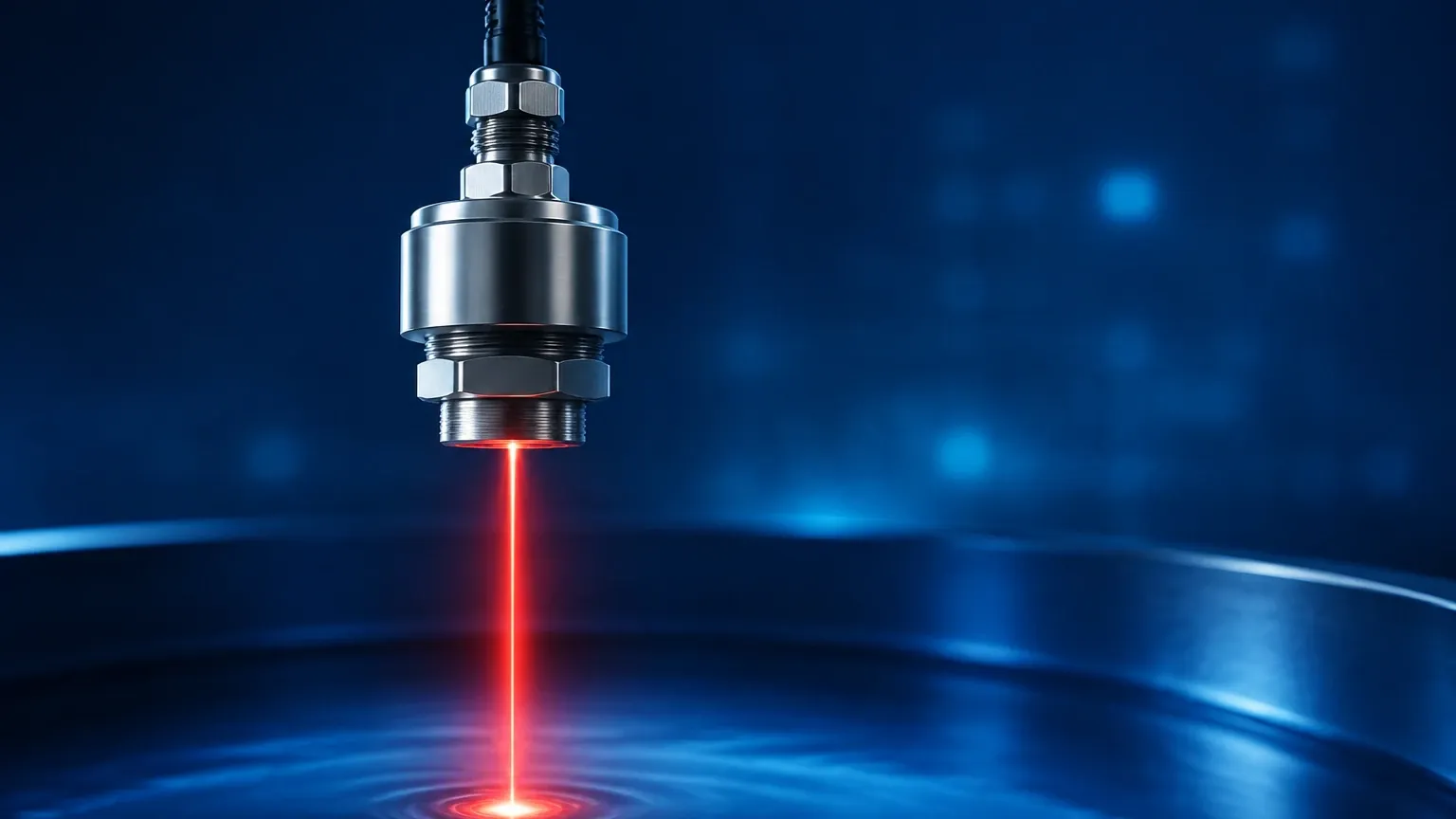
In the landscape of industrial automation, the demand for precision and reliability in material monitoring has led to the adoption of advanced optical technologies. The level sensor laser, often referred to as a laser level transmitter, represents a non-contact measurement solution designed to overcome the limitations of traditional ultrasonic and radar technologies. By utilizing a highly focused beam of light, these sensors provide accurate distance measurements even in narrow vessels or environments with complex internal structures.
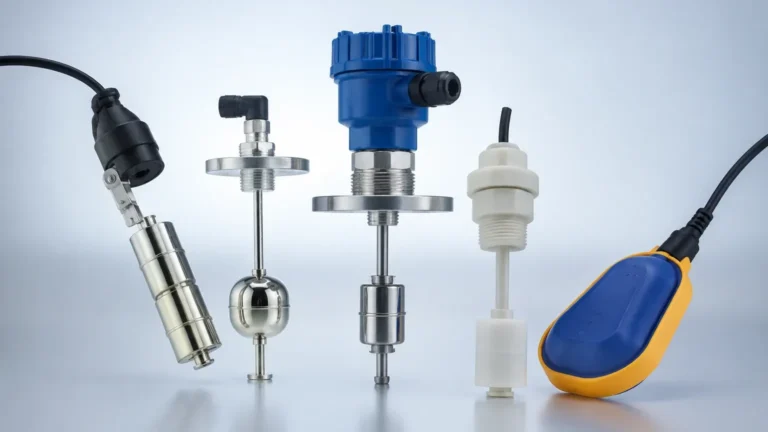
For process engineers and facility managers, understanding the technical nuances of laser-based measurement is essential for optimizing inventory management and process safety. While continuous measurement is the primary function of these devices, they are frequently integrated into systems alongside point-level devices, such as Level Switches, to ensure comprehensive monitoring and redundant overfill protection.
Measurement Principles of Laser Level Sensors
Laser level sensors operate on the principle of measuring the time it takes for a light pulse to travel from the sensor to the material surface and back. There are two primary methods used in industrial laser measurement: Time-of-Flight (ToF) and Phase Shift.
Time-of-Flight (ToF)
This is the most common method for long-range industrial level measurement. The sensor emits a short pulse of laser light. When the pulse hits the surface of the liquid or solid, it is reflected back to the sensor’s receiver. Since the speed of light is a known constant, the distance is calculated using the formula:
Distance = (Speed of Light × Time Delay) / 2
ToF sensors are highly effective for measuring bulk solids in silos and liquids in large tanks, offering ranges that can exceed 100 meters.
Phase Shift Measurement
In phase shift technology, the sensor emits a continuous laser beam with a modulated frequency. The sensor compares the phase of the emitted light with the phase of the reflected light. The difference in phase is proportional to the distance. This method is generally used for shorter ranges where extremely high precision (often within 1–2 mm) is required, though it is less common in standard bulk storage applications compared to ToF.
Key Advantages in Industrial Environments
The level sensor laser offers distinct advantages that make it a preferred choice for specific challenging applications. Unlike ultrasonic sensors, which rely on sound waves, laser sensors are not affected by air temperature, pressure, or vacuum conditions.
1. Narrow Beam Angle: One of the most significant benefits is the extremely narrow beam divergence, typically less than 0.3°. This allows the laser to pass through narrow openings or measure in vessels with internal obstructions like agitators, ladders, or reinforcement beams without interference.
2. Long Range Capability: Laser sensors can measure distances from a few centimeters up to 100 meters or more, making them suitable for very tall silos.
3. Rapid Response Time: Because light travels significantly faster than sound, laser sensors provide nearly instantaneous updates, which is critical for fast-filling processes or positioning applications.
4. No Echo Mapping Required: Unlike radar sensors, which may require complex "false echo" mapping to ignore internal tank structures, the laser’s focused beam simply avoids these obstacles entirely.
Comparing Continuous Laser Sensors and Level Switches
In a robust industrial level control strategy, continuous measurement and point-level detection serve complementary roles. A level sensor laser provides a real-time data stream (typically via 4-20mA, HART, or Modbus) that allows operators to see the exact percentage of volume remaining in a vessel.
However, for safety-critical functions, engineers often specify Level Switches as independent secondary devices. While the laser sensor tracks the level throughout the day, a vibrating fork or rotary paddle switch acts as a fail-safe. If the laser signal is lost due to an extreme dust event or if the primary control system fails, the level switch provides a hard-wired signal to shut down pumps or close valves, preventing environmental spills or equipment damage.
Selection Criteria and Technical Specifications
Choosing the right level sensor laser requires an evaluation of the material being measured and the environmental conditions of the site. The following table provides a general guideline for technical specifications found in Welk industrial laser sensors.
| Feature | Specification | Application Note |
| :— | :— | :— |
| Measuring Range | 0.5m to 130m | Depends on surface reflectivity. |
| Accuracy | ±10mm to ±30mm | Standard for bulk solids at long range. |
| Beam Divergence | < 0.3° | Ideal for narrow chutes and silos. |
| Output Signal | 4-20mA, RS485, HART | Integration with PLC/SCADA systems. |
| Operating Temp | -40°C to +60°C | High-temp versions available with cooling. |
| Enclosure Rating | IP66 / IP67 | Suitable for outdoor and wash-down areas. |
| Laser Class | Class 1 or Class 2 | Class 1 is eye-safe under all conditions. |
Material Reflectivity
Laser measurement depends on the "reflectivity" of the target material. Light-colored powders (like flour or plastic pellets) reflect light efficiently. Dark, matte materials (like coal or iron ore) may require higher-power laser pulses to ensure a consistent return signal. When measuring liquids, the laser works best on opaque fluids; very clear or transparent liquids may allow the light to pass through rather than reflecting from the surface.
Installation and Maintenance Best Practices
To ensure the longevity and accuracy of a level sensor laser, proper installation is paramount. Because the laser is an optical device, it must have a clear line of sight to the material.
Alignment and Positioning
The sensor should be mounted perpendicular to the material surface. In bulk solids applications, where the material forms a cone (angle of repose), the laser should be aimed at a point that represents the average volume, typically about one-sixth to one-third of the radius from the silo wall.
Managing Dust and Build-up
In very dusty environments, such as cement silos or grain elevators, dust can accumulate on the sensor lens, eventually blocking the beam. To mitigate this:
* Air Purge Systems: Many Welk laser sensors feature an air purge connection. A low-pressure stream of clean, dry air is blown across the lens to prevent dust from settling.
* Dust Tubes: An extension tube can be used to create a dead-air space in front of the lens, reducing the amount of circulating dust that reaches the optics.
Mounting Considerations
Avoid mounting the sensor directly over the fill stream. The falling material will intercept the laser beam, leading to false high-level readings. Additionally, ensure the mounting flange is stable and free from excessive vibration, which can cause jitter in the measurement signal.
Limitations and Environmental Factors
While highly versatile, laser technology is not a universal solution for every process. Engineers should be aware of the following limitations:
* Heavy Steam and Vapors: Unlike radar, which can penetrate thick steam, laser light is scattered by water droplets. In applications with heavy boiling or dense steam clouds, the signal may become unreliable.
* Transparent Media: As mentioned previously, clear liquids or glass-like surfaces can be difficult to measure if the light does not reflect back to the receiver.
* Ambient Light Interference: While most industrial lasers use filtered receivers to ignore sunlight, extremely high-intensity light directed straight into the lens can occasionally cause signal noise.
* Surface Turbulence: In liquid applications, extreme surface agitation or foam can scatter the laser beam. In these cases, a stilling well may be required, or a different technology like a guided wave radar might be more appropriate.
Frequently Asked Questions (FAQ)
Q: Is the laser used in these sensors dangerous to workers?
A: Most industrial level sensor lasers are Class 1 or Class 2. Class 1 lasers are completely eye-safe. Class 2 lasers are safe for accidental viewing because the human blink reflex provides protection, though one should never stare directly into the beam.
Q: Can a laser sensor measure the level of a liquid through a glass sight window?
A: Yes, provided the window is clean and the laser is positioned at a slight angle to prevent the reflection from the glass itself from over-powering the reflection from the liquid surface.
Q: How does a laser sensor handle the "angle of repose" in solids?
A: Because the beam is so narrow, it measures a single point. To get an accurate volume reading in a silo with a significant cone, multiple sensors may be used, or the sensor can be positioned to hit the "mean" level of the slope.
Q: Does the color of the material affect the measurement?
A: It affects the strength of the return signal but not the distance calculation. A dark material reflects less light than a white material, so the sensor must have a sensitive enough receiver to detect the weaker reflection.
Q: Can I use a laser sensor in explosive atmospheres?
A: Yes, many laser level transmitters are available with ATEX, IECEx, or North American hazardous area certifications (Class I, Div 1/2). Always verify the specific rating on the product data sheet before installation.
By integrating a level sensor laser into your process, you gain a high-precision tool capable of operating where other sensors fail. Whether it is a narrow chute, a vessel with internal obstructions, or a long-range silo, laser technology provides the data necessary for efficient industrial operations. For comprehensive safety, always consider pairing these continuous sensors with reliable Level Switches to protect your assets and personnel.