Level Sensor Liquid
Level Sensor Liquid
In industrial process control, the accurate monitoring of fluids is fundamental to operational safety, efficiency, and inventory management. A level sensor liquid system refers to any device designed to measure the height, volume, or presence of a liquid within a container, tank, or open channel. These instruments vary significantly in their underlying physics, ranging from simple mechanical floats to advanced non-contact radar systems.
For engineers and procurement professionals, selecting the appropriate technology requires a deep understanding of the medium's properties, the environmental conditions of the site, and the specific requirements of the control loop. This guide provides a technical overview of liquid level measurement principles, selection criteria, and practical application guidance.
Understanding the Principles of Liquid Level Measurement
Before selecting a specific instrument, it is essential to understand the physical principles that govern how a level sensor liquid operates. Most industrial sensors fall into one of several categories based on their measurement method.
Hydrostatic Pressure
The hydrostatic method operates on the principle that the pressure at the bottom of a liquid column is directly proportional to the height of that liquid ($P = \rho gh$). By measuring the pressure exerted by the liquid and knowing its density ($\rho$), the sensor can calculate the level. This is a common choice for vented tanks and deep wells.
Ultrasonic Time-of-Flight
Ultrasonic sensors emit high-frequency sound waves that travel through the air to the liquid surface and reflect back to the transducer. The sensor calculates the distance based on the time elapsed. Because this is a non-contact method, it is ideal for corrosive or sticky liquids, provided there is no significant foam or vapor to interfere with the signal.
Radar (Microwave)
Radar sensors function similarly to ultrasonic devices but use electromagnetic waves (microwaves) instead of sound. Radar is highly effective in environments with high pressure, extreme temperatures, or dust, as microwaves are not affected by air density or temperature gradients. Guided wave radar (GWR) uses a probe to direct the signal, while non-contact radar transmits through the air.
Magnetic and Float Principles
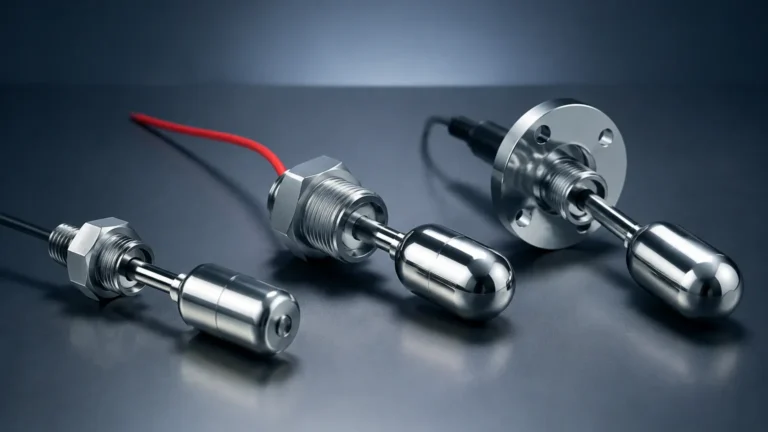
Mechanical sensors, such as magnetic level gauges, utilize a float containing a magnet that moves with the liquid level. This movement interacts with an external indicator or a series of reed switches. These are valued for their simplicity and the fact that they do not require power for visual indication.
Point Level vs. Continuous Level Measurement
When evaluating a level sensor liquid, the first distinction to make is whether the application requires continuous monitoring or point-level detection.
Continuous Level Measurement
Continuous sensors provide a constant output (typically 4-20mA, 0-10V, or digital protocols like HART or Modbus) representing the exact level across the entire span of the tank. This is necessary for inventory management and precise process control.
Point Level Detection
Point level detection is used to identify when a liquid reaches a specific height, such as "High-High" or "Low-Low" states. This is where Level Switches are employed. Level switches act as triggers for alarms, pumps, or valves to prevent overflows or dry-running of pumps. Technologies for these switches include tuning forks, capacitive probes, and float switches. In many industrial setups, a continuous sensor is used for primary measurement, while independent level switches serve as safety redundancies.
Key Selection Criteria for a Level Sensor Liquid
Choosing the wrong sensor can lead to frequent maintenance cycles or catastrophic failure. Engineers must confirm several parameters before finalizing a specification.
1. Media Characteristics: Is the liquid corrosive, viscous, or prone to coating? For example, a tuning fork switch may struggle with highly viscous fluids that "bridge" the forks, whereas a non-contact radar would be unaffected.
2. Process Temperature and Pressure: Standard ultrasonic sensors often have limits around 80°C (176°F), whereas specialized radar or hydrostatic transmitters can handle several hundred degrees Celsius and high-pressure ratings (up to 400 bar / 5800 PSI).
3. Tank Geometry and Obstructions: Internal structures like agitators, heating coils, or ladders can create false echoes for non-contact sensors. In these cases, guided wave radar or hydrostatic sensors are often preferred.
4. Accuracy Requirements: For custody transfer, high-precision radar with millimeter accuracy is required. For simple pump control, a broader tolerance is acceptable.
5. Power and Output: Ensure the sensor’s power requirements (24V DC, 220V AC) and output signals are compatible with the existing PLC or SCADA system.
Technical Comparison of Liquid Level Technologies
The following table summarizes the strengths and limitations of common liquid level measurement technologies used in B2B industrial environments.
| Technology | Type | Best For | Limitations |
| :— | :— | :— | :— |
| Radar | Continuous | High precision, extreme heat/pressure, corrosive media. | Higher initial cost. |
| Ultrasonic | Continuous | Water treatment, open channels, non-contact needs. | Affected by foam, heavy vapor, and vacuum. |
| Hydrostatic | Continuous | Deep tanks, wells, constant density liquids. | Sensitive to changes in liquid density. |
| Tuning Fork | Point | Overfill protection, pump dry-run prevention. | Not suitable for heavily aerated liquids. |
| Magnetic Float | Point/Cont. | Visual indication, high-pressure boilers. | Moving parts can wear; prone to scaling. |
| Capacitance | Point/Cont. | Small tanks, conductive or non-conductive liquids. | Requires recalibration if media changes. |
Installation and Engineering Considerations
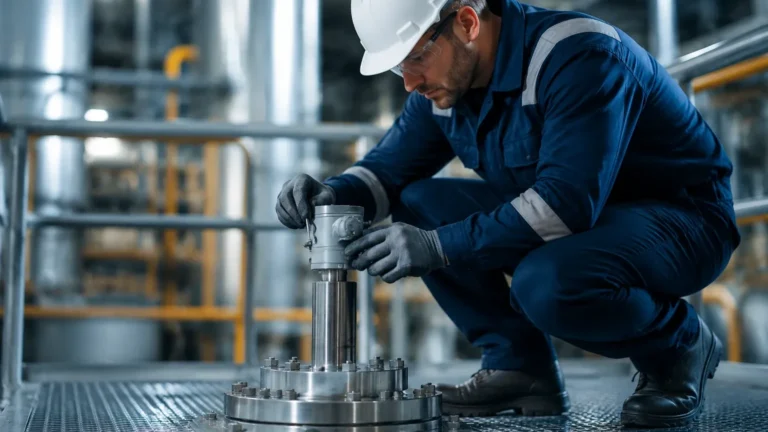
Proper installation is as critical as the sensor technology itself. Even the most advanced level sensor liquid will fail if mounted incorrectly.
* Dead Zones (Blocking Distance): All non-contact sensors have a "dead zone" directly beneath the transducer where measurement is impossible. Ensure the sensor is mounted high enough that the maximum liquid level never enters this zone.
* Nozzle Dimensions: For radar and ultrasonic sensors, the mounting nozzle should be short and wide enough to prevent the signal from reflecting off the nozzle walls.
* Turbulence and Agitation: In tanks with agitators, sensors should be mounted away from the vortex. If turbulence is severe, a stilling well (a pipe that shields the sensor) may be necessary to provide a stable surface for measurement.
* Positioning: Sensors should generally not be mounted in the center of a domed tank, as this can focus false reflections. They should also be kept away from the fill stream to avoid interference from falling liquid.
Common Risks and Operational Limitations
While modern instruments from manufacturers like Welk are highly reliable, certain environmental factors can pose risks to accuracy:
* Foam Accumulation: Dense foam can absorb ultrasonic and radar signals, leading to a "loss of echo." In foaming applications, hydrostatic sensors or guided wave radar (which penetrates foam better) are recommended.
* Vapor and Condensation: Heavy steam or chemical vapors can change the speed of sound, affecting ultrasonic accuracy. Condensation on the sensor face can also attenuate signals. Many Welk sensors feature self-cleaning faces or drip-off designs to mitigate this.
* Build-up and Scaling: In wastewater or mining slurries, material can build up on the sensor. Non-contact sensors are usually the best solution here, but if a contact probe is used (like a level switch), it must be designed with a coating-rejection circuit.
* Ambient Noise: High-frequency mechanical noise in a factory can sometimes interfere with ultrasonic sensors. Shielding or switching to radar usually resolves this.
Frequently Asked Questions (FAQ)
Q: Can a single level sensor liquid handle multiple types of liquids?
A: It depends on the technology. Radar and ultrasonic sensors measure the surface regardless of the liquid type (though radar depends on the dielectric constant). Hydrostatic sensors, however, must be recalibrated if the liquid density changes, as they measure weight/pressure.
Q: What is the difference between a level transmitter and a level switch?
A: A level transmitter provides a continuous signal (e.g., 45% full), while Level Switches provide a discrete on/off signal when a specific threshold is reached.
Q: How often do liquid level sensors need calibration?
A: This varies by industry. In regulated industries like pharmaceuticals or food and beverage, annual calibration is standard. In general water treatment, many solid-state sensors (like radar) can operate for years without significant drift.
Q: Are there sensors suitable for hygienic or food-grade applications?
A: Yes. Sensors for these applications must have stainless steel housings (typically 316L), tri-clamp fittings, and meet standards such as 3-A or EHEDG to ensure they can be cleaned in place (CIP).
Q: What is the maximum range for a liquid level sensor?
A: Hydrostatic and radar sensors can often measure up to 35 meters (approx. 115 feet) or more. Ultrasonic sensors are typically limited to 15-20 meters (approx. 50-65 feet) due to the attenuation of sound waves in air.
By carefully matching the sensor technology to the physical properties of the liquid and the mechanical constraints of the tank, industrial operators can ensure long-term reliability and minimize the risk of process interruptions. Welk provides a comprehensive range of these instruments, ensuring that whether the requirement is for a simple level switch or a high-precision continuous transmitter, a technically sound solution is available.