Level Sensor Low
Level Sensor Low
In industrial process control, the term "level sensor low" refers to a critical monitoring state where the volume of a liquid or solid in a vessel reaches a predefined minimum threshold. Monitoring this state is vital for preventing equipment damage—such as pump cavitation or dry running—and ensuring the continuity of production lines. While continuous level transmitters provide a constant data stream, the primary hardware used to trigger alarms or control logic at these specific points are Level Switches.
Choosing the correct instrument for low-level detection requires an understanding of the physical properties of the media, the environmental conditions of the tank, and the specific mechanical requirements of the installation. This guide examines the principles, selection criteria, and engineering considerations for implementing effective low-level sensing solutions.
Understanding the Role of Low-Level Detection
A low-level condition is more than just a measurement point; it is a safety and operational boundary. In water treatment, a level sensor low alarm might signal the need to initiate a backwash cycle or refill a chemical dosing tank. In the oil and gas industry, it may serve as a mandatory safety shutdown point to prevent the intake of sediment or air into downstream piping.
From an engineering perspective, level sensor low applications are typically divided into two categories:
1. Low Alarm (L): A warning state indicating that the level is approaching a critical minimum.
2. Low-Low Alarm (LL): A critical state that usually triggers an automated response, such as stopping a pump or closing a valve to protect the system.
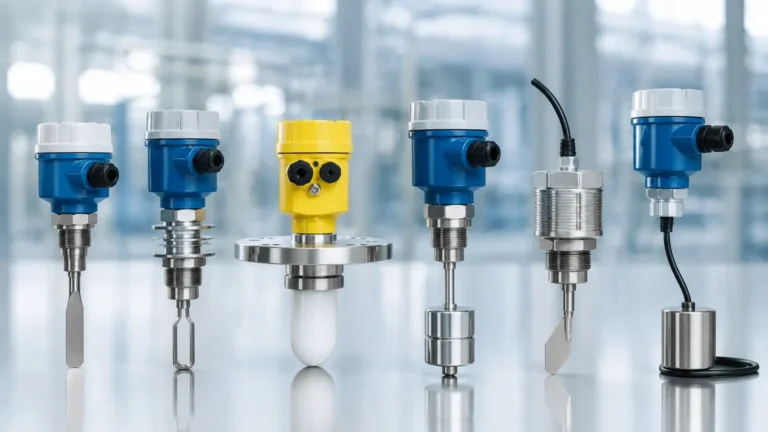
Welk provides a range of industrial level measurement instruments designed to handle these specific setpoints with high repeatability and long-term reliability.
Measurement Principles for Low-Level Monitoring
Before selecting a device, it is essential to understand how different technologies detect the presence or absence of material at a low setpoint. Each principle has distinct advantages depending on the media's viscosity, conductivity, and turbulence.
1. Buoyancy (Float Switches)
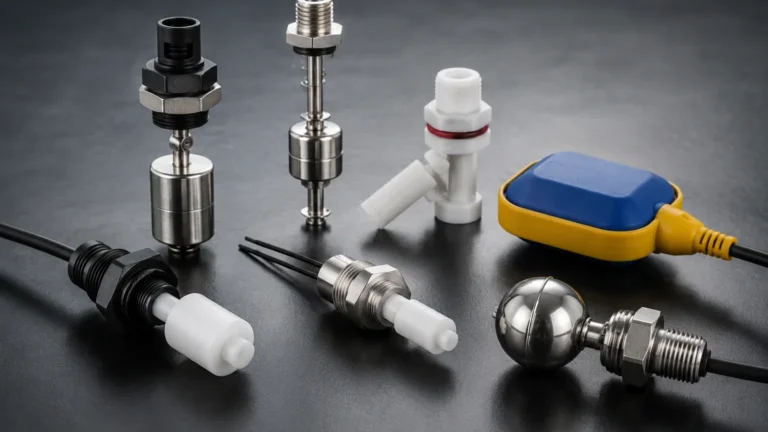
Float-based level switches operate on the principle of buoyancy. A float containing a magnet moves with the liquid level. When the liquid drops to the "low" point, the float descends, and its internal magnet actuates a reed switch or a microswitch. This is a purely mechanical-electrical interaction that requires no external power for the sensing element itself. It is highly effective for clean, non-coating liquids.
2. Vibration (Tuning Fork Switches)
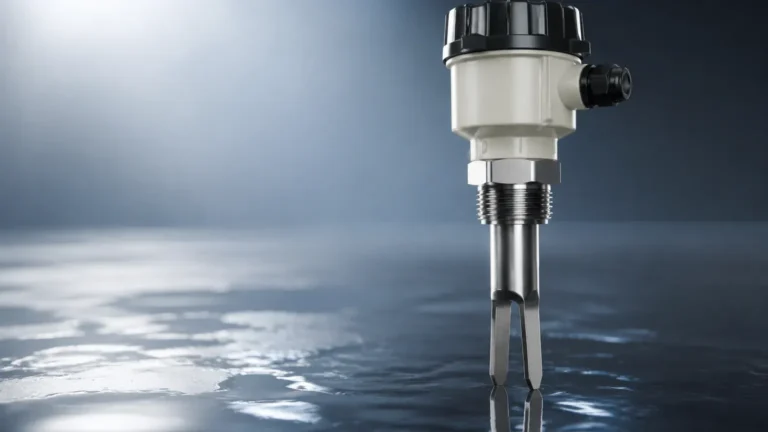
Often considered the "universal" choice for low-level detection, vibrating level switches use a sensing element shaped like a tuning fork. This fork is piezo-electrically vibrated at its resonant frequency in air (typically around 1,200 Hz to 1,400 Hz). When the liquid level rises to cover the fork, the frequency shifts or the vibration is dampened. For a "level sensor low" application, the switch is normally covered; when the level drops and exposes the fork to air, the electronics detect the frequency change and trigger the low-level alarm.
3. Capacitance
Capacitive sensors treat the tank wall and the sensor probe as two plates of a capacitor. The medium acts as the dielectric. As the level drops and the medium is replaced by air (which has a much lower dielectric constant), the measured capacitance changes. These are excellent for high-temperature or high-pressure environments where mechanical parts might fail.
4. Ultrasonic Gap Switches
These sensors feature a small gap between two piezoelectric crystals. One crystal transmits an ultrasonic signal, and the other receives it. When the gap is filled with liquid, the signal passes through easily. When the level drops below the gap, the signal is attenuated by the air. This provides a very precise point-level detection unaffected by changes in density or conductivity.
5. Optical Refraction
Optical sensors use an infrared LED and a phototransistor. When the sensor tip is immersed in liquid, the light is refracted into the medium. When the level is low and the tip is in air, the light is reflected back to the receiver. These are extremely compact and ideal for small pipes or laboratory-scale tanks.
Comparing Level Switch Technologies for Low-Level Sensing
Selecting the right technology involves balancing cost, maintenance requirements, and the physical properties of the substance being measured. The following table provides a comparison for common industrial scenarios.
Technical Selection Table
| Technology | Media Compatibility | Best For | Limitations | Maintenance Level |
| :— | :— | :— | :— | :— |
| Magnetic Float | Clean, low-viscosity liquids | Water tanks, fuel storage | Fouling, mechanical wear | Moderate |
| Vibrating Fork | Liquids, slurries, powders | Universal low-level alarm | Heavy coating/buildup | Low |
| Capacitive | Conductive & non-conductive | High temp/High pressure | Requires calibration | Low |
| Ultrasonic Gap | Most liquids | Aerated liquids, precision | Not for high-viscosity | Low |
| Optical | Clear, clean liquids | Small vessels, OEM equipment | Sensitive to ambient light | Very Low |
| Hydrostatic | Liquids | Deep wells, vented tanks | Density must be constant | Moderate |
Technical Selection Criteria
When specifying a level sensor for low-level detection, engineers must confirm several parameters to ensure the device functions correctly over its intended lifespan.
* Media Density: For float-based systems, the float must be lighter than the liquid. If the density is too low (e.g., certain hydrocarbons), a standard float may sink, causing a permanent "low" signal.
* Viscosity and Coating: If the medium is sticky (like resins or heavy oils), it may coat a tuning fork or cause a float to stick to the stem. In these cases, non-contact ultrasonic or high-frequency capacitive sensors are preferred.
* Operating Pressure and Temperature: Standard plastic switches may be rated only up to 80°C and 2 bar. For steam or chemical reactors, stainless steel or PTFE-coated sensors rated for 200°C+ and 40 bar are necessary.
* Output Type: For integration with a PLC (Programmable Logic Controller), a PNP/NPN transistor output or a 4-20mA loop-powered switch is common. For direct pump control, a SPDT (Single Pole Double Throw) relay output is often required.

Installation Best Practices for Low-Level Sensors
The physical placement of a level sensor low device is as important as the technology itself. Improper installation can lead to "false lows" or, more dangerously, a failure to detect a low condition.
1. Mounting Position
Low-level switches are typically side-mounted near the bottom of the tank. If side mounting is not possible (e.g., in underground pits), top-mounted switches with extension rods or cables must be used. When using extension rods, ensure they are braced if there is significant agitation in the tank to prevent mechanical fatigue.
2. The "Dead Zone" and Unmeasurable Volume
Every sensor has a physical limit on how low it can detect. For example, a side-mounted tuning fork needs approximately 20 mm to 50 mm of clearance from the tank bottom to avoid interference from sediment. This creates an "unmeasurable volume" at the very bottom of the tank. Engineers must calculate this volume to ensure the pump intake remains submerged even at the lowest detectable point.
3. Avoiding Turbulence and Vortexing
If the sensor is placed too close to a discharge outlet, the fluid may form a vortex as it drains. This can expose the sensor to air while the rest of the tank still contains liquid, triggering a premature low-level alarm. Sensors should be installed away from high-velocity flow paths or protected by a stilling well.
4. Orientation of Tuning Forks
When installing vibrating forks for low-level detection in liquids, the tines should be oriented vertically (one above the other) if the liquid is viscous, to allow the medium to drain off easily. If the liquid is thin, horizontal orientation is generally acceptable.
Limitations and Mitigation of False Alarms
No sensor is infallible. Understanding the limitations of a "level sensor low" setup allows for the implementation of redundant safety measures.
* Buildup and Scaling: In hard water or chemical applications, scale can build up on the sensor. Welk recommends periodic inspection or the use of "active shield" capacitance probes that ignore coating.
* Foam Interference: Ultrasonic and optical sensors can be fooled by thick foam. If foam is expected, a vibrating tuning fork or a hydrostatic pressure sensor is a more reliable choice for detecting the actual liquid level.
* Electromagnetic Interference (EMI): In environments with large motors or VFDs (Variable Frequency Drives), unshielded cables can pick up noise, causing the PLC to register a flickering low-level signal. Always use shielded twisted-pair cables and ensure proper grounding of the instrument housing.
Frequently Asked Questions (FAQ)
Q: Can I use a continuous level transmitter as a low-level switch?
A: Yes. Most continuous transmitters (like radar or ultrasonic) allow you to program "switch points" or relay outputs. However, for safety-critical applications (SIL-rated systems), it is common practice to use a dedicated, independent level switch as a redundant backup to the transmitter.
Q: How do I test a low-level sensor without draining the tank?
A: Many modern Level Switches include a manual test button or a magnetic test point on the housing. When activated, this electronically simulates a "dry" condition to verify that the internal relays and downstream alarms are functioning correctly.
Q: What is the best sensor for a low-level alarm in a tank with heavy agitation?
A: A vibrating tuning fork is generally the most robust choice for agitated liquids because its high-frequency vibration is not easily affected by the low-frequency turbulence of a mixer. Alternatively, a hydrostatic pressure sensor can be used, as it measures the head pressure of the liquid, which remains relatively stable even if the surface is turbulent.
Q: Is there a difference between "normally open" and "normally closed" for low-level detection?
A: For safety, low-level alarms are usually wired as "Normally Closed" (NC) in the safe state (when the tank is full). This means the circuit is closed when the sensor is covered. If the level drops OR if a wire breaks, the circuit opens, triggering the alarm. This is known as a fail-safe configuration.
Conclusion
Implementing a reliable level sensor low system is a fundamental requirement for industrial automation. By selecting the appropriate measurement principle—whether it be the simplicity of a float or the versatility of a vibrating fork—and adhering to strict installation guidelines, facilities can prevent costly downtime and equipment failure. When specifying your next system, always consider the chemical compatibility of the wetted parts and the physical dynamics of the vessel to ensure accurate, long-term performance.