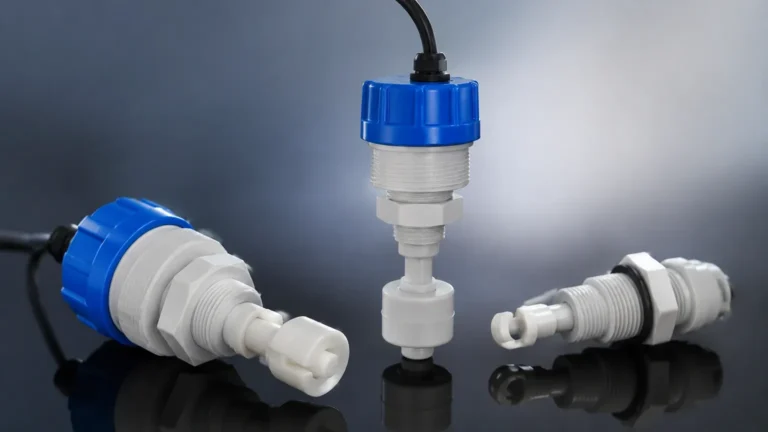
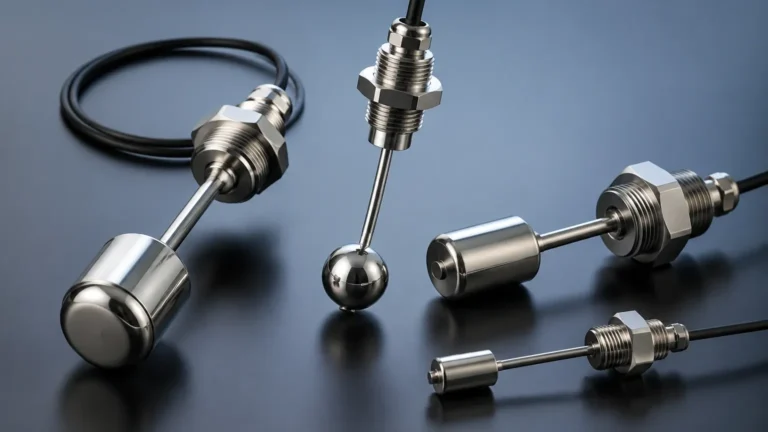
Level Switch Vegaswing 61
Level Switch Vegaswing 61
In the landscape of industrial process control, point level detection serves as a fundamental safety and operational layer. Among the various technologies available, the vibrating level switch—often referred to as a tuning fork sensor—is one of the most versatile and reliable. The level switch Vegaswing 61 is a prominent example of this technology, widely recognized for its ability to detect the presence or absence of liquids in tanks and pipelines with high precision.
For engineers and procurement specialists, understanding the underlying physics, application boundaries, and installation requirements of these Level Switches is essential for ensuring plant safety and process efficiency. This guide provides a technical overview of the Vegaswing 61, its operating principles, and how it compares to broader industrial level measurement solutions.
The Principle of Vibrating Level Measurement
Before evaluating specific models like the level switch Vegaswing 61, it is necessary to understand the vibrating limit switch principle. These instruments are designed to solve the common problems associated with float switches or conductivity probes, such as mechanical sticking or sensitivity to fluid properties.
The Tuning Fork Mechanism
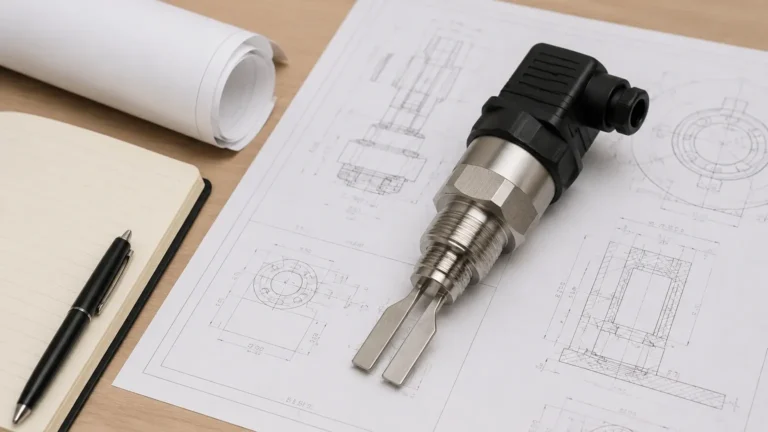
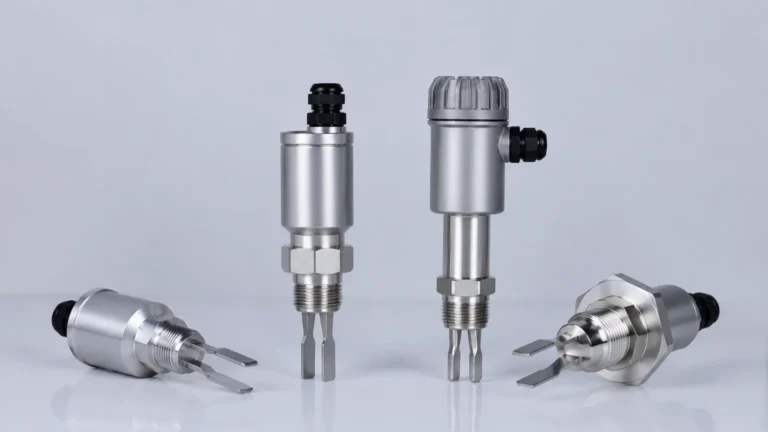
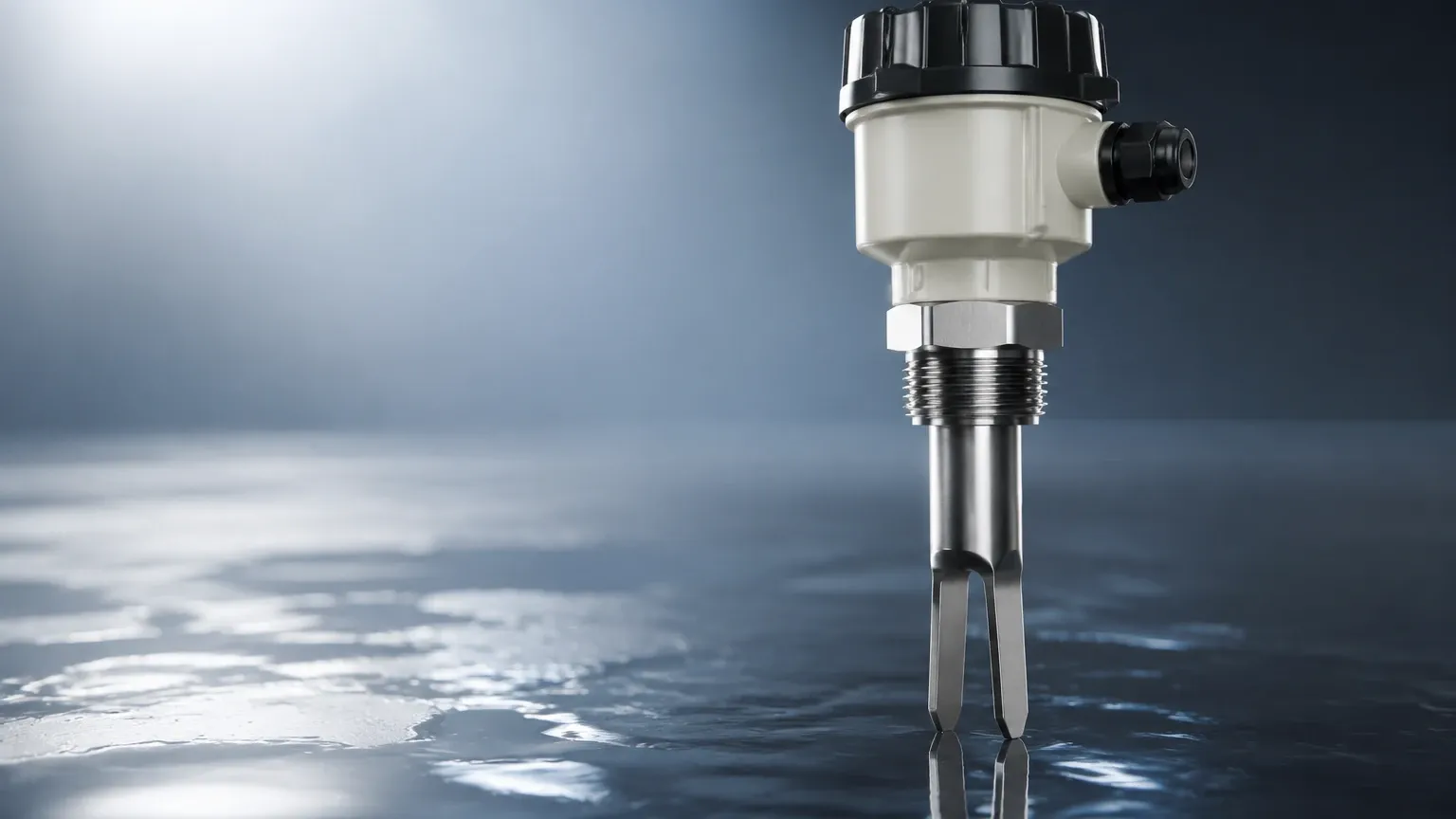
At the heart of the device is a tuning fork-shaped sensor. This fork is piezoelectrically energized and vibrates at its mechanical resonance frequency in the air. When the fork becomes submerged in a liquid, the frequency of the vibration changes significantly due to the increased density of the medium surrounding the tines.
Signal Processing and Switching
The internal electronics of the switch continuously monitor this frequency. A shift in frequency (typically a decrease when moving from air to liquid) is detected and converted into a switching command. This command can trigger an integrated relay, a transistor output, or a standardized signal (such as NAMUR or two-wire electronics). Because the switch relies on a physical change in vibration rather than electrical conductivity or dielectric constants, it is largely immune to changes in the liquid's chemical or physical properties.
Key Features of the Level Switch Vegaswing 61
The Vegaswing 61 is designed as a universal level switch for liquids. It is frequently specified in applications where reliability is non-negotiable, such as overfill protection (WHG) or dry-run protection for pumps.
Media Independence
One of the primary advantages of this specific level switch is its independence from the product properties. It functions accurately regardless of:
* Dielectric Constant: Unlike capacitive switches, it does not require the liquid to have a specific permittivity.
* Conductivity: It works in both conductive (water-based) and non-conductive (oil-based) fluids.
* Density: While there is a minimum density requirement (typically 0.7 g/cm³ or 0.5 g/cm³ depending on the setting), it is generally unaffected by density fluctuations during the process.
* Pressure and Temperature: It maintains a stable switching point across a wide range of operating pressures and temperatures.
Robust Construction
The sensor is typically constructed from high-grade stainless steel (316L), with options for exotic alloys like Hastelloy for highly corrosive environments. This makes it suitable for the chemical, pharmaceutical, and food processing industries where hygienic design and chemical resistance are mandatory.
Technical Specifications and Selection Criteria
When selecting a level switch for a specific application, engineers must match the instrument's specifications to the process conditions. The following table outlines the typical performance parameters for the Vegaswing 61 and similar high-performance Level Switches.
| Parameter | Specification (Standard) | Extended Options |
| :— | :— | :— |
| Process Temperature | -50 to +150 °C (-58 to +302 °F) | Up to +250 °C (+482 °F) |
| Process Pressure | -1 to 64 bar (-14.5 to 928 psi) | High-pressure variants available |
| Viscosity | 0.1 to 10,000 mPa·s | Suitable for most pumpable liquids |
| Density | > 0.7 g/cm³ (0.025 lb/in³) | Adjustable to > 0.5 g/cm³ |
| Wetted Materials | 316L Stainless Steel | Hastelloy C22, PFA coatings |
| Enclosure Rating | IP66/IP67 | IP68 (1 bar) |
Evaluation for Specific Applications
1. Chemical Resistance: For aggressive acids or bases, ensure the wetted parts are compatible. PFA coatings or Hastelloy are preferred over standard 316L for long-term reliability.
2. Hygienic Requirements: In food and beverage applications, look for versions with polished surfaces (Ra < 0.8 µm) and aseptic process connections (e.g., Tri-Clamp or Varivent).
3. Hazardous Areas: If the tank contains flammable liquids, the switch must carry the appropriate ATEX, IECEx, or FM certifications for intrinsic safety or explosion-proof protection.
Installation Considerations
Proper installation is critical to prevent false switching and ensure the longevity of the level switch Vegaswing 61. While the device is robust, certain physical factors can influence its performance.
Orientation and Position
* Horizontal Installation: This is the most common orientation for point level detection. The fork should be oriented so that the liquid can easily flow off the tines. If the liquid is viscous or prone to leaving deposits, the tines should be positioned vertically (one above the other) rather than horizontally to prevent the "bridging" of material between the tines.
* Vertical Installation: Often used for high-level alarms at the top of a tank or low-level alarms in a sump. When installed vertically, the switching point is at the tip of the fork.
Avoiding Mechanical Interference
* Inflow Streams: The switch should not be placed directly in the path of a filling stream. The kinetic energy of the falling liquid can cause mechanical stress or false triggering. If placement near an inlet is unavoidable, a baffle plate should be installed to protect the sensor.
* Agitators and Turbulence: In tanks with mixers, the switch must be positioned to avoid contact with the blades. Additionally, high turbulence can cause frequency fluctuations; however, the Vegaswing 61 usually includes a switching delay (typically 0.5 to 1 second) to filter out these transient states.
Nozzles and Build-up
When installing in a mounting nozzle, the length of the nozzle should be kept as short as possible. If the nozzle is too long, viscous liquids may become trapped inside, preventing the fork from vibrating freely or preventing the liquid from receding when the level drops. For applications with heavy build-up, the fork should extend fully into the vessel.
Limitations and Practical Challenges
Despite the versatility of the level switch Vegaswing 61, there are scenarios where alternative Level Switches might be more appropriate.
1. Solid Particles and Granulates: The Vegaswing 61 is specifically designed for liquids. For bulk solids or powders, a different fork geometry (such as the Vegaswing 66 or similar vibrating rod switches) is required to handle the different mechanical properties of the media.
2. Heavy Aeration/Foam: While the switch is generally immune to light foam, extremely dense, stable foam may be detected as a liquid level. Conversely, if the liquid is heavily aerated (like a carbonated beverage), the effective density may drop below the 0.5 g/cm³ threshold, causing the switch to fail to detect the liquid.
3. Mechanical Damage: The tuning fork tines are precision-engineered components. Any bending or significant abrasion of the tines will change their resonance frequency and render the device inoperable. In abrasive slurries, regular inspection for wear is necessary.
Maintenance and Functional Testing
One of the primary benefits of modern vibrating level switches is their lack of moving parts, which significantly reduces maintenance requirements compared to float switches. However, in safety-critical applications (such as SIL-rated loops), periodic functional testing is mandatory.
* Visual Inspection: Check for corrosion, mechanical damage to the tines, or significant material build-up.
* Proof Testing: Most versions of the Vegaswing 61 include a test button or can be tested via a signal interruption to simulate a full/empty state. This verifies that the electronics and the output relay are functioning correctly.
* Self-Monitoring: The device features internal self-monitoring that detects damage to the piezo drive or the electronics. If a fault is detected, the switch typically enters a defined fail-safe state (e.g., the relay de-energizes).
Frequently Asked Questions
Q: Can the level switch Vegaswing 61 be used in boiling liquids?
A: Yes, provided the resulting bubbles do not cause the average density to drop below the device's minimum threshold. The switch is designed to ignore the presence of vapor and only respond to the liquid phase.
Q: Is it possible to shorten the tines of the switch in the field?
A: No. The tines are factory-tuned to a specific resonance frequency. Cutting or grinding the tines will change this frequency and prevent the device from functioning. If a different length is required, a tube-extended version should be ordered.
Q: How does the switch handle coating or build-up?
A: The vibration of the fork has a certain "self-cleaning" effect for light coatings. However, if the build-up is thick enough to bridge the gap between the tines or significantly dampen the vibration, the switch may indicate a false positive. In such cases, a different technology or a larger fork design may be necessary.
Q: What is the difference between a relay output and a transistor output?
A: A relay output provides a volt-free contact capable of switching higher currents (e.g., for direct pump control), whereas a transistor output (like PNP) is typically used for high-speed switching into a PLC or DCS.
By understanding these technical nuances, engineers can effectively integrate the level switch Vegaswing 61 into their processes, ensuring reliable point level detection across a variety of industrial environments. For those exploring a wider range of technologies, comparing these features against other industrial Level Switches will help identify the most cost-effective and technically sound solution for specific project needs.