Level One Switches
Level One Switches
In industrial automation and process control, the term "level one switches" typically refers to the primary layer of point level detection. These instruments serve as the first line of defense in tank management, providing critical high-level or low-level alerts to prevent vessel overfills or pump dry-running. Selecting the appropriate technology for these primary detection points is a fundamental engineering task that requires a deep understanding of fluid dynamics, material properties, and sensor physics.
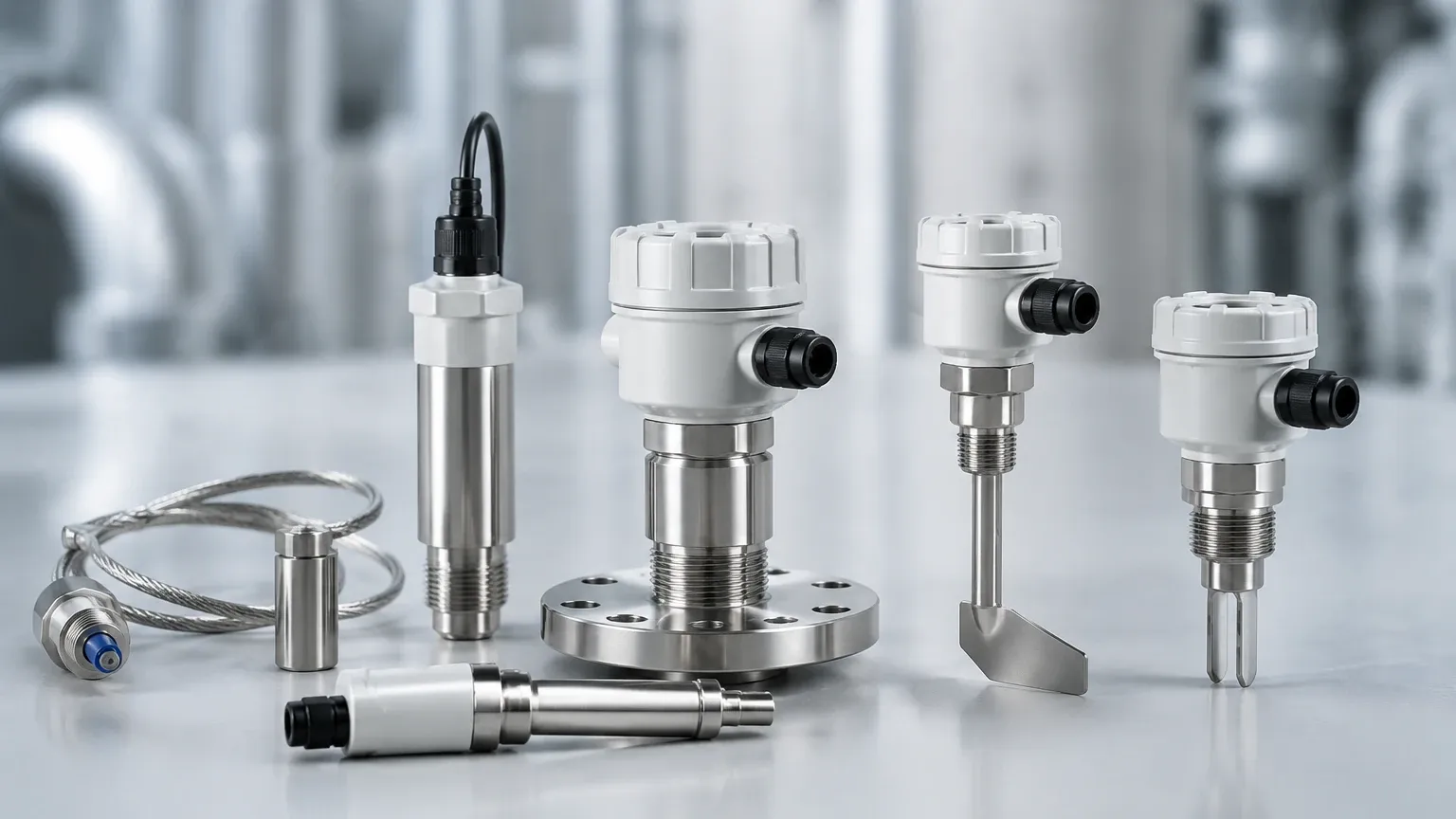
Industrial Level Switches are discrete sensors designed to detect the presence or absence of a substance at a specific height. Unlike continuous level transmitters that provide a constant stream of data (e.g., 4-20mA or HART signals), a level switch changes its output state only when the material reaches the sensing element. This binary feedback is essential for safety instrumented systems (SIS) and basic control loops.
Measurement Principles of Industrial Level Switches
To select the right level one switches for a specific application, engineers must first understand the underlying physical principles that govern different sensor types. Each technology interacts with the process media differently, making some more suitable for viscous liquids and others for dry solids.
Float-Operated Level Switches
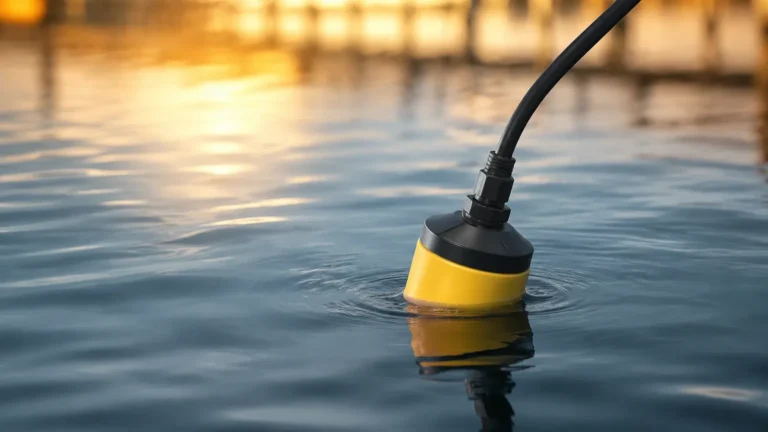
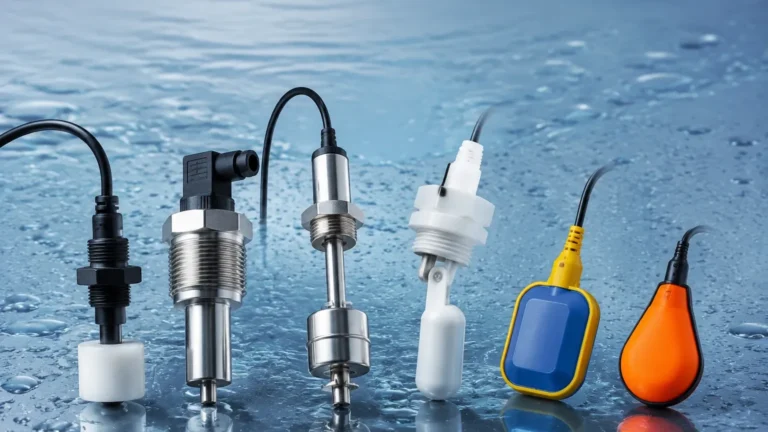
Float switches operate based on Archimedes' principle of buoyancy. A float, containing a permanent magnet, moves with the liquid level. When the float reaches a predetermined point, the magnetic field actuates a hermetically sealed reed switch located within the stationary stem.
These are among the most common "level one" solutions due to their simplicity and lack of power requirement for the sensing element itself. However, they are mechanical in nature and can be prone to sticking if the liquid contains high levels of particulates or is prone to crystallization.
Vibrating Tuning Fork Switches
The vibrating level switch uses a piezoelectric crystal to energize a tuning fork at its natural resonance frequency in the air. When the fork is immersed in a liquid or solid, the frequency changes or the vibration is damped. An electronic circuit detects this shift and converts it into a switching signal.
This technology is highly versatile because it is largely independent of the chemical properties of the media, such as dielectric constant, density (above a certain threshold), or conductivity. It is frequently used as a level one switch for overfill protection in chemical processing and water treatment.
Capacitive Level Switches
Capacitive sensors operate by measuring the change in electrical capacitance between the sensor probe and the vessel wall (or a reference probe). The material acts as a dielectric. As the level rises and covers the probe, the capacitance increases because the dielectric constant of the material is higher than that of air.
These switches are effective for both liquids and solids but require calibration to the specific media. Modern versions often include "active shield" technology to ignore material buildup on the probe, which is a common failure mode in sticky applications.
Conductive Level Switches
Conductive switches are used exclusively with conductive liquids (typically water-based). They utilize a low-voltage, low-current circuit between two electrodes. When the liquid touches both electrodes, the circuit is completed, and the switch triggers. This is a cost-effective solution for many water treatment and wastewater applications, though it cannot be used with oils or purified water with low conductivity.
Selection Criteria for Level One Switches
When specifying level one switches for a project, several technical parameters must be confirmed to ensure long-term reliability and accuracy. Misapplication of technology is the leading cause of instrument failure in the field.
1. Media Characteristics: Is the material a liquid, slurry, or solid? What is its density (kg/m³)? For vibrating forks, a minimum density (often 0.5 g/cm³ to 0.7 g/cm³) is required to damp the vibration effectively.
2. Process Conditions: The operating temperature and pressure are critical. Standard float switches might be rated up to 150°C (302°F) and 40 bar (580 psi), but extreme applications in oil and gas may require specialized high-pressure housings.
3. Chemical Compatibility: The wetted parts—the materials that actually touch the process media—must be resistant to corrosion. Common materials include 316L stainless steel, PTFE (Teflon), and PP (Polypropylene).
4. Output Type: Depending on the control system (PLC or DCS), you may require a relay output (SPDT/DPDT), a transistor output (PNP/NPN), or a two-wire loop-powered signal.
5. Hazardous Area Ratings: If the tank contains flammable liquids, the switch must be certified for use in explosive atmospheres (e.g., ATEX, IECEx, or UL Class I, Div 1).
Technical Comparison and Selection Table
The following table provides a general comparison of common technologies used for primary level detection.
| Technology | Suitable Media | Pros | Cons | Typical Applications |
| :— | :— | :— | :— | :— |
| Float | Clean Liquids | Low cost, no power needed for reed | Moving parts, prone to clogging | Water tanks, fuel storage |
| Vibrating Fork | Liquids & Solids | Robust, ignore foam/bubbles | Minimum density required | Chemical tanks, grain silos |
| Capacitive | Liquids, Pastes, Powders | No moving parts, sensitive | Requires calibration to media | Food & Beverage, Slurries |
| Conductive | Conductive Liquids | Very low cost, simple | Only for conductive media | Sumps, wastewater pits |
| Ultrasonic Gap | Clean Liquids | High accuracy, no moving parts | Sensitive to heavy aeration | Refineries, high-purity water |
Installation Best Practices and Considerations
Proper installation is as important as selecting the right technology. Even the best level one switches will fail if they are mounted in a way that interferes with their sensing mechanism.
Orientation and Positioning
* Side Mounting: Most vibrating forks and float switches can be mounted horizontally through the side of a tank. Ensure the switch is positioned away from the direct path of the inlet flow to prevent false triggers or physical damage from the force of the incoming material.
* Top Mounting: For deep tanks or underground sumps, top-mounting probes (capacitive or conductive) or cable-suspended floats are preferred. Ensure the length is accurately measured to hit the required "Level 1" threshold.
Avoiding Interference
* Turbulence: In tanks with agitators or high-velocity inlets, use a stilling well to provide a calm area for the sensor to operate. This is particularly important for float-type switches.
* Buildup and Dead Zones: Ensure that the sensing element is not placed in a "dead zone" where material can accumulate and harden, such as a narrow nozzle. For capacitive sensors, the distance from the vessel wall must be maintained according to the manufacturer's specifications to avoid parasitic capacitance.
Wiring and Grounding
For electronic level switches (vibrating, capacitive, conductive), proper grounding is essential to prevent electrical noise from interfering with the signal. In the case of capacitive sensors, the metal tank wall often acts as the reference ground; for non-metallic tanks, a reference electrode or ground strap must be used.
Limitations and Maintenance Requirements
While level switches are designed for durability, they are not "set and forget" devices. Understanding their limitations helps in designing a better maintenance schedule.
* Coating and Scaling: In applications like wastewater or chemical mixing, material can build up on the sensor. While some technologies (like tuning forks with specific coatings) are designed to shed material, periodic cleaning may still be required to prevent "bridging" or false positives.
* Mechanical Wear: Float switches have moving parts that eventually wear out. In high-cycle applications, a non-contact or solid-state switch (like a vibrating fork) is often a more reliable long-term choice.
* Environmental Factors: Extreme ambient temperatures or high humidity can lead to condensation inside the instrument housing. Always use proper cable glands and create a "drip loop" in the wiring to prevent water from entering the enclosure.
Frequently Asked Questions (FAQ)
Q: Can a level switch be used for continuous measurement?
A: No. A level switch only provides a signal at a specific point. If you need to know the exact percentage of volume in a tank at all times, you require a continuous level transmitter, such as a radar or ultrasonic sensor.
Q: What is the difference between a PNP and an NPN output?
A: These refer to the type of transistor output. A PNP switch "sources" power to the load (positive switching), while an NPN switch "sinks" the load to the ground (negative switching). The choice depends on your PLC's input card requirements.
Q: Why is my vibrating fork switch vibrating in the air but not switching when submerged?
A: This usually happens if the liquid's density is lower than the switch's minimum sensitivity setting, or if there is a significant coating of viscous material that has effectively "deadened" the fork's ability to sense the change in environment.
Q: How do I handle foam in a tank?
A: Foam can be a challenge for many level one switches. Vibrating forks are generally excellent at ignoring light foam and only triggering when the actual liquid level is reached. Capacitive sensors can often be tuned to ignore foam, whereas ultrasonic gap switches might be confused by it.
By carefully evaluating the process media, environmental conditions, and installation requirements, engineers can implement level one switches that provide reliable, long-term service, ensuring the safety and efficiency of industrial operations.