Level Switch Ametek
Level Switch Ametek
In industrial process control, point level detection serves as a critical safeguard for inventory management, overfill prevention, and pump protection. Among the various manufacturers in this space, Ametek—specifically through its Drexelbrook brand—has established a significant footprint with specialized technologies designed to handle challenging environments. This article explores the technical landscape of the level switch Ametek portfolio, examining the underlying measurement principles, selection criteria for engineers, and how these solutions compare to broader industrial Level Switches used in modern automation.
Understanding Point Level Measurement Principles
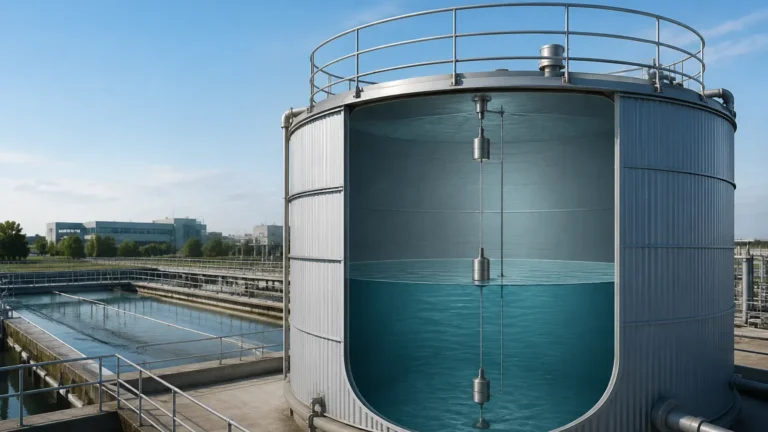
Before selecting a specific level switch, it is essential to understand the physics governing the detection. Point level switches do not provide a continuous 0-100% reading; instead, they act as a binary sensor (on/off) to indicate when a material reaches a specific height in a vessel.
RF Admittance (Radio Frequency)
Ametek Drexelbrook is perhaps best known for pioneering RF Admittance technology. This is an evolution of standard capacitance measurement. While a basic capacitance switch measures the change in dielectric constant between a probe and the tank wall, RF Admittance uses a sophisticated three-terminal bridge circuit.
This technology splits the signal into two components: the capacitive (reactive) component and the resistive (conductive) component. By analyzing these simultaneously, the electronics can "ignore" the effects of material buildup or coating on the probe. For example, if a sticky chemical coats a probe, a standard capacitance switch might stay in the "alarm" state even after the level drops. An RF Admittance level switch calculates that the coating is resistive and subtracts it from the total signal, ensuring an accurate reading of the actual liquid level.
Vibrating Tuning Fork
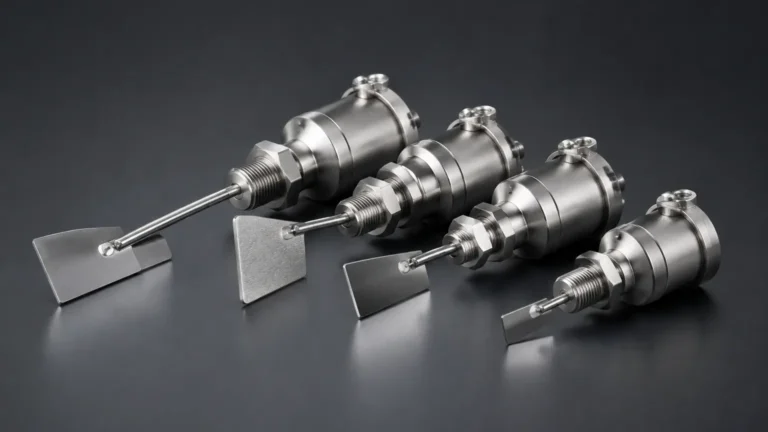
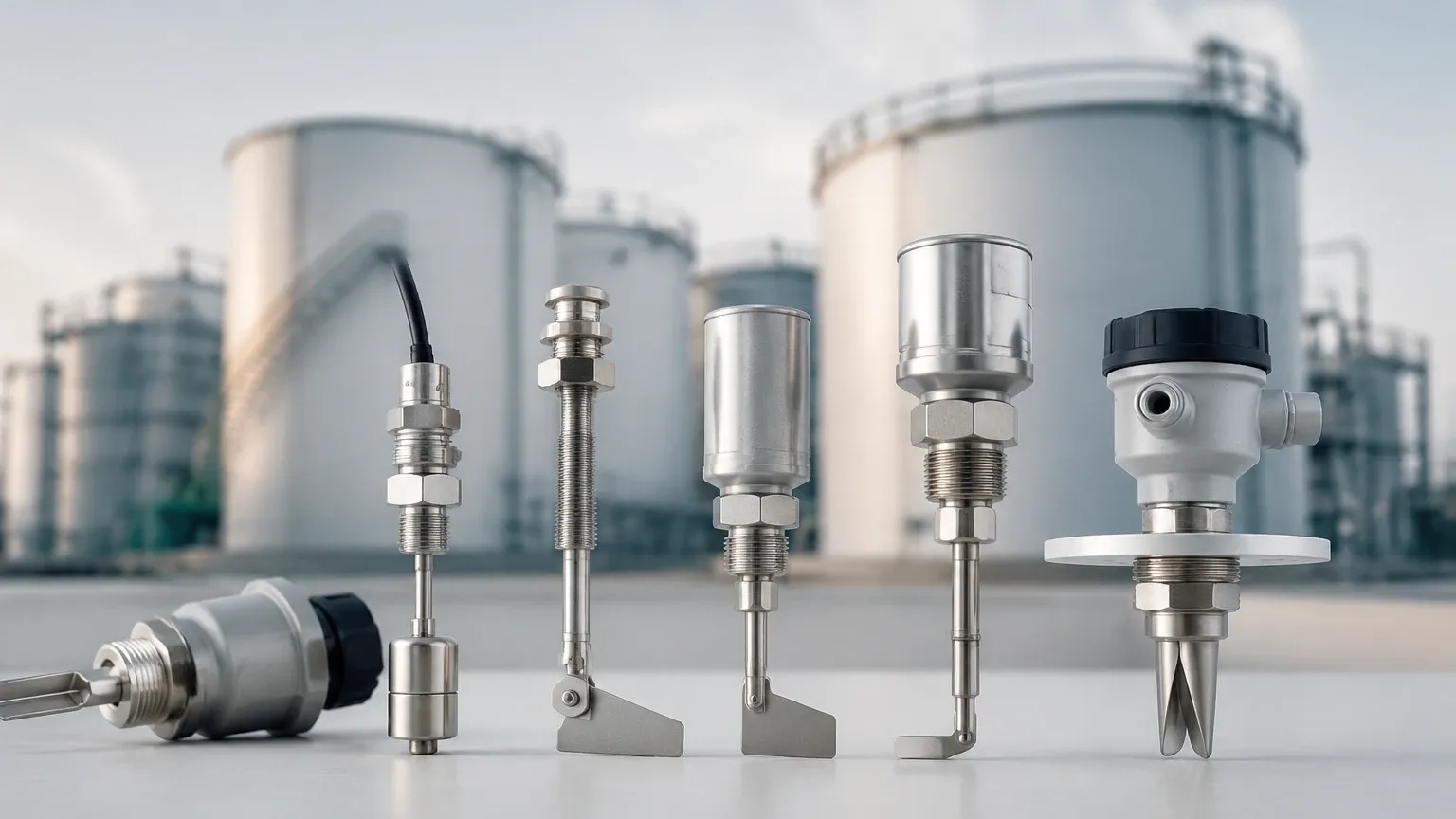
Vibrating level switches utilize piezoelectric crystals to vibrate a metal fork at its natural resonance frequency (typically around 1,200 Hz to 1,400 Hz). When the fork is immersed in a liquid or solid, the frequency shifts or the amplitude is dampened. The internal electronics detect this change and trigger the relay. This principle is highly reliable for most clean liquids and is largely unaffected by changes in pressure, temperature, or density.
Float and Displacer Principles
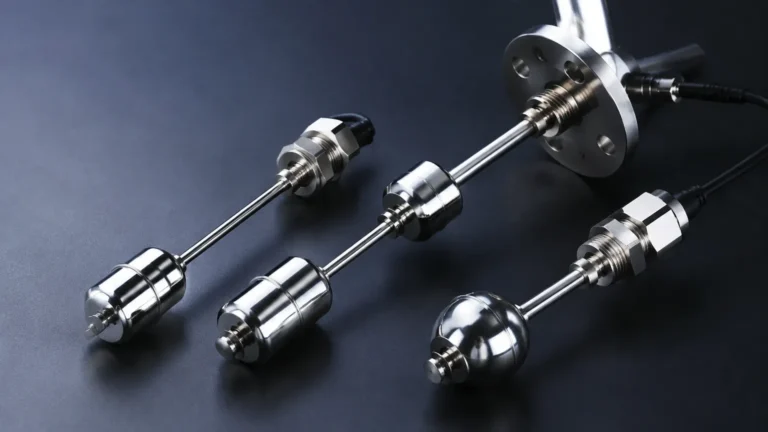
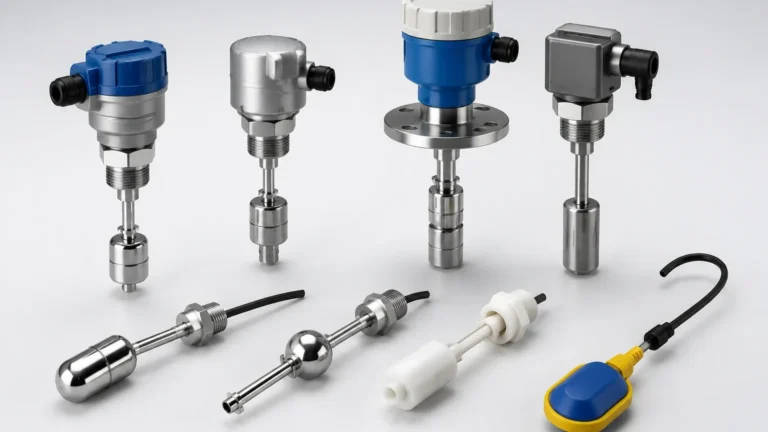
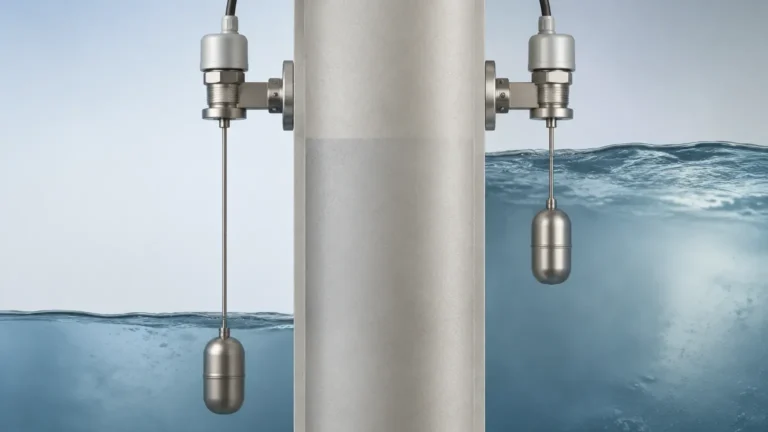
Mechanical level switches rely on buoyancy. A float with an internal magnet moves with the liquid level, actuating a reed switch or a microswitch at a predetermined point. Displacers, conversely, do not float; they are heavier than the liquid and rely on the change in apparent weight (Archimedes' principle) as the liquid rises to trigger a spring-loaded mechanism. These are often used in high-pressure oil and gas separators.
Ultrasonic Point Level
Ultrasonic switches use a gap sensor consisting of two piezoelectric crystals. One crystal transmits an ultrasonic signal across a small gap (usually 12 mm to 25 mm / 0.5" to 1"). When the gap is filled with air, the signal is too weak to reach the receiver. When liquid fills the gap, the signal travels efficiently, triggering the switch. This is ideal for non-contact applications or where the physical properties of the liquid vary widely.
Key Evaluation Criteria for Level Switch Ametek Applications
When evaluating a level switch Ametek or a similar industrial alternative from manufacturers like Welk, engineers must define the application boundaries to avoid premature sensor failure.
1. Media Characteristics: Is the material a liquid, slurry, or granular solid? Is it corrosive, conductive, or prone to coating? RF Admittance is superior for coating-prone liquids, while tuning forks are excellent for light powders.
2. Process Conditions: Operating temperatures can range from cryogenic levels to over 500°C (932°F). High-pressure environments (exceeding 100 bar / 1450 psi) require specialized housing and flange ratings.
3. Safety Requirements: For hazardous areas, switches must carry ATEX, IECEx, or FM certifications for intrinsic safety or explosion-proof enclosures. Furthermore, for critical overfill protection, SIL (Safety Integrity Level) ratings are often mandatory.
4. Output Type: Does the control system require a dry contact relay, a 2-wire loop-powered signal (8/16mA), or a transistor output (PNP/NPN)?
Technical Comparison Table
| Technology | Best Application | Primary Advantage | Main Limitation |
| :— | :— | :— | :— |
| RF Admittance | Sticky liquids, slurries, interfaces | Ignores probe coating/buildup | Requires grounding to tank wall |
| Vibrating Fork | General liquids, light powders | No calibration required | Sensitive to high-viscosity media |
| Float Switch | Water tanks, fuel storage | Simple, low-cost | Moving parts can jam in dirty media |
| Ultrasonic Gap | Acids, high-purity chemicals | No moving parts | Affected by heavy aeration/foam |
| Capacitance | Non-conductive oils, dry solids | Compact, versatile | False alarms if material coats probe |
Installation and Engineering Considerations
Proper installation is as critical as technology selection. Even the most advanced level switch Ametek unit will fail if the physical environment interferes with the sensing element.
Mounting Orientation
Most point level switches can be mounted horizontally (through the side of the tank) or vertically (from the top). For horizontal mounting, it is vital to ensure that the sensing element is positioned away from the inflow stream to prevent false triggers caused by splashing. If a vibrating fork is used in a horizontal position, the forks should be oriented vertically (one above the other) so that liquid can drain freely and not get trapped between the tines.
Nozzle Length and Dead Zones
When installing a switch in a nozzle, the "active" part of the sensor must extend past the nozzle into the vessel. If the sensor remains inside the nozzle, material can become trapped, leading to a permanent "high" alarm. For RF Admittance probes, the "guard" section of the probe must be long enough to clear the nozzle and any internal insulation.
Grounding and Shielding
For electronic switches, especially RF and capacitance types, the tank wall acts as the reference ground. In plastic or lined tanks, a grounding rod or a concentric shield must be used to provide a return path for the signal. Failure to provide an adequate ground will result in unstable readings or a complete lack of sensitivity.
Common Risks and Limitations
While industrial level switches are robust, they are not universal solutions. Engineers should be aware of the following risks:
* Turbulence and Agitation: High-velocity flow or agitator blades can physically damage probes or cause intermittent switching. In these cases, a stilling well or a bypass chamber (magnetic level gauge style) is recommended.
* Foam and Aeration: Many level switches struggle with foam. An ultrasonic gap sensor may see foam as a liquid, while a tuning fork might ignore it. RF Admittance can often be tuned to either detect or ignore foam depending on the dielectric difference.
* Material Compatibility: Ensure the wetted materials (316 Stainless Steel, Hastelloy, Monel, PFA, etc.) are compatible with the process fluid. Chemical corrosion can lead to probe thinning, causing leakage or electrical shorts.
* Dielectric Constant (Dk): For RF and capacitance switches, the material must have a dielectric constant significantly different from air (Dk=1). Most hydrocarbons have a low Dk (1.8 to 2.5), requiring high-sensitivity electronics.
Frequently Asked Questions (FAQs)
Q: Can a level switch be used for interface detection?
A: Yes. RF Admittance is particularly effective at detecting the interface between two liquids, such as oil and water. By tuning the electronics to the dielectric of the lower liquid, the switch can ignore the upper layer and only trigger when the interface reaches the probe.
Q: How often should level switches be calibrated?
A: Many modern switches, like vibrating forks, are "calibration-free." However, for RF Admittance and capacitance switches, a one-time calibration during commissioning is usually required. Annual proof-testing is recommended for safety-critical applications (SIL).
Q: What is the difference between a "fail-safe high" and "fail-safe low" setting?
A: This determines the state of the relay in the event of a power failure. A "Fail-Safe High" (FSH) setting ensures the relay de-energizes when the level is high or power is lost, preventing overfills. "Fail-Safe Low" (FSL) is used for dry-run protection of pumps.
Q: Are Ametek level switches compatible with existing PLC systems?
A: Generally, yes. Most industrial level switches provide standard outputs such as SPDT relays, DPDT relays, or 4-20mA step signals that are easily integrated into any standard PLC or DCS architecture.
Conclusion
Selecting a level switch Ametek solution requires a deep understanding of the specific process challenges, from material conductivity to the presence of coatings. While Ametek's Drexelbrook line offers specialized RF Admittance technology for the most difficult applications, many industrial needs can also be met by the diverse range of Level Switches provided by manufacturers like Welk.
By prioritizing measurement principles—such as choosing RF Admittance for sticky slurries or vibrating forks for clean liquids—and adhering to strict installation guidelines, plant operators can ensure long-term reliability and safety. Whether the goal is protecting a pump from running dry or preventing an environmental disaster through overfill protection, the right point level technology is the first line of defense in industrial automation.