Level Switch Water Tank
Level Switch Water Tank
In industrial and commercial water management, maintaining precise control over liquid volumes is essential for operational efficiency, equipment safety, and resource conservation. A level switch water tank system serves as the primary safeguard against overflow, dry-running of pumps, and process interruptions. Unlike continuous level transmitters that provide a constant data stream of the liquid's height, level switches are point-level sensors designed to trigger an electrical signal when the water reaches a specific threshold.
Selecting the appropriate technology for a water tank application requires an understanding of the physical properties of the water (such as conductivity and purity), the environmental conditions of the tank, and the specific control requirements of the facility. This guide explores the engineering principles, selection criteria, and installation best practices for implementing level switches in water storage and processing environments.
Core Measurement Principles for Water Level Switches
Before selecting a device, it is critical to understand the underlying physics that govern different types of Level Switches. Each technology offers distinct advantages depending on whether the application involves potable water, wastewater, or chemically treated process water.
Float Level Switches (Mechanical/Magnetic)
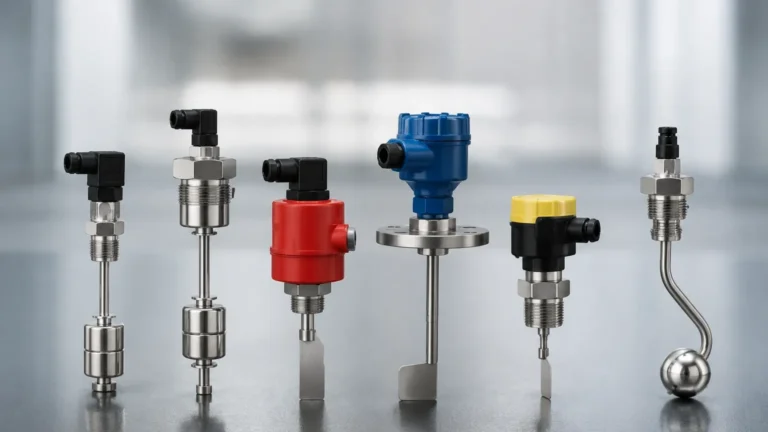
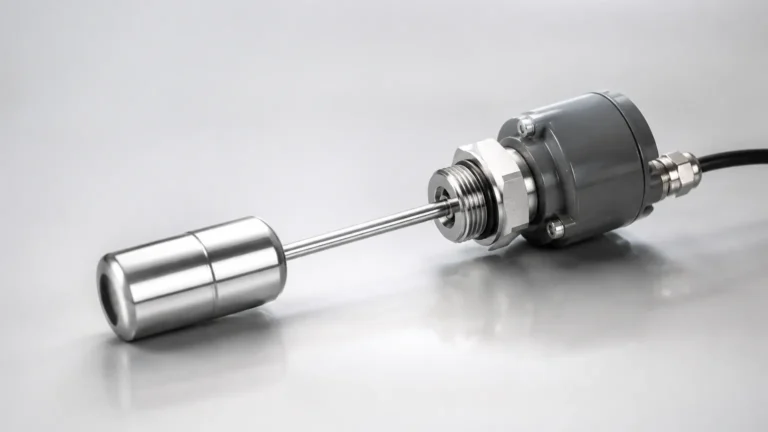
Float-based systems are the most traditional form of level detection. They operate on the principle of buoyancy. A float, typically made of stainless steel or high-density plastic, moves with the water level. In mechanical versions, the movement of the float directly actuates a microswitch via a lever. In magnetic versions, a permanent magnet inside the float moves past a reed switch housed within a stationary stem, opening or closing the circuit.
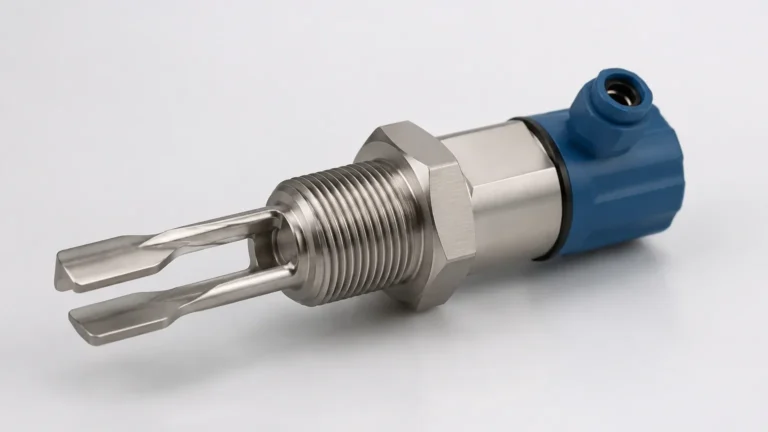
Vibrating Tuning Fork Switches
These electronic switches utilize a sensing element shaped like a tuning fork, which is vibrated at its natural frequency by a piezoelectric crystal. When the water level rises and immerses the fork, the frequency of vibration changes or stops. This shift is detected by the internal electronics and converted into a switching signal. This technology is highly reliable because it is unaffected by flow, turbulence, bubbles, or foam.
Capacitance Level Switches
Capacitance switches treat the sensor probe and the tank wall (or a reference probe) as two plates of a capacitor. Water has a significantly higher dielectric constant than air. When water covers the probe, the capacitance of the system increases. The switch detects this change and triggers the output. These are ideal for applications where non-contact through a non-metallic tank wall is required, or for compact installations.
Ultrasonic Point Level Switches
Ultrasonic switches use high-frequency sound waves to detect the presence of liquid. A transducer emits an ultrasonic pulse that travels through a gap in the sensor head. If the gap is filled with air, the signal is attenuated; if filled with water, the signal is transmitted to a receiver. This non-contact or gap-sensing approach is useful for avoiding mechanical wear.
Selection Criteria for Level Switch Water Tank Applications
Choosing the right level switch water tank solution involves balancing technical specifications with cost-effectiveness. The following table provides a comparison of common technologies used in water management.
| Technology | Typical Accuracy | Pressure Range | Temperature Range | Best For |
| :— | :— | :— | :— | :— |
| Float Switch | ±2 mm to 5 mm | Up to 40 bar (4 MPa) | -20°C to 150°C | Clean water, simple pump control |
| Tuning Fork | ±1 mm | Up to 64 bar (6.4 MPa) | -40°C to 150°C | Turbulent water, wastewater |
| Capacitance | ±1 mm to 2 mm | Up to 25 bar (2.5 MPa) | -40°C to 125°C | Non-metallic tanks, small spaces |
| Hydrostatic Switch | ±0.5% FS | Dependent on depth | -10°C to 80°C | Deep tanks, boreholes |
Material Compatibility
For standard water applications, 304 or 316L stainless steel is the industry standard for wetted parts. However, if the water tank contains deionized (DI) water or aggressive chemicals for water treatment, plastic materials like PVC, PP (Polypropylene), or PVDF may be required to prevent corrosion and contamination.
Electrical Requirements
Engineers must confirm the output type required for the control system. Common options include:
* SPDT/DPDT Relays: For direct control of small pumps or valves.
* PNP/NPN Transistor Outputs: For integration with Programmable Logic Controllers (PLCs).
* Two-wire Loop Powered: For simplified wiring in industrial automation networks.
Key Application Functions in Water Tanks
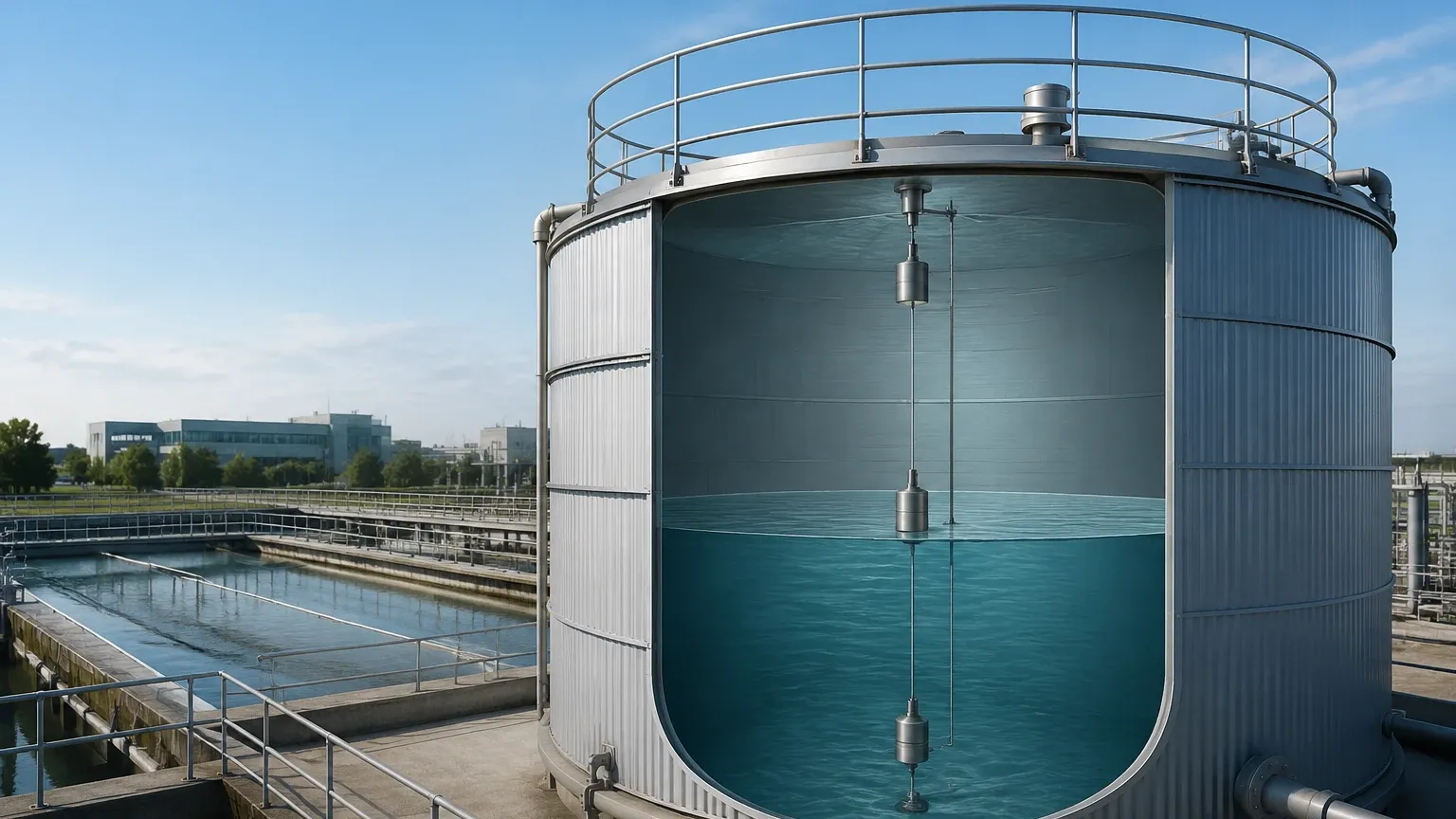
In a standard level switch water tank setup, switches are usually deployed in specific configurations to perform critical safety and operational tasks.
High-Level Alarm (Overfill Prevention)
A switch is placed at the top of the tank to prevent water from overflowing. This is a critical safety feature that can shut off an inlet valve or stop a transfer pump. In many jurisdictions, redundant high-level switches are required for environmental protection.
Low-Level Alarm (Dry-Run Protection)
When water levels drop too low, pumps can cavitate or overheat if they continue to run. A low-level switch ensures that the pump is deactivated before the water level falls below the intake pipe. This significantly extends the lifespan of expensive pumping equipment.
Automatic Tank Filling (Hysteresis Control)
By using two switches (one high and one low), a control circuit can manage the automatic filling of a tank. The pump starts when the water hits the low-level switch and continues to run until the high-level switch is reached. This prevents "short-cycling" of the pump, where the motor turns on and off too frequently, leading to premature failure.
Installation and Configuration Best Practices
Proper installation is as important as selecting the right sensor. Even the most advanced level switch water tank system will fail if environmental factors are ignored.
1. Avoid Turbulence: Do not install level switches directly under an inlet pipe where falling water can cause false triggers or mechanical damage to the probe. If turbulence is unavoidable, use a stilling well (a perforated pipe) to shield the sensor.
2. Mounting Orientation: Float switches are often side-mounted (horizontal) or top-mounted (vertical). Ensure there is enough clearance for the float to move through its full range of motion without hitting the tank wall or internal baffles.
3. Dead Zones: Electronic switches like ultrasonic or radar-based point switches have a "dead zone" near the sensor head where measurement is impossible. Ensure the switch is mounted high enough that the maximum water level does not enter this zone.
4. Cable Protection: For submersible switches (hydrostatic or cable-suspended floats), use a protective conduit or ensure the cable material is rated for long-term immersion. In outdoor tanks, UV-resistant cabling is mandatory.
5. Grounding: Ensure the instrument is properly grounded to prevent electrical noise from interfering with the switching signal, especially when using capacitance or tuning fork technologies.
Operational Limitations and Maintenance
While level switches are designed for durability, they are not maintenance-free. Understanding their limitations helps in developing a robust maintenance schedule.
* Buildup and Scaling: In hard water applications, calcium carbonate (scale) can build up on mechanical floats or tuning forks. This increase in mass can prevent a float from rising or dampen the vibration of a tuning fork, leading to switch failure. Periodic cleaning is required.
* Coating: Capacitance switches can be affected by conductive coatings on the probe. Selecting a switch with "active shield" technology can help ignore the effects of buildup.
* Mechanical Wear: Mechanical float switches have moving parts that will eventually wear out. In high-cycle applications (where the switch triggers many times per hour), solid-state electronic switches like tuning forks are preferred for their longer service life.
* Environmental Sealing: For outdoor water tanks, the switch housing must have an appropriate Ingress Protection (IP) rating, typically IP66, IP67, or IP68, to withstand rain, humidity, and wash-down procedures.
Frequently Asked Questions (FAQs)
Q: Can I use a single level switch to control a pump?
A: A single switch can be used for basic on/off control, but it often leads to pump "chattering" if the water surface is wavy. It is better to use two switches or a single switch with built-in hysteresis (differential) to provide a buffer zone between the start and stop points.
Q: How do I choose between a horizontal and vertical float switch?
A: Horizontal switches are easier to install in existing tanks through a side-wall port. Vertical switches are better for deep tanks where you want to detect multiple levels using a single mounting point on the tank roof.
Q: Are level switches suitable for wastewater tanks?
A: Yes, but you must choose non-clogging designs. Vibrating tuning forks or large-diameter cable-suspended float switches are generally better for wastewater than small, intricate mechanical switches that might get fouled by debris.
Q: What is the difference between a level switch and a level transmitter?
A: A level switch provides a discrete output (On/Off) at a specific point. A level transmitter provides a continuous output (e.g., 4-20mA or RS485) representing the exact level across the entire range of the tank.
For industrial operators, the reliability of a level switch water tank configuration depends on matching the sensor technology to the specific dynamics of the water system. By following these engineering guidelines and considering the long-term maintenance requirements, facilities can ensure safe and efficient water management for years to come.