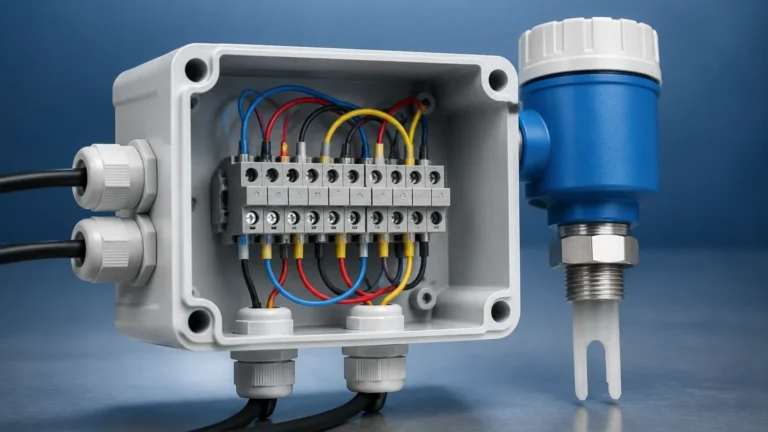
Level Switch Displacer
Level Switch Displacer
In the landscape of industrial automation and process control, ensuring reliable point-level detection is critical for safety, efficiency, and inventory management. Among the various technologies available, the level switch displacer remains a cornerstone for high-pressure, high-temperature, and heavy-duty applications. Unlike standard float switches that rely on buoyancy to stay atop a liquid surface, displacer-based systems operate on the principle of weight displacement, offering a robust solution for challenging environments where other sensors might fail.
Professional manufacturers like Welk provide a range of Level Switches designed to meet the rigorous demands of water treatment, chemical processing, and the oil and gas industry. Understanding the mechanical principles and selection criteria for a level switch displacer is essential for engineers tasked with designing or maintaining process vessels.
Measurement Principles of Displacer Technology
The operation of a level switch displacer is rooted in Archimedes' Principle, which states that a body immersed in a fluid is buoyed up by a force equal to the weight of the fluid displaced by the body. However, the mechanical execution of this principle in a displacer switch differs significantly from a float switch.
Buoyancy vs. Weight
In a float switch, the sensing element is lighter than the liquid and moves up and down on the surface. In contrast, a displacer is intentionally designed to be heavier than the liquid it is measuring. It is suspended from a spring or a torque tube mechanism.
When the liquid level is below the displacer, the full weight of the displacer pulls on the spring. As the liquid rises and covers the displacer, the displacer remains partially or fully submerged but does not float. Instead, the buoyant force of the liquid reduces the effective weight of the displacer. This change in apparent weight causes the spring to retract slightly or the torque tube to twist. This mechanical movement is then used to actuate a switch—typically through a magnetic coupling that isolates the process pressure from the electrical housing.
Sensitivity and Density
Because the device measures a change in weight, the density (specific gravity) of the process liquid is a critical factor. A level switch displacer must be calibrated for the specific gravity of the medium. If the liquid density changes significantly, the point at which the switch actuates will shift. This characteristic makes displacer switches particularly effective for interface detection (e.g., the boundary between oil and water), as the displacer can be weighted to react specifically to the change in buoyant force between two immiscible liquids.
Key Components of a Displacer Level Switch
A standard displacer system consists of three primary sub-assemblies:
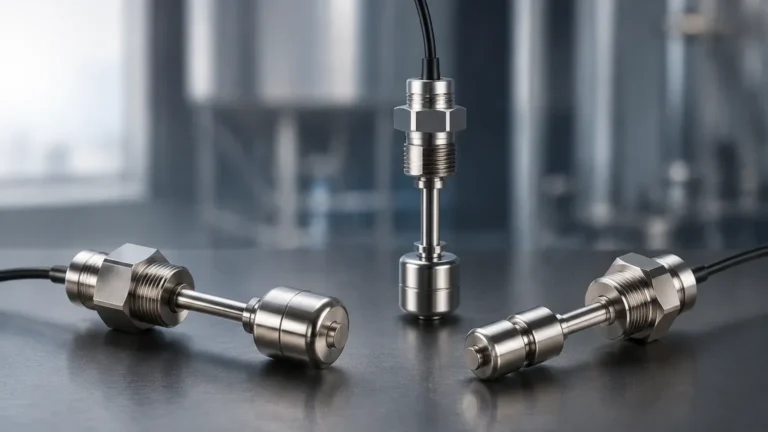
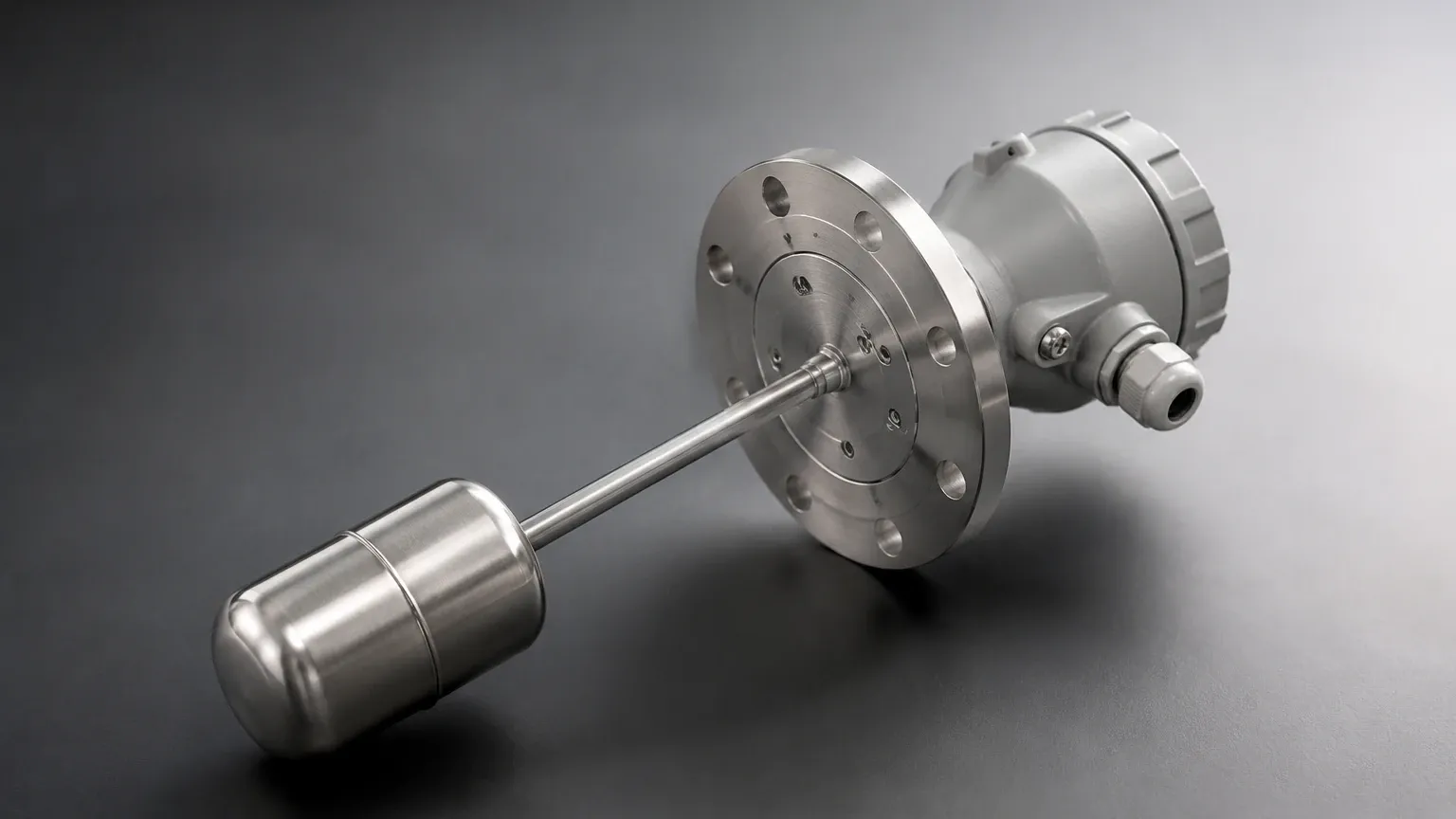
1. The Displacer Element: Usually a solid or hollow cylinder made of stainless steel, Hastelloy, or plastic (PTPE/PP). It is designed to withstand the process temperature and pressure.
2. The Suspension Mechanism: This includes the spring or torque tube and the range rod. It translates the change in buoyancy into linear or rotary motion.
3. The Switch Housing: This contains the electrical or pneumatic switching elements. Most modern units use a magnetic sleeve attached to the range rod. As the rod moves, the magnet attracts or repels a switch mechanism inside the housing, ensuring a hermetic seal between the process and the electronics.
Practical Selection Criteria
Choosing the right level switch displacer requires a thorough analysis of the process conditions. Engineers should evaluate the following parameters before procurement:
Specific Gravity (SG)
The most vital piece of information is the minimum and maximum specific gravity of the liquid. Displacers are often rated for a specific range (e.g., SG 0.4 to 1.2). If the liquid is too light, the buoyant force may be insufficient to trigger the switch.
Operating Pressure and Temperature
Displacer switches excel in high-pressure environments, often rated up to 150 bar (approx. 2175 psi) or higher. Similarly, because the sensing element is a simple mechanical mass, they can handle temperatures exceeding 400°C (752°F) when equipped with cooling fins for the switch housing.
Mounting Configuration
* Top Mounted: The displacer hangs directly into the tank. This is ideal for large sumps or tanks where side access is limited.
* External Cage (Side Mounted): The displacer is housed in a separate chamber piped to the side of the vessel. This allows for maintenance and testing without depressurizing the main tank.
Selection Table: Displacer vs. Other Technologies
| Feature | Displacer Switch | Float Switch | Ultrasonic Sensor | Radar (Non-contact) |
| :— | :— | :— | :— | :— |
| Pressure Range | Very High (up to 200+ bar) | Moderate (up to 40 bar) | Atmospheric | High |
| Temp Range | Very High (up to 450°C) | Moderate (up to 200°C) | Low (up to 100°C) | Very High |
| Interface Detection | Excellent | Poor | Not Applicable | Good (Guided Wave) |
| Turbulence Risk | Low (with still well) | High | High | Low |
| Cost | Moderate to High | Low | Moderate | High |
Installation Considerations
To ensure the longevity and accuracy of a level switch displacer, proper installation is paramount.
Stilling Wells and Cages
In tanks with high turbulence or agitation, the displacer must be protected. A stilling well (a vertical pipe with vent holes) prevents the displacer from swinging, which could cause mechanical fatigue or false switching. For external cage units, the piping should be level and clear of obstructions to ensure the liquid level in the cage accurately mirrors the level in the vessel.
Orientation and Clearance
The displacer must hang perfectly vertical. Any tilt can cause the displacer to rub against the side of the chamber or stilling well, creating friction that interferes with the weight measurement. Additionally, ensure there is sufficient overhead clearance for the removal of the displacer during maintenance cycles.
Venting and Draining
For external cage installations, include vent and drain valves. This allows the operator to simulate level changes for testing (proof testing) and to clear any sediment that may have settled in the bottom of the cage.
Limitations and Operational Risks
While robust, the level switch displacer is not a universal solution. Engineers must be aware of the following limitations:
1. Build-up and Scaling: In applications with heavy paraffin, calcium deposits, or sticky resins, material can accumulate on the displacer. This increases its weight and changes its volume, leading to significant calibration drift.
2. Vibration: Severe structural vibration can cause the spring mechanism to oscillate, potentially leading to "chattering" of the switch contacts.
3. Density Fluctuations: If the process involves liquids with varying densities (e.g., a mixing tank where the concentration changes), the switch point will not remain constant. In such cases, a continuous level transmitter might be more appropriate.
4. Mechanical Wear: Because it is a mechanical system with moving parts (springs and pivots), it is subject to wear over decades of use, unlike solid-state electronic sensors.
Maintenance and Troubleshooting
A regular maintenance schedule for a level switch displacer should include:
* Visual Inspection: Check for corrosion on the suspension rod and displacer element.
* Cleaning: Remove any scale or debris from the displacer surface.
* Functional Testing: Manually lift the rod or change the liquid level to ensure the switch actuates and resets at the correct points.
* Spring Inspection: Over time, springs can lose their tension (creep), especially in high-temperature applications. If the switch point has shifted and density is constant, the spring may need replacement.
Frequently Asked Questions (FAQs)
Q: Can a displacer switch be used for solids?
A: Generally, no. Displacer switches rely on the buoyant force of a liquid. Granular solids do not provide the uniform buoyant force required for the mechanism to operate accurately.
Q: How do I calibrate a displacer switch for a new liquid?
A: Calibration usually involves adjusting the spring tension or the position of the switch mechanism relative to the magnetic sleeve. You must know the specific gravity of the new liquid and follow the manufacturer's calibration curves to determine the new set point.
Q: What is the advantage of a multi-stage displacer switch?
A: A multi-stage unit uses multiple displacers on a single cable or rod, each set to trigger at a different height. This allows a single tank entry to provide high-level alarm, low-level alarm, and pump control functions.
Q: Is a displacer switch intrinsically safe?
A: The mechanical portion is inherently safe. However, the electrical switch housing must be rated for the specific hazardous area (e.g., ATEX/IECEx explosion-proof or intrinsically safe) if flammable vapors are present.
Conclusion
The level switch displacer remains a vital tool in the industrial engineer's arsenal, particularly for high-pressure and high-temperature applications where reliability is non-negotiable. By understanding the underlying physics of buoyancy and weight displacement, and by carefully considering factors like specific gravity and installation geometry, facilities can achieve precise and durable level control. For those seeking advanced Level Switches and customized measurement solutions, Welk offers the technical expertise and hardware necessary to optimize process safety and performance across global industrial sectors.