Level Switch Type 003s
Level Switch Type 003s
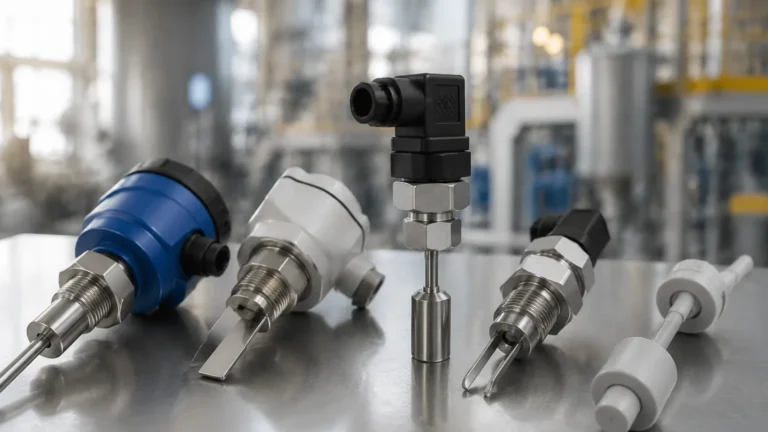
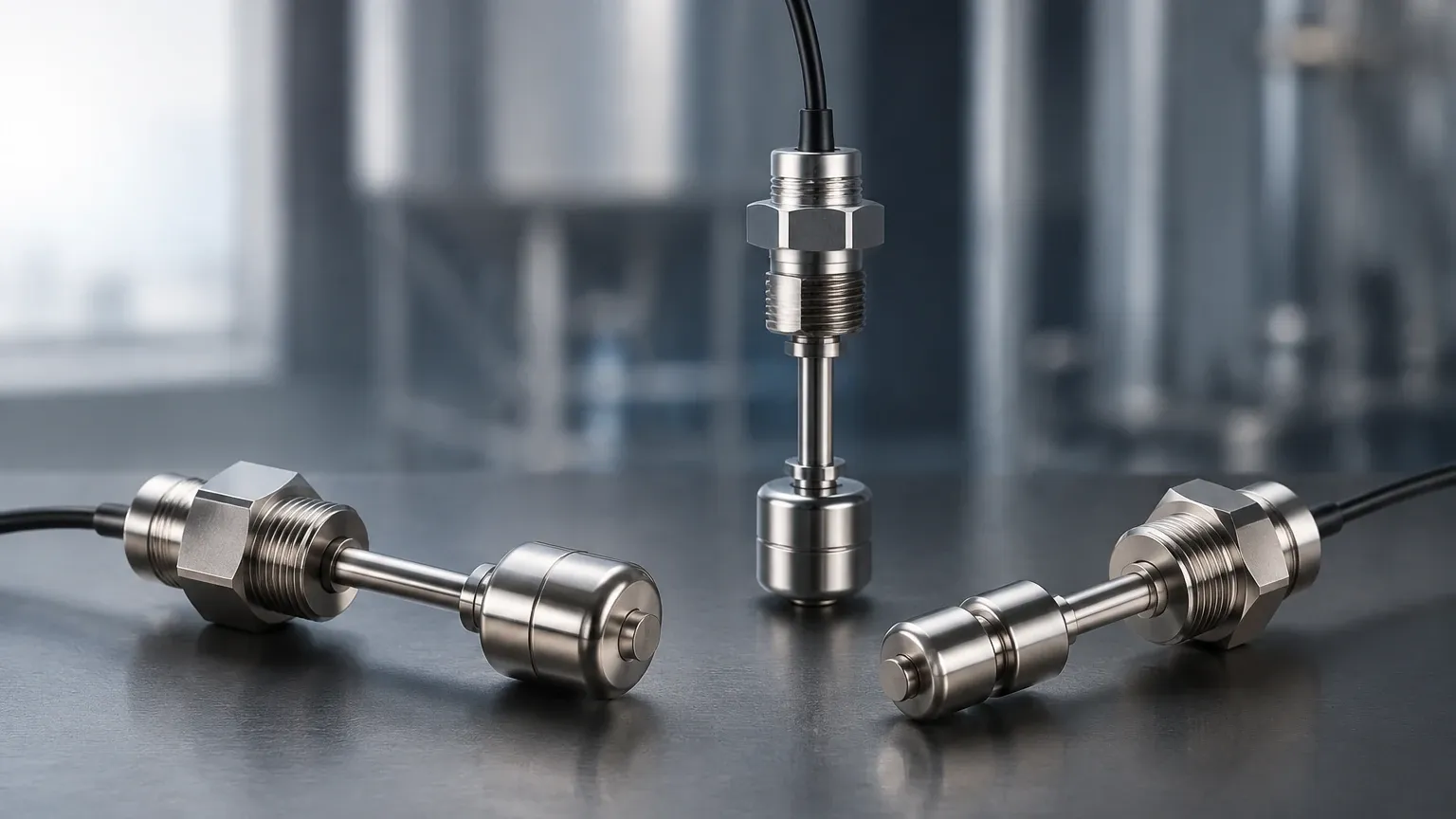
In the landscape of industrial process control, point level detection serves as a critical safeguard for equipment protection, inventory management, and environmental safety. Among the various technologies available, the level switch type 003s represents a specialized category of ultrasonic gap sensors. These instruments are engineered to provide reliable switching in liquid applications where traditional mechanical floats or tuning forks may face operational constraints.
Unlike continuous measurement systems that provide a constant stream of data regarding the exact volume of a tank, Level Switches are designed to trigger a discrete output—such as an alarm or a pump shut-off—when the liquid reaches a specific height. The 003s variant is particularly noted for its compact form factor and lack of moving parts, making it a preferred choice for high-reliability industrial environments.
Measurement Principle: Ultrasonic Attenuation
The fundamental operation of a level switch type 003s is based on the principle of ultrasonic attenuation across a defined gap. The sensor head typically features a small notch or "gap" between two piezoelectric crystals: a transmitter and a receiver.
The Acoustic Coupling Process
When the sensor is in a dry state (surrounded by air or gas), the acoustic impedance mismatch between the crystals and the air is significant. Ultrasonic waves generated by the transmitting crystal are almost entirely reflected or attenuated before they can reach the receiver. In this state, the electronic circuit detects no signal, signifying a "dry" condition.
When the liquid level rises and fills the gap, the liquid acts as an efficient medium for acoustic conduction. The ultrasonic signal travels across the gap with minimal loss, reaching the receiving crystal. This increase in signal amplitude is processed by the internal electronics to change the state of the output relay or transistor. Because this process relies on the physical presence of a medium to conduct sound rather than the movement of a mechanical component, the level switch type 003s is inherently resistant to wear and mechanical fatigue.
Technical Specifications and Design Features
The 003s design is optimized for versatility in demanding environments. While specific manufacturers may offer slight variations, the standard architecture follows a set of robust engineering parameters.
Material Composition
To ensure compatibility with a wide range of industrial fluids, the wetted parts of a level switch type 003s are commonly manufactured from 316L stainless steel. This provides excellent corrosion resistance against hydrocarbons, water, and many chemical solvents. For more aggressive media, specialized coatings or alternative alloys may be utilized.
Pressure and Temperature Ratings
Because the sensor is a solid-state device, it can withstand significant process pressures. Standard models are often rated for pressures up to 40 bar (approximately 580 psi), with high-pressure variants reaching 100 bar or more. Operating temperatures typically range from -40°C to +100°C (-40°F to +212°F), making them suitable for both cryogenic storage and moderately heated process vessels.
Output Options
Integration into modern automation systems is facilitated by various output configurations. The most common include:
* Relay Outputs: Potential-free contacts for direct control of small loads or alarms.
* Transistor Outputs (PNP/NPN): For high-speed switching and direct PLC interfacing.
* Two-Wire Current Loop: Mimicking a 4-20mA signal where 8mA represents dry and 16mA represents wet, allowing for line monitoring and fault detection.
Selection Criteria: When to Choose Type 003s
Selecting the correct instrument requires an understanding of the fluid properties and the vessel geometry. The level switch type 003s is an ideal candidate under specific conditions but may not be the universal solution for every application.
Comparison with Alternative Technologies
| Feature | Ultrasonic Gap (003s) | Vibrating Tuning Fork | Magnetic Float Switch |
| :— | :— | :— | :— |
| Moving Parts | None | Minimal (Vibration) | Yes (Float/Pivot) |
| Viscosity Limit | Low to Medium | High | Low |
| Foam Sensitivity | Moderate | High | Low |
| Aerated Liquids | High Sensitivity | Low Sensitivity | Low Sensitivity |
| Build-up Resistance| Moderate | High | Low |
| Installation Space| Very Compact | Medium | Large |
Ideal Applications
1. Pump Protection: Preventing dry-run conditions in pipelines and suction tanks.
2. Oily Water Separators: Detecting the interface or presence of liquid in marine and industrial filtration systems.
3. High-Level Alarms: Providing a secondary safety layer in chemical storage tanks to prevent overfills.
4. Condensate Pots: Monitoring liquid levels in steam systems where space is restricted.
Installation and Engineering Considerations
Proper installation is paramount to the longevity and accuracy of the level switch type 003s. Failure to follow engineering best practices can lead to false triggers or sensor failure.
Orientation and Positioning
The sensor can generally be mounted horizontally or vertically. However, horizontal mounting is often preferred for high-level alarms to ensure the gap is completely submerged or drained quickly as the level fluctuates. If mounted vertically, the sensor must be positioned so that air bubbles cannot become trapped in the gap, as this would simulate a "dry" condition even when submerged.
Avoiding Turbulence and Aeration
Ultrasonic waves are scattered by air bubbles and heavy foam. If the sensor is placed near a fill pipe or an agitator that creates significant aeration, the signal may be blocked, leading to unreliable switching. In such cases, the use of a stilling well or a baffle plate is recommended to provide a calm liquid surface for the sensor gap.
Cable Entry and Sealing
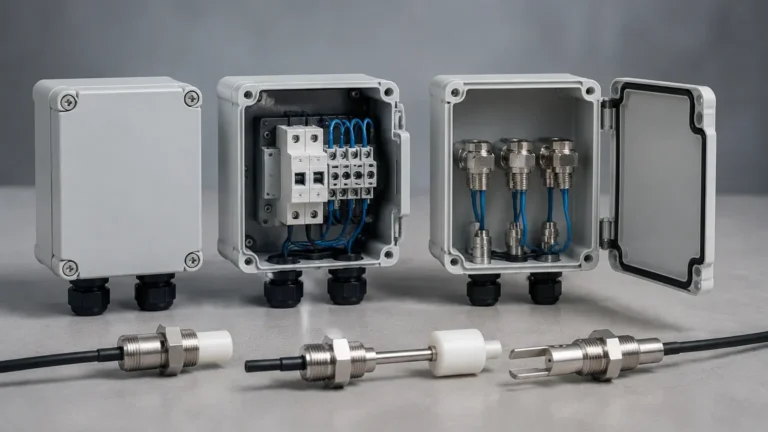
In industrial environments, moisture ingress through the cable entry is a common cause of electronic failure. Installers should always use appropriate cable glands and ensure a "drip loop" is formed in the cabling to prevent water from running down the wire directly into the sensor housing. For hazardous areas, ensure the model selected carries the necessary ATEX, IECEx, or UL certifications.
Limitations and Potential Risks
While the level switch type 003s is a highly capable instrument, engineers must be aware of its physical limitations to avoid misapplication.
* High Viscosity and Coating: If the liquid is highly viscous (e.g., heavy crude oil or molasses) or has a tendency to leave thick deposits, the gap may become bridged. A bridged gap will continue to conduct the ultrasonic signal even after the liquid level has dropped, resulting in a false "wet" indication.
* Aerated Liquids: As mentioned, significant entrained air or gas bubbles will attenuate the ultrasonic signal. If the application involves a boiling liquid or a highly carbonated beverage, the 003s may struggle to maintain a consistent signal.
* Solid Content: While small amounts of suspended solids are generally acceptable, high concentrations of abrasive particles can wear down the sensor faces over time or clog the gap.
Maintenance and Troubleshooting
One of the primary advantages of the solid-state level switch type 003s is its low maintenance requirement. Since there are no pivots to corrode or floats to puncture, routine service is usually limited to visual inspections.
Troubleshooting Common Issues
1. Constant "Wet" Signal: Check the gap for debris, thick coating, or bridging. Clean the sensor faces with a soft cloth and a compatible solvent. Ensure there is no external ultrasonic noise source nearby that could be interfering with the receiver.
2. Constant "Dry" Signal: Verify the power supply voltage. Check for heavy aeration or foam in the liquid. Ensure the liquid density and properties are within the sensor's operating range (most 003s units are designed for liquids with properties similar to water or light oils).
3. Intermittent Switching: This is often caused by turbulence. Review the installation position and consider adding a stilling well. Check the electrical connections for loose terminals or moisture in the junction box.
Frequently Asked Questions (FAQ)
Q: Can the level switch type 003s be used for interface detection between oil and water?
A: Generally, no. The 003s is designed to detect the presence or absence of a liquid compared to a gas. Since both oil and water conduct ultrasonic waves effectively, the switch will likely remain in the "wet" state for both liquids. Specialized interface sensors are required for that application.
Q: Does the orientation of the gap matter?
A: Yes. For horizontal installations, the gap should be oriented vertically (on its side) to allow liquid to drain freely and prevent sediment from settling in the gap. For vertical installations, ensure the gap is not positioned where rising air bubbles can be trapped.
Q: Is the 003s suitable for hygienic food and beverage applications?
A: It depends on the specific model's certifications. While the 316L stainless steel construction is compatible with many food products, the sensor must have a hygienic process connection (like a Tri-Clamp) and meet 3-A or EHEDG standards for clean-in-place (CIP) compatibility.
Conclusion
The level switch type 003s remains a cornerstone of point level detection due to its simplicity, lack of moving parts, and robust construction. By understanding the physics of ultrasonic attenuation and adhering to strict installation guidelines, process engineers can implement these sensors to significantly enhance the reliability of their automation systems. Whether used for simple pump protection or as part of a complex safety instrumented system, the 003s provides a cost-effective and durable solution for modern industrial liquid management. For those exploring a broader range of technologies, reviewing various Level Switches options is recommended to ensure the best fit for specific chemical and physical process parameters.