Level Switch Kansai
Level Switch Kansai
In the landscape of industrial process control, the reliability of point-level detection can determine the safety and efficiency of an entire production line. Among the various regional engineering standards and brands that have shaped global expectations, the term "level switch Kansai" often refers to the high-durability, Japanese-engineered instruments—specifically those from Kansai Automation—that have become benchmarks in bulk solids and heavy-duty liquid handling. For process engineers and procurement specialists, understanding the principles behind these robust designs is essential when selecting the appropriate Level Switches for demanding environments like cement silos, chemical reactors, or water treatment facilities.
This guide explores the technical foundations of level switching technology, the specific engineering characteristics associated with Kansai-style instrumentation, and the critical factors involved in selecting, installing, and maintaining these devices in a B2B industrial context.
Understanding the Role of Level Switches in Industrial Automation
Unlike continuous level transmitters that provide a constant 4-20mA or digital signal representing the exact level of a medium, a level switch is a point-detection device. Its primary function is to open or close an electrical circuit when a material reaches a specific height in a tank, silo, or pipe.
These devices serve three main purposes in industrial automation:
1. Overfill Protection (High Level): Preventing environmental hazards, material waste, and equipment damage by triggering an alarm or shutting off a pump when a vessel is nearly full.
2. Dry-Run Protection (Low Level): Ensuring that pumps do not run without fluid, which can lead to overheating and mechanical failure.
3. Process Control: Managing the automated filling and emptying cycles of intermediate buffer tanks.
In the context of "level switch Kansai" standards, the emphasis is frequently on mechanical robustness. Japanese industrial design often prioritizes longevity in harsh conditions, leading to the widespread adoption of rotary paddle and heavy-duty float switches in sectors where downtime is prohibitively expensive.
Core Measurement Principles for Level Switches
Before selecting a specific model, it is necessary to understand the physics governing different switching technologies. Each principle has distinct advantages depending on whether the medium is a liquid, a granular solid, or a slurry.
1. Rotary Paddle Principle
Commonly associated with the Kansai region's contribution to bulk handling, the rotary paddle switch is the workhorse of the solids industry. A low-speed motor rotates a paddle inside the silo. When the material reaches the paddle, the rotation is impeded. This mechanical resistance triggers a microswitch that stops the motor and changes the output signal. Once the material level drops, a spring returns the motor to its original position, and rotation resumes.
2. Vibrating Tuning Fork Principle
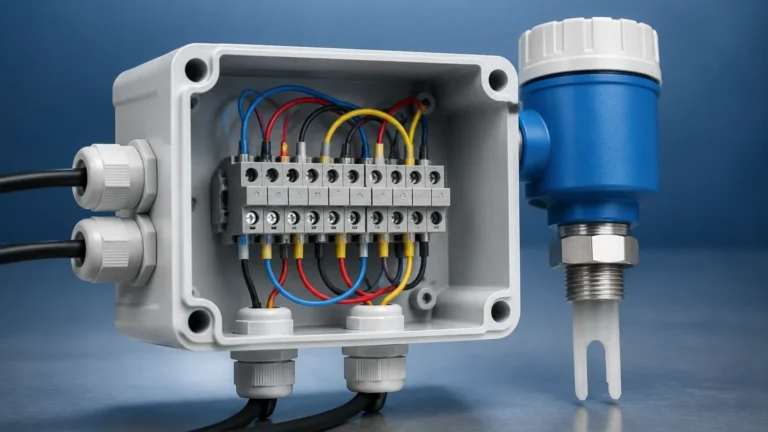
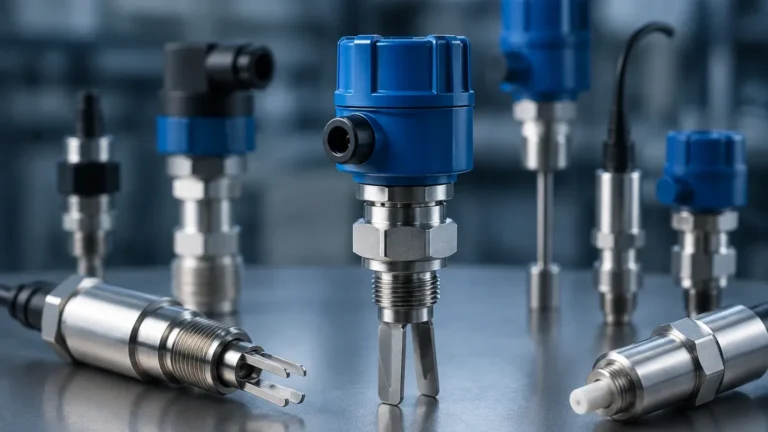
This technology utilizes a piezoelectric crystal to vibrate a metal fork at its natural resonance frequency in the air. When the fork is submerged in a liquid or covered by fine powders, the frequency changes or the vibration is dampened. The internal electronics detect this shift and trigger the switch. This method is highly reliable as it is generally unaffected by flow, turbulence, bubbles, or foam.
3. Capacitance (RF) Principle
A capacitance level switch acts as a simple capacitor. The probe serves as one electrode, and the tank wall (if metal) serves as the other. As the level of the medium rises, the dielectric constant between the electrodes changes, altering the measured capacitance. Modern RF (Radio Frequency) capacitance switches use an "admittance" technique to ignore material build-up on the probe, making them ideal for sticky or viscous substances.
4. Float and Magnetic Principle
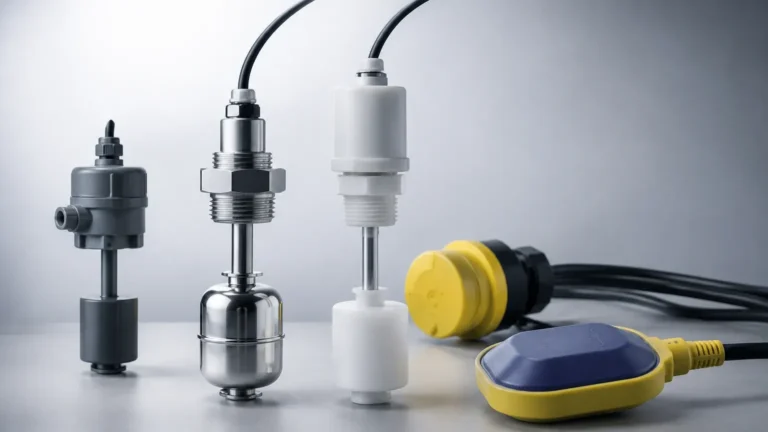
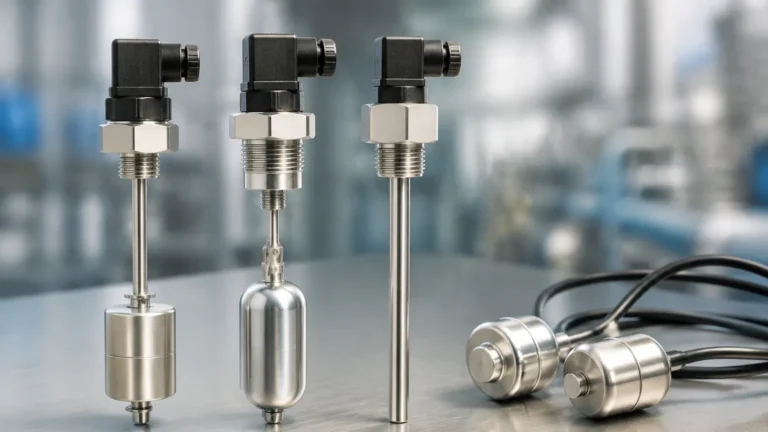
For liquid applications, the float switch remains a fundamental tool. A float containing a magnet moves with the liquid level. When the magnet reaches a specific point, it actuates a reed switch located inside a sealed stem. These are frequently used in water treatment and simple oil-level monitoring due to their cost-effectiveness and lack of power requirements for the sensing element itself.
Analyzing the Engineering Standards of Level Switch Kansai
When professionals search for "level switch Kansai," they are typically looking for solutions that adhere to specific Japanese Industrial Standards (JIS) or the rugged design philosophy of Kansai Automation. Several characteristics define this category of instrumentation:
High-Temperature Resilience
One of the hallmarks of this engineering lineage is the ability to operate in extreme thermal environments. Certain rotary paddle switches are designed with heat sinks and specialized bearings to withstand process temperatures exceeding 800°C (1472°F), which is common in fly ash handling and smelting processes.
Robust Housing and Sealing
Industrial environments in the Asia-Pacific region often demand high ingress protection. Most switches in this category feature IP65 or IP66 rated aluminum die-cast housings. The use of JIS-standard flanges (such as JIS 5K or 10K) is also a common requirement for compatibility with existing Japanese-manufactured infrastructure.
Torque Adjustment for Varied Densities
In paddle-type switches, the ability to adjust the detection torque is critical. A "Kansai-style" switch often includes a multi-stage spring adjustment, allowing the same unit to be used for lightweight plastic pellets (low torque) or heavy iron ore (high torque).
Key Selection Criteria for Process Engineers
Selecting the right level switch requires a detailed analysis of the process media and the environmental conditions. Use the following criteria to narrow down the options:
* Media State: Is it a liquid, solid, or slurry? For solids, consider the particle size and bulk density. For liquids, consider viscosity and the presence of solids.
* Operating Pressure: Standard switches often handle up to 1 MPa (10 bar), but high-pressure reactors may require specialized housings and seals capable of withstanding 5 MPa or more.
* Chemical Compatibility: The wetted parts (the parts of the switch that touch the material) must be resistant to corrosion. Common materials include SUS304, SUS316L, or PTFE coatings for aggressive acids.
* Power Supply and Output: Ensure the switch is compatible with the local grid (e.g., 110V/220V AC) or the control system (24V DC). Common outputs include DPDT relay contacts or NPN/PNP transistors.
Practical Technology Comparison Table
The following table provides a quick reference for comparing common level switch technologies based on industrial application needs.
| Technology | Primary Application | Best For | Main Limitation |
| :— | :— | :— | :— |
| Rotary Paddle | Bulk Solids | Silos, Hoppers, Cement | Mechanical wear over time |
| Tuning Fork | Liquids / Fine Powders | Chemical processing | Not for very high viscosity |
| Capacitance | Liquids / Slurries | Corrosive media | Requires calibration for media change |
| Float Switch | Clean Liquids | Water tanks, Sumps | Moving parts can clog in dirty fluids |
| Conductivity | Conductive Liquids | Boiler water, Acids | Only works with conductive media |

Installation Guidelines and Best Practices
Proper installation is as important as selecting the correct device. Even the highest quality level switch will fail if positioned incorrectly.
1. Avoid the Flow Path: Never install a level switch directly under the material inlet. The impact of falling grain or liquid can damage the probe or cause false triggers. If unavoidable, install a protective baffle or shield above the sensor.
2. Consider the Angle of Repose: In solids handling, material does not sit flat; it forms a cone. The switch must be positioned to account for this angle to ensure the "high" alarm actually triggers before the silo overflows.
3. Nozzle Length: For capacitance or tuning fork switches, ensure the nozzle (the pipe mounting) is not so long that material gets trapped inside, preventing the sensor from seeing the true level of the vessel.
4. Orientation: While many switches can be mounted horizontally or vertically, rotary paddle switches are generally more reliable when mounted horizontally or at a slight downward angle to prevent material from entering the shaft seal.
5. Grounding: For capacitance switches, ensure the tank is properly grounded. If the tank is plastic, a ground reference rod or a metal flange must be used to complete the circuit.
Limitations and Troubleshooting Common Issues
Despite their durability, level switches can encounter operational hurdles. Being aware of these limitations helps in designing a more resilient system.
* Material Build-up: In sticky applications, material can coat the probe. While RF capacitance switches are designed to handle this, tuning forks may eventually stall if the coating is heavy enough to dampen vibration. Regular inspection or the use of "active shield" probes is recommended.
* Mechanical Fatigue: In rotary switches, the motor is a wear item. High-quality Kansai-style switches use a design where the motor is electronically disconnected when the paddle is stalled to extend its lifespan.
* Turbulence and Foam: In liquid tanks with agitators, float switches may bounce, causing "chatter" in the relay. In these cases, a tuning fork switch with a programmed delay or an ultrasonic switch might be a better alternative.
Frequently Asked Questions (FAQ)
Q: Can a level switch be used for continuous level monitoring?
A: No. A level switch only provides an on/off signal at a specific point. If you need to know the exact percentage of volume in a tank, you require a level transmitter, such as a radar or ultrasonic sensor.
Q: What is the difference between a NPN and PNP output?
A: These refer to transistor outputs in DC-powered switches. NPN switches the negative side of the load, while PNP switches the positive side. The choice depends on the input requirements of your PLC (Programmable Logic Controller).
Q: How do I handle high-temperature applications?
A: For temperatures above 150°C (302°F), look for switches with a "remote" electronics option or a dedicated cooling fin/heat sink between the process connection and the housing.
Q: Are level switches explosion-proof?
A: Many are, but you must specify the required certification (such as ATEX, IECEx, or TIIS) based on the hazardous zone classification of your facility. Explosion-proof switches feature heavy-duty enclosures designed to contain any internal spark.
Conclusion
Whether you are sourcing a "level switch Kansai" for a specific Japanese-built machinery set or looking for a general-purpose solution for a new facility, the priority should always be on matching the measurement principle to the physical properties of the medium. By adhering to strict engineering standards and considering the environmental factors of the installation, process engineers can ensure long-term reliability and safety. For those looking to explore a wide range of industrial-grade options, reviewing modern Level Switches and their technical specifications is the first step toward optimized process control.