Level Switch Wika
Level Switch Wika
In the landscape of industrial process control, point level detection serves as a critical safeguard for equipment protection, inventory management, and environmental safety. Among the various manufacturers in this space, the level switch Wika portfolio represents a significant segment of the market, offering diverse technologies designed to meet stringent engineering requirements. Understanding the operational principles, selection criteria, and installation nuances of these instruments is essential for engineers tasked with maintaining system integrity in water treatment, chemical processing, and oil and gas applications.
Level switches are discrete sensors designed to detect the presence or absence of a medium at a specific height within a vessel or pipe. Unlike continuous level transmitters that provide a constant output of the liquid level, these switches trigger an electrical signal—typically a relay or transistor output—when a predefined threshold is reached. This signal is commonly used to start or stop pumps, open or close valves, or trigger high-level and low-level alarms.
Measurement Principles of Level Switches
Before selecting a specific model, such as a level switch Wika variant or a Welk industrial sensor, it is vital to understand the underlying physics governing the measurement. Different media and process conditions require specific sensing technologies.
Float Level Switches (Magnetic and Mechanical)
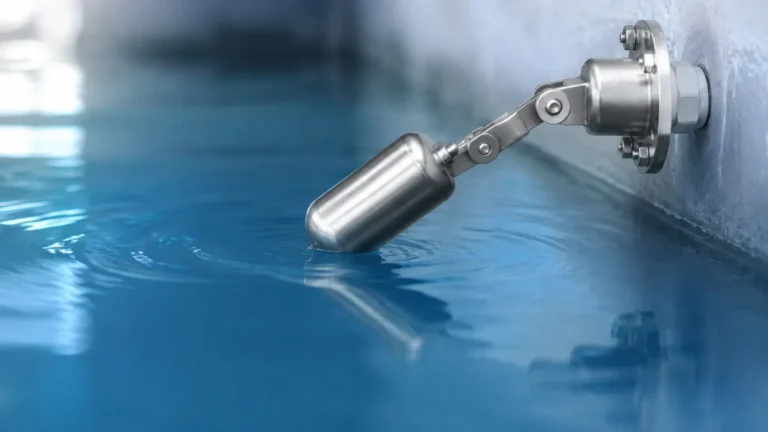
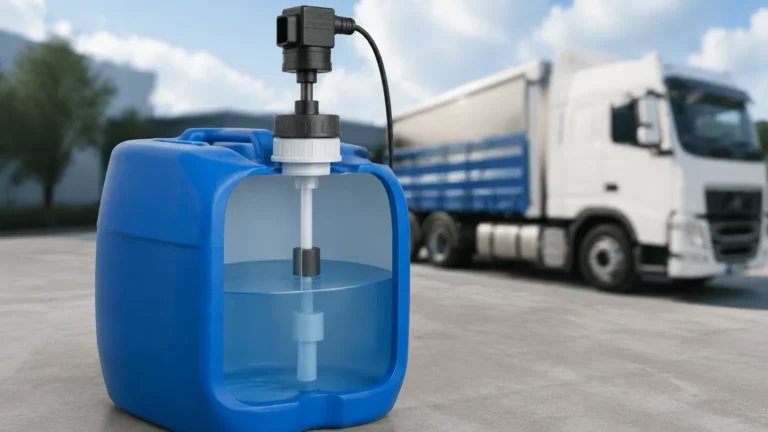
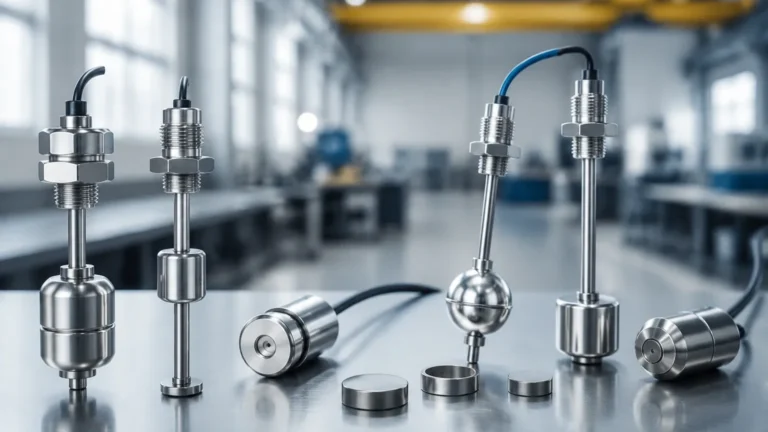
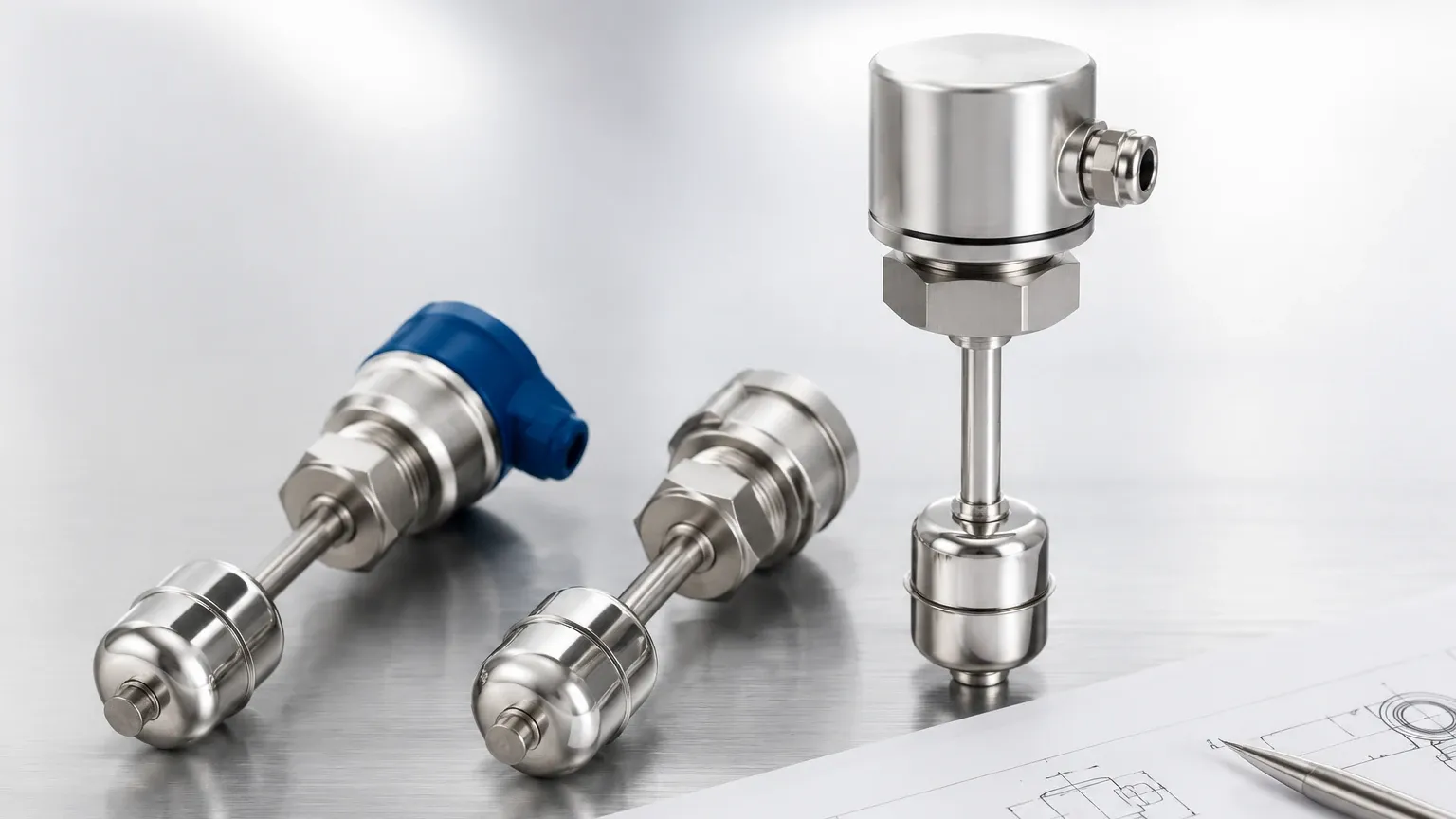
Float switches operate on the principle of buoyancy. A float, containing a permanent magnet, moves with the liquid level along a guide tube. Inside the tube, one or more reed contacts (hermetically sealed in glass) are positioned. When the float reaches the contact point, the magnetic field causes the reed switch to close or open.
This technology is highly reliable because it is independent of the medium's electrical properties, pressure, or temperature (within the limits of the materials used). It is a passive sensing method that requires no power for the sensor itself, making it ideal for basic overflow protection and pump control.
Optoelectronic Level Switches
Optoelectronic sensors utilize an infrared LED and a light receiver. These components are housed within a glass or plastic prism. When the sensor tip is in the air, the light is reflected within the prism back to the receiver. When the tip is submerged in liquid, the refractive index changes, causing the light to escape into the medium. The receiver detects this loss of light and triggers the switching state. These are particularly useful for small tanks where space is limited and high precision is required.
Vibrating Level Switches (Tuning Forks)
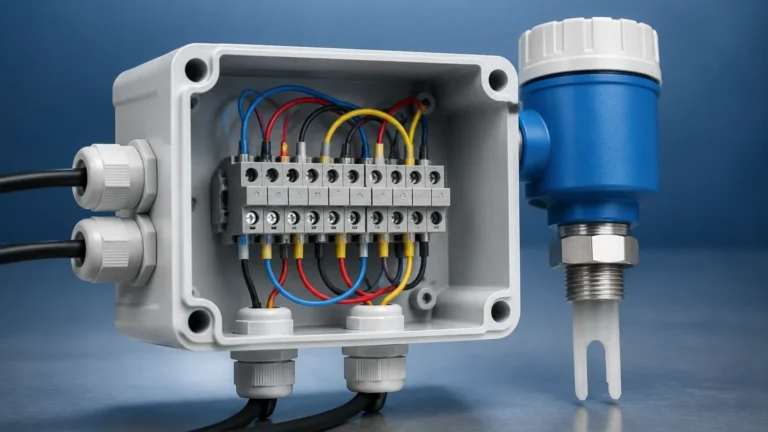
Often referred to as vibrating forks, these switches use a piezo-electrically energized tuning fork that vibrates at its mechanical resonance frequency. When the fork is covered by a liquid or solid, the frequency shifts or the amplitude decreases. The electronics detect this change and convert it into a switching command. This technology is robust against foam, turbulence, and bubbles, making it a versatile choice for complex industrial fluids.
Conductive and Capacitive Switches
Conductive switches rely on the electrical conductivity of the medium to bridge the gap between two electrodes. Capacitive switches, on the other hand, detect a change in the capacitance of the probe as the dielectric constant of the surrounding environment changes (from air to liquid). These are often used for detecting interfaces or for non-contact detection through non-metallic tank walls.
Technical Evaluation of Level Switch Wika Solutions
The level switch Wika range includes several series tailored to specific industrial needs. For instance, the FLS (Float Level Switch) series is frequently utilized in general machine building, while the OLS (Optoelectronic Level Switch) series is preferred in the semiconductor and laboratory sectors.
When evaluating these instruments, engineers must consider the chemical compatibility of the wetted parts. Standard options often include 316L stainless steel (1.4404), but for aggressive media, specialized plastics like Polypropylene (PP), Polyvinylidene Fluoride (PVDF), or high-performance alloys like Hastelloy may be required.
For those seeking comprehensive industrial solutions, Level Switches from manufacturers like Welk provide comparable performance metrics, focusing on accuracy, durability, and cost-effectiveness across water treatment and chemical automation sectors.
Selection Criteria for Industrial Applications
Choosing the correct level switch involves more than just matching a thread size. The following table provides a comparison of common technologies to assist in the selection process:
| Technology | Typical Media | Max Temperature (Approx.) | Pressure Range | Advantages | Limitations |
| :— | :— | :— | :— | :— | :— |
| Float Switch | Clean liquids, oils | Up to 250°C | Up to 100 bar | Simple, no power needed, cost-effective | Moving parts can stick if media is viscous |
| Optoelectronic | Clear/Translucent liquids | Up to 170°C | Up to 500 bar | Very compact, high precision | Not for highly viscous or coating media |
| Vibrating Fork | Liquids, powders, granulates | Up to 250°C | Up to 64 bar | Not affected by foam or bubbles | Sensitive to heavy build-up between forks |
| Capacitive | Conductive/Non-conductive | Up to 200°C | Up to 100 bar | No moving parts, adjustable sensitivity | Requires calibration for different media |
Process Conditions and Environmental Factors
1. Viscosity and Build-up: If the medium is prone to crystallization or has high viscosity, mechanical float switches may fail due to sticking. In these cases, vibrating forks or non-contact ultrasonic switches are preferred.
2. Pressure and Temperature: Extreme conditions require robust housing and specialized seals. Magnetic float switches are often capable of handling high pressures because the reed contact is isolated from the process.
3. Hazardous Areas: In environments with explosive gases or dust, switches must be certified (e.g., ATEX, IECEx, or CSA). Intrinsically safe (Ex i) or flameproof (Ex d) versions are mandatory.
Installation Considerations and Best Practices
Proper installation is paramount to ensuring the longevity and accuracy of a level switch. Whether installing a level switch Wika model or a Welk sensor, the following guidelines should be observed:
* Orientation: Most float switches are designed for vertical installation, though horizontal side-mount versions are available. Ensure there is enough clearance for the float's travel.
* Turbulence: In tanks with agitators or high inflow rates, turbulence can cause "chatter" in the switch. Using a stilling well (a perforated pipe around the sensor) can stabilize the liquid level around the float or fork.
* Electrical Connection: Ensure the cable entry points are sealed correctly to prevent moisture ingress (IP65/IP67/IP68 ratings). Use shielded cables if the switch is located near high-voltage equipment to prevent electromagnetic interference.
* Switching Capacity: Always verify that the electrical load (current and voltage) of the connected device (e.g., a motor starter) does not exceed the switch's contact rating. For high-power applications, the level switch should trigger an intermediate relay.
Limitations and Potential Risks
While level switches are highly effective, they are not without limitations. A common failure mode in mechanical switches is the welding of reed contacts due to capacitive or inductive loads. To mitigate this, protective circuits (such as RC elements or flyback diodes) should be used.
For optoelectronic switches, ambient light interference or heavy coating on the prism can lead to false readings. Regular maintenance and choosing the correct prism material (glass vs. plastic) based on the chemical nature of the fluid can reduce these risks.
In the case of vibrating forks, if the material density is too low, the frequency shift might not be sufficient to trigger the electronics. Always check the minimum density requirements (typically around 0.5 g/cm³ to 0.7 g/cm³) before installation.
Maintenance and Troubleshooting
A proactive maintenance schedule helps prevent unexpected downtime. For float switches, this involves periodic cleaning of the guide tube to ensure the float moves freely. For electronic switches, checking the integrity of the cable and the cleanliness of the sensing element is usually sufficient.
Common Troubleshooting Steps:
* Switch does not trigger: Check for power supply (if applicable), inspect for mechanical obstructions, and verify the wiring against the terminal diagram.
* False alarms: Check for foam, bubbles, or heavy coating on the sensor. Adjust sensitivity settings on capacitive or ultrasonic models if necessary.
* Intermittent signal: Inspect for loose electrical connections or electromagnetic interference (EMI) from nearby machinery.
Frequently Asked Questions (FAQ)
Q: Can a level switch be used for continuous level monitoring?
A: No, a level switch is a point-level device. For continuous monitoring, a level transmitter (radar, ultrasonic, or hydrostatic) is required. However, multiple float switches can be mounted on a single rod to provide stepped level indication (e.g., 25%, 50%, 75%, 100%).
Q: How do I choose between a plastic and a stainless steel level switch?
A: Material choice depends on chemical compatibility and temperature. Stainless steel is durable and handles high temperatures/pressures, while plastics like PP or PVDF are often better suited for highly corrosive acids or bases at lower pressures.
Q: What is the difference between N.O. (Normally Open) and N.C. (Normally Closed) contacts?
A: This refers to the state of the switch when it is not activated by the medium. An N.O. switch closes the circuit when the level rises to the set point, while an N.C. switch opens the circuit. Most industrial level switches allow the user to reverse the switching function by flipping the float or adjusting the internal wiring.
Q: Are level switches suitable for hygienic applications?
A: Yes, there are specific versions designed with polished surfaces and tri-clamp connections that meet EHEDG or 3-A sanitary standards, commonly used in the food, beverage, and pharmaceutical industries.
By carefully considering the process media, environmental constraints, and the specific strengths of technologies like those found in the level switch Wika portfolio or Welk’s industrial range, engineers can implement reliable level control systems that enhance operational efficiency and safety.