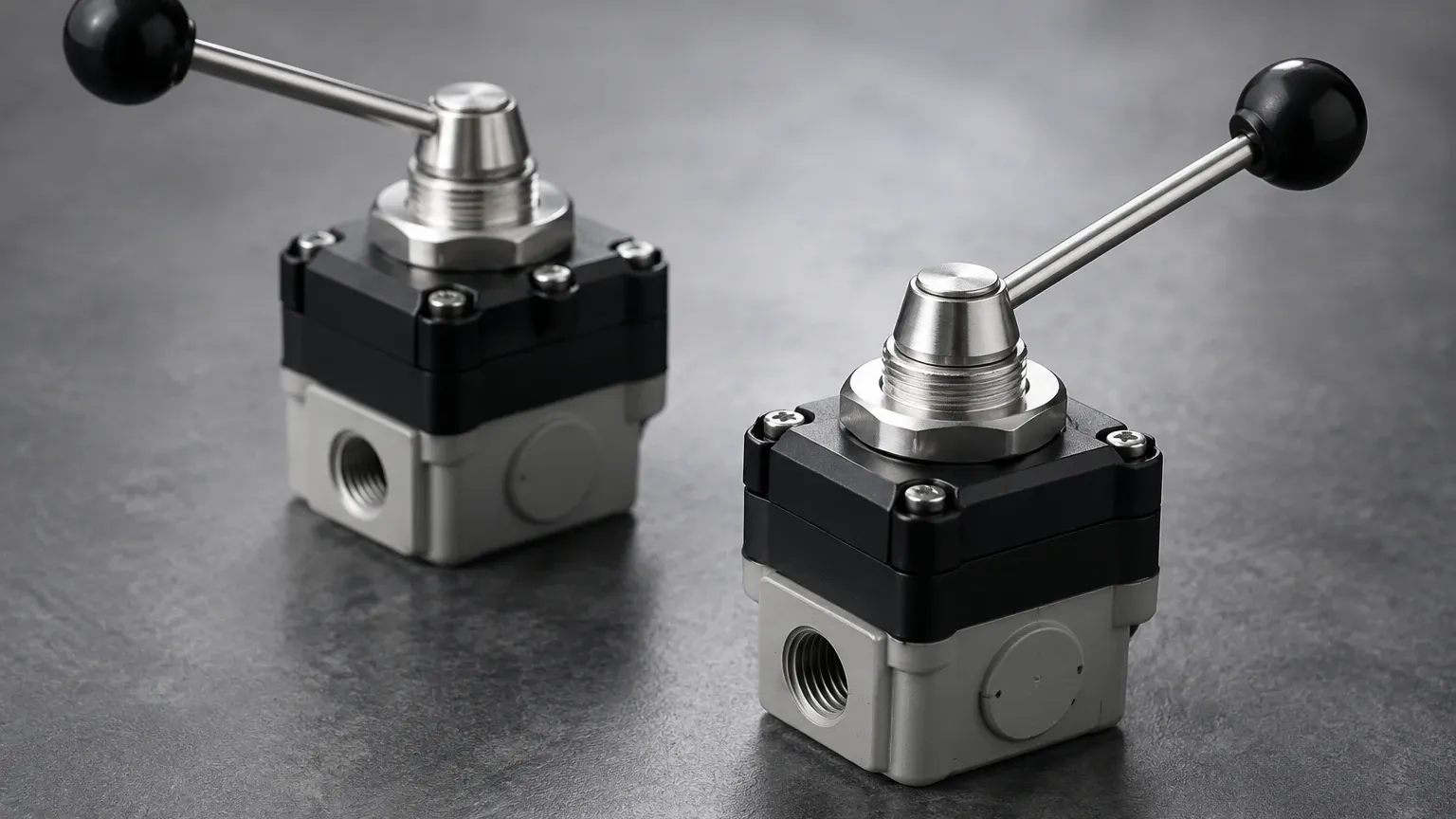
5 Position Lever Switch
5 Position Lever Switch
In the landscape of industrial automation and process control, the ability to manage multiple states or operational modes through a single interface is critical for efficiency and safety. The 5 position lever switch serves as a robust electromechanical component designed to provide precise control over complex circuits. While often associated with signal processing or manual overrides in control panels, its role in industrial level measurement systems—specifically as a selector or manual interface for multi-point Level Switches—is indispensable for engineers requiring tactile, reliable, and high-visibility state management.
This guide explores the technical principles, selection criteria, and practical applications of 5 position lever switches within the context of industrial level measurement and automation, providing a comprehensive reference for system integrators and maintenance professionals.
Understanding the 5 Position Lever Switch in Industrial Contexts
A 5 position lever switch is a type of selector switch that utilizes a mechanical lever to toggle between five distinct electrical states or output configurations. Unlike standard toggle switches that typically offer two or three positions (On-Off or On-Off-On), the 5-position variant allows for more granular control.
In industrial level measurement, these switches are frequently integrated into control consoles to manage multi-stage alarm systems. For example, a system monitoring a chemical storage tank might use a 5 position switch to cycle through different sensor inputs or to set the operational mode of the level control logic, such as:
1. Manual Drain
2. Automatic Fill
3. Standby/Idle
4. High-Level Alarm Test
5. Emergency Override
By providing a physical, tactile interface, the lever switch ensures that operators can identify the system state even in low-visibility environments or while wearing protective equipment, a common requirement in water treatment and oil and gas facilities.
Measurement and Operational Principles
The fundamental operation of a 5 position lever switch relies on an internal contact carrier moved by the external lever. Depending on the internal architecture, these switches generally follow one of two contact logics: "Break-Before-Make" (BBM) or "Make-Before-Break" (MBB).
Contact Configurations
Most industrial lever switches utilize a Single Pole, Five Throw (SP5T) or Double Pole, Five Throw (DP5T) configuration.
* SP5T: A single common input is routed to one of five possible outputs. This is ideal for selecting between different sensor channels or alarm setpoints.
* DP5T: Two independent common inputs are routed to two sets of five outputs. This allows for simultaneous switching of two different circuits, such as a low-voltage control signal and a high-voltage indicator lamp circuit.
Mechanical Detents and Tactile Feedback
To ensure the switch remains in the selected position despite industrial vibrations, these components feature mechanical detents. These are spring-loaded mechanisms that "lock" the lever into one of the five slots. The force required to move the lever—often measured in Newtons (N) or gram-force (gf)—is a critical specification for ensuring the switch is not accidentally toggled.
Electrical Ratings
Industrial lever switches must handle varying electrical loads. In a control loop involving hydrostatic level transmitters or ultrasonic sensors, the switch may only handle millivolt signals. However, if the switch directly controls a small pump or a solenoid valve, it must be rated for higher current (e.g., 10A to 15A at 250VAC).
Selection Criteria for Industrial Applications
Choosing the right 5 position lever switch requires an analysis of both the electrical requirements and the environmental conditions of the installation site.
1. Environmental Sealing (IP Ratings)
In industries like water treatment or chemical processing, switches are exposed to moisture, dust, and corrosive vapors.
* IP40: Suitable for clean, indoor control rooms.
* IP65/IP67: Necessary for wash-down environments or outdoor panels. These switches often feature internal O-rings and external rubber boots to prevent ingress.
2. Contact Material
* Silver Contacts: Best for high-power applications where arcing might occur. Silver provides excellent conductivity but can tarnish over time if used with very low-power "dry" circuits.
* Gold-Plated Contacts: Essential for low-voltage signal switching (e.g., PLC inputs). Gold does not oxidize, ensuring a reliable connection for micro-ampere signals.
3. Actuator Style and Material
The lever itself can be made of plastic (for cost-efficiency) or stainless steel (for durability and chemical resistance). In heavy industrial settings, a metal lever is preferred to prevent breakage from accidental impact.
Technical Specification Table
| Feature | Standard Industrial Spec | Heavy-Duty Spec |
| :— | :— | :— |
| Positions | 5 (Fixed) | 5 (Momentary or Fixed) |
| Contact Logic | Break-Before-Make | Make-Before-Break |
| Current Rating | 5A @ 125VAC | 15A @ 250VAC |
| Mechanical Life | 50,000 Cycles | 100,000+ Cycles |
| Operating Temp | -25°C to +70°C | -40°C to +85°C |
| Terminal Type | Solder Lug | Screw Terminal / Quick Connect |
Integration with Level Measurement Systems
The 5 position lever switch is rarely a standalone component; it is usually part of a larger control architecture involving various Level Switches and sensors.
Multi-Point Alarm Selection
In a tank equipped with five discrete float switches (Low-Low, Low, Mid, High, High-High), a 5 position lever switch can be used as a "Test Selector." Maintenance personnel can turn the lever to position 1 to test the Low-Low alarm circuit, position 2 for the Low alarm, and so on. This allows for individual circuit verification without needing to fill or empty the tank.
Pump Control Logic
For systems utilizing multiple pumps (Lead/Lag configurations), the switch can define the operational priority:
1. Pump A Lead
2. Pump B Lead
3. Both Pumps Parallel
4. Alternating Mode
5. Manual Override/Off
Installation and Wiring Considerations
Proper installation is vital to ensure the longevity of the switch and the accuracy of the control system.
Panel Mounting
Most industrial lever switches require a standard 12mm (0.47 in) or 22mm (0.86 in) mounting hole. It is essential to use the provided locking washers to prevent the switch body from rotating when the lever is toggled. For high-vibration environments, applying a thread-locking compound to the mounting nut is recommended.
Wiring Best Practices
1. Strain Relief: Ensure that wires connected to the switch terminals have adequate slack and are secured with cable ties. Constant pulling on the terminals can lead to internal contact failure.
2. Shielding: If the switch is handling low-level signals from radar or ultrasonic level meters, use shielded cabling to prevent electromagnetic interference (EMI) from nearby motors or VFDs.
3. Terminal Insulation: Use heat-shrink tubing or insulated crimp connectors to prevent accidental short circuits between the five output terminals, which are often spaced closely together.
Maintenance Checklist
* Visual Inspection: Check for cracks in the lever or signs of heat discoloration on the terminals.
* Tactile Check: Ensure the detents feel "crisp." A mushy feeling indicates spring fatigue or internal debris.
* Continuity Testing: Periodically verify that each of the 5 positions provides a low-resistance path (typically <0.1 ohms) to the common terminal.
Limitations and Environmental Constraints
While highly versatile, the 5 position lever switch has specific limitations:
* Complexity of Wiring: Wiring a DP5T switch involves 12 separate connections (2 commons + 10 outputs). This increases the risk of wiring errors compared to digital touchscreens or rotary encoders.
* Mechanical Wear: As a mechanical device, it has a finite lifespan. In high-cycle applications (switching hundreds of times per day), a solid-state selector or a PLC-based interface may be more appropriate.
* Space Requirements: Behind-the-panel depth for a 5-position switch can be significant (often 40mm to 60mm), which must be accounted for in compact control box designs.
Frequently Asked Questions (FAQ)
Q: Can a 5 position lever switch be used in hazardous (Ex) zones?
A: Standard lever switches are generally not rated for explosive atmospheres. For such applications, you must use an intrinsically safe barrier or select a switch that is specifically ATEX/IECEx certified and housed in an explosion-proof enclosure.
Q: What is the difference between a "maintained" and "momentary" 5 position switch?
A: A maintained switch stays in the position where you move the lever. A momentary switch (often used for jogging motors or incrementing digital values) will spring back to a center or default position once the lever is released.
Q: How do I choose between a lever switch and a rotary switch?
A: Lever switches provide faster visual confirmation of the current state and are easier to operate with gloves. Rotary switches are typically better for applications requiring more than 5 positions (e.g., 12-position selectors) and occupy less horizontal panel space.
Q: Are these switches compatible with 4-20mA loops?
A: Yes, provided you use gold-plated contacts. Standard silver contacts may develop a non-conductive oxidation layer (film) that the low voltage of a 4-20mA loop cannot "clean," leading to signal loss.
Conclusion
The 5 position lever switch remains a staple of industrial design due to its simplicity, reliability, and clear user interface. Whether used to toggle between various Level Switches in a complex tank farm or to manage pump sequences in a wastewater facility, understanding its mechanical and electrical nuances is key to building a resilient control system. By following proper selection and installation guidelines, engineers can ensure these components provide decades of trouble-free service in even the most demanding industrial environments.