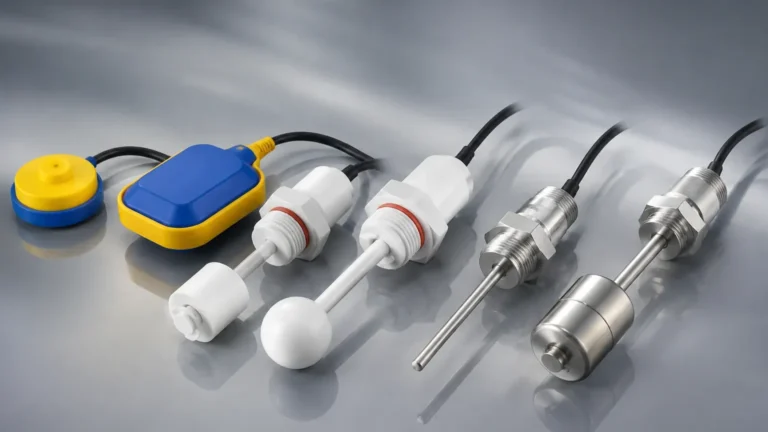
Level Switch Levcon
Level Switch Levcon
In industrial process control, point level detection serves as a critical safeguard for equipment protection, inventory management, and operational safety. Among the various technologies available, the level switch levcon represents a specific class of robust, mechanical, and magnetic-based instrumentation designed for demanding environments. These devices are frequently employed in high-pressure steam boilers, chemical storage tanks, and water treatment facilities where reliable "high" or "low" level signals are mandatory.
Understanding the engineering principles behind these switches is essential for selecting the correct model for a specific application. This guide explores the mechanical foundations, selection criteria, and installation best practices for industrial level switches, providing a technical framework for engineers and plant managers.
Measurement Principles of Level Switches
Before selecting a level switch levcon or a similar instrument, it is vital to understand the physics that govern its operation. Industrial level switches typically fall into two categories: mechanical (float/displacer) and electronic (ultrasonic/capacitance).
Magnetic Float Principle
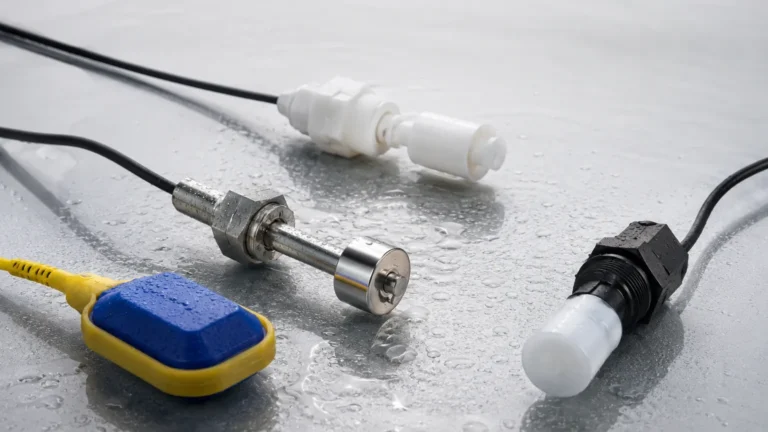
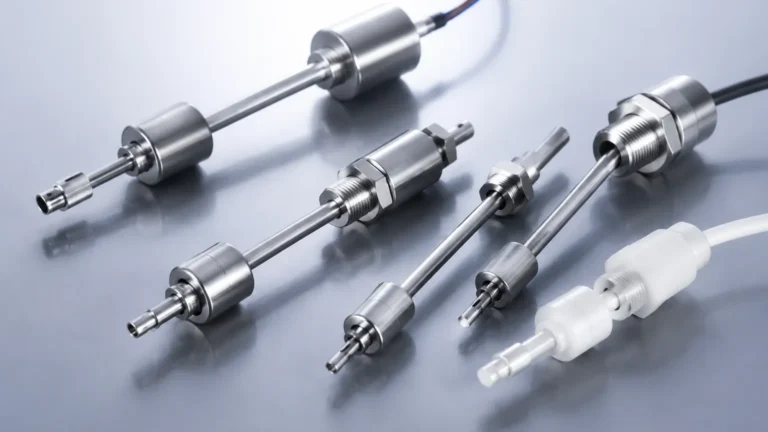
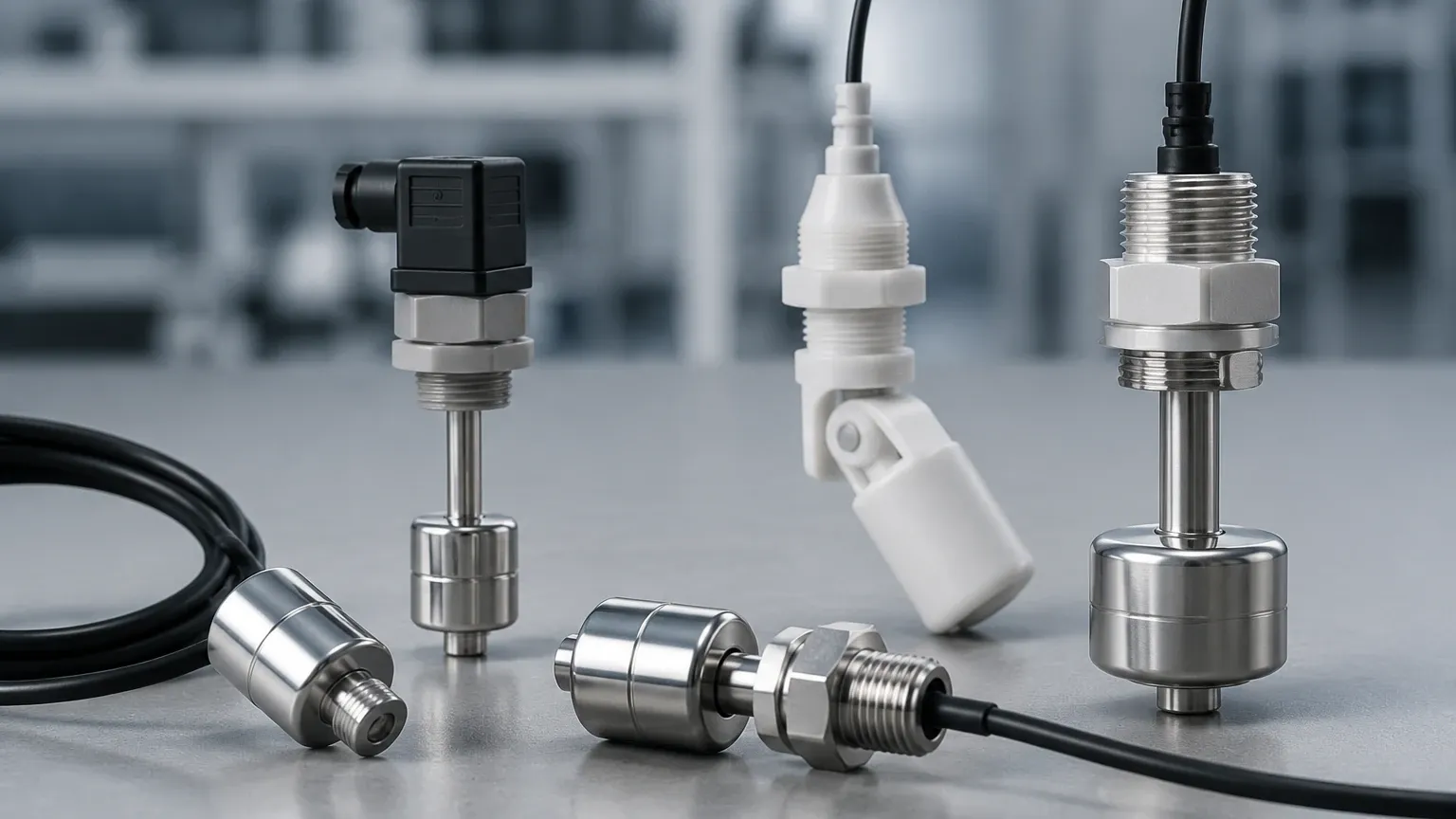
Most level switches in the Levcon category utilize a magnetic float. This principle relies on a buoyant float containing an internal magnet. As the liquid level rises or falls, the float moves along a stem. Inside the stem, a hermetically sealed reed switch is positioned at a specific set point. When the float's magnetic field reaches the reed switch, the contacts close (or open), triggering an electrical signal. This method is highly reliable because the electrical components are completely isolated from the process fluid.
Displacement Principle
Displacement level switches operate on Archimedes' Principle. Unlike a float that sits on the surface of the liquid, a displacer is heavier than the liquid and is suspended by a spring. When the liquid reaches the displacer, the buoyant force reduces the effective weight of the displacer, causing the spring to retract slightly. This movement is transmitted through a pressure seal or magnetic coupling to actuate a switch mechanism. This design is particularly effective for high-pressure applications or liquids with turbulent surfaces where a standard float might bounce excessively.
Conductivity and Capacitance
While the level switch levcon is traditionally mechanical, modern industrial environments often integrate electronic alternatives. Conductivity switches detect the change in resistance when a conductive liquid touches an electrode, whereas capacitance switches measure the change in the dielectric constant between two plates (or a probe and the tank wall). These are often used as secondary backups to mechanical switches in critical systems.
Key Evaluation Criteria for Selection
Selecting the appropriate Level Switches requires a deep dive into the process conditions. A mismatch between the switch material and the process fluid can lead to premature failure or safety hazards.
1. Specific Gravity (Density)
Every float or displacer is designed for a minimum specific gravity (SG). If the liquid is lighter than the float's design limit (e.g., an oil with an SG of 0.7 vs. a float designed for water at 1.0), the float will not rise, and the switch will fail to actuate. Always verify the SG of the fluid at the maximum operating temperature, as density decreases as temperature rises.
2. Pressure and Temperature Ratings
Industrial switches must withstand the maximum design pressure of the vessel. For boiler applications, this often exceeds 20 bar (approx. 290 psi). Similarly, the housing and internal seals must be rated for the process temperature to prevent the magnetic components from degaussing or the seals from leaking.
3. Wetted Materials
Compatibility is paramount. Common materials include:
* 316L Stainless Steel: Standard for water, food grade, and mild chemicals.
* Hastelloy/Monel: Used for highly corrosive acids or seawater.
* Polypropylene (PP)/PVC: Suitable for low-pressure, low-temperature corrosive chemical storage.
4. Switch Function (NO/NC/SPDT)
Engineers must define the electrical output required. A Single Pole Double Throw (SPDT) switch is common, allowing the user to choose between "Normally Open" (NO) or "Normally Closed" (NC) wiring. This flexibility is essential for configuring fail-safe logic, such as ensuring a pump stops if the switch loses power.
Practical Selection Table
| Feature | Magnetic Float Switch | Displacement Switch | Ultrasonic Level Switch |
| :— | :— | :— | :— |
| Primary Use | General tank level control | High pressure/High temp | Non-contact/Corrosive |
| Min. Specific Gravity | 0.5 to 0.8 | 0.4 to 0.9 | N/A (Independent of SG) |
| Max Temperature | Up to 200°C | Up to 400°C | Up to 150°C |
| Max Pressure | Up to 40 bar | Up to 100+ bar | Atmospheric to 3 bar |
| Maintenance | Low (Inspect for scaling) | Moderate (Spring tension) | Low (Clean sensor face) |
| Best For | Clean liquids | Boilers, heavy oils | Acids, slurries |
Installation Considerations and Best Practices
The reliability of a level switch levcon is often determined by its installation. Even the highest quality instrument will fail if subjected to improper mechanical stress or environmental interference.
Mounting Orientation
Level switches can be top-mounted or side-mounted.
* Top-mounting: Ideal for deep tanks where the switch point needs to be adjustable along a long stem.
* Side-mounting: Commonly used for high/low alarms in smaller vessels or where overhead space is limited. Ensure the switch is mounted perfectly horizontal (for float types) to prevent the float from binding against the stem.
Stilling Wells and Cages
In tanks with high turbulence, such as those with agitators or high-velocity inlet flows, a float switch may suffer from "chatter"—rapidly opening and closing. To prevent this, the switch should be installed inside a stilling well (a vertical pipe that stabilizes the liquid level around the float) or an external cage. External cages are standard for boiler applications, allowing the switch to be isolated for maintenance without draining the main vessel.
Magnetic Interference
Since many level switches use magnetic coupling, they should be kept away from strong electromagnetic fields, such as large motors or high-voltage cables. If multiple magnetic switches are installed in close proximity, ensure they are spaced according to the manufacturer’s guidelines to prevent cross-interference.
Electrical Wiring
Always use shielded cables for signal integrity, especially if the switch is connected to a Programmable Logic Controller (PLC) or Distributed Control System (DCS). Ensure the cable entry is sealed with a proper gland to prevent moisture ingress, which is the leading cause of switch failure in outdoor or wash-down environments.
Limitations and Common Risks
While robust, mechanical level switches have inherent limitations that engineers must account for during the design phase.
1. Build-up and Scaling: In liquids that are prone to crystallization or scaling (like hard water or certain chemicals), the float can become stuck to the stem. Regular inspection and cleaning are required in these applications.
2. Mechanical Wear: Because these devices have moving parts, they are subject to mechanical fatigue over millions of cycles. In high-cycle applications, electronic switches (like tuning forks or ultrasonic) may be a more durable choice.
3. Coating and Viscosity: Highly viscous liquids can cling to the float, increasing its weight and changing its buoyancy characteristics. If the liquid is too thick, the float may not move freely.
4. Specific Gravity Fluctuations: If a process involves mixing different fluids with varying densities, a mechanical float switch calibrated for one density may not function correctly when the density changes.
Frequently Asked Questions (FAQ)
Q: Can a level switch levcon be used for hazardous areas?
A: Yes, many are available with explosion-proof housings or can be used with intrinsically safe barriers. Always check the ATEX, IECEx, or UL certifications on the product label before installing in a classified zone.
Q: How do I test if the switch is working without filling the tank?
A: Most industrial level switches include a manual test lever or a magnetic test kit that allows the operator to lift the float or actuate the internal reed switch manually to verify the electrical circuit.
Q: What is the difference between a level switch and a level transmitter?
A: A level switch provides a discrete "on/off" signal at a specific point. A level transmitter provides a continuous signal (e.g., 4-20mA) representing the exact level from 0% to 100% of the tank height.
Q: Why is my switch not triggering when the liquid reaches it?
A: The most common causes are a float that is too heavy for the liquid's specific gravity, a float that is stuck due to debris/scaling, or a burnt-out reed switch caused by an electrical surge.
Conclusion
The level switch levcon remains a staple in industrial automation due to its simplicity and reliability in extreme conditions. By understanding the underlying displacement and magnetic principles, and by carefully matching the instrument to the process's specific gravity, pressure, and temperature, engineers can ensure long-term operational safety. For those integrating these components into modern control systems, choosing high-quality Level Switches and following rigorous installation standards is the most effective way to prevent costly overflows and equipment damage.