Level Switch Nohken
Level Switch Nohken
In the landscape of industrial automation and process control, point level detection remains a fundamental requirement for safety, efficiency, and inventory management. Among the established names in this sector, the level switch Nohken series represents a standard for reliability and precision. Originating from Japan, Nohken has developed a comprehensive portfolio of level sensors that cater to diverse media, from ultrapure water to abrasive solids.
For plant engineers and system integrators, selecting the correct level switch involves more than just identifying a brand; it requires a deep understanding of the physical principles governing the measurement and the specific environmental constraints of the application. This guide explores the engineering principles behind these devices, provides a technical breakdown of common models, and offers a framework for selecting the most appropriate Level Switches for industrial operations.
Fundamental Measurement Principles
Before selecting a specific level switch Nohken model, it is essential to understand the underlying technology. Level switches are binary devices—they provide an "on/off" signal when a substance reaches a predetermined height. The choice of technology depends heavily on the physical properties of the material being measured.
Buoyancy (Float Type)
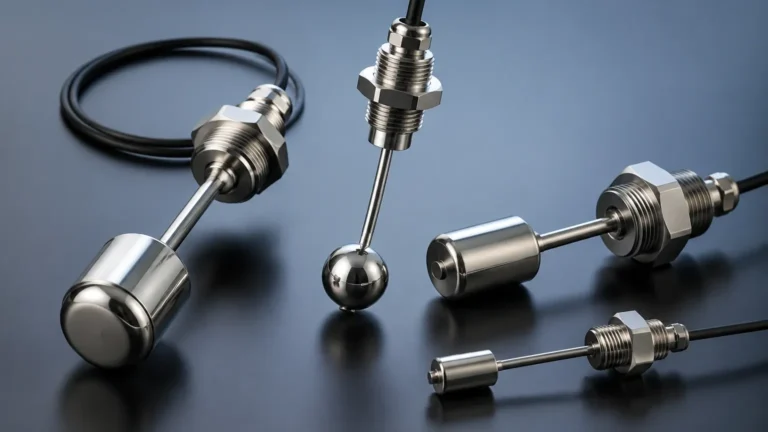
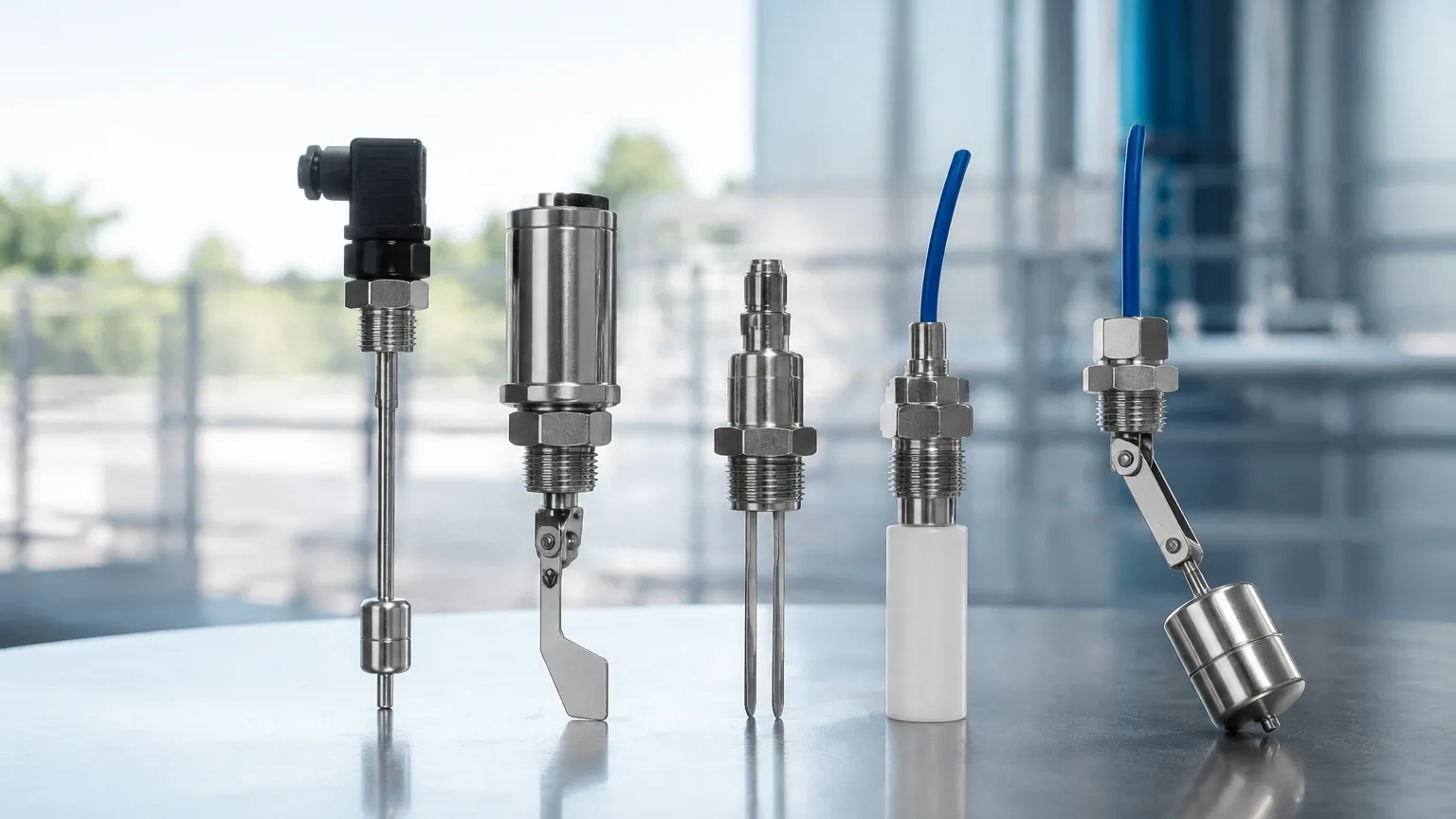
Float-operated switches utilize a permanent magnet built into a float and a reed switch set inside a stationary stem. As the liquid level rises or falls, the float moves accordingly. When the magnet aligns with the reed switch, the circuit closes or opens. This is a mechanical-electrical hybrid system that requires no external power to operate the sensing element itself.
Conductivity
Conductive level switches use the electrical conductivity of the liquid to complete a circuit. Two or more electrodes are inserted into the tank. When a conductive liquid (such as water or acids) touches the electrodes, a small current flows, triggering a relay. This method is highly reliable for liquids with a conductivity of at least 10 μS/cm.
Vibration (Tuning Fork)
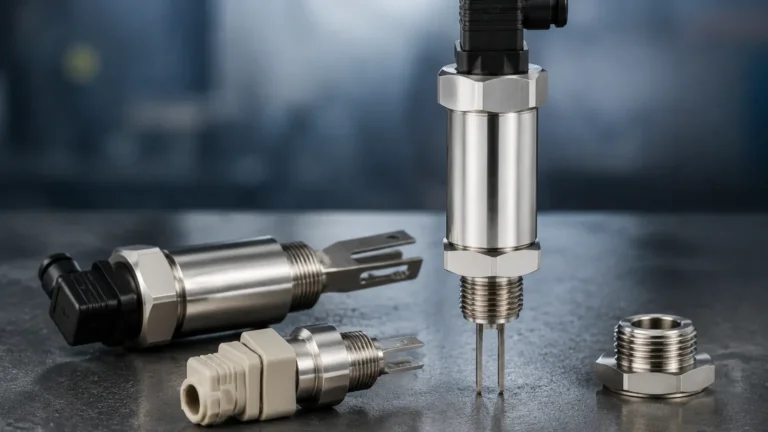
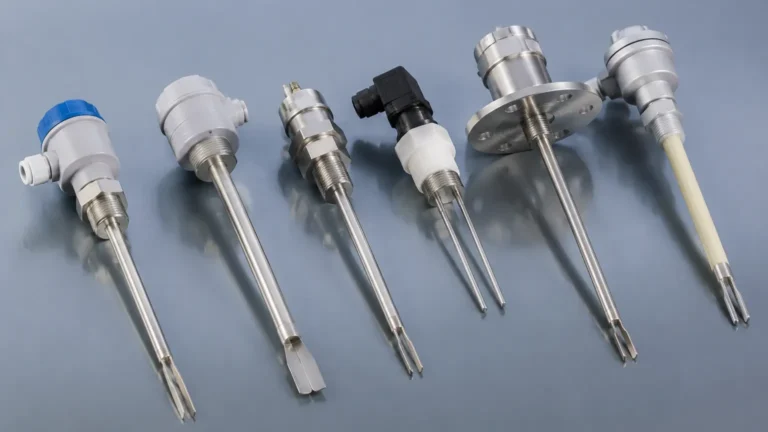
These switches utilize a sensing element in the shape of a tuning fork, vibrated at its resonant frequency by piezoelectric crystals. When the fork is submerged in a liquid or covered by solids, the frequency of vibration changes or stops. The internal electronics detect this shift and switch the output. This principle is excellent for detecting powders and granulates as well as liquids with varying densities.
Capacitance
Capacitance switches measure the change in electrical capacitance between the sensor probe and the tank wall (or a reference electrode). As the material level changes, the dielectric constant in the gap changes, altering the capacitance. This technology is versatile but requires calibration based on the specific dielectric constant of the medium.
Key Categories of Level Switch Nohken
Nohken’s product line is categorized by the physical state of the medium and the specific demands of the installation environment. Below are the primary series encountered in industrial B2B applications.
The OLV Series: Miniature Float Switches
The OLV series is designed for small-scale equipment and OEM applications. These are typically constructed from stainless steel (SUS316) or plastics like Polypropylene (PP) and Polyphenylsulfone (PPS). They are frequently used in medical equipment, food processing, and small chemical tanks where space is at a premium.
* Mounting: Vertical or horizontal options.
* Temperature Range: Typically up to 100°C (212°F) for stainless steel versions.
* Pressure Rating: Up to 1.0 MPa (145 psi).
The CG Series: Capacitance Level Switches
The CG series is often used for detecting liquids, powders, and even interfaces between two different liquids. Because they have no moving parts, they are highly resistant to wear and can be used in applications involving high-viscosity fluids that might jam a float switch.
The R7 Series: Rotating Paddle Switches
Specifically designed for bulk solids, the R7 series uses a low-speed motor that rotates a paddle. When the material reaches the paddle, the rotation is impeded, causing the motor to tilt and activate a microswitch. This is a robust solution for grain silos, plastic pellet hoppers, and cement bins.
Technical Selection Criteria
Selecting a level switch Nohken or a comparable industrial alternative requires a systematic evaluation of the process conditions. Engineers should use the following table as a preliminary screening tool.
| Medium Type | Recommended Technology | Key Consideration |
| :— | :— | :— |
| Clean Water | Float (OLV/FQ) | Low cost, high reliability. |
| Corrosive Chemicals | Conductive or Plastic Float | Check chemical compatibility of wetted parts. |
| Granular Solids | Rotating Paddle (R7) | Ensure paddle material resists abrasion. |
| High-Viscosity Liquids | Capacitance (CG) | Avoid float switches due to sticking risks. |
| Powders/Fine Dust | Vibration (VF) | Minimize bridge formation on the sensor. |
| Ultrapure Water | Ultrasonic or Non-contact | Prevent contamination from wetted sensors. |
Environmental Factors
1. Temperature: Standard switches operate up to 80°C (176°F). For high-temperature steam or furnace applications, specialized high-temp versions with cooling fins or ceramic insulators are required.
2. Pressure: In pressurized reactors, the housing and seals must be rated for the maximum possible surge pressure. Standard ratings often hover around 1 MPa, but high-pressure variants can exceed 5 MPa (725 psi).
3. Wetted Materials: For the food industry, SUS304 or SUS316 is standard. For aggressive acids (e.g., Hydrochloric acid), PTFE or PVC coatings are mandatory to prevent corrosion.
Installation and Engineering Considerations
Correct installation is as critical as the selection of the device itself. Failure to account for the physical dynamics within a tank can lead to false positives or premature sensor failure.
Turbulence and Baffles
In tanks with agitators or high-velocity inflow, the liquid surface may be turbulent. For float-type level switches, this can cause "chatter"—the rapid opening and closing of the switch. In such cases, a stilling well (a pipe surrounding the float) should be installed to dampen the movement of the liquid.
Mounting Orientation
* Top Mounting: Ideal for long stems with multiple switch points. It allows for easy removal without draining the tank.
* Side Mounting: Useful for high/low alarms in large vessels where top access is restricted. Ensure the switch is not placed directly under an inlet flow.
Wiring and Signal Integration
Most level switch Nohken models offer SPDT (Single Pole Double Throw) or SPST (Single Pole Single Throw) contacts. When integrating these into a PLC (Programmable Logic Controller), it is advisable to use an isolation relay to protect the switch contacts from high-current inductive loads, which can weld reed switches shut.
Limitations and Operational Constraints
While highly reliable, no single level switch technology is universal. Engineers must be aware of the following limitations:
* Coating and Buildup: In applications with wastewater or slurries, material can build up on the sensor. Capacitance and vibration switches are particularly sensitive to this. Periodic cleaning or the use of "active shield" technology is necessary.
* Specific Gravity: Float switches rely on buoyancy. If the liquid density changes significantly (e.g., due to temperature fluctuations), a float designed for water might sink in a lighter hydrocarbon.
* Mechanical Wear: Rotating paddle switches and mechanical floats have moving parts that eventually wear out. In high-cycle applications, solid-state sensors (conductive or capacitance) are preferred.
Frequently Asked Questions (FAQ)
Q: Can a level switch Nohken be used in explosive atmospheres?
A: Yes, but you must specify an intrinsically safe (IS) or flameproof model. These are typically marked with Ex or ATEX certifications and must be used in conjunction with a safety barrier.
Q: How do I test if a reed-switch based float is working?
A: Use a multimeter to check continuity across the leads while manually moving the float. If the resistance remains infinite (open) or zero (closed) regardless of float position, the reed switch is likely damaged.
Q: What is the difference between N.O. and N.C. in level switches?
A: N.O. (Normally Open) means the circuit is open when the switch is in its "rest" state (usually empty tank). N.C. (Normally Closed) means the circuit is complete. Many Nohken switches allow you to reverse the logic by flipping the float 180 degrees on the stem.
Conclusion
The level switch Nohken range provides a robust foundation for point level detection across various industrial sectors. By matching the physical properties of the medium—be it liquid, powder, or granulate—with the appropriate sensing principle, engineers can ensure long-term operational stability. Whether implementing a simple high-level alarm or a complex multi-point control system, the key lies in rigorous technical selection and adherence to installation best practices. For those seeking a broader range of solutions tailored to specific industrial automation needs, exploring modern Level Switches remains the most effective path toward optimizing process safety and efficiency.