Level Switch Rosemount
Level Switch Rosemount
In industrial process control, point level detection serves as a critical safeguard for overfill prevention, pump protection, and storage management. The industry often looks to the level switch Rosemount series, particularly the 2100 vibrating fork family, as a benchmark for reliability in liquid applications. Understanding the engineering principles, selection criteria, and installation nuances of these instruments is essential for maintaining plant safety and operational efficiency.
As a professional manufacturer of industrial level measurement instruments, Welk provides high-performance Level Switches designed to meet the rigorous demands of water treatment, chemical processing, and oil and gas sectors. This guide explores the technical landscape of vibrating fork technology and how to evaluate these solutions for your specific process needs.
Understanding Point Level Measurement Principles
Before selecting a specific model, it is vital to understand the physics governing the measurement. Point level switches are binary devices; they indicate whether a material has reached a specific height in a vessel. While there are various technologies—including float, ultrasonic, and capacitance—the vibrating fork principle is the most prevalent for liquid applications due to its immunity to changing fluid properties.
The Vibrating Fork Principle
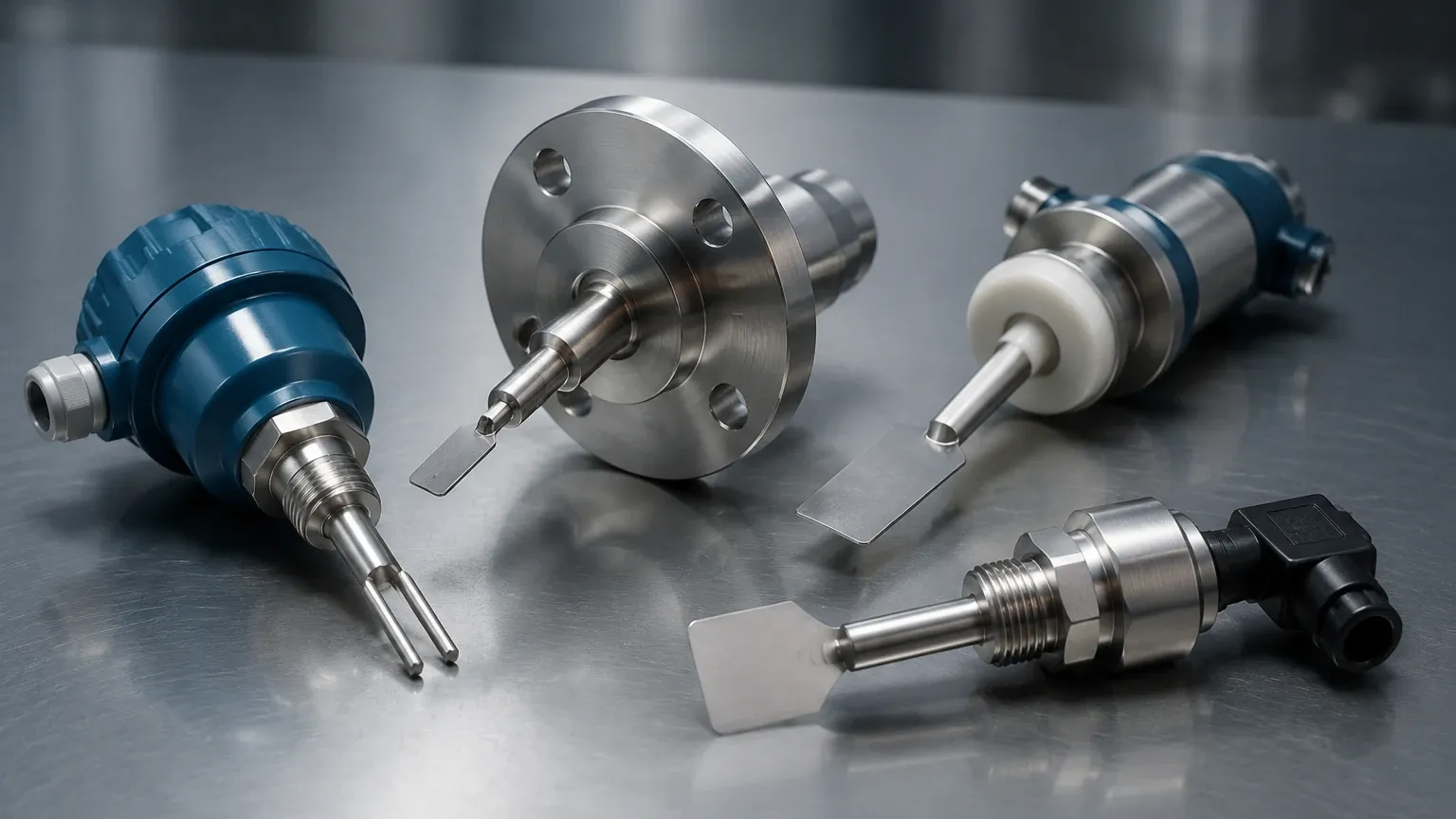
The vibrating fork level switch (also known as a tuning fork switch) operates using two tines that are vibrated at their natural resonant frequency by a piezoelectric crystal. When the tines are in the air (the "dry" state), they vibrate freely at a specific frequency (typically around 1200 Hz to 1400 Hz).
When the liquid level rises and covers the tines, the frequency of vibration shifts significantly due to the increased density of the surrounding medium. An internal electronic circuit detects this frequency shift and converts it into a switching signal (such as a relay contact, a transistor output, or a current shift).
Key advantages of this principle include:
* Independence from Fluid Properties: The switch is largely unaffected by changes in pressure, temperature, conductivity, or dielectric constant.
* No Calibration Required: Unlike capacitance probes, vibrating forks do not require field calibration to the specific liquid.
* Minimal Maintenance: With no moving parts like floats or linkages, mechanical wear is eliminated.
Overview of Rosemount Level Switch Series
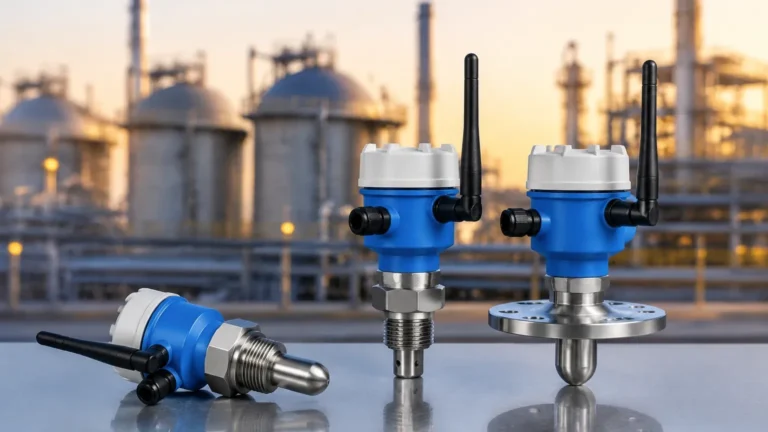
The Rosemount 2100 series is the primary lineup for vibrating fork technology. Each model is engineered for specific environmental and functional requirements.
Rosemount 2110: Compact and Basic
This model is designed for high-volume OEM applications and simple industrial use. It features a compact 316L stainless steel housing and is typically used for basic overfill protection or pump dry-run prevention. It is often chosen for its ease of installation in tight spaces.
Rosemount 2120: General Purpose and Versatile
The 2120 is the workhorse of the series, offering a wider range of process connections and electronic outputs. It is suitable for temperatures up to 150°C (302°F) and pressures up to 100 bar (1450 psi). It includes a visible "heartbeat" LED to indicate the health of the instrument and the switch status.
Rosemount 2130: High Performance and SIL 2
For critical safety applications, the 2130 offers enhanced diagnostics and is certified for use in SIL 2 safety instrumented systems. It can handle more extreme temperatures—up to 260°C (500°F)—and features a "Fast Drip" fork design that sheds liquid quickly to prevent false switching in viscous or sticky media.
Rosemount 2140: Advanced Diagnostics and Wireless
The 2140 is the first vibrating fork switch to offer wired or wireless HART communication. This allows for remote monitoring of the fork's health, detection of buildup, and media density changes. It is ideal for plants moving toward Industry 4.0 and predictive maintenance strategies.
Technical Selection Criteria
Selecting the correct level switch requires a detailed analysis of the process conditions. The following table provides a comparison framework for evaluating level switches in an industrial context.
Selection Comparison Table
| Feature | Compact/Basic (e.g., 2110) | General Purpose (e.g., 2120) | High Temp/Safety (e.g., 2130) |
| :— | :— | :— | :— |
| Max Temperature | 150°C (302°F) | 150°C (302°F) | 260°C (500°F) |
| Max Pressure | 40 bar (580 psi) | 100 bar (1450 psi) | 100 bar (1450 psi) |
| Housing Material | 316L Stainless Steel | Aluminum or Stainless Steel | Aluminum or Stainless Steel |
| Wetted Parts | 316L SST | 316L, Alloy C, ECTFE Coated | 316L, Alloy C |
| Outputs | Direct Load, PNP | Relay, PNP, 8/16mA, NAMUR | Relay, PNP, 8/16mA, NAMUR |
| Safety Rating | N/A | SIL 2 (Optional) | SIL 2 Certified |
| Typical Application | OEM Skids, Small Tanks | Chemical Storage, Water | High-Temp Reactors, Safety Loops |
Key Evaluation Factors
1. Media Viscosity: Ensure the fork design can shed the liquid. For highly viscous fluids, a "Fast Drip" fork or a different technology like a magnetic level gauge might be required.
2. Chemical Compatibility: Wetted parts must resist corrosion. While 316L is standard, aggressive chemicals may require Nickel Alloys (Alloy C) or PFA/ECTFE coatings.
3. Hazardous Area Certifications: For oil and gas or chemical plants, ensure the switch carries ATEX, IECEx, or FM approvals for explosive atmospheres.
4. Switching Logic: Decide whether the switch should be "Normally Open" or "Normally Closed" and whether you need a fail-safe high (overfill) or fail-safe low (dry-run) configuration.
Installation and Engineering Best Practices
Correct installation is paramount to the longevity and accuracy of a level switch. Even a high-quality level switch Rosemount unit can fail if improperly mounted.
Mounting Orientation
* Horizontal Mounting: This is the most common for high and low-level alarms. The tines should be oriented so that the liquid can easily drain off them. Most switches have a groove or mark on the hex nut to indicate the orientation of the tines; this mark should be vertical.
* Vertical Mounting: Used when the switch must be mounted from the top of the tank. In these cases, an extended length (pipe extension) is used to reach the desired switching point.
Avoiding Turbulence and Flow
Do not install the switch directly in the path of an incoming liquid stream. The force of the fluid can cause mechanical stress on the tines or lead to false switching. If the tank has an agitator, ensure the switch is positioned away from the vortex and protected by a baffle if necessary.
Nozzle Considerations
The nozzle length should be kept as short as possible. If the nozzle is too long, liquid can become trapped in the neck (the "dead zone"), preventing the tines from drying out when the level drops, which leads to a false "wet" signal.
Limitations and Application Risks
While vibrating fork level switches are robust, they are not universal solutions. Engineers should be aware of the following limitations:
* Heavy Coating and Buildup: While minor film buildup is usually ignored by the electronics, heavy, solidifying coatings can dampen the vibration to the point where the switch cannot distinguish between wet and dry states.
* Aerated Liquids: If a liquid is highly aerated or contains large amounts of bubbles, the density may drop below the switch's detection threshold (typically 0.5 to 0.7 g/cm³), causing it to remain in the "dry" state even when submerged.
* Granular Solids: Standard vibrating forks are designed for liquids. For powders or grains, a specialized solids level switch with a single-tine or different frequency profile is required to prevent material from wedging between the tines.
* Turbulence and Foam: Light foam is often ignored by vibrating forks, which is an advantage. However, very dense, saturated foam may be detected as a liquid, which could be a limitation depending on whether you want to detect the foam or the underlying liquid.
Frequently Asked Questions (FAQs)
Q: Can a vibrating fork switch be used for interface detection?
A: Generally, no. Standard vibrating forks detect the presence or absence of a liquid based on a density threshold. They cannot distinguish between two liquids (like oil and water) unless the densities are extremely different and the electronics are specifically tuned for interface detection.
Q: What is the difference between a 2-wire and 3-wire electronic output?
A: A 2-wire switch is wired in series with the load (like a PLC input or a relay coil). A 3-wire switch has separate wires for the power supply and the output signal (PNP or NPN), providing more flexibility and often higher switching currents.
Q: How do I test the switch without filling the tank?
A: Most modern switches, including the Rosemount 2100 series, feature a magnetic test point. By placing a magnet against a specific spot on the housing, you can simulate a "wet" condition to verify the electronics and the downstream alarm loop.
Q: Does the orientation of the tines matter in vertical installations?
A: In a purely vertical installation (top-down), the orientation of the tines relative to the tank walls is less critical than in horizontal mounting, as gravity naturally assists in draining the liquid from the fork.
Conclusion
The level switch Rosemount series represents a sophisticated approach to point level detection, offering solutions that range from simple pump protection to high-integrity safety loops. By understanding the vibrating fork principle and carefully matching the instrument specifications to the process environment, engineers can ensure long-term reliability.
At Welk, we specialize in providing a comprehensive range of Level Switches and continuous level transmitters. Whether you require standard configurations or customized OEM/ODM solutions, our technical team is available to assist in selecting the most cost-effective and accurate technology for your industrial automation needs. Reliable level measurement is the foundation of process safety; choosing the right instrument is the first step toward achieving it.