Level Switch Radar
Level Switch Radar
In the landscape of industrial automation, the demand for precise and reliable point-level detection has led to the evolution of sensing technologies. While traditional mechanical and contact-based sensors have served the industry for decades, the emergence of the level switch radar represents a significant shift toward non-contact, high-reliability solutions. This technology leverages electromagnetic waves to detect the presence or absence of materials at specific heights within a vessel, offering a robust alternative to legacy systems in challenging environments.
For process engineers and plant managers, selecting the right level measurement tool is critical for preventing tank overfills, protecting pumps from dry running, and ensuring consistent batch processing. This guide explores the technical principles, application benefits, and selection criteria for radar-based level switching.
Understanding Radar Technology in Point-Level Detection
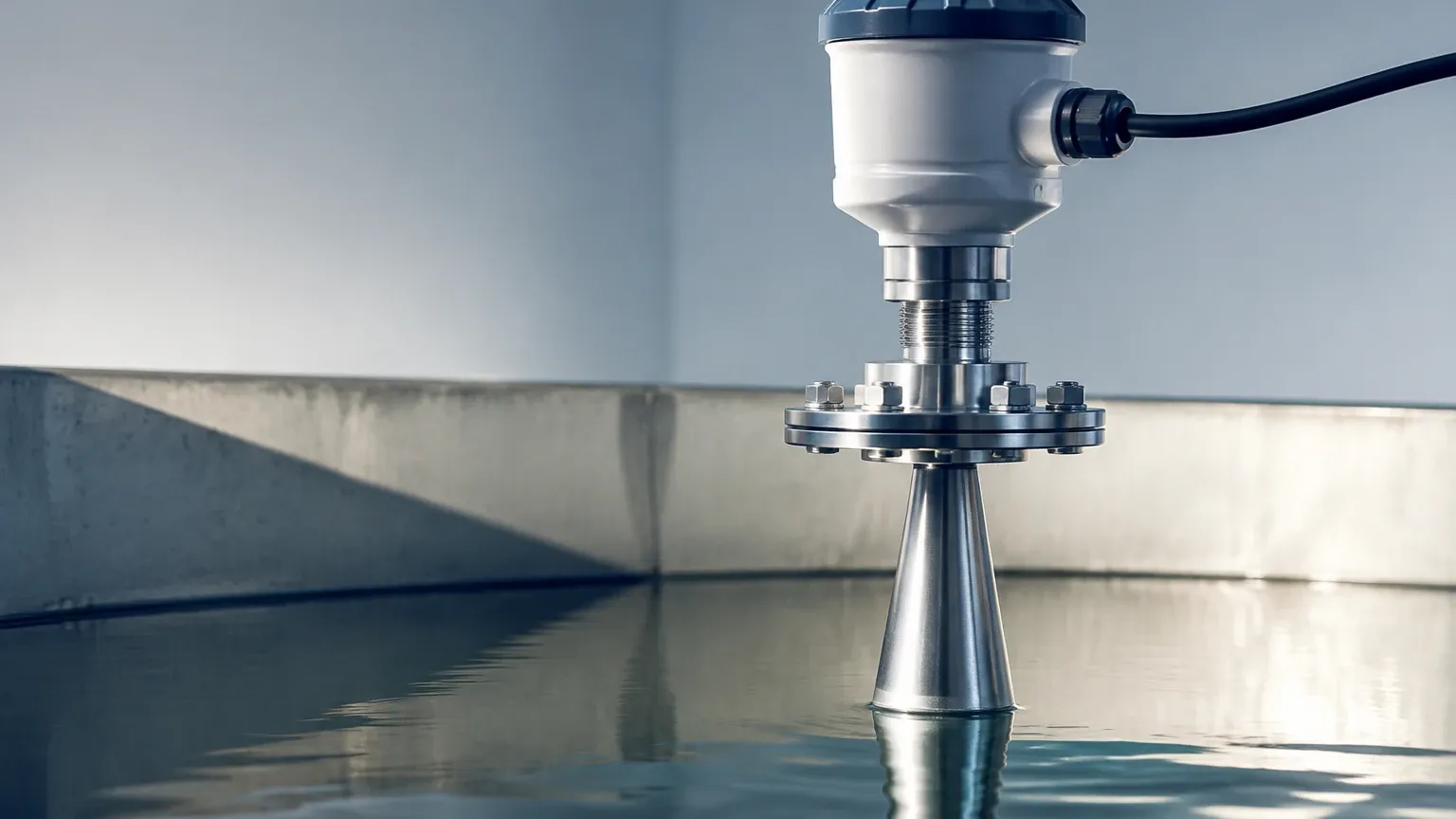
To appreciate the utility of a level switch radar, one must first understand the underlying physics of radar measurement. Radar (Radio Detection and Ranging) instruments function by emitting high-frequency electromagnetic pulses—typically in the microwave spectrum—toward a target surface.
The Time of Flight (ToF) Principle
The most common method used in these devices is Time of Flight. The sensor emits a pulse that travels at the speed of light. When this pulse hits the surface of the medium (liquid or solid), a portion of the energy is reflected back to the sensor. The device measures the time interval between the emission and the reception of the signal.
In a continuous level transmitter, this time is converted into a distance and then a level percentage. However, in a dedicated radar level switch, the internal electronics are programmed to trigger a discrete output (such as a relay or a transistor switch) when the measured distance reaches a specific pre-defined setpoint. This allows the device to act as a high-level alarm or a low-level cut-off.
Frequency and Beam Angle
Modern radar switches often operate at high frequencies, such as 26 GHz or 80 GHz. The frequency determines the beam angle and the ability of the sensor to focus its energy. An 80 GHz sensor can achieve a very narrow beam angle (often as low as 3° to 6°), which is essential for avoiding internal tank obstructions like agitators, ladders, or heating coils. This precision ensures that the switch triggers based on the actual material level rather than a false reflection from a structural component.
Comparing Radar Switches with Traditional Technologies
When evaluating Level Switches, it is important to compare radar technology against more common alternatives like float switches, tuning forks, and ultrasonic sensors.
Radar vs. Mechanical Switches
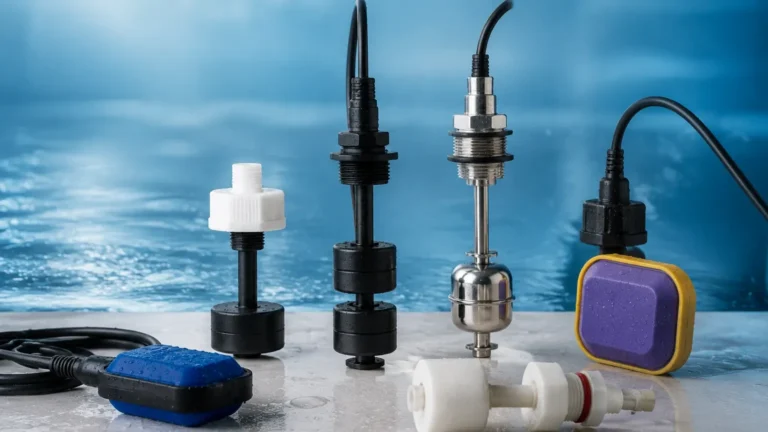
Float switches rely on buoyancy and moving parts. In viscous, corrosive, or coating-prone liquids, mechanical components can stick or fail. Radar, being non-contact, is immune to these mechanical failure modes. There are no seals to leak and no pivots to corrode.
Radar vs. Vibrating Tuning Forks
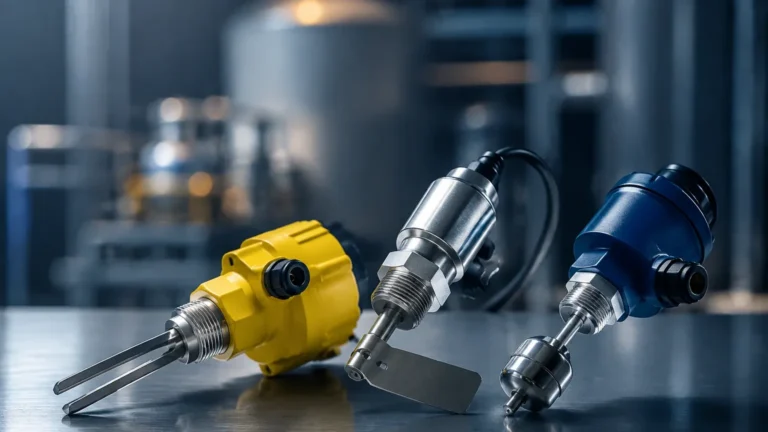
Tuning forks are excellent for many applications but require contact with the medium. If the medium is highly abrasive or if there is significant buildup, the frequency of the fork can be dampened, leading to false readings. A level switch radar remains outside the medium, making it ideal for aggressive chemicals or hygienic applications where contact must be minimized.
Selection Comparison Table
| Feature | Radar Level Switch | Vibrating Tuning Fork | Float Switch | Ultrasonic Switch |
| :— | :— | :— | :— | :— |
| Measurement Type | Non-contact | Contact | Contact | Non-contact |
| Media Density Sensitivity | None | High | High | Moderate |
| Maintenance Requirement | Very Low | Moderate | High | Moderate |
| Pressure Range | Up to 40 bar+ | Up to 64 bar | Up to 20 bar | Low (Atmospheric) |
| Temperature Range | -40°C to +200°C+ | -50°C to +150°C | -20°C to +100°C | -40°C to +80°C |
| Coating/Buildup Resistance | Excellent | Poor to Fair | Poor | Fair |
Key Selection Criteria for Level Switch Radar
Choosing the correct radar switch requires a thorough analysis of the process conditions. Unlike simple mechanical switches, radar performance is influenced by the electrical properties of the material being measured.
Dielectric Constant (εr)
The dielectric constant of the medium is the most critical factor. Materials with high dielectric constants (like water, εr ≈ 80) reflect radar waves very strongly. Materials with low dielectric constants (like oils or solvents, εr < 2) reflect very little energy. When selecting a level switch radar, ensure the device is sensitive enough to detect the specific dielectric constant of your media.
Process Temperature and Pressure
Radar sensors are available with various process connections and housing materials. For high-temperature applications (e.g., molten plastics or hot oils), specialized cooling fins or ceramic seals may be required. Standard industrial radar switches typically handle pressures up to 4 MPa (40 bar), but specialized versions can go much higher.
Vessel Geometry and Internal Obstructions
In small vessels or tanks with complex internals, the beam angle is paramount. A narrow beam (high frequency) reduces the risk of "ghost reflections." If the tank is made of plastic or fiberglass, radar can sometimes see through the tank wall, allowing for completely external mounting—a significant advantage for hazardous or ultra-pure liquids.
Installation Guidelines and Best Practices
Proper installation is essential to ensure the reliability of a level switch radar. Even the most advanced sensor will fail if positioned incorrectly.
1. Avoid the Center of the Tank: In cylindrical tanks with domed tops, mounting the sensor in the exact center can lead to multiple reflections (parabolic effect) that interfere with the signal. It is generally recommended to mount the sensor at 1/2 to 1/3 of the tank radius from the wall.
2. Nozzle Height and Diameter: The radar beam must clear the bottom of the mounting nozzle. If the nozzle is too long or too narrow, the radar signal will reflect off the inside of the nozzle (ringing), creating a "dead zone" where the sensor cannot detect the level. High-frequency 80 GHz radars are more forgiving of long nozzles due to their narrow beams.
3. Clearance from Inlets: Do not install the switch directly in the path of the falling product stream. The turbulence and the material stream itself will cause erratic switching.
4. Orientation: Ensure the sensor face is parallel to the liquid surface. For solid materials, which may form a cone (angle of repose), a swiveling flange may be necessary to aim the radar at the material surface for the best return signal.
Limitations and Application Constraints
While highly versatile, level switch radar is not a universal solution for every scenario. Engineers must be aware of its limitations:
* Heavy Foam: Extremely thick, dense foam can absorb radar signals rather than reflecting them. In such cases, the radar may not "see" the top of the foam or may give an inconsistent reading. If the application involves heavy firefighting-style foam, a contact-based technology like a tuning fork might be more reliable.
* Extremely Low Dielectric Media: For materials with a dielectric constant below 1.5, the reflected signal may be too weak for standard radar switches. Guided wave radar (GWR) or specialized high-sensitivity units are often required here.
* Cost: Radar technology generally carries a higher initial capital cost compared to simple float or conductive switches. The ROI is typically found in reduced maintenance and higher process uptime, but for simple, non-critical water tanks, it may be over-engineered.
Frequently Asked Questions (FAQs)
Q: Can radar level switches detect solids and liquids?
A: Yes. Radar is effective for both. However, for solids (like grain, plastic pellets, or powders), the surface is often uneven. High-frequency radar with a narrow beam is preferred to get a reliable reflection from the material's peak or slope.
Q: Does dust or steam affect the radar signal?
A: Unlike ultrasonic sensors, which rely on sound waves and are affected by air density, temperature, and dust, radar uses electromagnetic waves. These waves pass through dust, steam, and vapors with negligible attenuation, making radar superior for boilers or dusty silos.
Q: Is a level switch radar the same as a continuous radar transmitter?
A: Technically, they use the same physics. However, a "switch" is often optimized for a single point of detection with a simplified output (Relay/PNP/NPN), whereas a transmitter provides a 4-20mA or digital signal (HART/Modbus) representing the entire level range. Many modern transmitters can be configured to act as switches via their programmable outputs.
Q: What is the "dead zone" in radar switching?
A: The dead zone (or blocking distance) is the area immediately below the sensor where it cannot accurately measure. This is usually due to the time required for the electronics to switch from "transmit" to "receive" mode. When installing, ensure the maximum high-level setpoint is below this dead zone (typically 50mm to 200mm depending on the model).
Conclusion
The adoption of level switch radar technology provides a path toward maintenance-free level monitoring in complex industrial environments. By eliminating contact with the process media and providing immunity to changes in pressure, temperature, and density, these devices offer a level of reliability that mechanical switches cannot match. When specifying your next system, consider the dielectric properties of your media and the physical constraints of your vessel to ensure the chosen radar solution provides the necessary precision for your application. For a comprehensive range of point-level and continuous measurement solutions, you can explore various Level Switches tailored for diverse industrial needs.