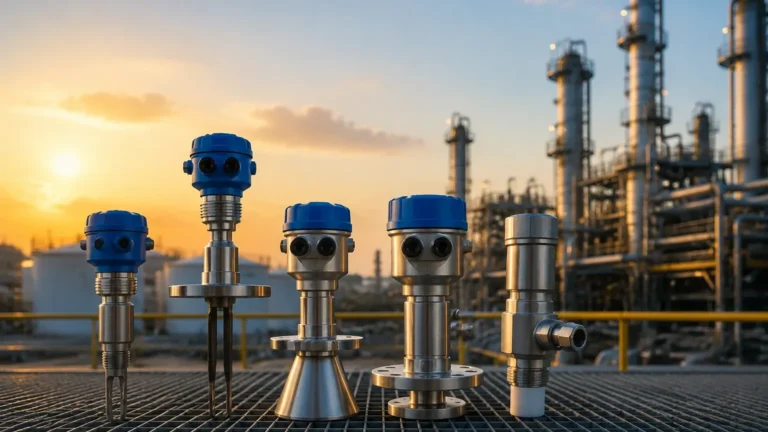
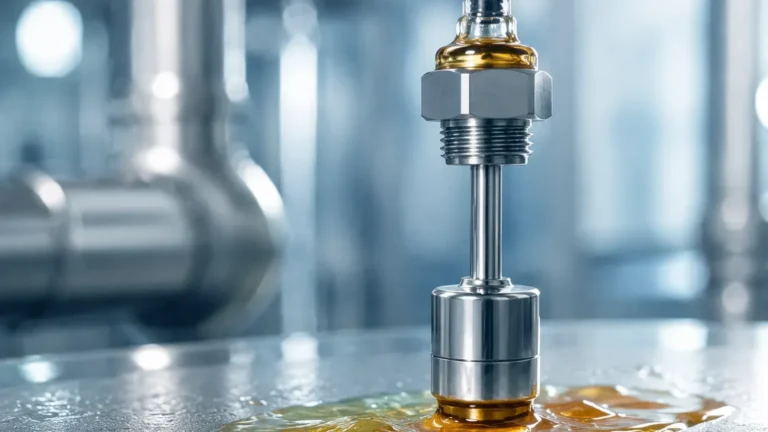
Level Switch Tuning Fork
Level Switch Tuning Fork
In the field of industrial automation and process control, the reliable detection of liquid or solid levels is a fundamental safety and operational requirement. Among the various technologies available, the level switch tuning fork—also known as a vibrating fork level switch—has emerged as a preferred solution for point level detection. These devices are valued for their robustness, lack of moving parts, and immunity to changes in the dielectric constant, conductivity, or pressure of the medium.
As a professional manufacturer of industrial level measurement instruments, Welk provides high-performance Level Switches designed to meet the rigorous demands of water treatment, chemical processing, and the oil and gas industry. This guide explores the engineering principles, selection criteria, and installation best practices for tuning fork technology.
Measurement Principles of Tuning Fork Technology
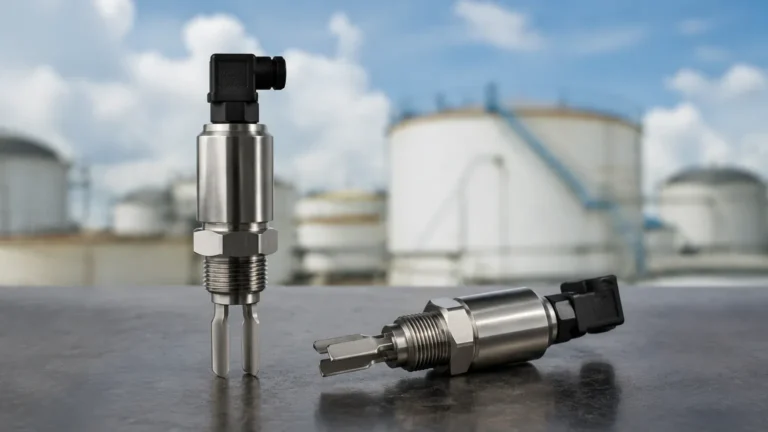
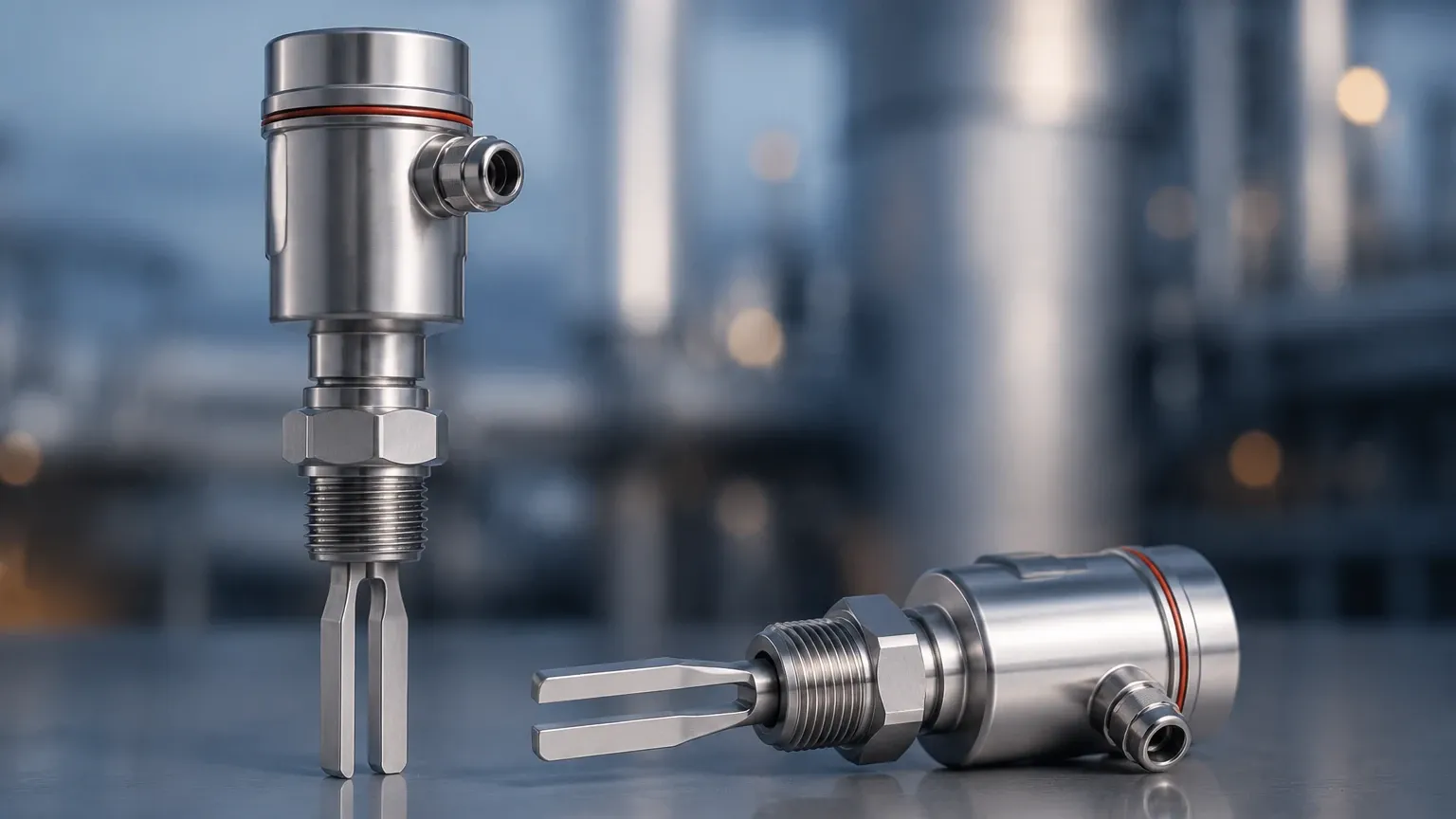
The operation of a level switch tuning fork is based on the principle of vibration frequency shift. The device consists of a fork-shaped sensing element that is driven into vibration by an internal piezoelectric crystal. A second piezoelectric crystal acts as a receiver, detecting the frequency of the vibration.
The Vibratory Mechanism
When the fork is in the air (the "dry" state), it vibrates at its natural resonant frequency, typically around 1,000 Hz to 1,400 Hz for liquid switches, and lower for solids. The electronics continuously monitor this frequency.
When the process medium (liquid or solid) covers the tines of the fork, the frequency of vibration changes. In liquids, the mass of the fluid increases the effective mass of the fork, causing the frequency to drop. In solids, the damping effect of the material restricts the vibration amplitude and shifts the frequency. The internal electronics detect this specific shift and trigger an output signal, such as a relay contact or a transistor switch (PNP/NPN), to indicate that the level has reached the sensor's position.
Key Advantages of the Principle
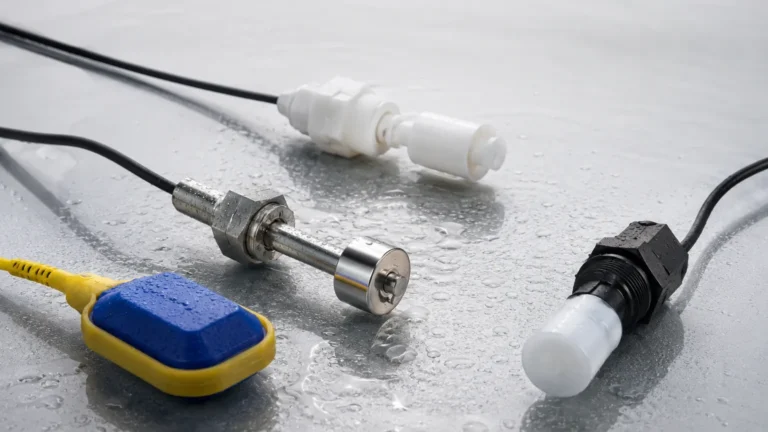
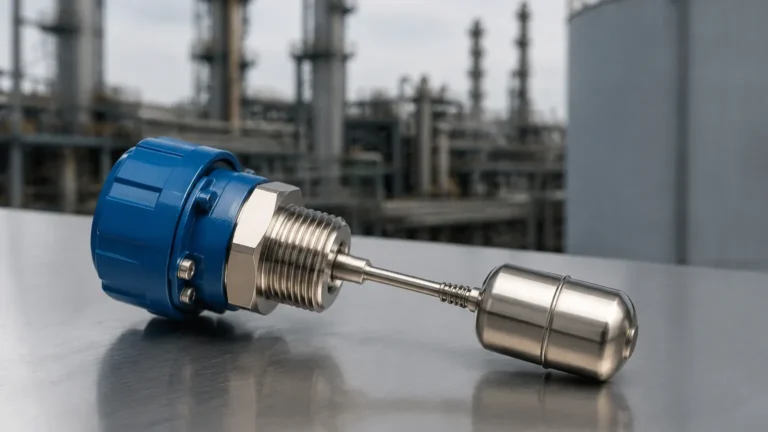
Unlike float switches, which rely on buoyancy and mechanical movement, the tuning fork has no moving parts that can jam or wear out. Unlike capacitive switches, the tuning fork is largely unaffected by the electrical properties of the medium. This makes it an exceptionally versatile tool for diverse industrial applications.
Key Features and Evaluation Criteria
When evaluating a level switch tuning fork for a specific application, several technical factors must be considered to ensure long-term reliability and accuracy.
1. Media Density and Viscosity
Tuning forks are sensitive to the density of the material. For liquids, most switches require a minimum density of 0.5 g/cm³ (31.2 lb/ft³). For light powders or granulated solids, specialized versions with larger tines may be required to detect low-density materials. Viscosity is also a factor; while tuning forks handle viscous fluids better than many other technologies, extremely high-viscosity fluids (above 10,000 mPa·s) may cause "bridging" between the tines, leading to false readings.
2. Material of Construction
The wetted parts must be chemically compatible with the process medium. Standard forks are typically manufactured from 316L stainless steel, which offers excellent corrosion resistance for water treatment and general chemical applications. For highly aggressive media, coatings like PFA or exotic alloys like Hastelloy C may be necessary.
3. Temperature and Pressure Ratings
Industrial processes often involve extreme conditions. Standard tuning fork switches can typically handle temperatures from -40°C to 150°C (-40°F to 302°F) and pressures up to 40 bar (580 psi). High-temperature variants with extended thermal sleeves are available for applications exceeding these limits.
4. Output Options
The choice of electronic output depends on the control system integration:
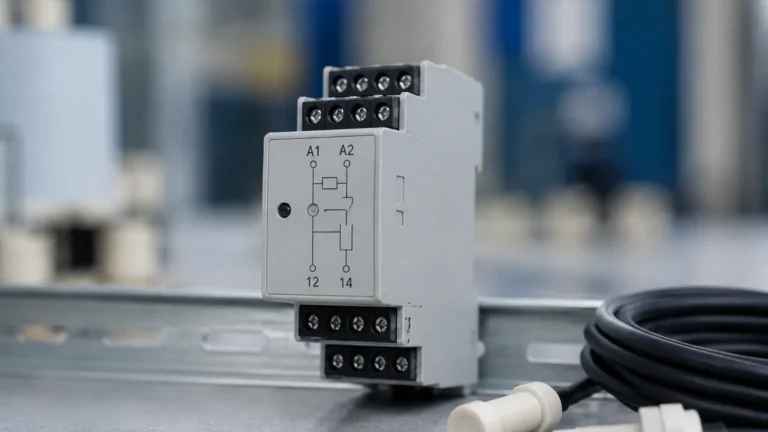
* Relay (SPDT/DPDT): Ideal for direct control of pumps or valves.
* PNP/NPN: Used for direct connection to PLC inputs.
* Two-wire AC/DC: Simplifies wiring in replacement applications.
* NAMUR: Specifically designed for intrinsically safe circuits in hazardous areas.
Selection Table: Liquid vs. Solid Tuning Forks
Choosing the right configuration is critical for performance. The following table highlights the primary differences between liquid-optimized and solid-optimized tuning fork switches.
| Feature | Liquid Level Switch | Solid Level Switch (Granular/Powder) |
| :— | :— | :— |
| Tine Design | Short, compact tines to minimize turbulence impact. | Longer, more robust tines to handle material weight. |
| Frequency | Higher frequency (~1200 Hz). | Lower frequency (~150 Hz to 400 Hz). |
| Sensitivity | High sensitivity to density changes. | Adjustable sensitivity to ignore light dust/buildup. |
| Typical Media | Water, oils, acids, solvents, beverages. | Flour, plastic pellets, cement, sand, grain. |
| Common Use | Overfill protection, pump run-dry protection. | Silo high/low level detection, blockage detection. |
Installation Considerations and Best Practices
Proper installation is essential to prevent false alarms and ensure the longevity of the level switch tuning fork. Engineers should adhere to the following guidelines during the design and commissioning phases.
Orientation and Positioning
* Horizontal Mounting: This is common for side-wall installation in tanks. The tines should be oriented vertically (one above the other) if the liquid is viscous, allowing the medium to drain easily from between the tines. For solids, the tines should be oriented so that the material flows over the narrow edge to reduce mechanical stress.
* Vertical Mounting: Used for top-of-tank installation, often for high-level alarms. Ensure the tines are clear of any internal tank structures or agitators.
Avoiding Turbulence and Flow
If the switch is installed near an inlet pipe or an agitator, the physical force of the moving medium can cause mechanical fatigue or false switching. In these cases, a protective baffle or a stilling well should be installed to shield the fork from direct impact.
Preventing Buildup and Bridging
In applications involving sticky or crystallizing liquids, the gap between the tines can become bridged by material. While many modern Level Switches from Welk feature advanced electronics to ignore minor buildup, significant bridging will eventually cause a permanent "covered" signal. Installing the switch at a slight downward angle can help the material shed more effectively.
Electrical Wiring and Grounding
Ensure that the cable entry points face downward to prevent moisture from entering the housing via capillary action (creating a "drip loop"). Proper grounding of the housing is essential, especially in hazardous environments where static discharge could be a risk.
Limitations of Tuning Fork Level Switches
While highly versatile, the level switch tuning fork is not a universal solution for every application. Engineers must be aware of the following limitations:
1. Extreme Viscosity: As mentioned, fluids that behave like thick pastes may bridge the tines.
2. Large Granules: In solids applications, if the particle size is larger than the gap between the tines (typically 15mm to 20mm), the material can become wedged, causing a false alarm.
3. Aerated Powders: Extremely light, aerated powders with a density below 0.05 g/cm³ may not provide enough damping to trigger the switch.
4. Heavy Coating: While they handle thin coatings well, thick, non-conductive coatings that harden (like drying paint) can insulate the fork and prevent it from sensing the surrounding medium.
Industrial Applications
Welk’s tuning fork level switches are deployed across various sectors due to their reliability and cost-effectiveness.
* Water and Wastewater: Used for pump protection in lift stations and high-level alarms in chemical dosing tanks (e.g., sodium hypochlorite or alum).
* Chemical Industry: Reliable detection of aggressive acids and bases in storage tanks where non-contact radar might be overkill or where secondary redundancy is required.
* Oil and Gas: Monitoring of lube oil levels in large compressors and separators. The compact design allows for installation in small pipes and bypass chambers.
* Food and Beverage: Hygienic versions with polished tines and Tri-Clamp fittings are used for detecting milk, juice, or syrups in processing tanks.
Frequently Asked Questions (FAQs)
Q: Can a tuning fork level switch be used for interface detection?
A: Generally, no. Tuning forks are designed to detect the presence or absence of a medium. While they can sometimes distinguish between a liquid and a heavy foam, they are not suitable for detecting the interface between two liquids (e.g., oil and water) unless there is a very significant density difference and specialized calibration is performed.
Q: Does the presence of bubbles or foam affect the reading?
A: Tuning forks are remarkably stable in the presence of bubbles. However, very dense foam may be detected as a liquid. If the goal is to ignore foam and only detect the liquid level, the sensitivity may need to be adjusted, or a different technology might be more appropriate.
Q: How often does a tuning fork level switch require calibration?
A: One of the primary benefits of this technology is that it typically requires no field calibration. The resonant frequency is set at the factory. Periodic functional testing (checking the output by immersing the fork or using a built-in test button) is recommended as part of a standard maintenance schedule.
Q: What is the maximum cable length for remote electronics?
A: For integrated units, the distance is limited by the power supply and signal requirements. For units with remote electronics, specialized low-capacitance cable can often extend up to 50 meters (approx. 164 feet), depending on the manufacturer’s specifications.
Conclusion
The level switch tuning fork remains a cornerstone of modern level control strategy. Its ability to provide maintenance-free, point-level detection in a wide variety of media makes it an essential component for process safety and efficiency. By understanding the underlying vibratory principles and carefully selecting materials and mounting positions, engineers can ensure high system availability and protect critical infrastructure from overflows or dry-run conditions.
For more information on selecting the appropriate hardware for your specific industrial environment, explore the full range of Level Switches and technical resources available through Welk.