Level Switch Yokogawa
Level Switch Yokogawa
In the landscape of industrial process control, point level detection serves as a critical safeguard for inventory management and overfill protection. Systems utilizing a level switch Yokogawa or similar high-reliability instruments are frequently integrated into Safety Instrumented Systems (SIS) and Distributed Control Systems (DCS) to ensure operational continuity. These devices are designed to detect the presence or absence of liquids or solids at specific heights within a vessel, triggering alarms or controlling pumps and valves to prevent dry running or tank overflows.
Selecting the appropriate level switching technology requires a deep understanding of the physical properties of the medium, the environmental conditions of the process, and the specific engineering requirements of the facility. This guide explores the principles, selection criteria, and installation best practices for industrial Level Switches, providing a technical foundation for engineers and procurement specialists.
Core Measurement Principles for Level Switches
Before selecting a specific model, such as a level switch Yokogawa vibrating fork or a displacer type, it is essential to understand the underlying measurement physics. Different technologies interact with the process media in unique ways, influencing their suitability for various applications.
Vibrating Fork (Tuning Fork) Principle
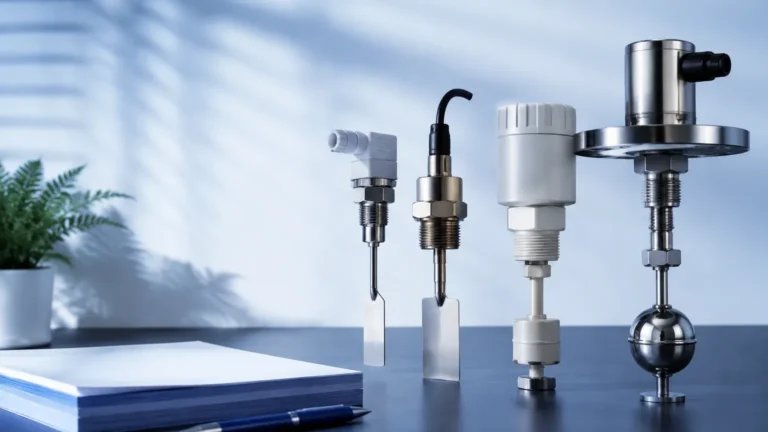
This is one of the most common technologies used in high-end industrial switches. A piezoelectric crystal excites a tuning fork to vibrate at its natural resonance frequency in the air (typically around 1200 Hz to 1400 Hz). When the fork is submerged in a liquid or covered by solids, the frequency shifts or the amplitude decreases due to the change in density and damping. The internal electronics detect this shift and switch the output state. This method is highly resistant to changes in pressure, temperature, and conductivity.
Displacer and Float Principles
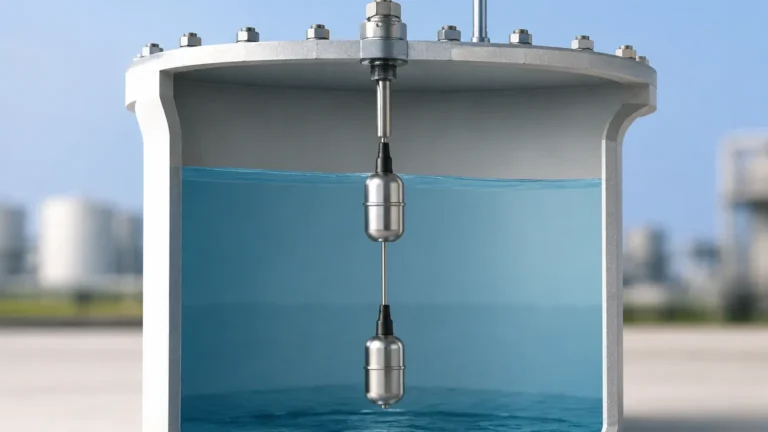
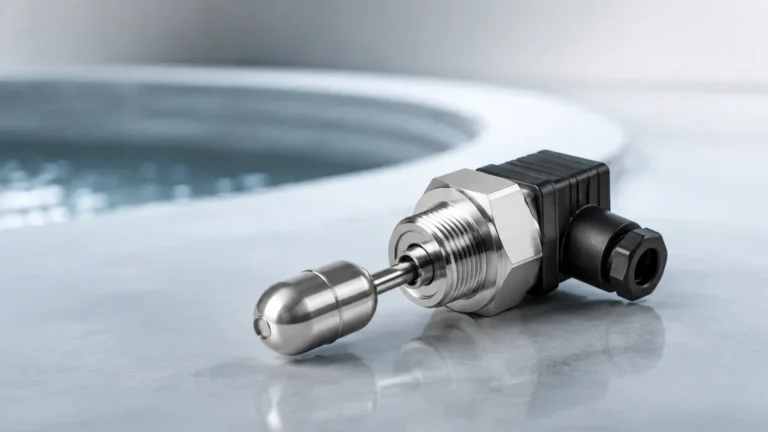
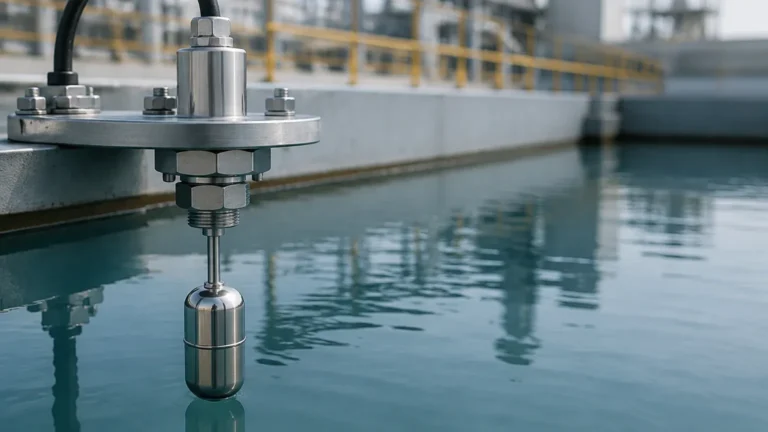
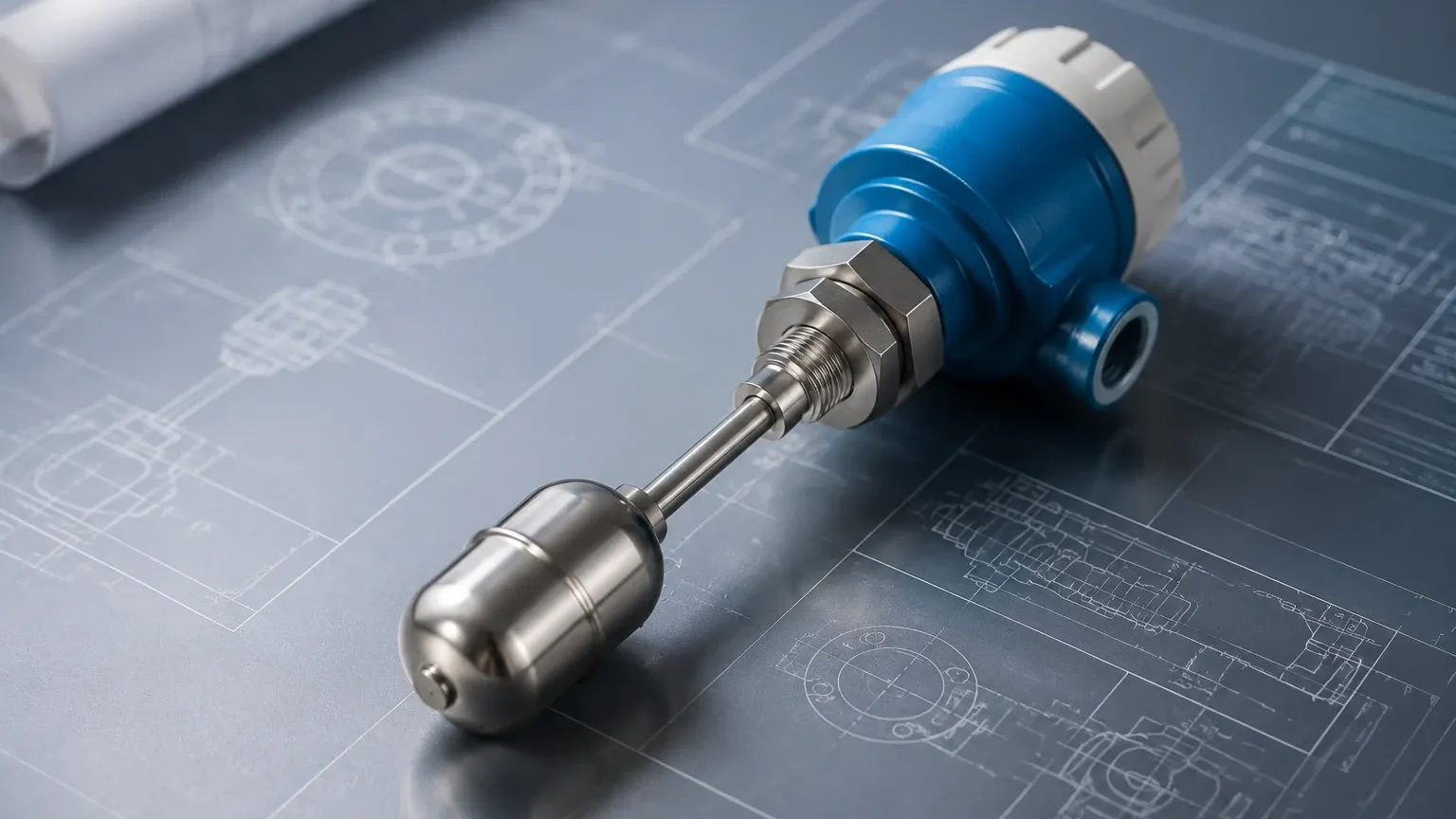
Displacer switches operate on the Archimedes principle. Unlike a float, which remains on the surface of the liquid, a displacer is heavier than the liquid and is suspended by a spring or torque tube. As the liquid level rises and covers the displacer, the buoyant force reduces the apparent weight of the displacer, which triggers the switch mechanism. Standard float switches, conversely, rely on a buoyant object containing a magnet that moves along a stem to actuate a reed switch.
Capacitance and Conductivity
Capacitive switches measure the change in dielectric constant between the sensor probe and the tank wall. When the medium covers the probe, the capacitance increases, triggering the switch. Conductive switches are simpler, relying on the electrical conductivity of the liquid to close a circuit between two electrodes. These are generally limited to conductive, non-flammable liquids.
Technical Specifications of High-Reliability Level Switches
When evaluating a level switch Yokogawa for a specific project, engineers must focus on the robustness of the sensor and its integration capabilities. High-performance switches are characterized by their ability to operate in extreme environments while maintaining SIL (Safety Integrity Level) ratings.
| Feature | Specification Range (Typical) | Notes |
| :— | :— | :— |
| Process Temperature | -50°C to +250°C | High-temp versions available for steam applications. |
| Pressure Rating | Vacuum to 64 bar (6.4 MPa) | Higher ratings available for specialized displacer types. |
| Wetted Materials | 316L Stainless Steel, Alloy C22, PFA | Essential for chemical compatibility. |
| Output Options | Relay, PNP/NPN, NAMUR, 8/16mA | NAMUR is preferred for hazardous area safety. |
| Viscosity Limit | Up to 10,000 mm²/s | Higher viscosity requires specialized fork geometries. |
Instruments in this category often feature self-monitoring electronics that detect damage to the vibrating fork or build-up on the sensor, providing a diagnostic output before a failure occurs. This is a hallmark of the reliability expected from brands like Welk or Yokogawa in critical process loops.
Selection Criteria for Industrial Media
Choosing the right switch involves matching the technology to the specific challenges of the medium. A level switch Yokogawa vibrating fork might be ideal for clean liquids, but other technologies may be required for complex fluids.
1. Density (Specific Gravity): Vibrating switches have a minimum density requirement (often >0.5 g/cm³). If the liquid is extremely light or aerated, a displacer or ultrasonic switch might be more reliable.
2. Viscosity and Coating: Highly viscous liquids can "bridge" the tines of a tuning fork, leading to false readings. In these cases, a flush-mounted capacitive sensor or a heavy-duty displacer is preferred.
3. Turbulence and Foam: Mechanical floats can be damaged by heavy turbulence. Vibrating forks are generally unaffected by foam, whereas ultrasonic or capacitive switches may struggle with thick foam layers.
4. Hazardous Areas: For oil and gas or chemical plants, ensure the switch carries ATEX, IECEx, or FM certifications. The use of intrinsically safe (IS) circuits with NAMUR outputs is standard practice.
Installation Considerations for Optimal Performance
Proper installation is as critical as the selection of the instrument itself. Incorrect positioning can lead to premature wear or inaccurate switching points.
* Nozzle Length: For vibrating fork switches, the tines must extend fully into the vessel beyond the nozzle. If the tines are partially inside the nozzle, material can build up, causing a permanent "covered" signal.
* Orientation: While many switches can be mounted horizontally or vertically, horizontal mounting is preferred for high-level alarms to ensure immediate contact with the rising liquid. For solids, a 20-degree angle is often recommended to prevent material impact damage.
* Avoid the Inflow Stream: Never install a level switch directly in the path of the tank's filling stream. The force of the falling material can cause mechanical failure or false triggers.
* Clearance: Ensure at least 50mm of clearance from the tank walls or internal structures like baffles to prevent interference with the sensor's frequency or magnetic field.
Maintenance and Operational Limitations
While modern Level Switches are designed for low maintenance, they are not entirely "fit and forget" devices. Regular verification is required, especially in safety-critical applications.
Common Limitations
* Build-up: Even the best vibrating forks can fail if a hard crust forms over the tines. Regular inspection is necessary in crystallizing media.
* Corrosion: In aggressive chemical environments, even 316L stainless steel may degrade. Periodic thickness testing of the sensor probe is advised.
* Ambient Temperature: The electronics housing must be kept within specified temperature limits (usually -40°C to +70°C). In high-process-heat applications, use an extended neck or remote electronics.
Troubleshooting Table
| Symptom | Potential Cause | Action |
| :— | :— | :— |
| False High Alarm | Material build-up or bridging. | Clean sensor; check for nozzle obstruction. |
| No Signal Change | Electronic failure or incorrect wiring. | Verify power supply and output loop current. |
| Intermittent Switching | Heavy turbulence or bubbles. | Increase damping/delay or install a stilling well. |
| Delayed Response | High viscosity medium. | Adjust sensitivity settings if available. |
Frequently Asked Questions (FAQ)
Q: Can a level switch Yokogawa be used for both liquid and solid applications?
A: Yes, but the model must be specified for the medium. Vibrating forks for solids are typically larger and more robust to handle the mechanical load of bulk materials compared to liquid versions.
Q: What is the benefit of a NAMUR output in a level switch?
A: NAMUR (IEC 60947-5-6) is a two-wire current signal that indicates not only the switch state but also wire breaks or short circuits. This makes it ideal for safety-instrumented functions.
Q: How does a displacer switch differ from a standard float switch?
A: A float switch follows the liquid level and is usually used for wider control ranges. A displacer switch is designed for high-precision point detection and can withstand much higher pressures and temperatures due to its rugged mechanical construction.
Q: Does the dielectric constant affect vibrating fork switches?
A: No. One of the primary advantages of vibrating fork technology is that it is independent of the dielectric constant, conductivity, and humidity, making it more versatile than capacitive sensors.
For engineers seeking reliable point level control, understanding these technical nuances ensures that the chosen solution—whether a level switch Yokogawa or a customized Welk instrument—provides the safety and accuracy required for modern industrial processes.