Level Sensor York Chiller
Level Sensor York Chiller
In industrial refrigeration and HVAC systems, the precision of liquid level monitoring is a critical factor in maintaining operational efficiency and hardware longevity. Centrifugal and screw chillers, such as those manufactured by York, rely on sophisticated sensing technologies to manage refrigerant levels in the evaporator and condenser, as well as oil levels in the compressor lubrication circuit. A "level sensor york chiller" setup typically involves high-precision point-level detection or continuous measurement to prevent compressor damage and optimize heat transfer.
Selecting the correct instrumentation requires an understanding of the specific physical properties of refrigerants and lubricants under varying pressures and temperatures. This guide examines the measurement principles, selection criteria, and installation best practices for level sensors and switches used in chiller environments.
Measurement Principles for Chiller Level Sensing
Level detection in chillers is primarily achieved through three main technologies: optical, float-based, and capacitive. Each principle offers distinct advantages depending on whether the target medium is a liquid refrigerant, an oil-refrigerant mixture, or pure lubricant.
Optical Level Sensing
Optical sensors are widely used in York chillers for point-level detection. These sensors operate on the principle of infrared light refraction. The sensor contains an infrared LED and a light receiver housed within a conical prism. When the prism is surrounded by gas (vaporized refrigerant), the infrared light reflects internally within the prism and returns to the receiver. When liquid covers the prism, the light refracts into the liquid, significantly reducing the amount of light reaching the receiver. This change triggers the Level Switches to signal the control system.
Float-Based Sensing
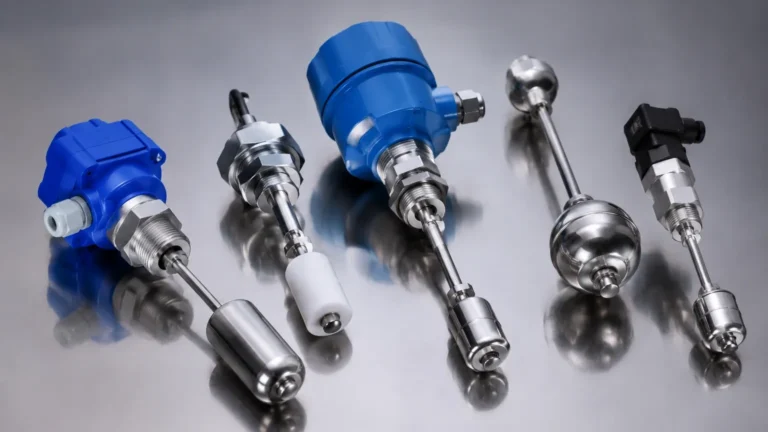
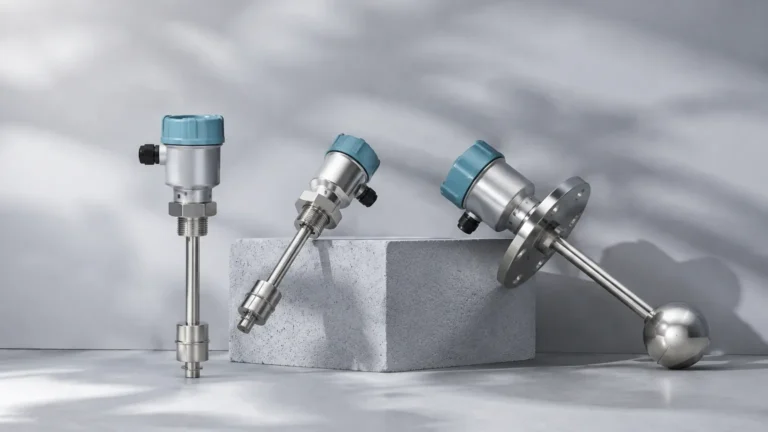
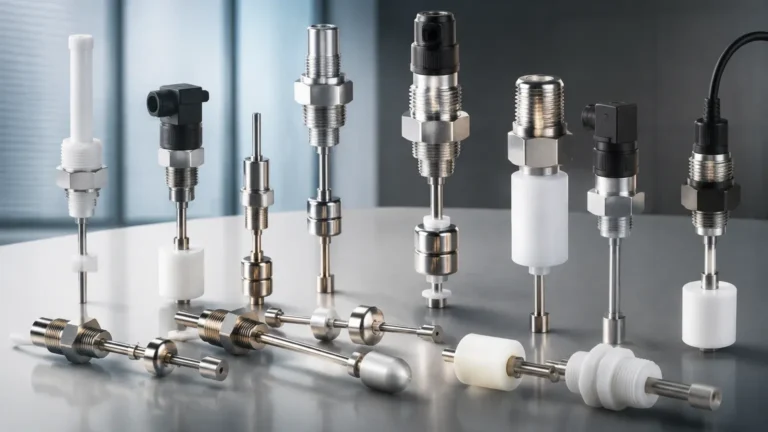
Mechanical float switches utilize buoyancy to track the liquid surface. A magnetic float moves along a stem containing reed switches. As the liquid level rises or falls, the magnetic field actuates the switches. While simple and reliable, float-based systems in chillers must be designed to withstand high-pressure environments and must be compatible with specific refrigerants like R-134a or R-123. They are often used in surge drums or high-pressure receivers.
Capacitance Level Sensing
Capacitance sensors measure the change in dielectric constant between the sensor probe and the vessel wall (or a reference ground). Liquid refrigerants have a different dielectric constant than their vapor phase. As the liquid level rises, the total capacitance increases. This technology is frequently employed for continuous level measurement in evaporators, allowing the chiller's electronic expansion valve (EEV) to modulate the refrigerant flow precisely.
Key Applications in York Chiller Systems
The integration of a level sensor york chiller component is usually found in two primary areas: the refrigerant circuit and the lubrication system.
1. Evaporator Liquid Level Control
In flooded evaporators, it is essential to maintain a specific liquid level to ensure the heat exchanger tubes remain submerged for maximum efficiency, while ensuring that liquid refrigerant does not enter the compressor suction line (liquid slugging). Level sensors provide real-time feedback to the control center to maintain this balance.
2. Oil Separator and Sump Monitoring
Compressors require a constant supply of oil for lubrication and cooling. Level switches are installed in the oil separator or the compressor sump to ensure that the oil level remains within safe operating limits. If the level drops too low, the sensor triggers a safety shutdown to prevent mechanical failure.
Selection Criteria for Level Sensors
When specifying a replacement or an upgrade for a chiller level sensor, several technical parameters must be confirmed to ensure compatibility and reliability.
| Feature | Requirement | Notes |
| :— | :— | :— |
| Pressure Rating | Up to 45 bar (650 psi) | Must exceed the maximum design pressure of the chiller. |
| Temperature Range | -40°C to +120°C | Covers both low-temp evaporation and high-temp oil discharge. |
| Fluid Compatibility | Refrigerants & POE/PVE Oils | Materials must be non-reactive to specific chemical compositions. |
| Output Type | NPN/PNP or Relay | Must match the chiller's control panel (e.g., OptiView). |
| Connection Type | NPT, SAE, or Flanged | 1/2" NPT and 3/4" NPT are common for York applications. |
Material Compatibility
The housing and seals of the sensor must be resistant to the corrosive effects of certain refrigerants and the synthetic oils used in modern chillers. Stainless steel (316L) is the standard for sensor bodies, while fused glass or high-performance polymers are used for optical prisms to prevent clouding over time.
Installation Considerations and Best Practices
Correct installation is paramount to the accuracy of a level sensor york chiller assembly. Improper mounting can lead to false readings caused by foaming or turbulence.
1. Orientation: Optical sensors are typically mounted horizontally. If mounted vertically, the prism must point downwards to prevent liquid from pooling on the tip, which could cause a "false wet" reading.
2. Sealing: Use only manufacturer-approved gaskets or thread sealants. Many refrigerants are highly diffusive; improper sealing can lead to significant refrigerant loss over time.
3. Electrical Isolation: Ensure that the sensor wiring is shielded from high-voltage motor leads to prevent electromagnetic interference (EMI) from affecting the signal.
4. Stilling Wells: In vessels with high turbulence, such as evaporators during high-load conditions, installing the sensor within a stilling well (a perforated pipe) can help stabilize the liquid surface around the sensor.

Limitations and Potential Risks
While modern level switches are highly reliable, engineers should be aware of specific limitations in chiller applications:
* Foaming: In oil separators, refrigerant can mix with oil and create foam. Standard float switches may struggle to distinguish between foam and liquid, whereas optical sensors are generally more resistant but not immune to heavy foaming.
* Coating and Fouling: Over years of operation, oil breakdown products can form a film on optical prisms or capacitive probes. This coating can lead to delayed response times or permanent "wet" signals. Regular inspection during annual chiller teardowns is recommended.
* Pressure Spikes: Rapid changes in system pressure during startup or surging can stress sensor diaphragms or seals. Choosing sensors with high overpressure ratings is a necessary safeguard.
Maintenance and Troubleshooting
If a York chiller reports a "Low Oil Level" or "High Liquid Level" alarm that appears to be false, the following troubleshooting steps should be taken:
1. Visual Verification: Check the sight glass (if available) to confirm the actual liquid level against the sensor's report.
2. Power Supply Check: Verify that the sensor is receiving the correct voltage (typically 24VDC or 120VAC).
3. Cleaning: For optical sensors, remove the unit and gently clean the prism with a soft cloth and a compatible solvent to remove oil film.
4. Continuity Test: For mechanical switches, use a multimeter to check the continuity of the reed switch while manually moving the float (if accessible).
Frequently Asked Questions (FAQ)
Q: Can I replace an optical sensor with a float switch?
A: It is not recommended unless the control system is reconfigured. Optical sensors provide a different electronic signal and have different response characteristics compared to mechanical switches.
Q: What is the typical lifespan of a level sensor in a York chiller?
A: In well-maintained systems, high-quality sensors from manufacturers like Welk can last 10 to 15 years. However, harsh conditions or contaminated refrigerant can shorten this lifespan to 5 years.
Q: Are these sensors compatible with new low-GWP refrigerants?
A: Most modern stainless steel and glass sensors are compatible with R-1234ze, R-513A, and other newer refrigerants, but always verify the O-ring material (e.g., Neoprene vs. Viton) for specific chemical resistance.
Q: How do I handle a sensor that is leaking refrigerant through the electrical connector?
A: This indicates a failure of the internal hermetic seal. The sensor must be replaced immediately, as this represents a leak path for the entire refrigerant charge.
For engineers and facility managers, selecting the right Level Switches is essential for the reliable operation of York chiller units. By understanding the underlying physics of optical and capacitive measurement, and adhering to strict installation protocols, the risks of unscheduled downtime and compressor damage can be significantly mitigated.