Level Switches Emerson
Level Switches Emerson
In the landscape of industrial process control, point level detection remains a fundamental requirement for safety, inventory management, and operational efficiency. Whether preventing a storage tank from overflowing or protecting a pump from running dry, the reliability of a switch is paramount. Among the industry benchmarks for these components, level switches emerson—specifically those under the Rosemount and Mobrey brands—have established a reputation for robustness in demanding environments.
This guide explores the underlying measurement principles of point level technology, evaluates the specific offerings within the Emerson portfolio, and provides practical engineering considerations for selecting and installing Level Switches in diverse industrial applications.
1. Core Measurement Principles of Level Switches
Before selecting a specific model, it is essential to understand the physics governing different switch technologies. Each principle has specific strengths and environmental limitations.
Vibrating Fork (Tuning Fork) Technology
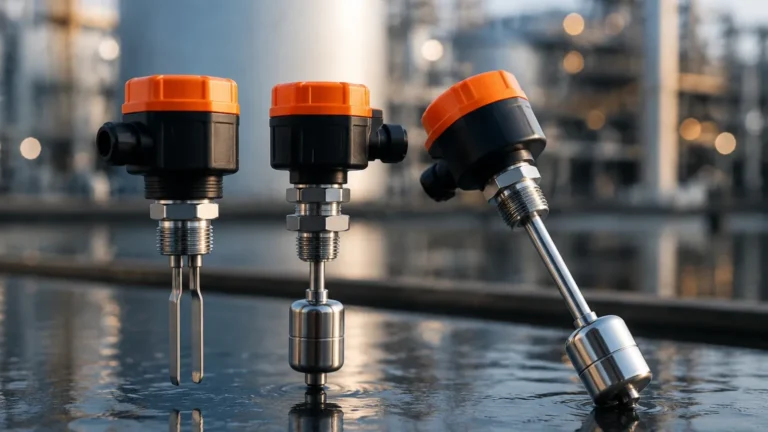
The vibrating fork is perhaps the most common technology found in modern liquid level switches. It utilizes a piezoelectric crystal to drive a fork-shaped sensing element at its natural resonant frequency. When the fork is immersed in a liquid, the frequency shifts or the amplitude of vibration decreases due to the increased density of the surrounding medium. This change is detected by the internal electronics and converted into an output signal (e.g., a relay or transistor switch).
* Advantages: Immune to changes in dielectric constant, pressure, or temperature. It is largely unaffected by turbulence or bubbles.
* Applications: High and low-level alarms in chemicals, oils, and water-based liquids.
Magnetic Float Switches
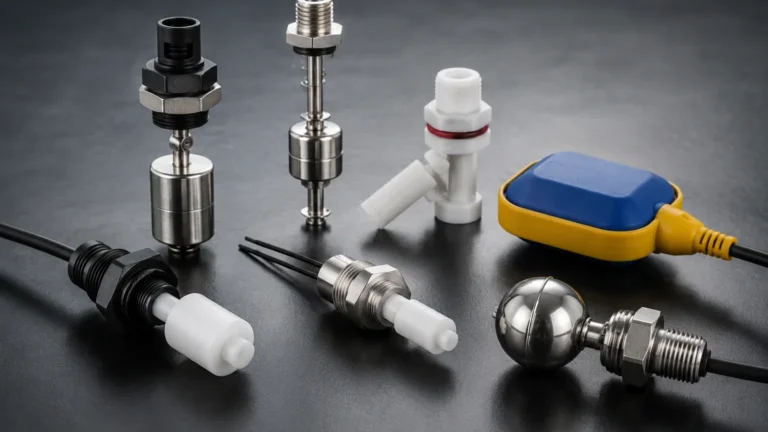
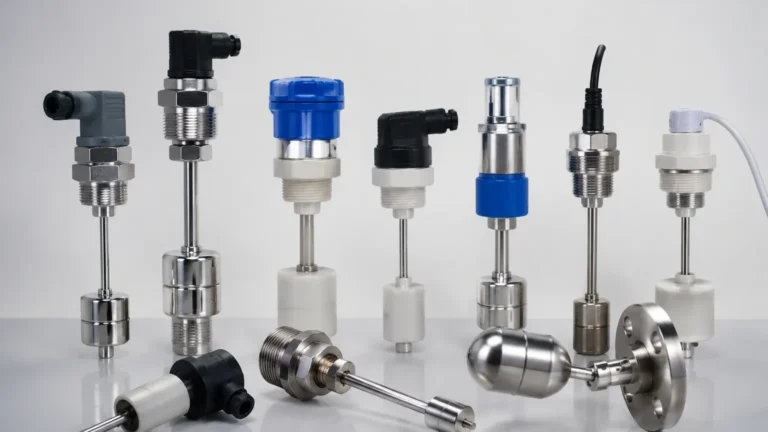
This traditional mechanical principle uses a float containing a permanent magnet that moves with the liquid level. As the float passes a reed switch or a microswitch housed within a central stem or external chamber, the magnetic field actuates the contact.
* Advantages: Simple, requires no power for the sensing element itself, and is highly cost-effective.
* Applications: Simple water tanks, fuel storage, and basic sump control.
Ultrasonic Gap Switches
Ultrasonic switches feature a sensor head with a small gap. An ultrasonic signal is transmitted across this gap. When the gap is filled with air, the signal is attenuated; when filled with liquid, the signal is transmitted efficiently to a receiver.
* Advantages: No moving parts and highly reliable in non-coating liquids.
* Applications: Clean liquids where mechanical movement might lead to wear.
Capacitance Switches
These sensors measure the change in electrical capacitance between the probe and the tank wall (or a reference probe). As the material covers the probe, the dielectric constant changes, altering the capacitance and triggering the switch.
* Advantages: Excellent for solids, powders, and high-viscosity liquids.
* Applications: Grain silos, cement storage, and heavy oil tanks.
2. Evaluating Level Switches Emerson: The Rosemount and Mobrey Series
When engineers specify level switches emerson, they are typically looking at the Rosemount 2100 series or Mobrey magnetic float switches. These products are designed to integrate seamlessly into Plantweb™ digital architectures and provide diagnostic capabilities beyond simple on/off signals.
Rosemount 2100 Series (Vibrating Fork)
The Rosemount 2100 series is the flagship for liquid point level detection. It includes several iterations tailored to specific needs:
* Rosemount 2110: A compact switch designed for high-volume OEM applications and tight spaces. It features a "fast drip" fork design that sheds liquid quickly, preventing false triggers in viscous applications.
* Rosemount 2120: A versatile switch for general process applications, often used for overfill prevention. It offers multiple housing materials and output options, including NAMUR and direct load switching.
* Rosemount 2130: Engineered for extreme conditions, capable of handling temperatures from -70°C to 260°C (-94°F to 500°F). It is frequently used in safety instrumented systems (SIS).
* Rosemount 2140: The world's first wired HART® vibrating fork switch, providing advanced diagnostics and a "media learn" function to distinguish between liquid and foam.
Mobrey Magnetic Switches
Mobrey switches are often preferred for high-pressure or high-temperature steam applications, such as boiler water level control. Their hermetically sealed designs ensure that the process fluid never comes into contact with the switching mechanism, reducing the risk of leaks and electrical failure.
3. Selection Criteria and Comparison Table
Choosing the right switch requires a detailed analysis of the process media and the mechanical constraints of the vessel. The following table provides a general comparison for common industrial scenarios.
| Feature | Vibrating Fork (e.g., Rosemount 2120) | Magnetic Float | Ultrasonic Gap | Capacitance |
| :— | :— | :— | :— | :— |
| Media Type | Liquids (Low to Med Viscosity) | Clean Liquids | Clean Liquids | Liquids, Solids, Slurries |
| Max Pressure | Up to 100 bar (1450 psi) | Up to 200 bar (2900 psi) | Up to 40 bar (580 psi) | Up to 100 bar (1450 psi) |
| Max Temperature | Up to 260°C (500°F) | Up to 400°C (752°F) | Up to 150°C (302°F) | Up to 200°C (392°F) |
| Coating Resistance | Moderate (Excellent with 2110) | Poor | Poor | Good (with active shield) |
| Moving Parts | No | Yes | No | No |
| Maintenance | Low | Moderate | Low | Low |
4. Installation Considerations for Industrial Level Switches
Proper installation is as critical as selecting the correct technology. Incorrect mounting can lead to false alarms or, more dangerously, a failure to trigger when needed.
Orientation and Positioning
* Vibrating Forks: For horizontal installation, the fork tines should be oriented vertically (one above the other) if the liquid is viscous, allowing the fluid to drain freely. If the liquid is thin, horizontal orientation of the tines is usually acceptable.
* Avoid the Fill Stream: Never install a point level switch directly in the path of the incoming material flow. The force of the falling liquid or solid can cause mechanical damage or constant false tripping.
* Standoff Pipes: If using a nozzle or standoff pipe, ensure the sensing element (especially for forks and ultrasonic gaps) extends fully into the vessel. If the sensor is recessed in a pipe, stagnant liquid or trapped air can prevent accurate detection.
Wiring and Safety
* Cable Glands: Always use appropriately rated cable glands to maintain the ingress protection (IP) rating of the housing. In hazardous areas, explosion-proof or intrinsically safe wiring practices must be followed.
* Functional Testing: After installation, a "wet test" should be performed. For Level Switches used in safety-critical roles (SIL 2/3), regular proof testing is mandatory to ensure the internal relay and logic are functioning correctly.
5. Limitations and Operational Risks
While level switches emerson and similar high-quality instruments are highly reliable, they are not universal solutions. Engineers must account for the following risks:
* Bridging and Buildup: In vibrating fork switches, highly viscous or fibrous materials can "bridge" the gap between the tines. This causes the sensor to remain in the "wet" state even after the level has dropped. In such cases, a capacitance switch with a coating-rejection circuit or a flush-mounted pressure transmitter might be a better choice.
* Turbulence and Aeration: Heavy foam can be problematic for ultrasonic and some vibrating fork switches. If the foam is dense enough, it may trigger a liquid alarm. Conversely, highly aerated liquids (like a carbonated beverage or a boiling fluid) may have a density too low for a standard vibrating fork to detect.
* Material Compatibility: The wetted parts (usually 316L Stainless Steel, Hastelloy, or Monel) must be compatible with the process fluid. For corrosive acids, plastic-lined probes or exotic alloys are necessary to prevent premature failure.
6. Frequently Asked Questions (FAQs)
Q: Can level switches emerson be used for dry solids?
A: While the Rosemount 2100 series is specifically for liquids, Emerson and other manufacturers like Welk offer specialized vibrating rod or rotating paddle switches designed specifically for the density and flow characteristics of powders and granules.
Q: What is the difference between a "Normally Open" (NO) and "Normally Closed" (NC) configuration?
A: This refers to the state of the switch when the level is not detected. For safety-critical applications (like high-level alarms), a "Normally Closed" or "Fail-Safe" configuration is preferred. In this setup, the circuit is closed during normal operation and opens when the level is reached or if power is lost, ensuring the system defaults to a safe state.
Q: How do I handle high-vibration environments?
A: Standard vibrating fork switches are designed to ignore external plant vibration because they operate at a specific high frequency. However, extreme mechanical vibration can still affect the electronics. In these cases, remote-mounted electronics or heavy-duty magnetic float switches are recommended.
Q: Is it possible to adjust the sensitivity of these switches?
A: Many modern switches, including the Rosemount 2140, allow for sensitivity adjustments via HART® communication or internal dip switches. This is useful when dealing with low-density fluids or when trying to ignore light foam.
7. Conclusion
Selecting the appropriate point level detection technology requires a balance between process requirements, maintenance capabilities, and budget. While level switches emerson provide a high-tier solution with advanced diagnostics for complex plants, the fundamental principles of vibrating forks, floats, and ultrasonic gaps remain the industry standard.
For engineers looking to optimize their level control strategy, Welk offers a comprehensive range of industrial level measurement instruments, including radar, ultrasonic, and hydrostatic solutions that complement point level switches. By understanding the limitations and installation nuances of these devices, facilities can ensure long-term reliability and safety in their automated processes.