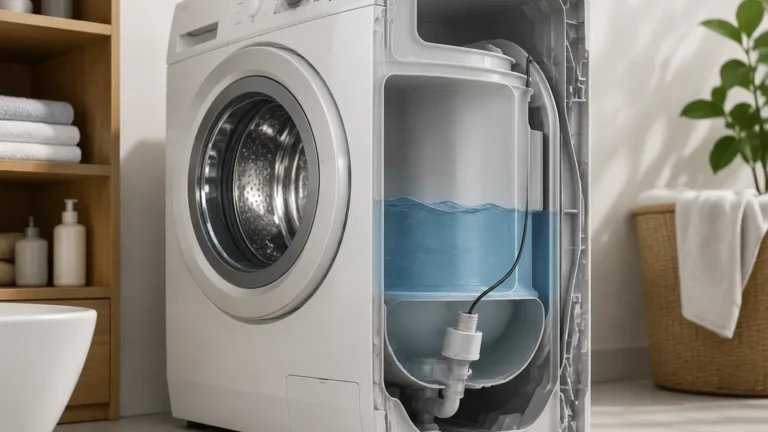
Wet Dry World Water Level Switches
Wet Dry World Water Level Switches
In the realm of industrial automation and process control, the transition between the presence and absence of liquid—often colloquially referred to as the "wet-dry world"—is the most critical boundary to monitor. Wet dry world water level switches are the primary instruments responsible for managing this transition. These point-level detection devices serve as the first line of defense in preventing tank overflows, protecting pumps from dry running, and ensuring that chemical or water treatment processes remain within safe operating parameters.
Selecting the right technology for detecting these states requires a deep understanding of the physical principles governing fluid dynamics and sensor electronics. This guide explores the various methodologies used in water level switching, providing practical engineering insights for selecting and installing the most effective solutions for industrial environments.
Measurement Principles of Level Switches
Before selecting a switch for a wet-dry application, it is essential to understand the underlying physics of how different sensors detect the presence of water. Each technology interacts with the fluid’s physical properties—such as buoyancy, conductivity, or dielectric constant—in distinct ways.
1. Float Level Switches (Mechanical/Magnetic)
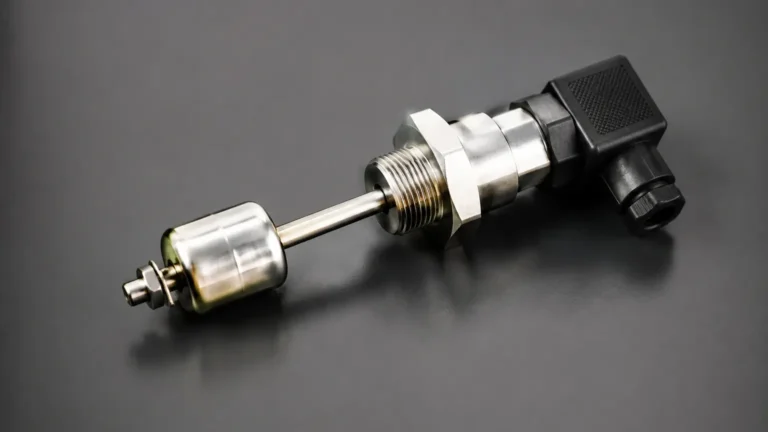
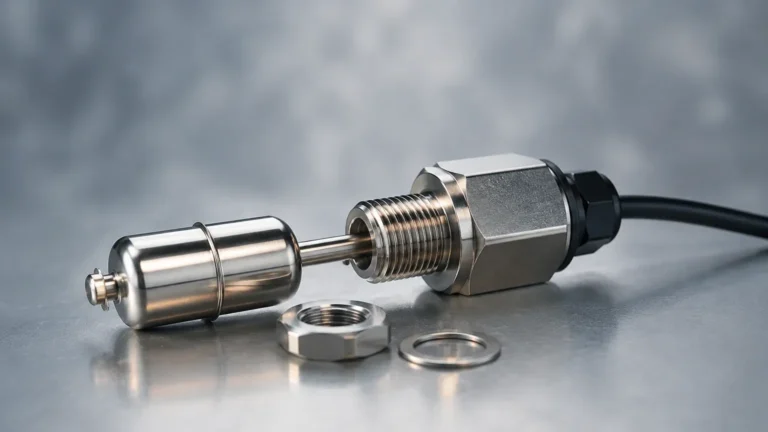
Float switches operate on the principle of buoyancy. A float, containing a permanent magnet, moves with the water level. When the water rises (the "wet" state), the float reaches a predetermined point where its internal magnet actuates a hermetically sealed reed switch or a microswitch. Conversely, as the water level drops (the "dry" state), the float falls, and the switch returns to its original position.
* Pros: Simple, cost-effective, and requires no external power for the sensing element.
* Cons: Moving parts are susceptible to fouling, scaling, or jamming in dirty water applications.
2. Vibrating Tuning Fork Switches
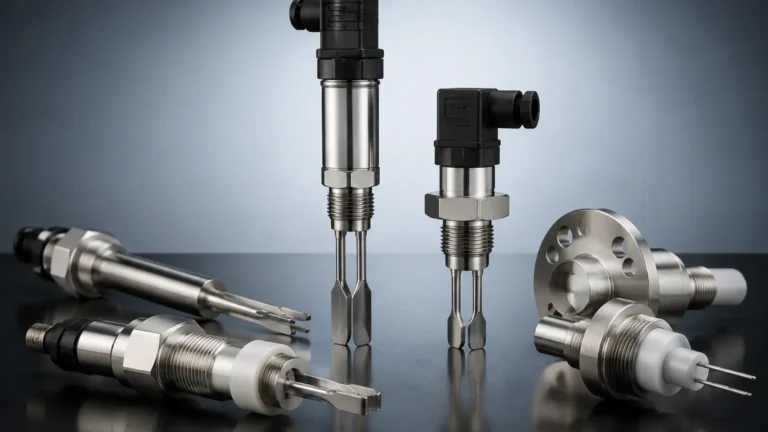
These electronic switches utilize a tuning fork-shaped sensing element that vibrates at its natural resonant frequency in the air (the "dry" state). When the fork is submerged in water (the "wet" state), the frequency of vibration changes due to the increased density of the medium. An internal electronic circuit detects this frequency shift and triggers the output relay.
* Pros: Highly reliable, unaffected by bubbles, foam, or turbulence.
* Cons: Can be affected by significant material build-up between the forks.
3. Conductive Level Switches
Conductive switches rely on the electrical conductivity of the liquid. A low-voltage current is passed between two electrodes. When water bridges the gap between the electrodes, the circuit is completed (wet). When the water falls below the electrodes, the circuit is broken (dry).
* Pros: Very low cost, compact, and ideal for multiple-point detection in small tanks.
* Cons: Only works with conductive liquids (not suitable for pure deionized water or oils) and prone to electrode corrosion.
4. Capacitance Level Switches
Capacitance sensors treat the probe and the tank wall (or a second probe) as two plates of a capacitor. Water has a much higher dielectric constant than air. As the water level rises and covers the probe, the capacitance of the system increases significantly, which is then translated into a switching signal.
* Pros: No moving parts; can detect levels through non-metallic tank walls.
* Cons: Requires calibration for specific media and can be sensitive to moisture or coating on the probe.
Evaluating Wet Dry World Water Level Switches
When navigating the Level Switches market, engineers must evaluate the specific demands of their "wet-dry world" to ensure long-term reliability. The transition between a submerged sensor and an exposed sensor often involves harsh conditions, such as drying residues that can cause false readings.
Material Compatibility
The housing and wetted parts of the switch must be compatible with the water chemistry. While standard 304 or 316 stainless steel is sufficient for general water treatment, applications involving brackish water, seawater, or chemical additives may require specialized plastics like PVC, PP, or PVDF, or high-grade alloys like Hastelloy.
Pressure and Temperature Ratings
Industrial water tanks are not always at atmospheric pressure. It is vital to confirm that the switch can withstand the maximum operating pressure (often measured in bar or PSI) and temperature (Celsius or Fahrenheit) of the process. For example, boiler feed water applications require high-temperature steam-resistant switches, whereas outdoor municipal tanks must withstand freezing temperatures.
Output Logic (NO vs. NC)
Engineers must decide whether the switch should be Normally Open (NO) or Normally Closed (NC). In a high-level alarm scenario, a "fail-safe" configuration is usually preferred, where the circuit opens if power is lost or the level is exceeded, ensuring the system stops filling to prevent a spill.
Technical Selection Table
The following table provides a comparison of common technologies used for wet dry world water level switches based on typical industrial criteria.
| Technology | Suitable Media | Turbulence Resistance | Maintenance Level | Typical Application |
| :— | :— | :— | :— | :— |
| Mechanical Float | Clean Water | Moderate | High | Sump pump control |
| Vibrating Fork | Water, Slurries, Foam | High | Low | Overfill prevention |
| Conductivity | Conductive Liquids | Low | Moderate | Boiler water level |
| Capacitance | Water, Chemicals | Moderate | Moderate | Non-metallic tanks |
| Optical | Clear Liquids | High | Low | Leak detection |
Installation Considerations for Optimal Performance
Proper installation is the most significant factor in preventing premature failure of water level switches. Even the most advanced sensor will fail if placed in a location where it cannot accurately distinguish between wet and dry states.
1. Avoid Turbulence: Do not install switches directly in the path of an inlet pipe or near an agitator. The constant splashing can cause "chatter," where the switch rapidly toggles on and off, potentially damaging pumps or control relays. If turbulence is unavoidable, use a stilling well (a perforated pipe) to dampen the water movement around the sensor.
2. Mounting Orientation: While many switches can be mounted horizontally or vertically, vibrating forks and floats often have a preferred orientation to allow liquid to drain away from the sensor when the level drops. This prevents "bridging" or false "wet" signals caused by trapped droplets.
3. Cable Protection: For submersible switches, ensure the cable is made of a non-wicking material and that the vent tube (if present for atmospheric pressure compensation) is protected from moisture ingress.
4. Dead Zones: Be aware of the "dead zone" or the minimum distance from the tank wall or bottom where the switch cannot operate correctly. For mechanical floats, ensure there is enough clearance for the float to move through its full arc without hitting any internal tank structures.
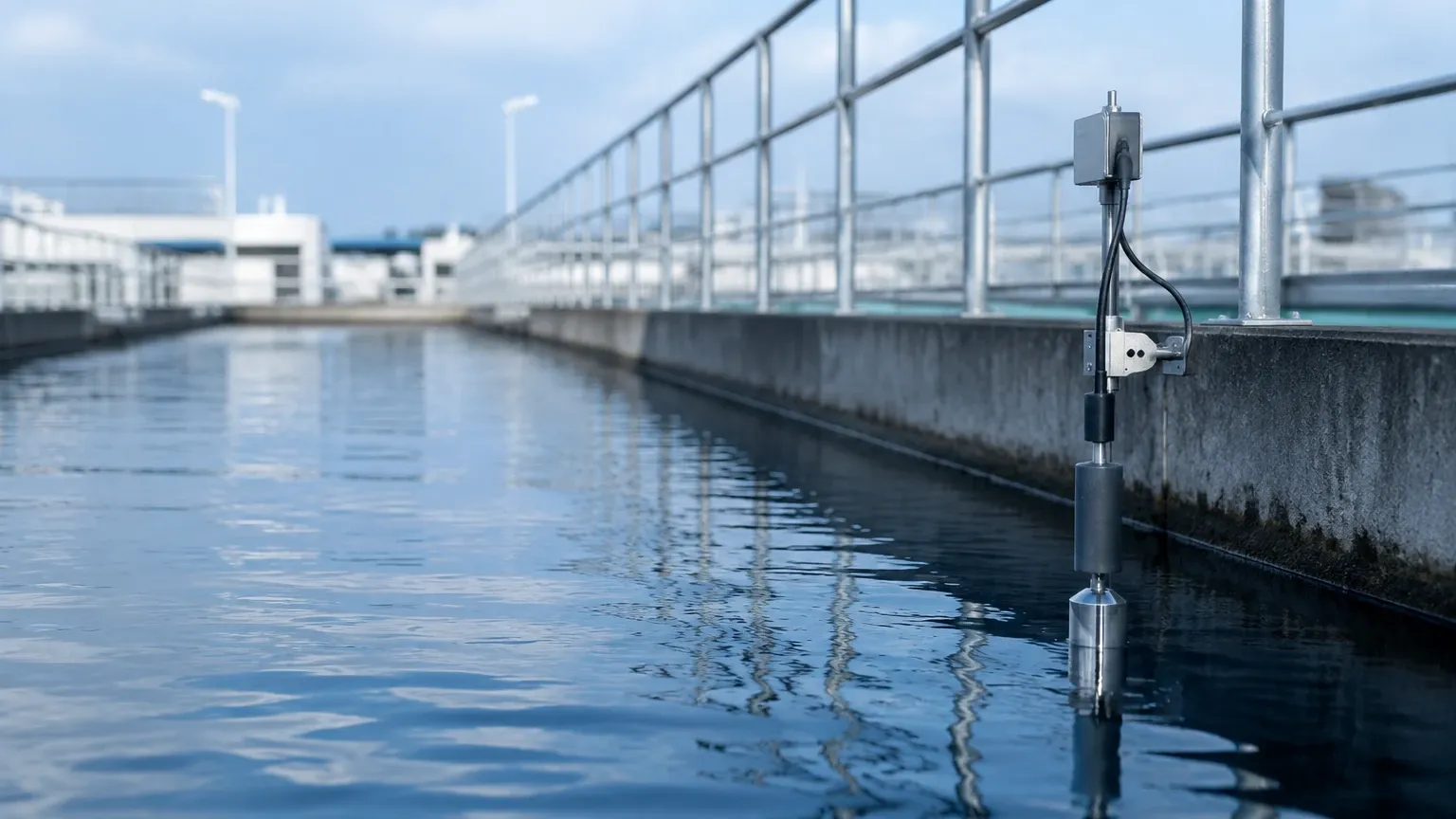
Limitations and Common Risks
Despite their utility, wet dry world water level switches face several challenges in industrial environments:
* Coating and Scaling: In hard water applications, calcium carbonate can build up on sensors. This is particularly problematic for conductive and capacitance switches, as the scale can mimic the presence of water even when the tank is dry.
* Specific Gravity Changes: Mechanical float switches are calibrated for a specific liquid density. If the water contains high concentrations of dissolved solids or if the temperature changes significantly, the float may not sit correctly in the water, leading to inaccurate switching points.
* Electromagnetic Interference (EMI): Electronic switches (vibrating fork and capacitance) can be affected by nearby high-power motors or variable frequency drives (VFDs). Using shielded cables and ensuring proper grounding is essential to prevent ghost signals.
Frequently Asked Questions (FAQs)
Q: Can I use a water level switch for wastewater or sewage?
A: Yes, but mechanical floats are prone to clogging with debris. Vibrating tuning forks or heavy-duty non-contact sensors are generally preferred for wastewater to minimize maintenance.
Q: How do I test if my switch is working without filling the tank?
A: Most modern electronic switches include a "test" magnetic point or a button on the housing that simulates a wet state. For mechanical floats, you must manually lift the float to verify the electrical continuity.
Q: What is the typical lifespan of a water level switch?
A: In clean water conditions, a high-quality stainless steel vibrating fork or magnetic float switch can last 10 to 15 years. However, in corrosive or high-scaling environments, the lifespan may be reduced to 2 to 5 years without regular cleaning.
Q: Is it better to have a top-mounted or side-mounted switch?
A: Top-mounted switches are easier to access for maintenance without draining the tank. Side-mounted switches are often used when the tank is very tall or when multiple point levels need to be detected at specific heights.
Conclusion
Navigating the wet-dry world of industrial water management requires a strategic approach to instrument selection. By understanding the principles of buoyancy, vibration, and conductivity, and by adhering to strict installation guidelines, engineers can ensure that their water level switches provide accurate, fail-safe performance. Whether protecting a multi-million dollar cooling system or a simple drainage sump, the right level switch is an indispensable component of modern industrial infrastructure.