Level Switch Endress Hauser
Level Switch Endress Hauser
In the landscape of industrial automation, point level detection serves as a critical safeguard for process safety and efficiency. Whether preventing a storage tank from overflowing or protecting a pump from running dry, the reliability of a level switch is paramount. Engineers and procurement specialists often look toward industry benchmarks, such as the level switch endress hauser range, to understand the performance standards required for demanding applications in chemical processing, water treatment, and oil and gas sectors.
Selecting the right instrument requires a deep understanding of measurement principles, media characteristics, and environmental constraints. This guide explores the technical foundations of level switching technology, compares leading industrial solutions, and provides a framework for selecting the most appropriate Level Switches for specific process needs.
Measurement Principles of Industrial Level Switches
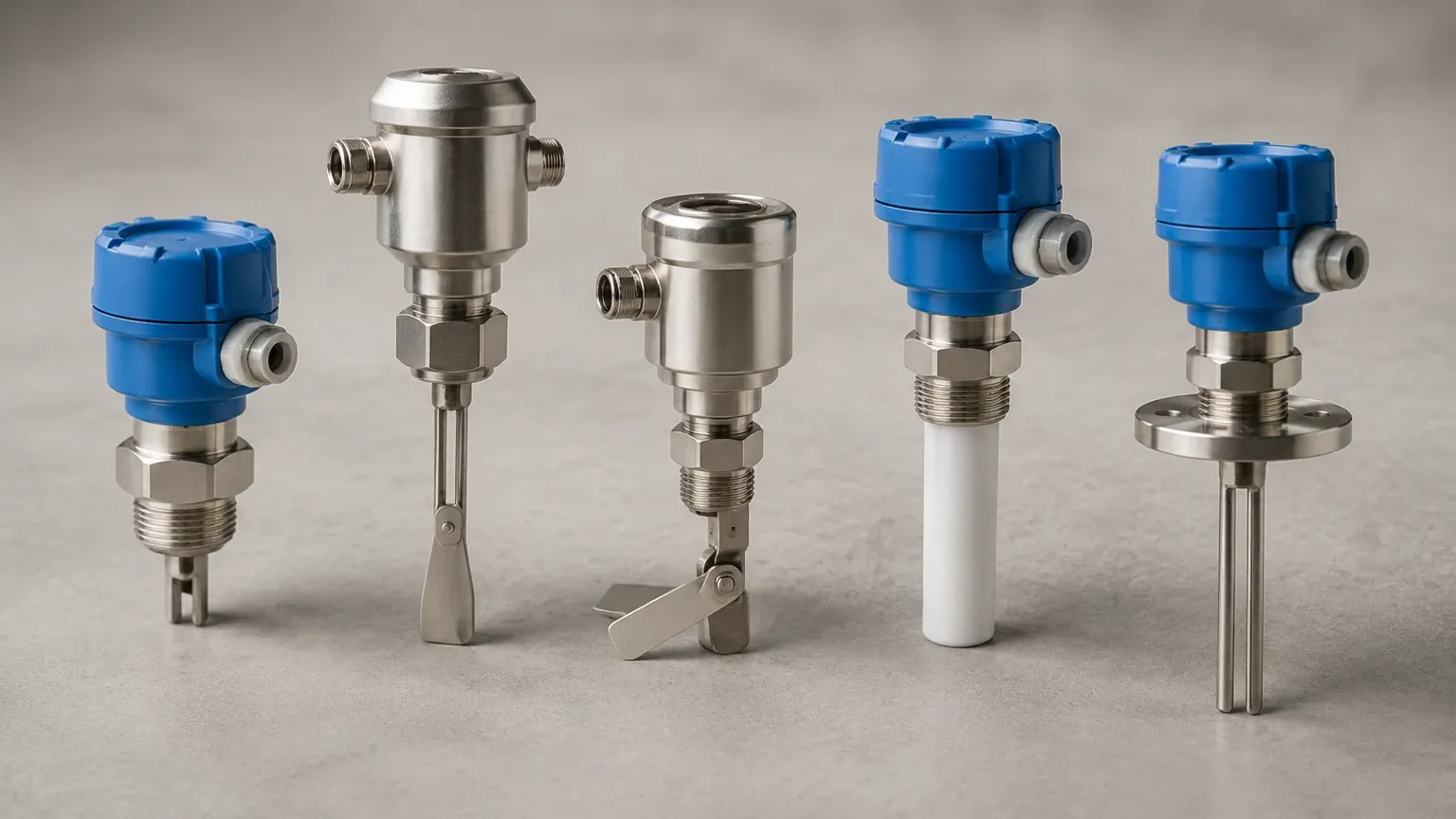
Before selecting a specific model, such as a level switch endress hauser Liquiphant or a Welk ultrasonic sensor, it is essential to understand how different technologies interact with the process media. Point level switches operate on several distinct physical principles.
Vibronic (Vibrating Fork) Technology
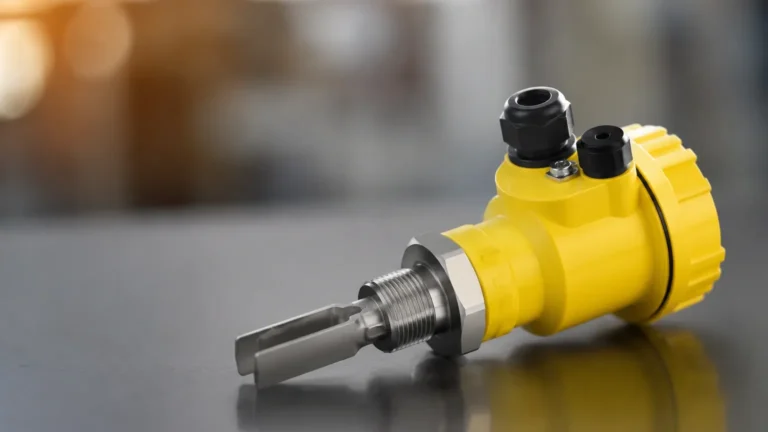
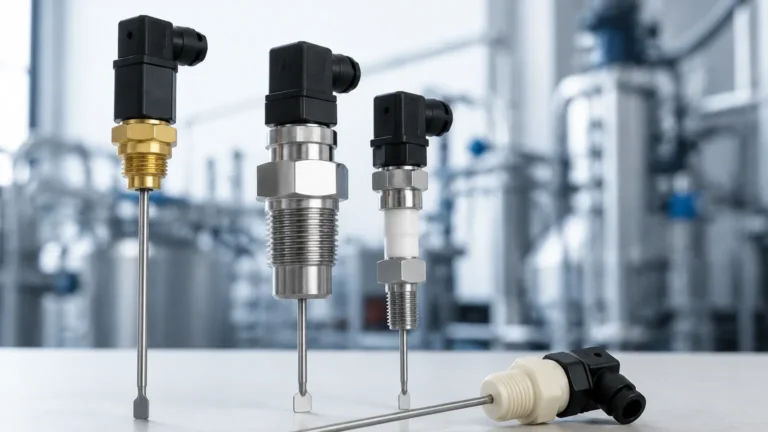
Often considered the gold standard for liquid point level detection, vibronic switches utilize a tuning fork that is piezoelectrically excited to vibrate at its resonance frequency in the air. When the fork is submerged in a liquid, the frequency shifts. This change is detected by the internal electronics and converted into a switching signal.
* Advantages: Unaffected by flow, turbulence, bubbles, foam, or vibration. No calibration is typically required.
* Common Use: Overfill prevention and pump dry-run protection.
Capacitance Level Switching
Capacitance switches measure the electrical capacitance between the sensing electrode and the tank wall (or a reference electrode). As the level rises and covers the probe, the dielectric constant changes, altering the measured capacitance.
* Advantages: Suitable for both liquids and solids; can be designed for high-temperature and high-pressure environments.
* Limitations: May require recalibration if the dielectric constant of the media changes significantly.
Conductive Level Measurement
This principle is limited to conductive liquids. It involves two or more electrodes. When the liquid touches the electrodes, it completes an electrical circuit, triggering the switch.
* Advantages: Simple, low-cost, and reliable for water-based applications.
* Limitations: Not suitable for oils, hydrocarbons, or media that cause heavy buildup on electrodes.
Ultrasonic Point Level Detection
Ultrasonic switches use a pair of crystals (transmitter and receiver) located in a gap in the sensor tip. When the gap is filled with liquid, the ultrasonic signal travels across; when it is filled with air, the signal is attenuated.
* Advantages: Non-contact options are available; no moving parts.
* Limitations: High-density foam can sometimes interfere with the signal.
Comparing Technology Applications
The following table provides a general comparison of common level switch technologies based on application suitability.
| Technology | Media Type | Pressure Range (Max) | Temperature Range (Max) | Typical Application |
| :— | :— | :— | :— | :— |
| Vibrating Fork | Liquids / Solids | 64 bar (928 psi) | 280°C (536°F) | Overfill prevention, pump protection |
| Capacitance | Liquids / Solids | 100 bar (1450 psi) | 400°C (752°F) | High-pressure chemical reactors |
| Conductive | Conductive Liquids | 10 bar (145 psi) | 100°C (212°F) | Water tanks, sump pits |
| Float Switch | Clean Liquids | 40 bar (580 psi) | 150°C (302°F) | Fuel storage, simple water tanks |
| Ultrasonic | Liquids | 40 bar (580 psi) | 150°C (302°F) | Wastewater, corrosive chemicals |
The Role of Level Switch Endress Hauser in Modern Engineering
When discussing high-performance level detection, the level switch endress hauser portfolio is frequently cited for its innovation in vibronic and capacitance technologies. Their Liquiphant series, for instance, has set industry standards for Safety Integrity Level (SIL) rated applications. These devices are engineered to provide "proof testing" capabilities, allowing operators to verify the switch's functionality without removing it from the process.
For bulk solids, the Soliphant series utilizes a similar vibrating principle but is optimized for the different mechanical properties of powders and granulates. While these premium solutions offer extensive features, many industrial applications can be effectively managed with robust, cost-effective alternatives that adhere to the same rigorous measurement principles.
Key Selection Criteria for Industrial Level Switches
Choosing between a specialized level switch endress hauser model and a standard industrial transmitter requires an evaluation of the following factors:
1. Media Properties
* Viscosity: High-viscosity liquids may stick to vibrating forks, causing "false full" readings. In such cases, a flush-mounted capacitance switch or a heavy-duty float may be preferable.
* Corrosivity: Ensure the wetted parts (e.g., 316L Stainless Steel, Alloy C, or PFA coating) are compatible with the chemical composition of the media.
* Density: Vibrating switches have a minimum density requirement (typically > 0.5 g/cm³) to function correctly.
2. Process Conditions
* Pressure and Temperature: Extreme conditions require specialized seals and housing materials. Standard sensors usually handle up to 40 bar and 150°C, but specialized versions can go much higher.
* Turbulence and Foam: If the tank has an agitator, a vibrating fork or ultrasonic switch is generally more stable than a mechanical float.
3. Safety and Certification
In hazardous areas, switches must carry ATEX, IECEx, or CSA certifications. For safety-instrumented systems (SIS), look for SIL2 or SIL3 certified devices to ensure the probability of failure on demand is within acceptable limits.
Installation and Maintenance Considerations
Proper installation is as important as selecting the right technology. Even a high-quality level switch endress hauser unit can fail if installed incorrectly.
* Orientation: Vibrating forks should be installed with the tines oriented vertically (for liquids) to allow the media to drain off easily, preventing buildup.
* Nozzle Length: Ensure the sensing element extends far enough into the vessel to avoid being influenced by the stagnant media inside the mounting nozzle.
* Electrical Connection: Use proper cable glands and create a "drip loop" to prevent moisture from entering the housing through the conduit.
* Maintenance: While modern solid-state switches (like vibronic or ultrasonic) are virtually maintenance-free, they should be inspected periodically for physical damage or significant material buildup in aggressive environments.
Limitations and Potential Risks
No single level switch technology is universal. Engineers should be aware of the following limitations:
1. Coating and Buildup: While vibronic switches are resistant to some buildup, heavy, conductive crusting can eventually dampen the vibration and cause a fault.
2. Gas Bubbles: In ultrasonic gap switches, heavy aeration in the liquid can block the signal, leading to a "false empty" state.
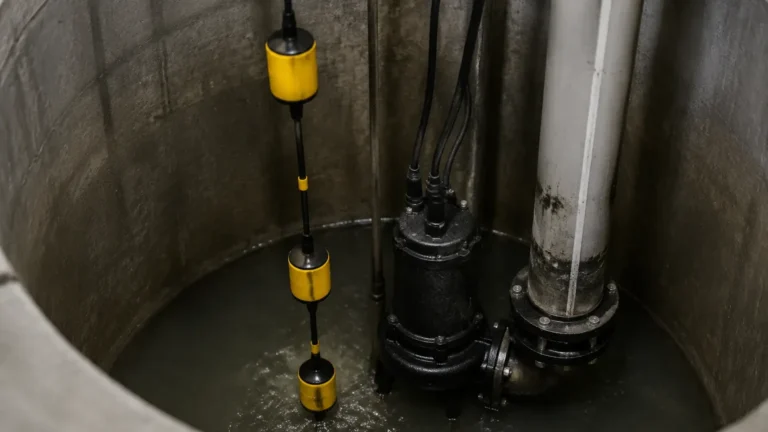
3. Mechanical Wear: Float switches, containing moving parts, are susceptible to mechanical fatigue and jamming if the liquid contains solids or becomes sticky.
Frequently Asked Questions (FAQ)
Q: Can a level switch endress hauser Liquiphant be used for solids?
A: No. The Liquiphant is specifically tuned for the frequency shifts caused by liquids. For solids, the Soliphant series is the appropriate vibronic choice, as it is designed to handle the different damping characteristics of dry materials.
Q: What is the difference between a level switch and a level transmitter?
A: A level switch provides a discrete (on/off) signal at a specific point. A level transmitter provides continuous measurement (e.g., 4-20mA or Modbus) of the entire range of the tank level.
Q: How do I handle applications with thick foam?
A: Vibronic switches are generally the best choice for foam, as they are designed to ignore the low-density foam layer and only trigger when they contact the actual liquid surface.
Q: Is calibration required for new level switches?
A: For most vibrating fork and ultrasonic switches, no calibration is required. Capacitance switches, however, usually require a "dry" and "wet" calibration to set the sensitivity based on the specific dielectric of the media.
Conclusion
Selecting an industrial level switch involves balancing technical requirements with budget constraints. While a level switch endress hauser provides high-end features for safety-critical and complex applications, understanding the underlying measurement principles allows engineers to choose the most efficient solution for their specific environment. By focusing on media compatibility, process conditions, and proper installation, facilities can ensure long-term reliability and safety in their level control processes.
For those seeking a wide range of industrial-grade options, exploring various Level Switches can provide the necessary flexibility to meet diverse automation challenges.