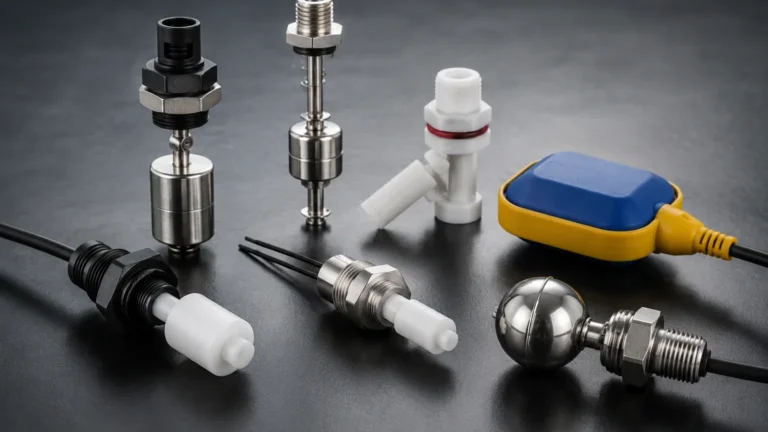
Trimod Besta Level Switches
Trimod Besta Level Switches
In the field of industrial process control, the reliable detection of liquid levels is a fundamental requirement for safety, efficiency, and environmental compliance. Among the various technologies available, float-operated level switches remain a cornerstone of liquid level monitoring due to their mechanical simplicity and high reliability. The Trimod Besta system represents a specialized modular approach to this technology, offering a versatile range of configurations for demanding industrial environments. This guide explores the engineering principles, selection criteria, and installation best practices for Level Switches designed around the Trimod Besta modular concept.
Understanding the Operating Principle of Float-Based Level Switches
The primary function of a float-type level switch is to convert the movement of a float—driven by the buoyancy of a liquid—into a discrete electrical or pneumatic signal. The Trimod Besta design utilizes a magnetic coupling principle that ensures a complete physical separation between the process medium and the switching element.
The Buoyancy Principle
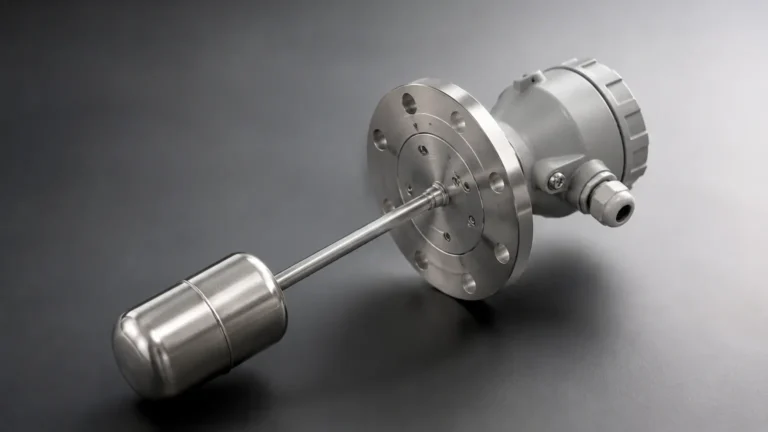
As the liquid level in a vessel rises or falls, the float moves accordingly. The float is attached to a lever arm that contains a permanent magnet. When the liquid reaches a predetermined set point, the float moves the magnet into a position where it interacts with a second magnet located inside the switch housing.
Magnetic Coupling and Hermetic Sealing
Unlike traditional mechanical switches that might use a bellows or a sliding seal to transmit motion from the process to the switch, the magnetic coupling allows for a solid metal wall to exist between the two environments. This hermetic separation is critical for applications involving high pressure, vacuum, or hazardous chemicals, as it eliminates the risk of leaks through the switch assembly. The repulsion or attraction between the two magnets triggers the snap-action microswitch or proximity sensor, providing a reliable "on/off" signal for pumps, valves, or alarms.
The Modular Design of Trimod Besta Systems
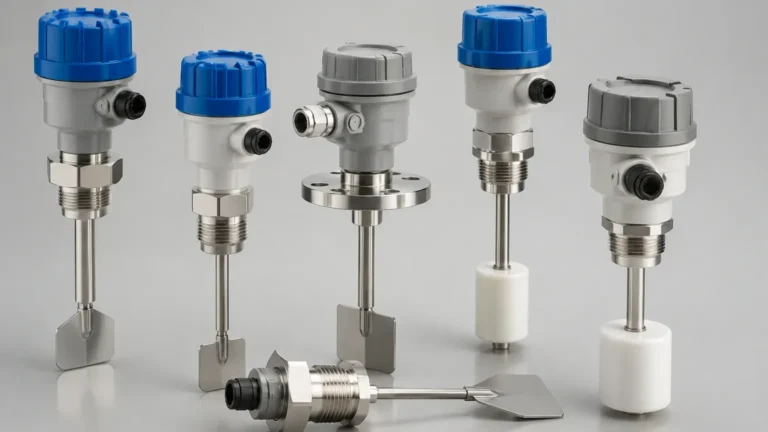
The "Trimod" name is derived from the three-module architecture that defines this system. This modularity allows engineers to customize the instrument to meet specific process conditions without requiring a custom-engineered solution for every application. The system consists of the following components:
1. The Switch Module
The switch module contains the electrical or pneumatic contact mechanism. Depending on the application requirements, this can include:
* Microswitches: Standard SPDT or DPDT switches for high-load electrical circuits.
* Proximity Switches: Inductive or reed-based switches for low-current signals or hazardous areas.
* Pneumatic Controllers: Used in environments where electrical signals are prohibited or where pneumatic logic is already in place.
* High-Temperature Elements: Specifically designed housings with cooling fins to protect the electronics from process heat.
2. The Flange (Mounting) Module
This module provides the mechanical connection to the vessel. Standard options include:
* Square Flanges: Often used for standard industrial tanks.
* Industrial Standard Flanges: DIN, ANSI, or JIS compliant flanges for integration into existing piping systems.
* Threaded Connections: For smaller vessels or specific manifold mountings.
3. The Float Module
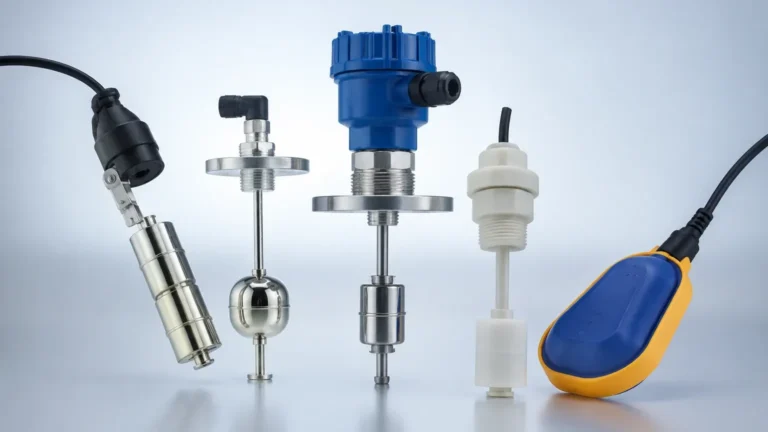
The float module is the part of the instrument in direct contact with the process liquid. It is selected based on the liquid's density, temperature, and chemical compatibility. Options range from standard stainless steel (316L) to exotic alloys like Hastelloy or plastics such as PP and PTFE for corrosive media.
Key Selection Criteria for Industrial Applications
Selecting the correct configuration for Trimod Besta level switches requires a thorough analysis of the process environment. The following table outlines the primary evaluation criteria for standard configurations:
| Parameter | Standard Range | High-Performance Range |
| :— | :— | :— |
| Operating Pressure | Vacuum to 25 bar (2.5 MPa) | Up to 250 bar (25 MPa) |
| Operating Temperature | -30°C to +250°C | -200°C to +400°C |
| Minimum Liquid Density | 0.7 g/cm³ | 0.45 g/cm³ (with specialized floats) |
| Wetted Materials | 316L Stainless Steel, PP | Hastelloy, PTFE, Titanium |
| Enclosure Rating | IP65 / NEMA 4 | IP68 / Explosion-proof (Ex d) |
Density Considerations
One of the most critical factors is the density of the liquid. If the liquid is too light, the float will not displace enough volume to overcome the weight of the lever arm and the magnetic resistance of the switch. For low-density liquids like liquefied gases or light hydrocarbons, oversized or weighted floats may be required to ensure reliable switching.
Chemical Compatibility
While stainless steel is the standard for many water treatment and oil applications, chemical processing often requires specialized materials. In applications involving aggressive acids or bases, the float and flange modules must be coated or manufactured from inert materials to prevent corrosion-induced failure.
Installation and Mounting Guidelines
Proper installation is essential to ensure the longevity and accuracy of a float level switch. Because these are mechanical devices, physical orientation and clearance are paramount.
Mounting Orientation
Trimod Besta switches are typically designed for horizontal mounting through the side of a tank. However, vertical mounting configurations are available using a 90-degree lever arm or a vertical float guide. When mounting horizontally, the switch must be perfectly level to ensure the float moves freely throughout its intended arc.
Avoiding Turbulence and Obstructions
* Stilling Wells: In tanks with high turbulence or agitation, the float should be installed inside a stilling well (a perforated pipe) to prevent the float from bouncing, which can cause "chatter" or false triggering of the switch.
* Clearance: Ensure there is sufficient internal clearance for the float's full range of motion. Obstructions like heating coils, ladders, or internal baffles must be avoided.
* Nozzle Length: The nozzle (the pipe stub where the switch is mounted) should be as short as possible. If the nozzle is too long, the float lever may strike the interior of the pipe before the switch is activated.
Electrical Wiring
Wiring should be performed according to local electrical codes. For high-vibration environments, flexible conduit is recommended to prevent the transmission of mechanical stress to the switch housing. In hazardous locations, the use of intrinsically safe barriers or explosion-proof enclosures is mandatory.

Operational Limitations and Maintenance Requirements
While highly robust, float-operated level switches are not suitable for every application. Engineers should be aware of the following limitations:
1. Viscous Liquids: Highly viscous liquids can impede the movement of the float or cause it to stick to the tank wall. If the liquid's viscosity exceeds 5,000 mPa·s, alternative technologies like vibrating fork switches may be more appropriate.
2. Solid Content: Liquids with a high concentration of suspended solids or fibrous materials can build up on the float and lever arm, changing the buoyancy characteristics or physically jamming the mechanism.
3. Coating and Scaling: In applications like wastewater or calcium-rich water, scaling can occur. Periodic inspection and cleaning of the float module are necessary to prevent failure.
4. Magnetite Build-up: Since the system relies on magnets, the presence of magnetic particles (such as magnetite in boiler water) can lead to the accumulation of debris around the coupling, potentially interfering with the switch operation.
Maintenance Checklist
* Functional Test: Manually lift the float (if accessible) or use a test actuator to verify the switch triggers the expected control logic.
* Visual Inspection: Check the housing for signs of moisture ingress or corrosion.
* Float Integrity: Inspect the float for dents or pinhole leaks. A compromised float will lose buoyancy and fail to rise with the liquid level.
Comparing Technologies: Float Switches vs. Modern Alternatives
When evaluating Level Switches for a new project, it is helpful to compare the Trimod Besta float design with other common technologies:
* Vibrating Fork Switches: These are excellent for turbulent liquids and are generally more compact. However, they may struggle with aerated liquids or heavy foam, where a float switch remains unaffected.
* Ultrasonic Switches: These provide non-contact measurement, which is ideal for highly corrosive or ultrapure liquids. However, they are sensitive to foam, steam, and changes in the vapor space composition.
* Conductivity Probes: These are very cost-effective for conductive liquids (like water) but cannot be used with hydrocarbons or non-conductive oils, and they are prone to fouling.
Trimod Besta float switches excel in high-pressure and high-temperature environments where electronic sensors might fail. Their purely mechanical-magnetic operation means they do not require power to function (in the case of pneumatic versions) and are less susceptible to electronic interference.
Frequently Asked Questions (FAQ)
Q: Can a Trimod Besta switch be used for interface measurement?
A: Yes. By adjusting the weight and volume of the float, the switch can be calibrated to sink in the upper (lighter) liquid and float on the lower (heavier) liquid, allowing for the detection of the interface between two immiscible fluids like oil and water.
Q: What is the benefit of a test actuator?
A: A test actuator allows maintenance personnel to manually move the internal mechanism from the outside of the vessel without breaking the process seal. This is a critical safety feature for verifying the operation of high-level alarms in hazardous tanks.
Q: Are these switches suitable for sanitary applications?
A: While standard models are industrial-grade, specific versions with polished stainless steel surfaces and tri-clamp connections are available for food, beverage, and pharmaceutical applications.
Q: How do I handle high-vibration environments?
A: For applications on ships or near heavy machinery, the switch modules can be equipped with dampened microswitches or specific mounting kits designed to absorb mechanical shock and prevent false trips.
By understanding the modular nature and the physical principles of the Trimod Besta system, engineers can specify a level measurement solution that provides long-term reliability in even the most challenging process conditions.