Rosemount Level Switches
Rosemount Level Switches
In industrial process control, point level detection serves as a critical safety and operational layer. Unlike continuous level measurement, which provides a constant stream of data regarding the volume or height of a substance, level switches are designed to trigger an action when a specific threshold is reached. Rosemount level switches, manufactured by Emerson, are widely recognized in the B2B sector for their reliability in overfill prevention, high- and low-level alarms, and pump control across the oil and gas, chemical, and water treatment industries.
Selecting the appropriate instrument requires a deep understanding of the underlying measurement principles, the physical properties of the media, and the specific constraints of the process environment. This guide examines the technical specifications, application logic, and installation requirements for these essential industrial components.
Measurement Principles of Modern Level Switches
Before selecting a specific model, engineers must evaluate the physics of the detection method. Different media—ranging from low-viscosity hydrocarbons to abrasive slurries—require specific sensing technologies to ensure long-term stability and prevent false triggers.
Vibrating Fork (Tuning Fork) Technology
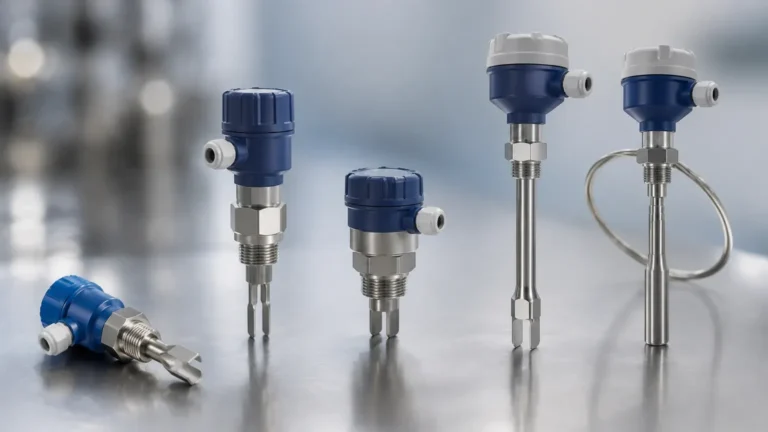
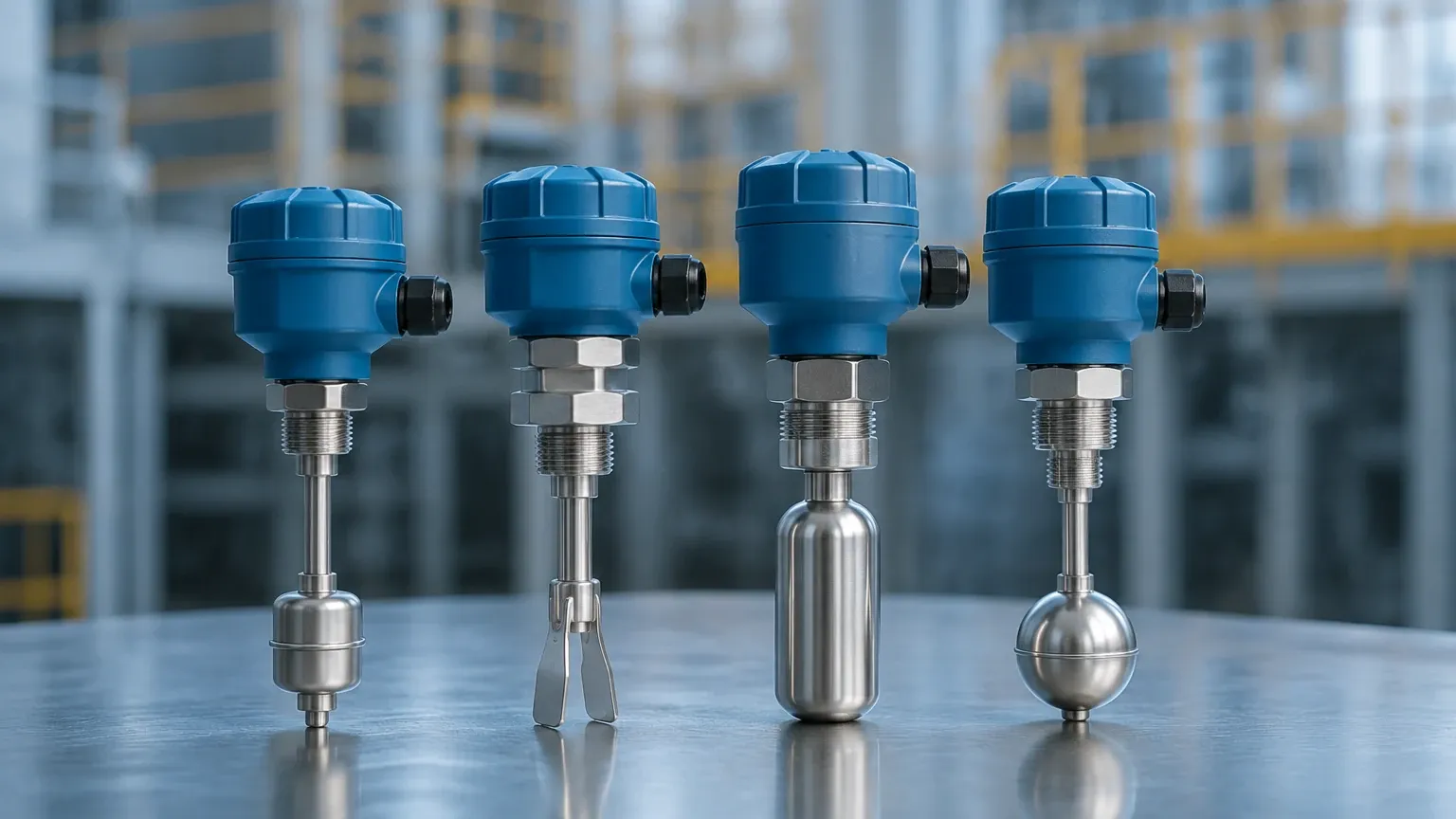
The vibrating fork is the primary technology used in many Rosemount level switches, such as the 2100 series. The principle relies on a piezoelectric crystal that excites a tuning fork at its natural resonant frequency. When the fork is in the air (the "dry" state), it vibrates freely. As the liquid level rises and covers the fork (the "wet" state), the frequency changes due to the increased density of the surrounding medium.
This frequency shift is detected by the internal electronics, which then switch the output state. Vibrating forks are favored because they are largely unaffected by flow, turbulence, bubbles, or foam. However, they can be sensitive to heavy coating or build-up between the tines, which may require periodic cleaning in high-viscosity applications.
Magnetic Float Mechanisms
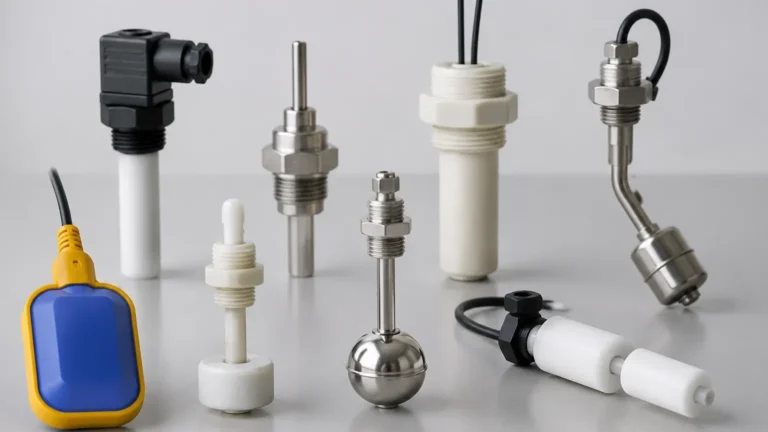
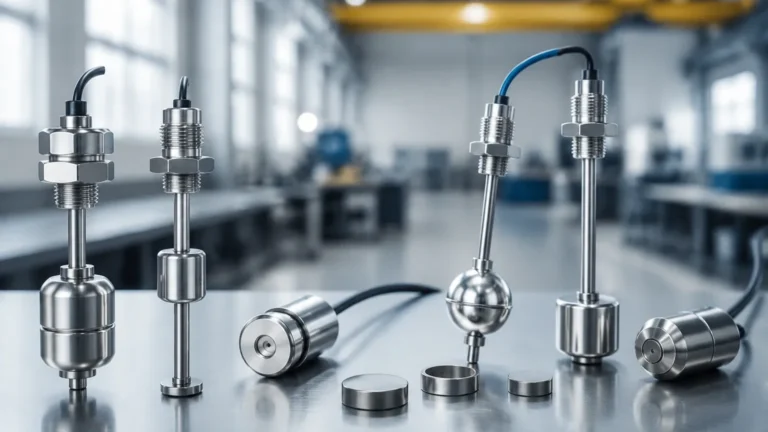
Magnetic float switches operate on a simpler mechanical principle. A float containing an internal magnet moves up and down a stem as the liquid level changes. Inside the stem, a reed switch is positioned at a specific height. When the magnet in the float aligns with the reed switch, the circuit closes (or opens). While highly cost-effective, these switches are susceptible to mechanical wear and are generally not recommended for fluids containing magnetic particles or those prone to heavy scaling.
Ultrasonic Gap Detection
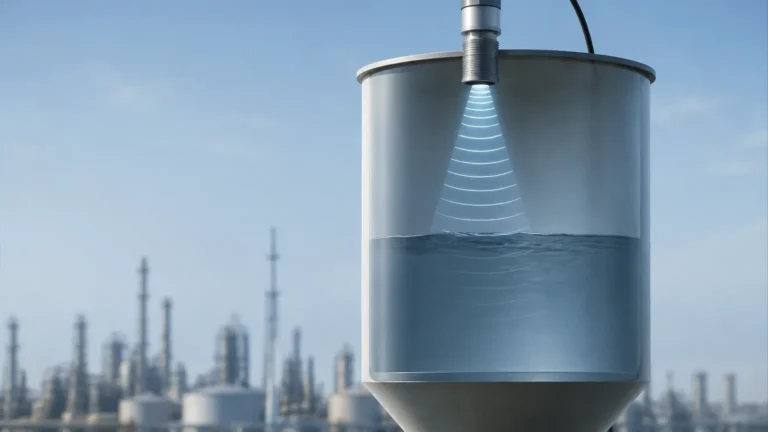
Ultrasonic level switches utilize a pair of crystals separated by a small gap. One crystal acts as a transmitter, sending an ultrasonic signal, while the other acts as a receiver. When the gap is filled with air or gas, the signal is attenuated and does not reach the receiver. When liquid fills the gap, the signal is transmitted efficiently. This technology is excellent for clean liquids but can struggle in aerated fluids or those with high solids content that might block the gap.
Rosemount Level Switches: Product Series Overview
Rosemount has standardized much of its point level portfolio around the vibrating short fork technology. This design is compact and suitable for installation in pipes or small tanks where space is limited.
Rosemount 2100 Series (Vibrating Fork)
The 2100 series is the flagship line for liquid point level detection. It includes several iterations tailored to different industrial needs:
* Rosemount 2110: Designed for high-volume OEM applications and basic industrial use. It features a compact stainless steel body and is often used for simple overfill protection or pump dry-run prevention.
* Rosemount 2120: A more robust version designed for demanding process environments. It offers expanded temperature and pressure ratings, along with various housing materials to resist corrosion.
* Rosemount 2130: Engineered for high-temperature and high-pressure applications. It often includes enhanced diagnostics to detect if the sensor is damaged or if there is significant build-up on the tines.
* Rosemount 2140: This model focuses on ease of use and safety, often featuring HART communication for remote testing and diagnostics. It is frequently specified for SIL 2 (Safety Integrity Level) applications.
Rosemount 2160 Wireless Switches
For remote locations where wiring costs are prohibitive, the Rosemount 2160 utilizes WirelessHART technology. This allows for the integration of Level Switches into a digital ecosystem without the need for extensive cabling infrastructure, making it ideal for tank farms or remote wellheads.
Engineering Selection Criteria
Choosing the right level switch involves more than just matching a pipe size. Engineers must perform a comprehensive review of the process conditions to avoid premature instrument failure.
Process Media Characteristics
1. Viscosity: High-viscosity liquids can cling to the tines of a vibrating fork, causing a "hang-up" where the switch remains in the wet state even after the liquid level has dropped. In these cases, a switch with a "coating rejection" feature or a different technology, like a displacement switch, may be necessary.
2. Density: Vibrating fork switches have a minimum density requirement (typically measured in kg/m³ or g/cm³). If the liquid is too light—such as certain liquefied gases—the frequency shift may not be significant enough to trigger the sensor.
3. Corrosivity: The wetted parts must be compatible with the process media. While 316L stainless steel is standard, aggressive chemicals may require Hastelloy, Monel, or PFA coatings.
Environmental and Safety Compliance
In hazardous areas, switches must carry appropriate certifications (ATEX, IECEx, or FM). Furthermore, for critical safety loops—such as those preventing a tank from overflowing into a secondary containment area—the switch must meet SIL 2 or SIL 3 requirements. Rosemount level switches often include internal self-checking routines to ensure the electronics and the sensing element are functioning correctly, which is a prerequisite for high-integrity safety systems.
Comparison Table: Level Switch Technologies
| Technology | Best For | Limitations | Maintenance Level |
| :— | :— | :— | :— |
| Vibrating Fork | General purpose, turbulent liquids, foam | Heavy coating/viscous media | Low |
| Magnetic Float | Clean liquids, low-cost applications | Moving parts, scaling, solids | Medium |
| Ultrasonic Gap | Clean liquids, non-contact electronics | Aerated liquids, solids in gap | Low |
| Capacitance | Slurries, interface detection | Requires calibration, dielectric sensitive | Medium |
| Hydrostatic | Deep tanks, heavy liquids | Density dependent, requires venting | Medium |
Installation Guidelines and Best Practices
Proper installation is as important as selecting the right technology. Failure to follow engineering best practices can lead to false alarms or, worse, a failure to trigger during a critical event.
Orientation and Positioning
* Horizontal vs. Vertical: Vibrating forks can usually be mounted in any orientation. However, when mounted horizontally, the tines should be oriented so that liquid can easily drain off them. If the tines are oriented "flat" (one above the other), liquid can become trapped between them, leading to false readings.
* Avoid Turbulence: Switches should not be installed directly in the path of a fill stream. The force of the incoming liquid can cause mechanical damage or create localized turbulence that interferes with the vibration frequency.
* Nozzle Length: Ensure the sensing element (the fork or float) extends far enough into the vessel to be clear of the mounting nozzle. If the fork is recessed inside a narrow nozzle, air pockets or material build-up can occur, preventing the switch from seeing the actual liquid level.
Electrical Considerations
Most industrial level switches operate on 24V DC or universal AC/DC power. It is essential to ensure that the load (e.g., a pump starter or a PLC input) matches the switch's output type (Relay, PNP/NPN, or 8/16mA). For safety-critical applications, the "fail-safe" mode must be correctly configured: "Fail-Safe High" for overfill prevention (the switch opens if power is lost) and "Fail-Safe Low" for dry-run protection.
Limitations and Operational Risks
While Rosemount level switches are highly engineered, they are not universal solutions. Engineers should be aware of the following risks:
1. Material Build-up: In applications involving wastewater or crystallization, material can bridge the gap between the tines of a vibrating fork. Regular inspection or the use of extended tines can mitigate this.
2. Pressure and Temperature Extremes: Standard switches are often rated up to 100 bar (1450 psi) and 150°C (302°F). Exceeding these limits can degrade the piezoelectric crystals or the seals, leading to process leaks.
3. Vibration Interference: In rare cases, heavy mechanical vibration from nearby pumps or compressors can match the resonant frequency of a tuning fork switch, causing a false trigger. Using a switch with a different resonant frequency or improved signal processing can resolve this.
Frequently Asked Questions (FAQ)
Q: Can vibrating fork switches be used in solids?
A: Standard liquid vibrating forks are tuned for liquid densities. For powders or grains, a specific "solids" version of a vibrating fork (often with larger, more robust tines) is required to handle the different damping characteristics of dry media.
Q: How do I test a Rosemount level switch without filling the tank?
A: Many modern switches, including the Rosemount 2100 series, feature a magnetic test point or a remote test function via HART. By holding a magnet against a specific spot on the housing, the user can manually trigger the electronics to verify the loop and alarm logic.
Q: What is the difference between a point level switch and a level transmitter?
A: A switch provides a binary output (on/off) at a specific point. A transmitter provides a continuous signal (e.g., 4-20mA or Modbus) representing the exact level across a range. Switches are typically used for redundant safety or simple control, while transmitters are used for inventory management and process optimization.
Q: Is it possible to use these switches in hygienic applications?
A: Yes, there are versions with polished surfaces and Tri-Clamp connections specifically designed for the food, beverage, and pharmaceutical industries to prevent bacterial growth and allow for Clean-in-Place (CIP) procedures.
By carefully evaluating the process requirements and following established installation protocols, Rosemount level switches provide a dependable solution for industrial point level detection. Whether integrated into a complex safety instrumented system or used for simple pump control, these devices remain a cornerstone of modern process automation.