Level Switch Rosemount 2120
Level Switch Rosemount 2120
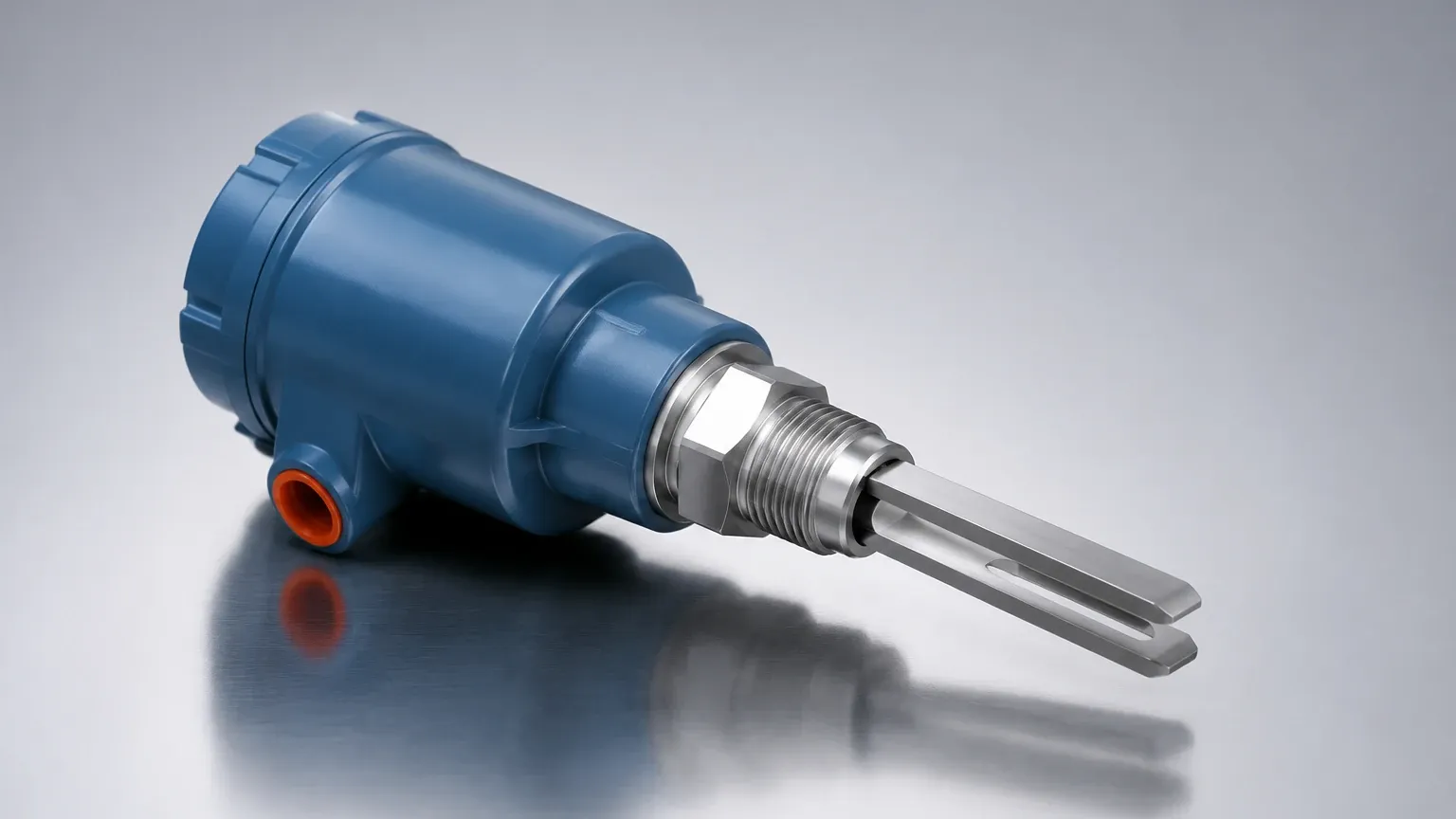
In the landscape of industrial automation and process safety, point level detection serves as a critical safeguard against overfills, dry-run conditions, and pump damage. Among the various technologies available, the vibrating fork level switch has emerged as a preferred solution for liquid applications due to its reliability and lack of moving parts. The level switch Rosemount 2120 is a widely recognized instrument in this category, utilizing the vibrating short fork principle to provide high-level and low-level alarms in diverse process environments.
For process engineers and maintenance professionals, understanding the underlying technology, selection criteria, and installation nuances of these switches is essential for ensuring plant uptime and safety. This guide examines the technical foundations of the Rosemount 2120, compares its capabilities with broader industry standards, and provides practical engineering insights for successful implementation.
Measurement Principle: The Vibrating Fork Technology
Before selecting a specific instrument, it is vital to understand how vibrating fork technology—often referred to as a "tuning fork"—operates. Unlike float switches that rely on buoyancy or ultrasonic sensors that measure time-of-flight, the vibrating fork level switch utilizes frequency shifts to detect the presence of liquid.
The Piezo-Electric Drive
The core of the level switch Rosemount 2120 is a pair of stainless steel forks. Inside the housing, a piezo-electric crystal assembly drives the forks to vibrate at their natural resonant frequency in the air (typically around 1,000 to 1,400 Hz). This vibration is continuous as long as the forks are not in contact with a liquid medium.
Frequency Shift Detection
When the forks are submerged in a liquid, the density of the medium causes the resonant frequency of the forks to drop significantly. The internal electronics monitor this frequency change. Once the frequency falls below a predefined threshold, the switch changes state—for example, from "normally open" to "closed."
One of the primary advantages of this principle is its immunity to changes in the liquid’s physical properties. Because the switch detects a frequency shift rather than a specific conductivity or dielectric constant, it remains accurate regardless of variations in temperature, pressure, or chemical composition. Furthermore, the high-frequency vibration provides a self-cleaning effect, shedding small amounts of build-up that might otherwise cause false readings in static sensors.
Key Features of the Rosemount 2120
The Rosemount 2120 is designed for versatility in liquid point level detection. Its engineering focus is on ease of use and long-term stability in industrial settings like water treatment, chemical processing, and oil and gas storage.
1. Short Fork Design: The "short fork" geometry allows the sensor to be installed in small-diameter pipes and compact tanks where traditional long forks would be obstructive. This design minimizes the protrusion into the process, reducing the risk of damage from high-flow velocities.
2. Electronic Self-Checking: Modern process safety requires instruments to report their own health status. The 2120 includes a Heartbeat LED and internal diagnostics that monitor the health of the piezo-electric crystal and the electronics. If a fault is detected, the switch can signal a failure state rather than remaining in a "safe" position.
3. Adjustable Switching Delay: To prevent "chatter" or false switching in turbulent liquids or tanks with splashing, the electronics often feature a selectable delay (e.g., 1 to 30 seconds). This ensures the switch only triggers when the liquid level is sustained.
4. Material Versatility: Standard units are typically constructed from 316L stainless steel, but for aggressive chemical environments, options like Alloy C-276 or specialized coatings (such as ECTFE or PFA) are available to prevent corrosion.
Practical Selection Criteria
When evaluating a Level Switches solution for a specific application, engineers must look beyond the basic model number. The following table outlines the primary technical parameters that dictate the selection of a vibrating fork switch.
Selection Table: Technical Parameters
| Feature | Specification Range (Typical) | Engineering Consideration |
| :— | :— | :— |
| Process Temperature | -40°C to 150°C (-40°F to 302°F) | High-temp versions required for steam or hot oil. |
| Process Pressure | Vacuum to 64 bar (928 psi) | Ensure flange or thread rating matches vessel pressure. |
| Liquid Viscosity | 0.2 to 10,000 cP | Higher viscosity may require specific fork spacing. |
| Liquid Density | Minimum 500 kg/m³ | Very light hydrocarbons may require high-sensitivity settings. |
| Output Types | Relay, PNP, PLC (Direct Load), NAMUR | Must match the input requirements of the PLC or DCS. |
| Certifications | ATEX, IECEx, SIL 2 | Mandatory for hazardous areas or safety-instrumented systems. |
Installation Considerations and Best Practices
Correct installation is the most significant factor in the longevity of a level switch Rosemount 2120. Even the most robust sensor will fail if subjected to improper mechanical stress or electrical interference.
Orientation and Positioning
* Horizontal Mounting: This is the most common orientation for high-level or low-level alarms. The forks should be oriented so that liquid can drain freely off them. If the forks are mounted with the flat faces horizontal, liquid may pool between the tines, causing a "bridge" that results in a false high-level alarm.
* Vertical Mounting: Ideal for low-level detection in the bottom of a tank. In this position, the switch should be placed away from the direct flow of the inlet to avoid mechanical fatigue caused by constant liquid impact.
* Nozzle Length: Ensure the forks extend fully into the vessel. If the forks are recessed inside a narrow mounting nozzle, air pockets or stagnant liquid can become trapped, leading to inaccurate switching.
Wiring and Grounding
Industrial environments are rife with electromagnetic interference (EMI). Using shielded cables and ensuring the housing is properly grounded to the vessel is critical. For hazardous areas, the use of Intrinsic Safety (IS) barriers or explosion-proof conduits is mandatory to comply with local safety regulations.
Limitations and Common Risks
While vibrating fork technology is highly reliable, it is not a universal solution for every medium. Engineers should be aware of the following limitations:
* Heavy Coating and Scaling: While the vibration sheds light build-up, heavy, viscous, or "sticky" media (like molasses or thick resins) can eventually coat the forks completely. If the coating is thick enough to dampen the vibration, the switch will indicate a covered state even when the tank is empty.
* Aerated Liquids and Foam: If a liquid is highly aerated or covered in a thick layer of dense foam, the density of the medium at the forks may be too low to trigger the frequency shift. In such cases, a different technology, such as a magnetic level gauge or a radar level meter, may be more appropriate.
* Solid Particles: While the 2120 is designed for liquids, the presence of large solids or fibrous materials can wedge between the fork tines. This mechanical blockage prevents vibration and triggers a false alarm.
Enhancing Reliability with Welk Level Solutions
As a professional manufacturer of industrial level measurement instruments, Welk provides a comprehensive range of solutions that complement or serve as alternatives to the level switch Rosemount 2120. In many industrial automation applications, the choice of a level switch depends on the balance between specialized features and cost-effectiveness.
Welk’s portfolio includes high-performance Level Switches designed for water treatment, chemical processing, and oil and gas sectors. By offering advanced technology alongside strict quality control, Welk ensures that every instrument—whether a vibrating fork, ultrasonic sensor, or hydrostatic transmitter—meets the rigorous demands of modern industry. For projects requiring specific customizations, Welk’s OEM/ODM services allow for the development of level measurement solutions tailored to unique vessel geometries or extreme process conditions.
Frequently Asked Questions (FAQ)
1. Can the Rosemount 2120 be used for dry bulk solids?
No. The Rosemount 2120 is specifically tuned for liquid densities. For dry powders or granulates, a vibrating fork designed for solids (which typically has larger, more robust tines and a different vibration frequency) is required.
2. How do I test the switch without filling the tank?
Most modern vibrating fork switches, including the 2120, feature a magnetic test point on the housing. By placing a magnet against this point, the user can simulate a "covered" state to verify that the electronics and the connected alarm system are functioning correctly.
3. What is the difference between the 2120 and the Rosemount 2110?
The Rosemount 2110 is a more basic version designed for general-purpose applications, whereas the 2120 offers more advanced features such as SIL 2 certification, a wider range of process connections, and extended temperature capabilities.
4. Does the switch require calibration?
One of the main benefits of vibrating fork technology is that it does not require field calibration. The switching point is factory-set based on the physical properties of the forks. Once installed, it is essentially a "plug-and-play" device, provided the liquid density meets the minimum requirements.
5. What happens if the forks are damaged?
If the tines of the fork are bent, corroded, or broken, the resonant frequency will change permanently. This usually results in the device reporting a fault. Because the forks are precision-engineered components, they cannot be repaired in the field; the entire sensor insert or the unit must be replaced.
Conclusion
The level switch Rosemount 2120 remains a benchmark for liquid point level detection, offering a blend of robust physics and sophisticated electronics. However, successful implementation requires a thorough analysis of the process media, vessel dynamics, and safety requirements. By adhering to established engineering guidelines for selection and installation, and by considering reliable alternatives from specialized manufacturers like Welk, industrial operators can ensure their level control systems provide the highest degree of protection and efficiency.