Level Switch 3
Level Switch 3
In industrial process control, point level detection serves as the primary line of defense against tank overfills, dry-run conditions for pumps, and automated inventory management. The concept of a "level switch 3" configuration—typically referring to a three-point detection system—is a standard requirement in complex liquid and solid handling systems. By utilizing multiple Level Switches, engineers can establish a robust control loop that manages high-level alarms, low-level alarms, and intermediate pump control or safety interlocks.
This guide examines the technical principles, selection criteria, and installation requirements for implementing reliable level switch 3 systems in B2B industrial environments, ranging from water treatment to chemical processing.
Understanding Industrial Level Switches
Level switches are discrete sensors that provide an output signal (typically a relay or transistor switch) when a material reaches a specific height in a vessel. Unlike continuous level transmitters that provide a 4-20mA or digital signal of the entire level range, a level switch is designed for "point" detection.
In a level switch 3 setup, three distinct points are monitored:
1. High-High (HH) or High (H) Alarm: Prevents overflow and potential environmental hazards.
2. Control Point: Triggers a pump or valve to start or stop (e.g., emptying or filling the tank).
3. Low (L) or Low-Low (LL) Alarm: Protects pumps from cavitation or ensures process continuity by signaling a refill requirement.
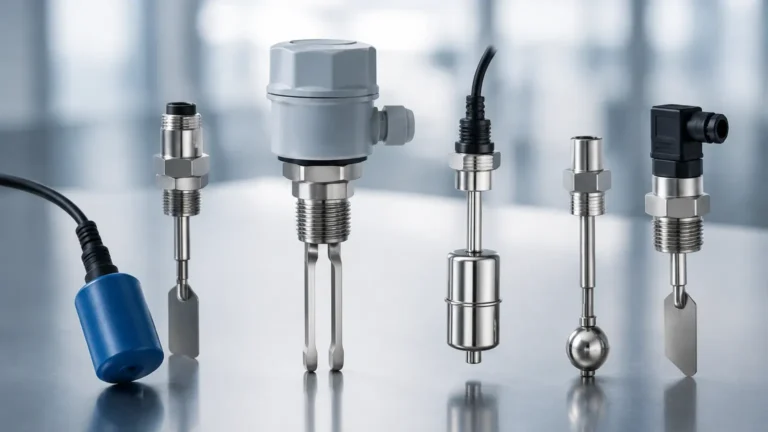
Welk provides a variety of technologies to meet these multi-point requirements, ensuring that the chosen instrument matches the physical and chemical properties of the media.
Measurement Principles for Point Level Detection
Before selecting a level switch 3 configuration, it is essential to understand the underlying physical principles of the sensors. Each technology has specific strengths depending on the media's viscosity, conductivity, and dielectric constant.
1. Float Level Switches
Float switches operate on the principle of buoyancy. A float containing a magnet moves with the liquid level. When the float reaches a reed switch located inside a stationary stem, the magnetic field causes the switch to open or close.
* Best for: Clean liquids, water, and light oils.
* Advantages: Simple, requires no power (for the switch itself), and cost-effective.
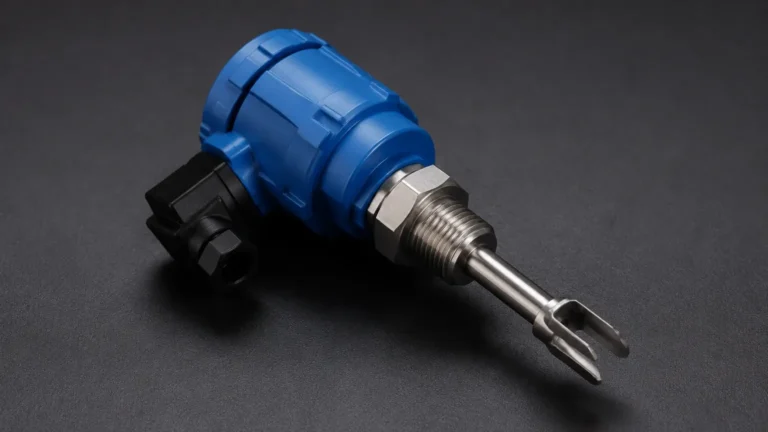
2. Vibrating Tuning Fork Switches
The sensor consists of a tuning fork that is piezoelectrically vibrated at its resonant frequency. When the fork is immersed in a medium (liquid or solid), the frequency changes. This shift is detected by the electronics and converted into a switching signal.
* Best for: Almost all liquids, including those with bubbles or agitation; also used for fine-grained solids.
* Advantages: Immune to changes in conductivity, dielectric constant, or pressure.
3. Capacitance Level Switches
Capacitance switches measure the change in electrical capacitance between the sensor probe and the tank wall (or a reference electrode). As the media covers the probe, the dielectric constant changes, altering the capacitance.
* Best for: Corrosive liquids, slurries, and interface detection.
* Advantages: No moving parts; can withstand high temperatures and pressures.
4. Ultrasonic Level Switches
These sensors use ultrasonic waves to detect the presence of liquid in a gap. When liquid fills the gap between the transmitter and receiver, the ultrasonic signal passes through; when air is present, the signal is attenuated.
* Best for: Highly viscous liquids or where physical contact must be minimized.
* Advantages: Highly reliable with no moving parts.
The Role of 3-Point Level Control in Process Automation
Implementing a level switch 3 logic is critical for automated pump control, often referred to as "differential level control." In a typical sump pump application, the system operates as follows:
* Point 1 (Low Level): The pump stops to prevent dry running when the liquid falls below this sensor.
* Point 2 (High Level): The pump starts once the liquid reaches this sensor.
* Point 3 (High-High Level): An emergency alarm is triggered if the pump fails to start or if the inflow exceeds the pump's capacity.
This redundancy is a hallmark of industrial safety. By separating the control points from the emergency alarm points, the level switch 3 system ensures that a failure in the control logic does not result in a catastrophic overflow.
Technical Selection Criteria for Level Switch 3 Applications
Selecting the correct level switch requires a detailed analysis of the process conditions. The following table provides a comparison of common technologies used in multi-point configurations.
Selection Comparison Table
| Technology | Media Type | Max Temp (°C) | Max Pressure (Bar) | Viscosity Handling | Build-up Sensitivity |
| :— | :— | :— | :— | :— | :— |
| Float | Clean Liquids | 150°C | 40 Bar | Low | High |
| Tuning Fork | Liquids/Solids | 250°C | 64 Bar | Medium | Low |
| Capacitance | Liquids/Slurries | 400°C | 100 Bar | High | Medium |
| Optoelectronic | Clear Liquids | 125°C | 50 Bar | Low | High |
| Conductivity | Conductive Liquids | 100°C | 10 Bar | Low | Medium |
Key Evaluation Factors
1. Media Density: Float switches require the float to be less dense than the liquid. If the density varies significantly, the switching point may drift.
2. Chemical Compatibility: Ensure the wetted materials (e.g., 316L Stainless Steel, PTFE, PP) are resistant to the process media.
3. Turbulence and Foam: Vibrating forks and ultrasonic switches handle foam better than float switches, which may bounce or become trapped in foam layers.
4. Coating/Build-up: For sticky media like resins or heavy oils, capacitance switches with "active shield" technology or tuning forks are preferred to prevent false triggers.

Installation Guidelines and Best Practices
Proper installation is as critical as sensor selection for a level switch 3 system. Failure to account for tank geometry or flow dynamics can lead to premature wear or inaccurate switching.
Mounting Orientation
* Top Mounting: Standard for multi-point float switches where a single stem contains multiple reed switches. Ensure the stem is long enough to reach the lowest required point.
* Side Mounting: Common for tuning forks and single-point switches. In a level switch 3 setup, three separate penetrations in the tank wall are required at the specific heights needed.
Turbulence and Agitation
If the tank contains an agitator or high-velocity inflow, the sensors must be protected.
* Still Wells: For float switches, a still well (a pipe surrounding the float) prevents the float from being damaged by turbulent waves.
* Baffles: Installing a baffle plate between the inlet and the sensor can reduce the impact of splashing.
Electrical Considerations
* Inductive Loads: When connecting a level switch directly to a motor or solenoid valve, use an intermediate relay. The high inrush current of inductive loads can weld the contacts of small reed switches found in float sensors.
* Cable Routing: Avoid running sensor cables parallel to high-voltage power lines to prevent electromagnetic interference (EMI), especially for capacitance and ultrasonic models.
Limitations and Common Risks
While level switches are highly reliable, they are not universal solutions. Engineers should be aware of the following limitations:
* Mechanical Wear: Float switches have moving parts that can eventually fail due to metal fatigue or pivot point wear, especially in high-cycle applications.
* Dielectric Dependency: Capacitance switches may require recalibration if the moisture content or chemical composition of the media changes significantly.
* Minimum Distance: For side-mounted switches in small vessels, ensure the probe does not touch the opposite wall or internal structures like heating coils.
* Solid Bridging: In silo applications for solids, material can "bridge" over a tuning fork or diaphragm switch, causing it to stay in the "covered" state even after the level has dropped.
Maintenance and Troubleshooting
A proactive maintenance schedule ensures the longevity of the level switch 3 system. Welk recommends the following steps:
1. Visual Inspection: Check for signs of corrosion on the housing and wetted parts every 6–12 months.
2. Cleaning: If the media is prone to scaling or build-up, remove the sensors periodically and clean them with a compatible solvent. Do not use abrasive tools on sensitive tuning forks or optoelectronic lenses.
3. Function Test: Manually lift the float or immerse the sensor in a sample of the media to verify that the relay toggles and the control system responds correctly.
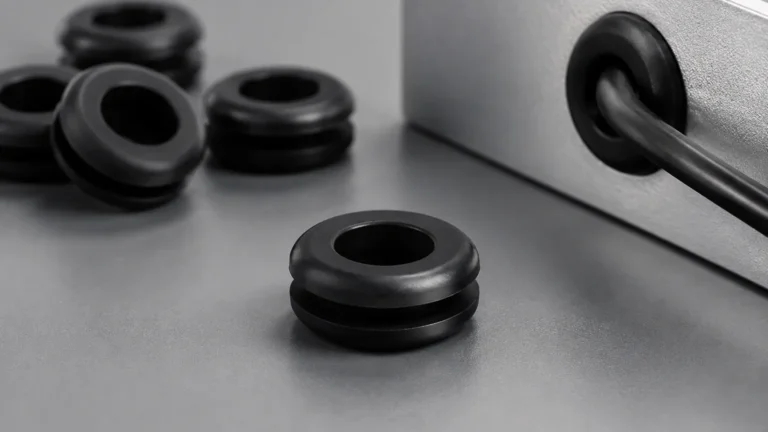
4. Seal Integrity: Check cable glands and conduit entries for moisture ingress, which is the leading cause of electronic failure in outdoor or wash-down environments.
Frequently Asked Questions (FAQ)
Q: Can I use a single sensor for a level switch 3 configuration?
A: Yes, certain technologies like multi-point float switches or multi-rod conductivity probes allow for up to 4 or 5 switching points on a single process connection. This reduces the number of tank penetrations required.
Q: What is the difference between a NPN and PNP output in electronic level switches?
A: This refers to the transistor switching logic. PNP switches provide a positive voltage output (sourcing), while NPN switches connect the load to the negative/ground (sinking). Ensure the output matches your PLC's input requirements.
Q: How do I handle level switching in pressurized tanks?
A: Ensure the switch is rated for the maximum design pressure of the vessel. For high-pressure applications (above 40 bar / 580 psi), magnetic level gauges with external switches or high-pressure capacitance probes are typically used.
Q: Is a level switch better than a continuous level transmitter?
A: Not necessarily; they serve different purposes. A level switch is a safety device or simple controller. A continuous transmitter (like radar or ultrasonic) provides real-time data for inventory management but is often more expensive and may require more complex integration.
For more detailed technical specifications and to explore the full range of point level detection technologies, Review product options and application support to find the ideal solution for your specific process requirements.