Sump Pump Level Switches
Sump Pump Level Switches
In industrial and commercial water management, the reliability of a drainage system depends heavily on the precision of its automated components. Sump pump level switches are the critical sensors responsible for monitoring fluid accumulation in pits and basins, triggering the pump to evacuate liquid before it reaches critical levels. While the concept of a sump switch may seem straightforward, industrial applications demand a deeper understanding of measurement principles, material compatibility, and mechanical design to ensure long-term operational stability.
For engineers and facility managers, selecting the right technology from the broad category of Level Switches is essential to prevent costly flooding, dry-running of pumps, and environmental non-compliance. This guide explores the technical nuances of sump pump level switches, providing a factual framework for selection and installation in professional environments.
Core Measurement Principles of Level Switches
Before selecting a specific switch, it is vital to understand the underlying physical principles that govern how these devices detect liquid levels. In the context of sump management, most switches operate on one of three primary principles: buoyancy, hydrostatic pressure, or electrical conductivity.
1. Buoyancy-Based Actuation
This is the most common principle used in sump applications. It relies on Archimedes' principle, where a float—denser than air but less dense than the liquid—moves vertically or tilts as the liquid level rises. This movement mechanically or magnetically actuates a switch circuit.
* Mechanical Linkage: The float is connected to a rod or cable that physically trips a microswitch.
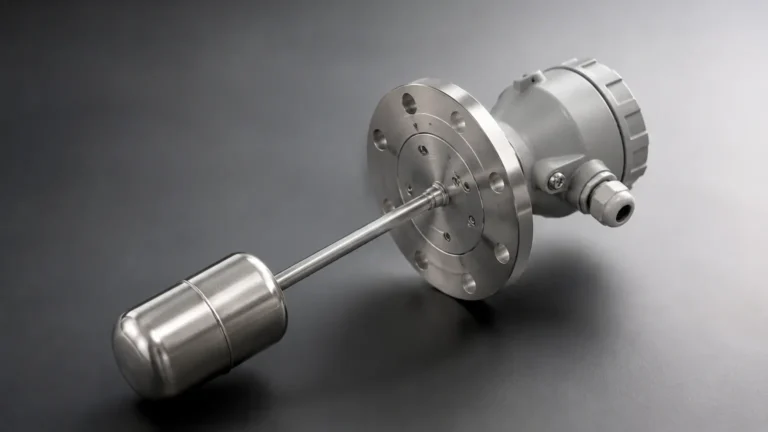
* Magnetic Reed Switches: The float contains a permanent magnet that moves past a reed switch housed inside a sealed stem, closing the circuit without direct contact between the electrical components and the fluid.
2. Hydrostatic Pressure (Diaphragm)
Diaphragm switches detect the weight of the water column above them. As the liquid level in the sump rises, the increased pressure compresses a flexible diaphragm, which then pushes against a microswitch. This method is particularly effective in environments where floating debris might interfere with mechanical floats.
3. Electrical Conductivity and Capacitance
Electronic sump pump level switches utilize probes to detect the presence of liquid. Conductivity switches pass a low-voltage current between two electrodes when they are submerged in a conductive liquid (like wastewater). Capacitance switches detect changes in the dielectric constant between the probe and the tank wall. These methods are preferred for high-cycle applications because they contain no moving parts to wear out.
Types of Sump Pump Level Switches
Sump environments vary from clean water collection to heavy industrial wastewater containing solids and corrosive chemicals. Consequently, several switch designs have evolved to meet these specific challenges.
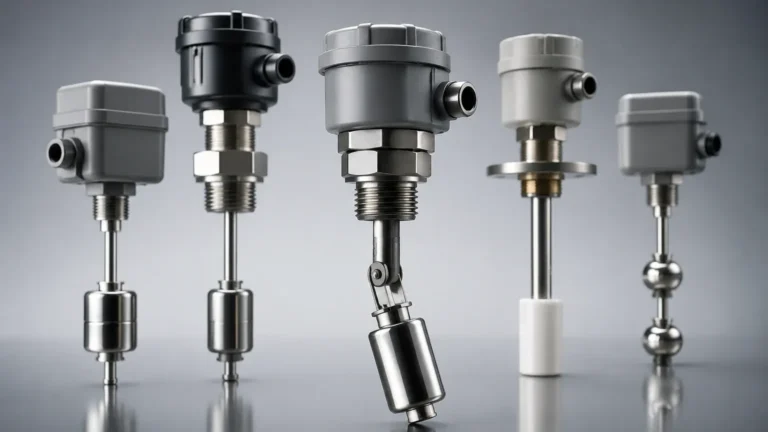
Tethered Float Switches
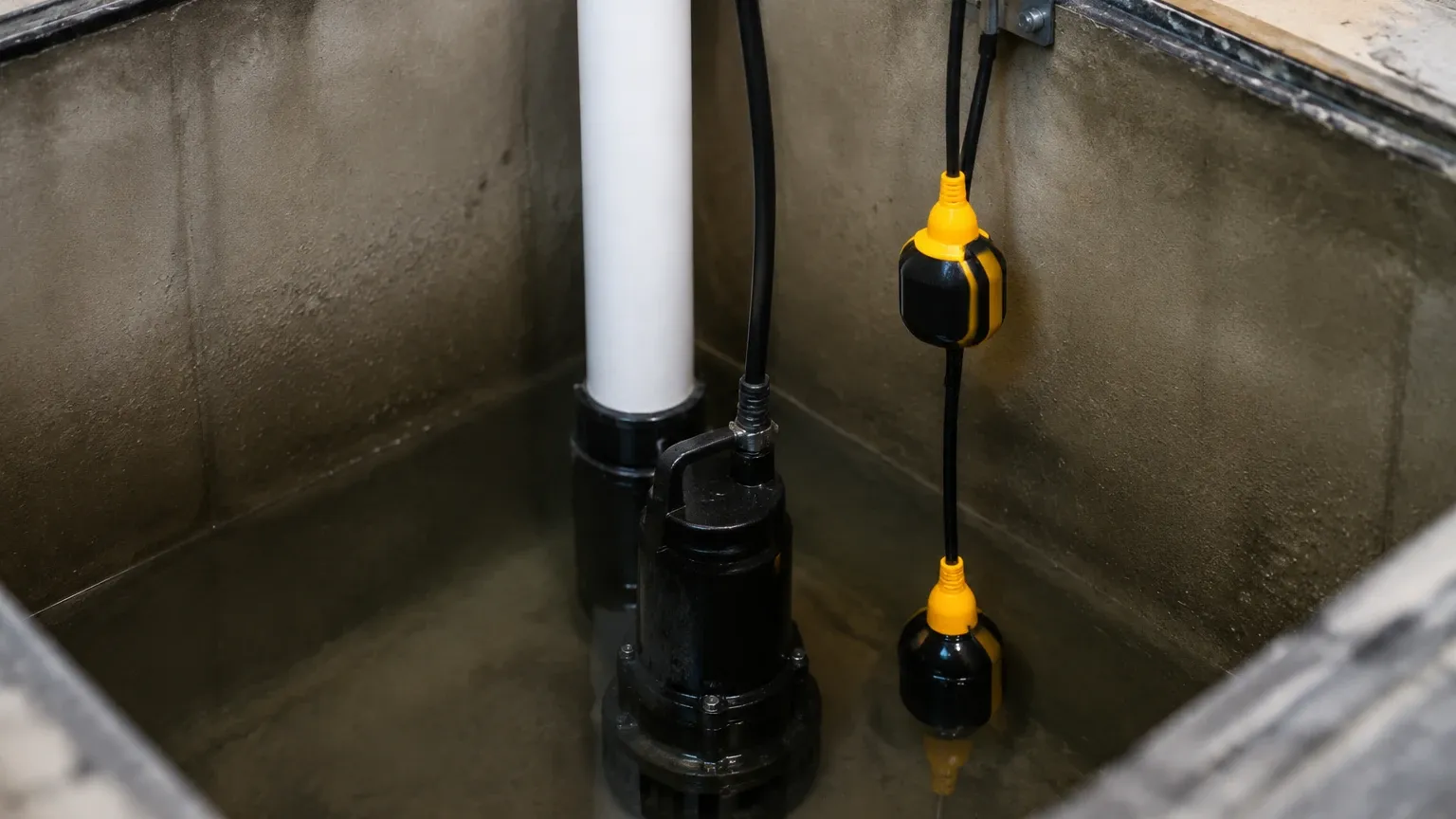
A tethered float consists of a sealed float housing containing a switch mechanism (usually a metallic ball that rolls onto contacts) attached to a flexible cable. The cable is anchored to the pump or a discharge pipe. As the water rises, the float pivots upward.
* Advantages: They offer a wide "differential" (the distance between the on and off points), which can be adjusted by changing the length of the tether. This prevents the pump from "short-cycling."
* Limitations: They require a large pit diameter to allow the float to swing freely without hitting the walls or the pump.
Vertical Float Switches
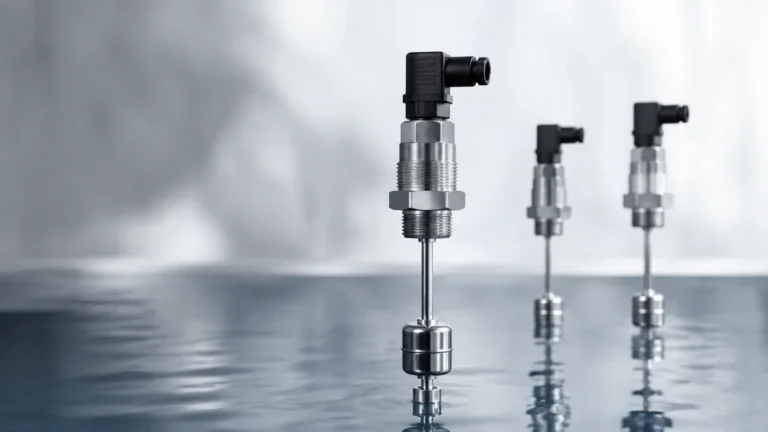
Vertical switches utilize a float that moves straight up and down a guided rod or stem. These are often used in small-diameter sumps where space is limited.
* Advantages: Small footprint and high precision. They are less likely to become entangled in piping.
* Limitations: The travel distance is fixed by the length of the rod, providing a smaller differential than tethered models.
Diaphragm (Pressure) Switches
Usually mounted at the base of the pump or on the pit wall, these switches sense the "head" pressure.
* Advantages: They are generally more compact and less prone to mechanical jamming from surface debris or grease.
* Limitations: Over time, the diaphragm can lose its elasticity or become clogged with silt, requiring periodic inspection.
Electronic and Ultrasonic Switches
In high-demand industrial settings, solid-state electronic switches are increasingly common. These often use dual-probe conductivity or small-scale ultrasonic sensors to determine levels.
* Advantages: No moving parts mean a significantly longer lifespan. Many models include built-in alarms for high-water conditions.
* Limitations: Conductivity switches require the liquid to be conductive (they will not work with pure oils or distilled water).
Technical Selection Criteria for Industrial Pits
When specifying sump pump level switches for professional projects, engineers must confirm several variables to ensure the device is compatible with the intended environment.
Media Characteristics
The chemical composition of the sump liquid is the primary factor in material selection. For standard water drainage, PVC or Polypropylene floats are sufficient. However, in chemical processing sumps, 316 Stainless Steel or Hastelloy components may be required to resist corrosion. If the media contains high levels of fats, oils, or grease (FOG), non-stick coatings or diaphragm-based sensors are preferable to prevent "float weighting," where buildup prevents the float from rising.
Temperature and Pressure
Industrial sumps may collect hot condensate or process runoff. Standard switches are often rated up to 50°C or 60°C. For high-temperature applications, specialized high-temp floats or non-contact sensors like radar or ultrasonic level meters are necessary to prevent housing failure.
Electrical Load and Rating
It is critical to match the switch's electrical rating with the pump's requirements. Many switches are rated for 115V or 230V and a specific horsepower (HP). If the pump exceeds the switch's amperage rating, the switch must be used as a pilot device to trigger a motor starter or relay rather than powering the pump directly.
Comparative Analysis of Switch Technologies
| Switch Type | Best For | Differential Range | Resistance to Debris | Lifespan |
| :— | :— | :— | :— | :— |
| Tethered Float | Large pits, wide pumping ranges | High (Adjustable) | Moderate | Moderate |
| Vertical Float | Small pits, precise control | Low (Fixed) | Low | High |
| Diaphragm | Confined spaces, dirty water | Moderate | High | Moderate |
| Electronic Probe | High-cycle industrial sumps | High (Adjustable) | High | Very High |
| Magnetic Reed | Clean water, chemical tanks | Low | Moderate | High |
Installation and Configuration Best Practices
Proper installation is as important as the selection of the switch itself. Improperly positioned switches are the leading cause of sump pump failure.
1. Clearance and Obstructions: Ensure the switch has at least 50 mm to 100 mm of clearance from the pit walls and any discharge piping. For tethered switches, the "swing radius" must be completely unobstructed.
2. Turbulence Management: In sumps with high inflow rates, the water surface can become turbulent, causing the switch to "chatter" (rapidly turn on and off). Installing the switch inside a stilling well—a vertical pipe with small holes to equalize the water level—can stabilize the float.
3. Differential Settings: Set the "On" level high enough to maximize the pump's efficiency but low enough to prevent the water from reaching the inflow pipes. The "Off" level must ensure the pump remains primed and does not suck in air, which causes cavitation.
4. Cable Security: Use high-quality cord grips and strain reliefs. In deep sumps, the weight of the cable itself can pull on the switch connections, leading to premature failure or water ingress into the wiring compartment.
Limitations and Operational Risks
While sump pump level switches are designed for durability, they are not "set and forget" devices. Understanding their limitations is key to risk mitigation.
* Mechanical Fatigue: In high-cycle applications (where the pump triggers many times per hour), mechanical microswitches inside floats will eventually reach their cycle limit. Industrial users should consider solid-state electronic switches for these scenarios.
* Buildup and Scaling: In hard water or wastewater applications, calcium or mineral deposits can form on the float or probe. This increases the weight of the float or creates an insulating layer on conductivity probes, leading to failure.
* Environmental Interference: In outdoor sumps, ice formation in winter can freeze a float in the "Off" position, leading to inevitable flooding when the thaw begins. In such climates, heat-traced sumps or pressure-based switches are more reliable.
Frequently Asked Questions (FAQs)
Q: Can I use a single switch to control two pumps in a duplex system?
A: Generally, no. A duplex system (two pumps) requires a controller that uses multiple level inputs (Start Pump 1, Start Pump 2, Stop All, High Level Alarm) to alternate pump usage and provide backup. You would typically use three or four separate level switches or a continuous level transmitter to provide these signals to the controller.
Q: What is the difference between a "pump down" and "pump up" switch?
A: A "pump down" switch (Normally Open) closes the circuit when the liquid rises, turning the pump on to empty the tank. A "pump up" switch (Normally Closed) closes the circuit when the liquid falls, turning the pump on to fill a tank. Sump applications almost exclusively use "pump down" configurations.
Q: How often should sump level switches be inspected?
A: In industrial environments, a quarterly inspection is recommended. This involves manually lifting the float to ensure the pump engages and checking for any signs of material degradation or debris buildup.
Q: Are electronic switches better than mechanical floats?
A: "Better" depends on the application. Electronic switches offer superior longevity and reliability in high-cycle or debris-heavy environments, but they require a power source to operate. Mechanical floats are simpler and often more cost-effective for basic, low-frequency drainage tasks.
Conclusion
Sump pump level switches are foundational to industrial fluid management. By selecting a switch based on sound engineering principles—considering buoyancy, pressure, or conductivity—and matching the materials to the chemical environment, operators can significantly reduce the risk of system failure. For complex or high-stakes applications, consulting with a specialized manufacturer like Welk ensures that the chosen Level Switches provide the accuracy and durability required for modern industrial automation.