Water Level Switches Are Blank Initiating Devices
Water Level Switches Are Blank Initiating Devices
In the field of industrial automation and fire protection systems, the terminology used to describe sensors often dictates how they are integrated into control logic. A common technical query in system design is the classification of specific sensors: water level switches are blank initiating devices. In the context of fire safety standards such as NFPA 72 and general industrial monitoring, the "blank" is typically filled by the term supervisory.
While an alarm initiating device (like a smoke detector) signals an immediate emergency, a supervisory initiating device—such as a water level switch in a gravity tank or reservoir—monitors the status of a system to ensure it is capable of performing its intended function. If the water level drops below a specific threshold, the switch initiates a supervisory signal, alerting operators that the system requires attention before a critical failure occurs.
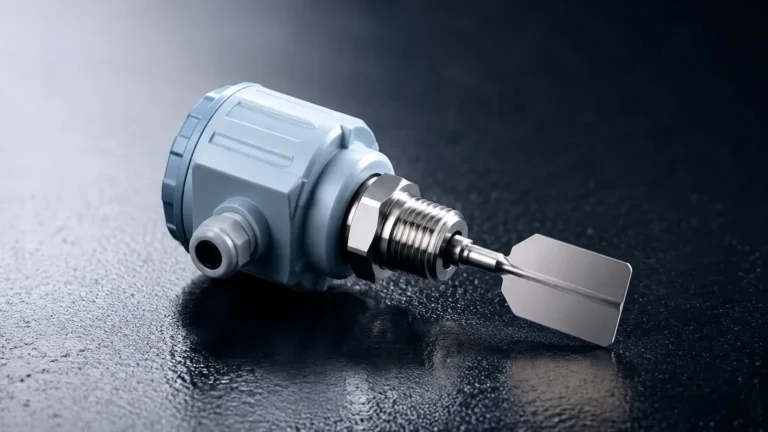
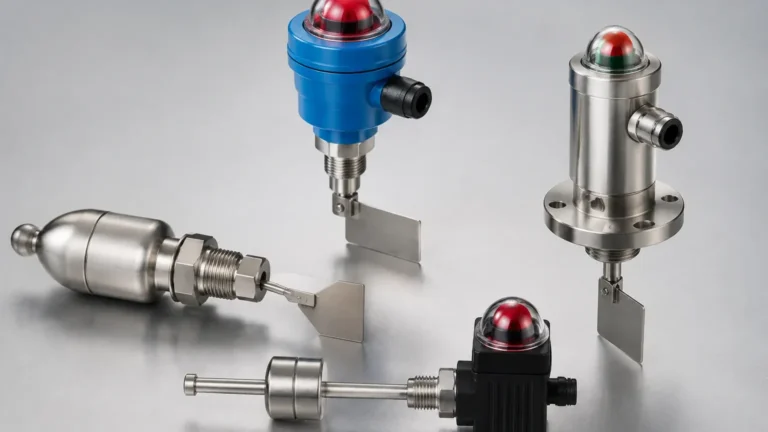
For industrial engineers and facility managers, understanding these Level Switches is essential for maintaining process continuity and safety compliance. This article examines the principles, selection criteria, and installation requirements for industrial-grade level switches.
Core Measurement Principles of Level Switches
Before selecting a device, it is critical to understand how different technologies detect the presence or absence of a liquid. Level switches are point-level measurement tools, meaning they provide a binary output (on/off) when the media reaches a predetermined height.
1. Float Level Switches (Buoyancy Principle)
Float switches utilize a buoyant body containing a magnet. As the liquid level rises, the float moves along a stem. When the magnet reaches a specific position, it actuates a reed switch or a microswitch. These are the most common types of switches due to their simplicity and low cost.
2. Vibrating Tuning Fork Switches
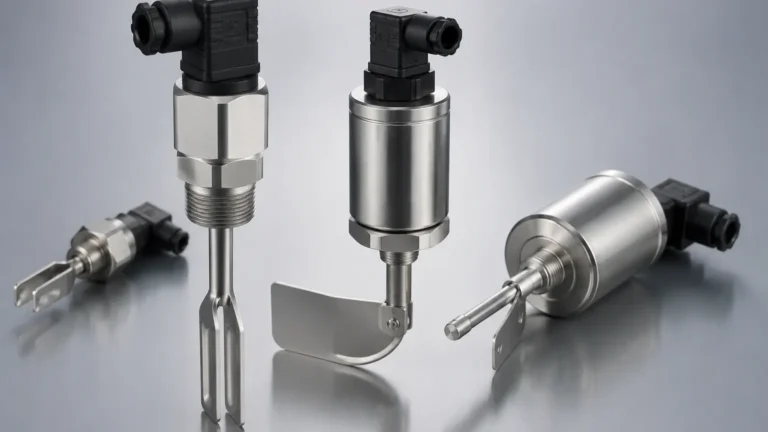
The sensor consists of two tines that vibrate at their natural resonant frequency in air. When the tines are submerged in liquid, the frequency shifts. The internal electronics detect this change and trigger the output. This technology is highly robust and immune to changes in flow, turbulence, or bubbles.
3. Conductivity Level Switches
These devices use the electrical conductivity of the liquid to complete a circuit. Two or more electrodes are placed in the tank. When the liquid touches the electrodes, a small electrical current flows between them, signaling the control unit. These are ideal for water-based applications but cannot be used with non-conductive fluids like oils or pure distilled water.
4. Ultrasonic Level Switches
Ultrasonic switches use a piezoelectric crystal to send high-frequency sound waves across a gap in the sensor. If liquid fills the gap, the sound waves travel efficiently; if the gap is filled with air or gas, the signal is attenuated. This non-contact or gap-contact method is useful for aggressive or viscous fluids.
Classification as Supervisory Initiating Devices
In building management and fire protection, the distinction between "alarm" and "supervisory" is vital.
* Alarm Initiating Devices: These trigger an immediate emergency response (e.g., fire department dispatch). Examples include manual pull stations and heat detectors.
* Supervisory Initiating Devices: These monitor the "health" of the system. A water level switch in a fire pump suction tank is a supervisory device because a low-water condition does not mean there is a fire, but it does mean the fire suppression system is compromised.
In industrial B2B contexts, this logic translates to Interlock and Safety Systems. A level switch might be used as a high-level alarm (HLA) to prevent tank overfill or a low-level cut-off (LLCO) to prevent pump cavitation. In both cases, the switch initiates a specific control action to maintain safe operating parameters.
Industrial Selection Criteria
Choosing the correct switch requires an evaluation of the chemical and physical properties of the media, as well as the environmental conditions of the installation site.
Material Compatibility
For water treatment, stainless steel (SS304 or SS316) is standard. However, in chemical processing involving acids or alkalis, plastic materials like Polypropylene (PP), PVC, or PTFE (Teflon) are required to prevent corrosion.
Pressure and Temperature Ratings
Standard float switches may be rated for pressures up to 10 bar (145 psi) and temperatures up to 80°C. For high-pressure boilers or steam applications, specialized magnetic level switches capable of withstanding 40 bar or temperatures exceeding 200°C are necessary.
Output Types
* SPDT (Single Pole Double Throw): Provides one common, one normally open (NO), and one normally closed (NC) contact.
* DPDT (Double Pole Double Throw): Provides two independent sets of contacts, useful for simultaneously triggering an alarm and shutting down a pump.
* Transistor (PNP/NPN): Common in high-speed electronic switching and PLC integration.
Comparison Table: Level Switch Technologies
| Technology | Media Suitability | Max Pressure (Approx.) | Advantages | Limitations |
| :— | :— | :— | :— | :— |
| Float | Clean, low-viscosity | 30 bar | Low cost, no power needed | Moving parts can jam |
| Tuning Fork | Liquids, slurries, powders | 64 bar | No calibration, very reliable | Can be affected by heavy coating |
| Conductivity | Conductive liquids only | 10 bar | No moving parts, simple | Requires conductive media |
| Ultrasonic | Most liquids | 20 bar | Non-contact gap, no moving parts | Sensitive to heavy foam |
Installation Considerations and Best Practices
Proper installation is the primary factor in the long-term reliability of a level switch. Failure to account for the physical dynamics of the tank can lead to false triggers or mechanical failure.
1. Avoid Turbulence: Do not install switches directly under a fill pipe. The force of the incoming liquid can damage float arms or cause "chatter" in the electrical contacts. If turbulence is unavoidable, use a stilling well (a pipe that surrounds the sensor to dampen liquid movement).
2. Mounting Orientation: Some switches are designed for vertical mounting (top-down), while others are designed for horizontal mounting (side-entry). Ensure the orientation matches the manufacturer's specifications to allow for proper drainage and movement.
3. Cable Protection: In outdoor or wash-down environments, ensure that the cable entry is sealed with a proper NEMA 4X or IP67-rated gland. Use a "drip loop" to prevent moisture from following the cable into the housing.
4. Hysteresis Management: Hysteresis is the difference between the point where the switch turns on and where it turns off. For pump control, ensure the switch has sufficient hysteresis (or use two switches) to prevent the pump from cycling on and off rapidly (short-cycling).

Limitations and Maintenance
While level switches are generally robust, they are not "set and forget" devices.
* Coating and Scaling: In wastewater or chemical applications, material can build up on the sensor. Vibrating forks are more resistant to this than floats, but even they can fail if the coating becomes thick enough to dampen the vibration.
* Mechanical Wear: Float switches have moving parts that eventually wear out. In high-cycle applications, solid-state switches (like tuning forks or ultrasonic) are preferred.
* Specific Gravity: Float switches depend on the density of the liquid. If a float is designed for water (SG 1.0) and used in a light oil (SG 0.7), it may not float high enough to trigger the switch.
Periodic testing (monthly or quarterly) is recommended. For supervisory initiating devices in safety systems, a "proof test" should be conducted by manually raising or lowering the liquid level to ensure the signal reaches the control panel.
Frequently Asked Questions
Q: Can a level switch be used for continuous level monitoring?
A: No. A level switch only detects a single point. For continuous monitoring (e.g., 0% to 100% full), a level transmitter (radar, ultrasonic, or hydrostatic) is required.
Q: What is the difference between a normally open (NO) and normally closed (NC) switch?
A: A normally open switch completes the circuit when the level rises to the setpoint. A normally closed switch breaks the circuit when the level rises. For safety systems, NC is often preferred because a broken wire will trigger an alarm (fail-safe).
Q: Are level switches suitable for hazardous areas?
A: Yes, but they must be rated for the specific environment. Look for ATEX, IECEx, or UL Class/Division ratings. Intrinsically safe (IS) versions require an external safety barrier.
Conclusion
Whether they are functioning as supervisory initiating devices in a fire protection system or as high-level interlocks in a chemical reactor, level switches are fundamental to industrial safety and efficiency. By understanding the underlying measurement principles—from simple buoyancy to advanced vibration analysis—engineers can select the most appropriate technology for their specific application. For those requiring reliable, industrial-grade solutions, evaluating the diverse range of Level Switches is the first step toward building a robust and compliant fluid management system.
Download Water Level Switches Are Blank Initiating Devices as a PDF