2 Level Light Switch
2 Level Light Switch
In industrial process control, the term "2 level light switch" typically refers to an optical level detection system configured to monitor two distinct setpoints—usually a high-level and a low-level—within a tank or vessel. Unlike continuous measurement systems that provide a constant data stream of the fluid level, these point-level systems act as binary triggers. When the media reaches a specific height, the switch changes state, providing a signal to a controller, an alarm, or a local light indicator.
For engineers and facility managers, selecting the right Level Switches involves understanding the physics of the sensing technology and how dual-point logic can be integrated into automated workflows to prevent overflows or dry-run conditions in pumps.
Measurement Principles of Optical Level Switches
To understand the functionality of a 2 level light switch system, one must first examine the underlying technology of optical sensing. Optical level switches operate based on the principles of infrared light transmission and refraction.
The Refraction Principle
An optical level switch consists of an infrared LED and a phototransistor housed within a transparent plastic or glass prism. When the sensor tip is surrounded by air (the "dry" state), the infrared light emitted by the LED is internally reflected within the prism and directed back to the phototransistor. This completes the circuit and indicates that the liquid has not yet reached the sensor.
When the liquid media submerses the sensor tip (the "wet" state), the refractive index at the prism interface changes. Instead of reflecting back to the receiver, the infrared light refracts into the liquid. The phototransistor detects the loss of light intensity and triggers the switch output.
Dual-Point Configuration
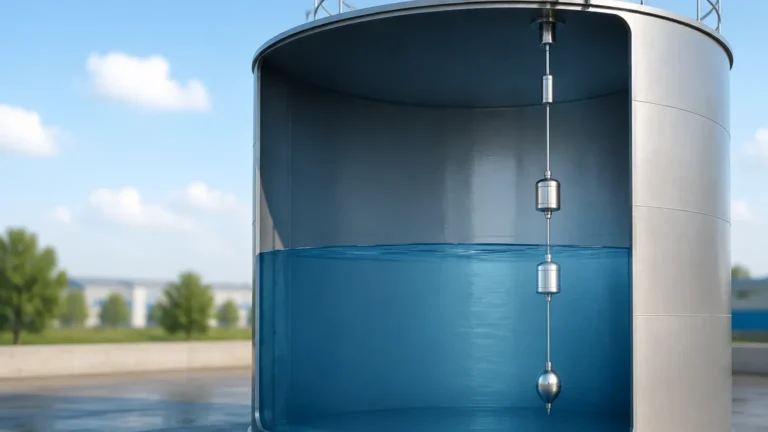
A "2 level" configuration involves using two of these sensing points. This can be achieved through two separate sensors installed at different heights or a single multi-point probe.
1. High Level (HL): Positioned at the top of the tank to prevent overfilling.
2. Low Level (LL): Positioned at the bottom to ensure pumps do not run dry or to signal a refill cycle.
Technical Selection Criteria for 2 Level Systems
Choosing a 2 level light switch requires a detailed analysis of the process environment. Because optical switches rely on light transmission, the optical properties of the liquid are paramount.
Media Characteristics
* Transparency and Color: While most optical switches work with clear liquids, highly opaque or extremely dark fluids may require higher-intensity IR emitters.
* Viscosity: High-viscosity liquids may leave a film on the prism tip, leading to "false wet" readings. In such cases, a conical tip design or a different technology, such as a tuning fork switch, may be preferable.
* Chemical Compatibility: The housing material (typically Polysulfone, Stainless Steel, or PFA) must be resistant to the process media. Polysulfone is common for water and mild chemicals, while Stainless Steel is required for high-pressure or food-grade applications.
Environmental Factors
* Ambient Light: In outdoor or highly illuminated indoor environments, ambient light interference can affect the phototransistor. Industrial-grade switches use modulated IR signals to filter out external light noise.
* Pressure and Temperature: Standard optical switches are rated for temperatures up to 85°C (185°F) and pressures up to 25 bar (362 psi). High-performance versions can extend to 125°C (257°F) and 50 bar (725 psi).
Comparison of Level Switch Technologies
While the 2 level light switch (optical) is effective for many applications, it is helpful to compare it against other common point-level technologies used in industrial automation.
| Technology | Operating Principle | Best For | Limitations |
| :— | :— | :— | :— |
| Optical (Light) | IR Refraction | Clean liquids, small spaces, fast response. | Coating/scaling on the prism tip. |
| Float Switch | Buoyancy/Magnetism | Simple water tanks, low cost. | Moving parts can jam; prone to fouling. |
| Tuning Fork | Vibration Frequency | Slurries, powders, viscous liquids. | Larger footprint; more expensive. |
| Capacitive | Dielectric Constant | Non-conductive liquids, solids. | Sensitive to changes in media composition. |
| Ultrasonic Gap | Sound Transmission | Aerated liquids, high-pressure oil. | Affected by bubbles or foam. |
Configuration and Wiring Logic
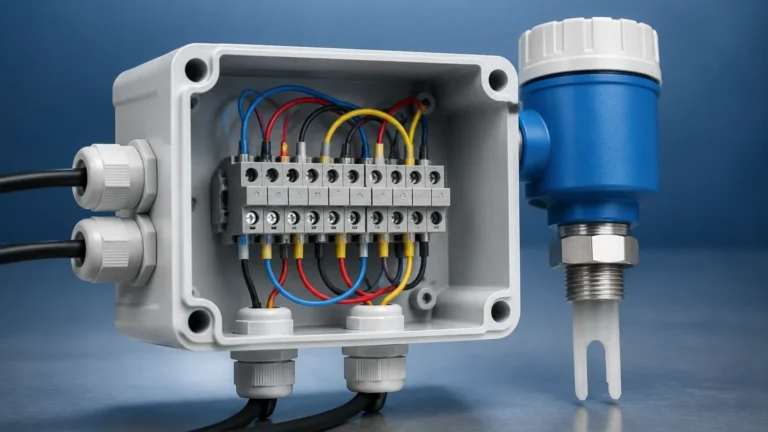
In a 2 level light switch setup, the output logic is critical for process safety. Most industrial switches offer NPN or PNP outputs, which can be configured as "Normally Open" (NO) or "Normally Closed" (NC).
Pump Control Logic (Auto-Fill/Auto-Empty)
For a typical tank filling application:
* Low Level Switch: When the liquid falls below this point, the switch closes the circuit to start the pump.
* High Level Switch: When the liquid reaches this point, the switch opens the circuit to stop the pump.
This creates a hysteresis loop, preventing the pump from "chattering" (rapidly cycling on and off) if the liquid surface is turbulent. Many modern Level Switches include built-in time delays (typically 1 to 5 seconds) to ignore momentary splashing or bubbles.
Installation Considerations
Proper installation is essential to ensure the longevity and accuracy of a 2 level light switch system. Engineers should adhere to the following guidelines:
1. Orientation: Optical switches can be installed horizontally or vertically. However, if installed horizontally, the tip should be angled slightly downward to allow liquid to drain off the prism, preventing false readings from droplets.
2. Avoid Obstructions: Ensure there are no reflective surfaces (like tank walls or agitator blades) within 50 mm (approx. 2 inches) of the sensor tip, as these can reflect IR light back into the receiver.
3. Turbulence: In tanks with high agitation, the sensors should be installed inside a stilling well (a perforated pipe) to provide a stable liquid surface for measurement.
4. Cable Protection: Use liquid-tight conduits for wiring, especially in wash-down environments or where corrosive vapors are present.
Limitations and Prohibitions
While versatile, the 2 level light switch is not a universal solution. Certain conditions preclude its use:
* Heavy Coating: If the media is prone to crystallization or heavy scaling (e.g., concentrated brine or thick syrups), the prism will eventually become coated, rendering the switch inoperable. Regular maintenance or a change to vibrating level switches is recommended.
* Highly Aerated Liquids: Large quantities of bubbles can mimic the refractive index of air, causing the switch to indicate a "dry" state even when submersed.
* Direct Sunlight: Although many sensors have IR filters, direct exposure to intense sunlight in open-top tanks can occasionally saturate the phototransistor.
Maintenance and Troubleshooting
Optical level switches are generally low-maintenance because they have no moving parts. However, a routine inspection schedule should be implemented:
* Visual Inspection: Every 6 to 12 months, check the sensor tip for any signs of pitting, clouding, or residue buildup.
* Cleaning: If a film is present, clean the prism with a soft cloth and a solvent compatible with the housing material (e.g., isopropyl alcohol for stainless steel units).
* Testing: Manually trigger the switch by dipping it into the process media or a test beaker to verify that the control logic and alarms are functioning correctly.
Frequently Asked Questions (FAQ)
Q: Can a 2 level light switch be used for oil and water detection?
A: Yes. Because oil and water have different refractive indices, specialized optical switches can be calibrated to distinguish between the two, though standard switches will simply detect the presence of either liquid.
Q: What is the typical response time for an optical level switch?
A: Most optical switches respond in less than 100 milliseconds, making them much faster than float switches or thermal dispersion sensors.
Q: Is it possible to have two sensing points on a single probe?
A: Yes, custom-length probes can be manufactured with two optical sensors integrated into one stem, reducing the number of tank penetrations required.
Q: Do these switches require a separate controller?
A: While they can be wired directly to a PLC (Programmable Logic Controller), many systems use a dedicated level controller or relay module to handle the high-current switching required for pumps and motors.
Q: Are optical switches safe for explosive environments?
A: Intrinsically safe (IS) versions are available. These must be used in conjunction with a galvanic isolator or Zener barrier to limit the electrical energy entering the hazardous area.
By understanding the specific requirements of the application—from chemical compatibility to the logic of the control loop—engineers can implement a 2 level light switch system that provides reliable, long-term performance in demanding industrial environments. For further technical specifications and model comparisons, professionals should consult updated Level Switches documentation to ensure compliance with local safety and engineering standards.