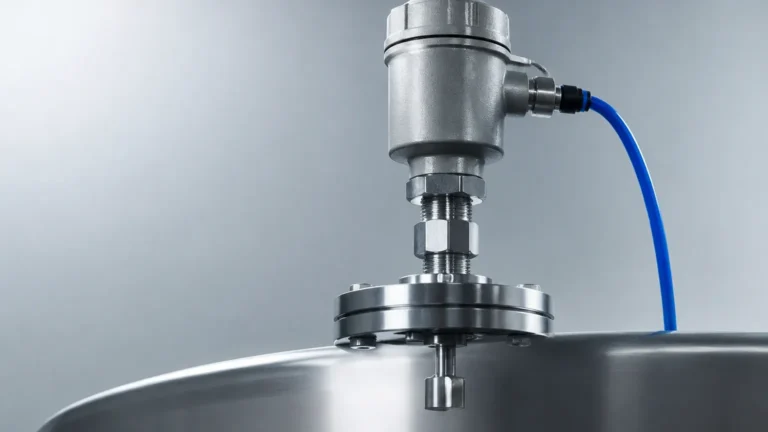
Water Level Switches Are Initiating Devices
Water Level Switches Are Initiating Devices
In the architecture of industrial automation and safety systems, the term "initiating device" refers to any component that detects a change in physical state and triggers a response from a control unit. Within water management and process industries, water level switches are initiating devices that serve as the primary sensory input for pumps, valves, and alarm systems. By providing a discrete signal—typically an on/off contact—these devices ensure that industrial processes remain within safe operational boundaries.
Selecting the correct technology for these initiating devices is critical. A failure to trigger at the designated setpoint can lead to tank overflows, pump cavitation, or environmental hazards. This guide examines the principles, selection criteria, and installation requirements for industrial level switches used as initiating components in modern control loops.
Measurement Principles of Level Switches
Before integrating these devices into a system, it is essential to understand the underlying physical principles that allow them to function as reliable triggers. Unlike continuous level transmitters that provide a constant data stream, Level Switches are designed to react when a specific threshold is reached.
Float-Based Level Switches
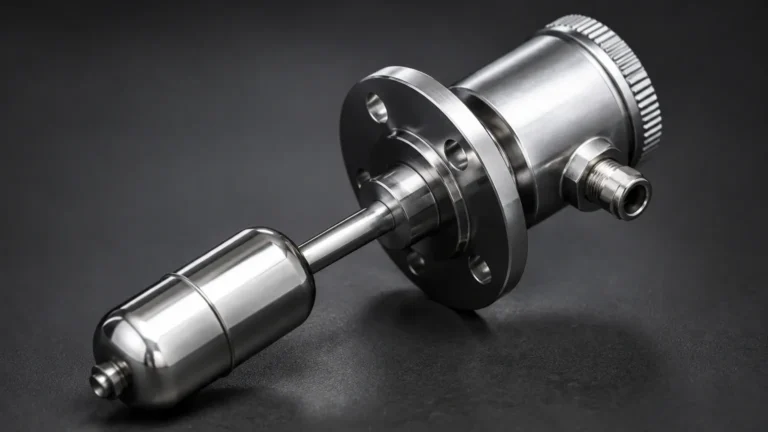
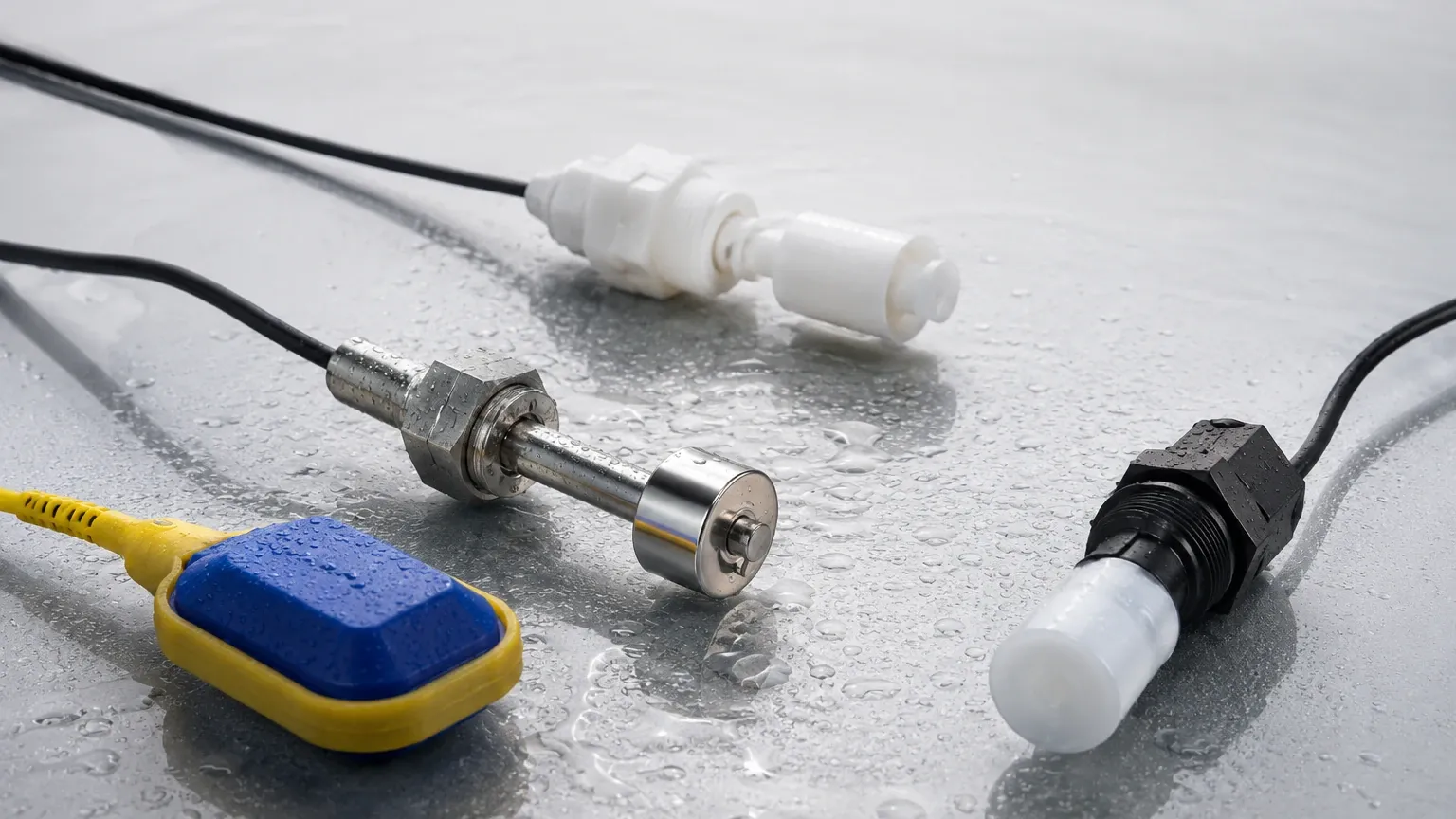
The most traditional form of initiation is the float switch. This technology relies on the principle of buoyancy. A float, containing a magnet or a mechanical linkage, moves with the rising or falling water level. When the float reaches a predetermined height, it actuates a reed switch or a microswitch. These are widely used in clean water applications due to their simplicity and low cost.
Vibrating Tuning Fork Switches
Vibrating level switches utilize a piezoelectric crystal to vibrate a small tuning fork at its natural frequency. When the fork is submerged in water, the frequency changes due to the increased density of the medium compared to air. The internal electronics detect this frequency shift and change the output state. Because they do not rely on buoyancy, they are highly resistant to changes in liquid density or turbulence.
Capacitance Level Switches
Capacitance sensors treat the water and the tank wall (or a reference probe) as the plates of a capacitor. As the water level rises and covers the probe, the dielectric constant changes, increasing the measured capacitance. This technology is effective for both conductive and non-conductive liquids and is often preferred in high-pressure or high-temperature environments where mechanical floats might fail.
Ultrasonic Gap Switches
These devices feature a small gap between a transmitter and a receiver. When the gap is filled with air, ultrasonic signals cannot bridge the space efficiently. When water enters the gap, the signal is transmitted, initiating the switch output. This is a robust solid-state solution for liquids that may contain small amounts of debris.
Comparison of Initiating Technologies
Selecting the right device requires balancing the physical properties of the liquid with the environmental conditions of the installation. The following table provides a comparison of common level switch types used as initiating devices.
| Technology | Typical Application | Advantages | Limitations |
| :— | :— | :— | :— |
| Float Switch | Sump pumps, clean water tanks | Low cost, no power required (mechanical) | Prone to jamming if solids are present |
| Tuning Fork | Industrial process tanks, wastewater | Unaffected by foam or turbulence | Not suitable for highly viscous liquids |
| Capacitance | Chemical storage, high-pressure vessels | No moving parts, handles high temps | Requires calibration for different media |
| Optical | Leak detection, small vessels | Extremely compact, fast response | Sensitive to coating or heavy scaling |
| Hydrostatic | Deep wells, reservoirs | High reliability in deep water | Sensitive to changes in specific gravity |
How Water Level Switches Function as Initiating Devices
In a control circuit, water level switches are initiating devices that bridge the gap between the physical world and electronic logic. Their role is defined by how they interact with the Control Processing Unit (CPU) or Programmable Logic Controller (PLC).
The Input Signal
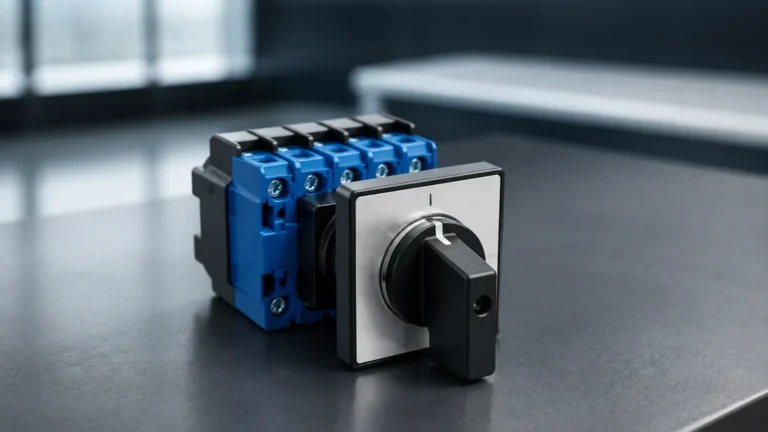
When the water level reaches the switch, the device changes its contact state. This is usually a Dry Contact (Voltage Free) output, which can be configured as:
* Normally Open (NO): The circuit is open until the water reaches the setpoint, at which point the switch closes to initiate an action.
* Normally Closed (NC): The circuit is closed during normal operation and opens when the level threshold is crossed. This is often used for fail-safe "High-Level" alarms, as a wire break will also trigger the alarm.
Logic Integration
Once the switch initiates the signal, the PLC processes the data to perform specific tasks:
1. Pump Control: A low-level switch initiates a "Pump Start" command, while a high-level switch initiates a "Pump Stop."
2. Safety Interlocks: If a high-high level switch is triggered, it may initiate an Emergency Power Off (EPO) for the entire system to prevent flooding.
3. Telemetry: In remote water monitoring, the initiation of a switch can trigger a cellular gateway to send an SMS or email alert to operators.
Installation and Engineering Considerations
Proper installation is paramount to ensuring that water level switches are initiating devices that provide accurate and repeatable signals. Engineering teams must consider the following factors during the design phase:
1. Mounting Orientation
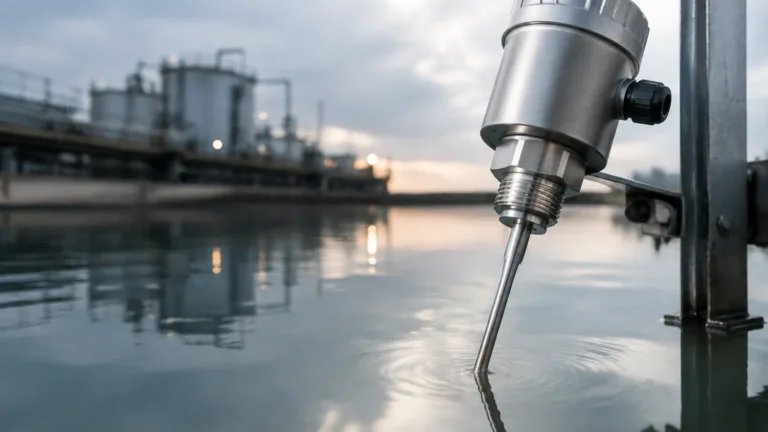
Level switches can be mounted horizontally (through the side of a tank) or vertically (from the top). Vertical mounting is often preferred for deep tanks or when multiple setpoints are required on a single probe. Horizontal mounting is common for point-level detection in pipes or small vessels.
2. Turbulence and Stilling Wells
In tanks with agitators or high-flow inlets, turbulence can cause a switch to "chatter" (rapidly open and close). To prevent this, a stilling well—a vertical pipe that shields the sensor from surface waves—should be installed. This ensures the initiating device only reacts to the true mean level of the water.
3. Material Compatibility
While water is generally non-corrosive, industrial water treatment often involves chemicals like chlorine or acids. Welk level switches are available in various materials, including 304/316 Stainless Steel, PP (Polypropylene), and PTFE. The housing must also be rated for the environment, typically IP65 or IP68 for submerged applications.
4. Wiring and Interference
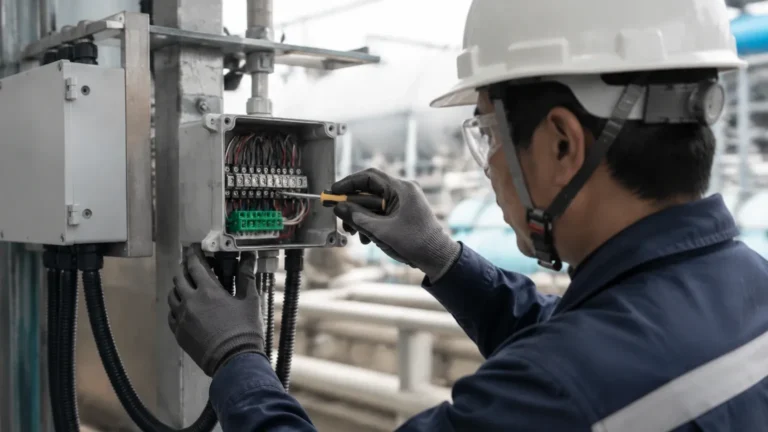
As initiating devices, level switches often carry low-voltage signals (24V DC). To prevent electromagnetic interference (EMI) from high-power pump motors, shielded cables should be used, and signal wires should be run in separate conduits from power lines.
Limitations and Operational Constraints
While highly reliable, no single technology is universal. Engineers must be aware of the following limitations:
* Scaling and Buildup: In hard water or wastewater applications, calcium deposits or biological growth can coat the sensor. This is particularly problematic for tuning forks and capacitance probes, which may require periodic cleaning to maintain accuracy.
* Specific Gravity Changes: Float switches are calibrated for a specific liquid density (typically 1.0 g/cm³ for water). If the liquid density changes significantly due to temperature or additives, the float may sit lower or higher in the water, shifting the initiation point.
* Mechanical Wear: Any device with moving parts, such as a mechanical float switch, has a finite cycle life. In high-frequency switching applications, solid-state technologies like ultrasonic or tuning fork switches are recommended for longer service life.
Maintenance and Testing Protocols
Since water level switches are initiating devices often used for safety, regular testing is mandatory.
1. Proof Testing: Manually lift the float or submerge the probe to ensure the control system receives the signal and the correct actuator (pump or valve) responds.
2. Visual Inspection: Check for signs of corrosion on the housing and ensure that cable glands are tight to prevent moisture ingress into the electronics.
3. Calibration Check: For capacitance-based switches, verify that the "switch-on" point hasn't drifted over time due to changes in the dielectric properties of the water or probe coating.
Frequently Asked Questions (FAQs)
Q: Can a level switch be used for continuous monitoring?
A: No. A level switch is a point-level device that only detects if the water is above or below a specific point. For continuous monitoring (e.g., 0-100% full), a radar or ultrasonic level transmitter is required.
Q: What is the difference between an initiating device and an indicating device?
A: An initiating device (like a level switch) starts a signal based on a physical change. An indicating device (like a strobe light or a digital display) provides a visual or audible representation of that signal for human operators.
Q: How do I choose between a mechanical and an electronic level switch?
A: Mechanical switches (floats) are excellent for simple applications where power is limited. Electronic switches (tuning fork, capacitance) are better for applications involving turbulence, foam, or where high reliability and long life are required without maintenance.
Q: Are water level switches suitable for hazardous areas?
A: Yes, provided they carry the appropriate certifications (such as ATEX or IECEx). For water treatment plants where methane gas may be present, intrinsically safe or explosion-proof housings are necessary.
By understanding that water level switches are initiating devices, engineers can better design systems that are responsive, safe, and efficient. Whether protecting a boiler from dry-firing or managing a municipal reservoir, the correct selection of level switching technology is the foundation of reliable process control.
Download Water Level Switches Are Initiating Devices as a PDF