Types of Level Switches
Types of Level Switches
In industrial process control, level switches serve as critical components for point level detection. Unlike continuous level transmitters that provide a constant stream of data regarding the exact height of a medium, a level switch is designed to trigger a response when a specific level—typically a high or low limit—is reached. This functionality is vital for preventing tank overflows, protecting pumps from dry running, and automating the filling or emptying of vessels.
Selecting the correct equipment requires a deep understanding of the various types of level switches and the physical principles that govern their operation. Each technology offers distinct advantages depending on the physical properties of the media, environmental conditions, and the specific requirements of the application, such as hygiene standards or hazardous area classifications.
Fundamental Measurement Principles
Before exploring specific hardware, it is essential to understand the physical principles used to detect the presence or absence of a medium. Industrial level switches generally fall into two categories: mechanical and electronic.
1. Mechanical/Buoyancy Principle: These switches rely on the physical displacement of a float or the movement of a mechanical part caused by the density of the liquid. As the liquid level rises, the buoyant force moves a component that mechanically or magnetically actuates a switch.
2. Vibrational Principle: Utilizing piezoelectric crystals, a sensing element (usually a fork) is vibrated at its resonant frequency. When the medium covers the fork, the frequency changes or the vibration is damped, which is then converted into a switching signal.
3. Electrical Property Principle: These switches detect changes in electrical characteristics. This includes conductivity (measuring the flow of current between probes) and capacitance (measuring the change in the dielectric constant between the probe and the tank wall).
4. Pressure and Optical Principles: Other methods include sensing the hydrostatic pressure at a specific point or using the refraction of light to detect the presence of a liquid.
Common Types of Level Switches
Understanding the diverse range of available technologies is the first step in engineering a reliable level control system. Below are the primary types of level switches used in modern industrial automation.
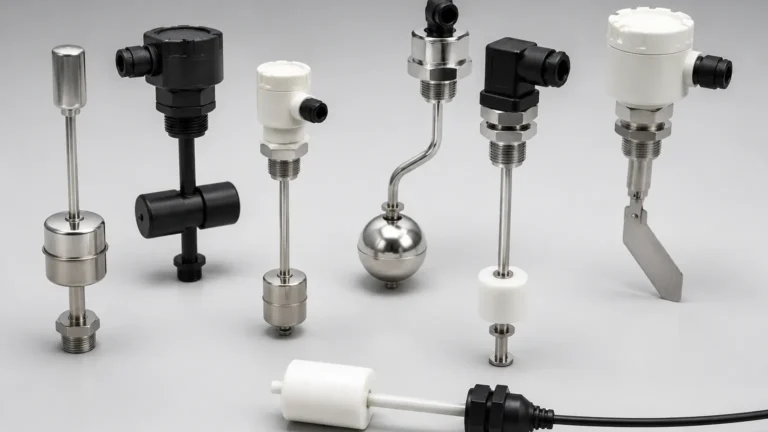
1. Float Level Switches
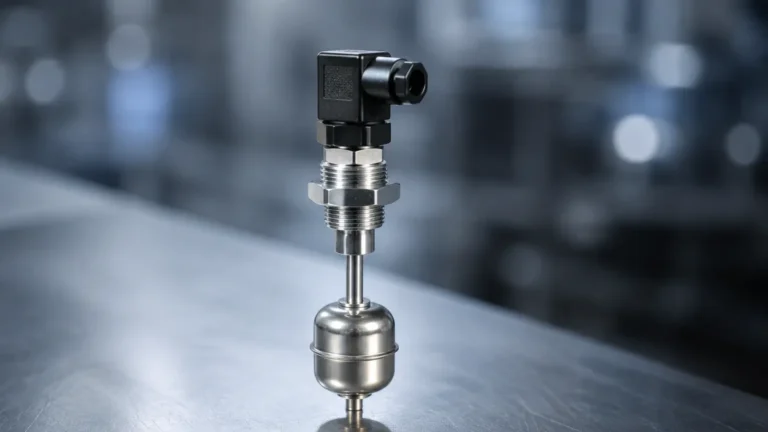
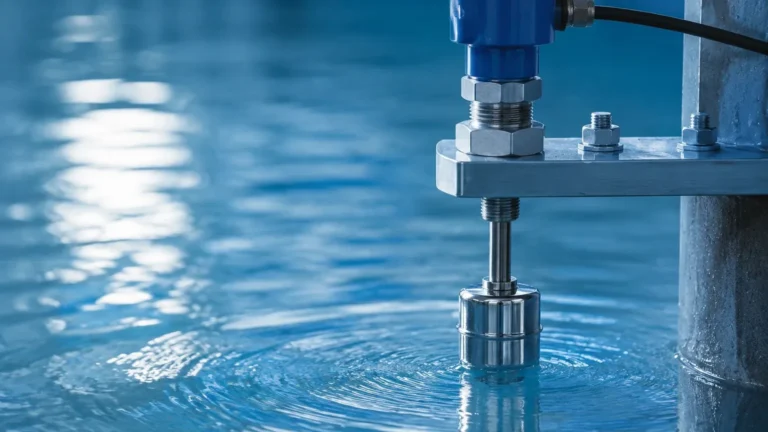
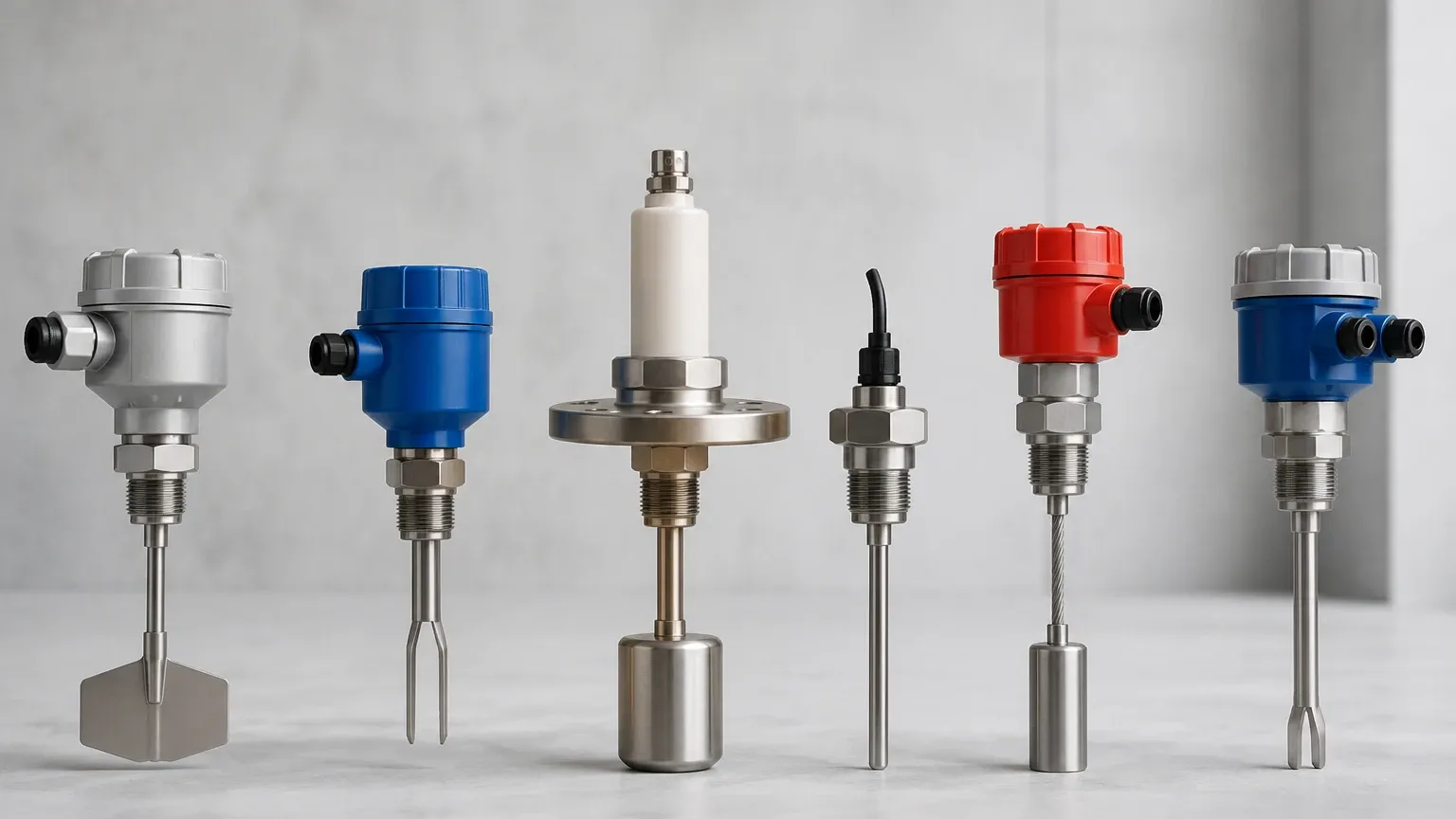
Float level switches are among the most established and cost-effective technologies. They operate on the principle of buoyancy, where a float containing a magnet moves with the liquid level. When the float reaches a predetermined point, the internal magnet actuates a hermetically sealed reed switch or a microswitch.
* Magnetic Float Switches: Usually mounted vertically or horizontally. In vertical models, a float travels along a stem. As it passes a reed switch inside the stem, it opens or closes the circuit.
* Cable-Hung Float Switches: Often used in water treatment and sewage pits. The switch is encased in a waterproof float suspended by a cable. When the liquid rises, the float tilts, triggering a mechanical ball or switch inside.
Best for: Clean liquids, water, and oils where high precision is not the primary concern.
2. Tuning Fork (Vibrating) Level Switches
Tuning fork switches are highly versatile and reliable. A piezoelectric crystal excites a metal fork to vibrate at its natural frequency (typically around 1200 Hz to 1400 Hz). When the fork is submerged in a liquid or covered by a solid, the frequency drops. The internal electronics detect this shift and trigger the output.
These switches are particularly valued because they are largely unaffected by flow, bubbles, foam, or vibration in the vessel. They are also suitable for detecting powders and fine-grained solids.
Best for: High-viscosity liquids, aerated liquids, and applications requiring high reliability in turbulent conditions.
3. Capacitance Level Switches
Capacitance switches operate by treating the sensor probe and the tank wall as two plates of a capacitor. The medium acts as the dielectric. Since different materials have different dielectric constants (ε), the capacitance changes as the medium covers the probe.
Modern capacitance switches often feature "active shield" technology, which allows the sensor to ignore material buildup on the probe—a common issue in sticky or conductive media. These are excellent for both liquids and bulk solids like sand or plastic pellets.
Best for: Corrosive chemicals, high-temperature environments, and solids.
4. Rotary Paddle Level Switches
Designed specifically for bulk solids, the rotary paddle switch uses a low-speed motor that rotates a paddle. When the material reaches the paddle, it creates a mechanical resistance that stops the motor. This torque is then used to actuate a microswitch and shut off the motor to prevent burnout.
Best for: Grains, sugar, cement, sand, and other dry bulk materials in silos.
5. Conductivity Level Switches
Conductivity switches are simple, low-cost solutions for detecting conductive liquids. They consist of a set of electrodes (probes). When the liquid touches the probes, a low-voltage electrical circuit is completed between them. Because they rely on the conductivity of the medium, they cannot be used for oils, pure water, or non-conductive chemicals.
Best for: Boiler water level control, wastewater, and acids.
6. Optical Level Switches
Optical switches use an infrared LED and a light receiver. The sensor tip is usually a prism. In air, the infrared light is reflected back to the receiver. When the tip is submerged in liquid, the light is refracted into the liquid, and the receiver detects the loss of signal. These are extremely compact and have no moving parts.
Best for: Leak detection, small tanks, and pharmaceutical applications where space is limited.
Practical Selection Table
Choosing between the various Level Switches depends on the specific parameters of your process. The following table provides a general comparison of the most common types.
| Switch Type | Media Compatibility | Max Temp (Approx) | Pressure Resistance | Buildup Sensitivity | Cost Profile |
| :— | :— | :— | :— | :— | :— |
| Float | Clean Liquids | 150°C | Moderate | High | Low |
| Tuning Fork | Liquids / Solids | 250°C | High | Low | Moderate |
| Capacitance | Liquids / Solids | 400°C+ | Very High | Moderate | Moderate |
| Rotary Paddle | Bulk Solids | 200°C | Low | Moderate | Low |
| Conductivity | Conductive Liquids | 100°C | Moderate | High | Very Low |
| Optical | Clean Liquids | 125°C | High | High | Moderate |
Installation and Engineering Considerations
Proper installation is as critical as selecting the right technology. Engineering teams should consider the following factors during the design phase:
Mounting Orientation
Level switches can be mounted either horizontally (from the side of the tank) or vertically (from the top).
* Vertical mounting is often preferred for low-level alarms to ensure the probe is always in contact with the media when needed.
* Horizontal mounting is common for high-level alarms, but care must be taken to ensure the probe does not become a collection point for debris or sediment.
Turbulence and Agitation
In tanks with mixers or high-velocity inflow, mechanical switches like floats can be damaged or provide false readings. In these environments, tuning fork switches or non-contact ultrasonic switches are preferred. If a float switch must be used, a stilling well (a pipe that surrounds the float to dampen movement) should be installed.
Material Compatibility
The wetted parts of the switch must be chemically compatible with the process media. Common materials include Stainless Steel (304 or 316L), PVC, PP, and PTFE. For highly corrosive environments, such as concentrated acids, specialized coatings or plastic-bodied switches are required.
Dead Zones and Switching Hysteresis
Every switch has a "dead zone" or a minimum distance it must be from the tank wall or bottom to function correctly. Additionally, hysteresis—the difference between the point where the switch activates and the point where it deactivates—must be factored into the control logic to prevent "chattering" (rapid cycling of pumps or valves) when the liquid level is fluctuating near the setpoint.
Limitations and Common Risks
While level switches are robust, they are not infallible. Awareness of their limitations prevents system failures:
* Coating and Buildup: In many types of level switches, such as capacitance or conductivity probes, the accumulation of sticky material can lead to false positives. Choosing a tuning fork or a switch with buildup compensation is necessary for these applications.
* Density Changes: Float switches are calibrated for a specific specific gravity. If the process media changes (e.g., switching from water to a light oil), the float may no longer function correctly.
* Mechanical Wear: Any switch with moving parts, such as rotary paddles or float switches, will eventually experience mechanical fatigue. Regular inspection intervals are required for these devices.
* Dielectric Constant (ε): For capacitance switches, if the dielectric constant of the material is too low (less than 1.5), the sensor may struggle to distinguish between the material and air.
Frequently Asked Questions (FAQ)
Q: Can I use a liquid level switch for solids?
A: Only certain types. Tuning fork switches and capacitance switches are often dual-purpose. However, float switches and conductivity switches are strictly for liquids. Rotary paddle switches are strictly for solids.
Q: How do I prevent a pump from cycling too frequently?
A: This is managed through hysteresis. You can use two level switches (a high-level switch to stop the pump and a low-level switch to start it) or a single switch with a built-in time delay or a wide differential.
Q: Are level switches suitable for high-pressure vessels?
A: Yes, but you must specify the pressure rating. Capacitance and tuning fork switches can often be engineered to withstand pressures exceeding 60 bar (870 psi), whereas standard plastic float switches are usually limited to atmospheric or low-pressure applications.
Q: What is the difference between a NPN and PNP output in electronic switches?
A: These refer to the type of transistor output. PNP switches provide a positive voltage signal when triggered, while NPN switches pull the load down to the negative/ground rail. The choice depends on the input requirements of your PLC (Programmable Logic Controller).
Conclusion
Identifying the appropriate types of level switches involves balancing the physical constraints of the application with the required reliability and budget. From the simplicity of a float switch to the advanced frequency-shift detection of a tuning fork, each technology serves a specific niche in industrial automation. By understanding the measurement principles and limitations outlined in this guide, engineers can ensure accurate point level detection, protecting both equipment and process integrity.