What Is a Sotf Switch
What Is a Sotf Switch
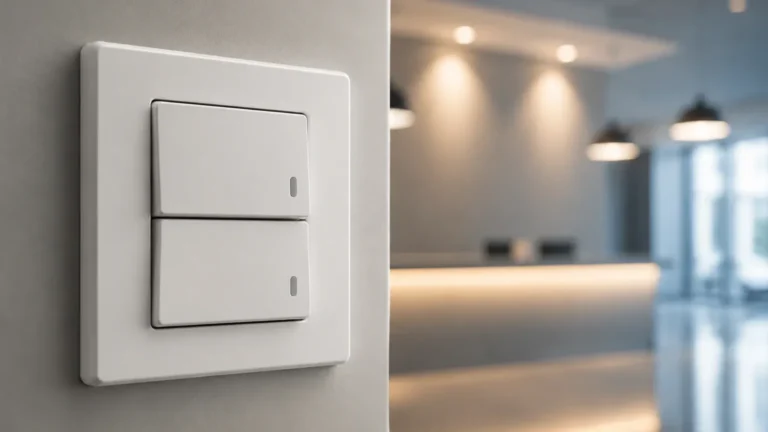
In the complex landscape of industrial automation and power distribution, the term "SOTF" refers to a critical protection logic: Switch On To Fault. While the term originated in the electrical utility and relay protection sector, its underlying philosophy—providing instantaneous protection during the initial energization or activation of a system—is a cornerstone of industrial safety. For engineers managing fluid levels and process vessels, understanding the relationship between protective switching logic and reliable Level Switches is essential for preventing catastrophic equipment failure and environmental incidents.
This article explores the technical definition of SOTF, its operational principles, and how point level detection technologies serve as the primary "fault" protection mechanisms in modern industrial processing.
Understanding the Concept of Switch On To Fault (SOTF)
A SOTF switch, or more accurately, the SOTF logic within a protective relay or circuit breaker, is designed to provide high-speed tripping when a breaker is closed onto a pre-existing fault. In standard power system operations, many protective relays use time-delayed settings to allow for coordination between upstream and downstream devices. However, if a maintenance crew leaves a grounding strap on a line or if a short circuit exists at the moment a switch is closed, waiting for a time delay could lead to an explosion or severe equipment damage.
The Logic of SOTF
When a "close" command is initiated, the SOTF logic becomes active for a very short window (typically 200 to 500 milliseconds). During this window, the relay ignores standard time-delay coordination and triggers an instantaneous trip if current or voltage thresholds are exceeded. Once the window expires and the system is deemed stable, the relay reverts to its normal, coordinated protection settings.
In the context of level measurement, this concept translates to the "High-High" or "Low-Low" alarm logic. Just as an electrical SOTF prevents energizing a faulted line, a safety-certified level switch prevents the "energization" of a filling process if a fault condition (such as an overfill or a dry-run) is detected.
The Role of Level Switches in Industrial Safety Systems
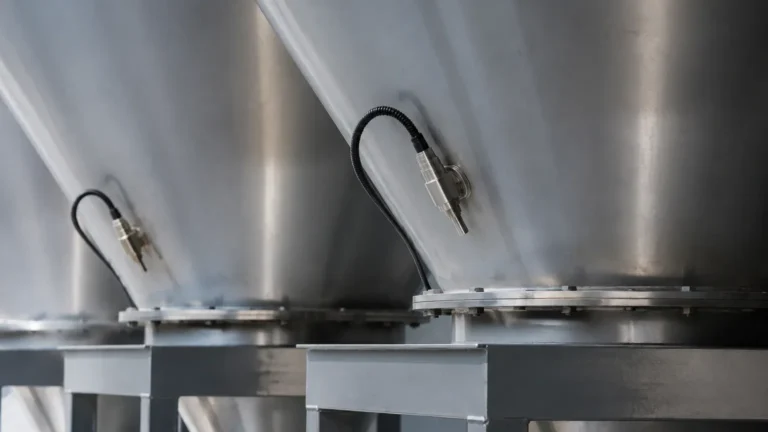
Level switches are point-level detection devices used to determine if a liquid or solid has reached a specific height within a tank, silo, or pipe. Unlike continuous level transmitters (such as radar or ultrasonic sensors) that provide a constant 4-20mA or digital signal of the level, a switch provides a discrete output—usually a relay contact or a transistor switch.
In industrial B2B applications, these devices are the primary components in Safety Instrumented Systems (SIS). They act as the final line of defense. If a continuous radar level meter fails or provides an incorrect reading due to heavy foam or vapor, the independent level switch must detect the "fault" (the dangerous level) and shut down pumps or close valves immediately.
Principles of Level Switch Operation
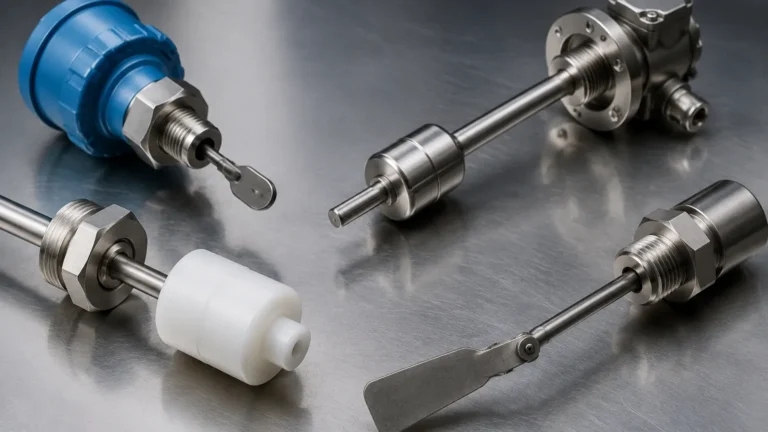
To select the correct instrument for fault protection, one must understand the physical principles that govern different types of switches. Welk provides several technologies, each suited to specific media and environmental conditions.
1. Vibrating Fork (Tuning Fork) Level Switches
The vibrating fork switch uses a piezoelectric crystal to vibrate two metal tines at their natural resonant frequency in the air. When the tines are immersed in a liquid or solid, the frequency changes or the vibration is dampened. This change is detected by the internal electronics, which then switch the output state.
* Principle: Frequency shift/damping.
* Best for: Most liquids, powders, and granular solids.
* Advantage: Unaffected by flow, turbulence, bubbles, or foam.
2. Float and Magnetic Level Switches
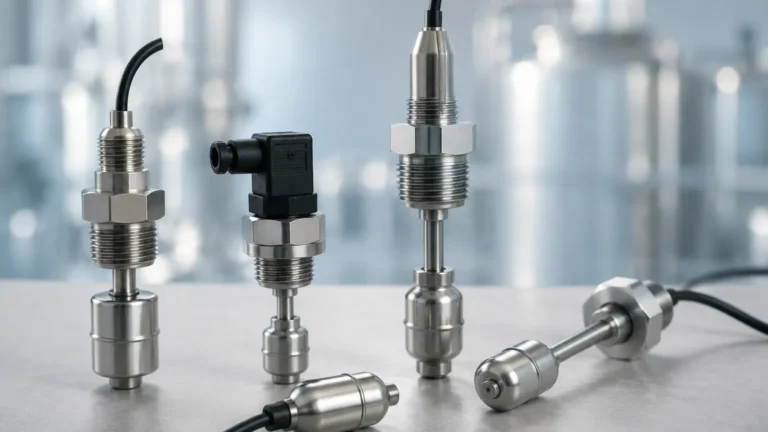
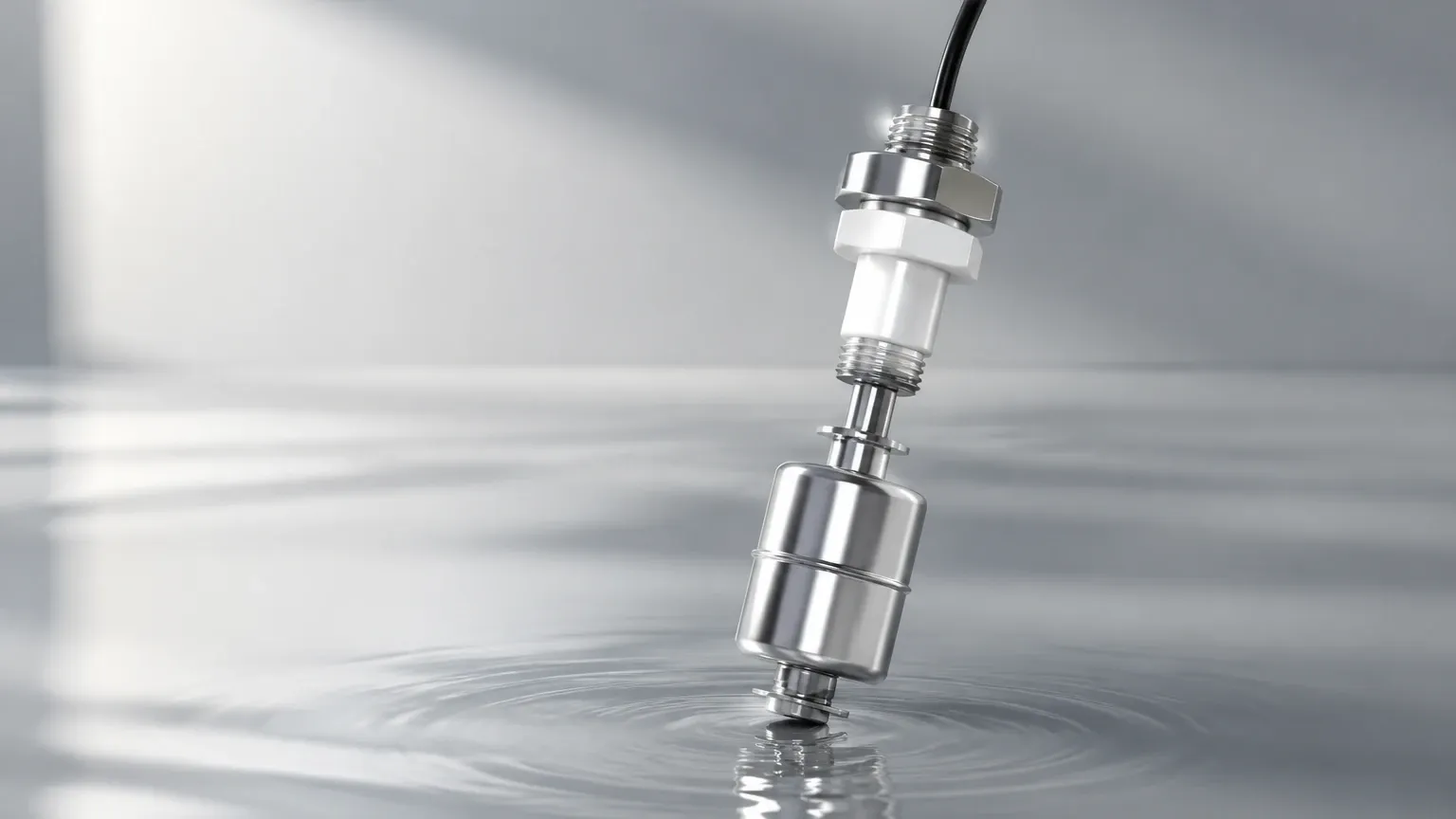
These are among the most established technologies. A float containing a permanent magnet moves with the liquid level along a stem. Inside the stem are reed switches. As the magnet passes the reed switch, it opens or closes the circuit.
* Principle: Buoyancy and magnetism.
* Best for: Clean liquids with stable density.
* Advantage: Simple, low cost, and requires no power to operate the basic reed contact.
3. Capacitance Level Switches
Capacitance switches measure the change in electrical capacitance between an electrode and the tank wall (or a second electrode). As the process material displaces air, the dielectric constant changes, altering the capacitance.
* Principle: Dielectric constant variation.
* Best for: Corrosive liquids, slurries, and interfaces.
* Advantage: No moving parts; can handle high temperatures and pressures.
4. Ultrasonic Level Switches
These devices use a pair of ultrasonic transducers separated by a gap. When liquid fills the gap, ultrasonic waves travel across; when the gap is empty (filled with air/gas), the waves are attenuated.
* Principle: Ultrasonic wave transmission through liquid.
* Best for: Highly viscous liquids or applications where physical contact with moving parts is undesirable.
Comparing Level Switch Technologies for Fault Prevention
Choosing the right technology is the first step in ensuring that your system never "switches on to a fault" condition without a safety override. The following table provides a comparison based on common industrial parameters.
| Technology | Media Type | Max Temp (Approx.) | Max Pressure (Approx.) | Viscosity Handling | Foam Resistance |
| :— | :— | :— | :— | :— | :— |
| Vibrating Fork | Liquids/Solids | -50°C to 250°C | Up to 64 bar | High | Excellent |
| Float Switch | Clean Liquids | -20°C to 150°C | Up to 40 bar | Low | Moderate |
| Capacitance | Liquids/Slurries | -100°C to 400°C | Up to 100 bar | Moderate | Poor |
| Ultrasonic | Liquids | -40°C to 150°C | Up to 40 bar | High | Good |
| Hydrostatic | Liquids | -20°C to 80°C | N/A (Submersible) | Moderate | Excellent |
Selection Criteria for Level Switches in Critical Applications
When specifying a switch to prevent process faults, engineers must look beyond the basic measurement principle. The following criteria are vital for B2B procurement and engineering design:
Media Characteristics
* Density: Float switches require a minimum liquid density (usually >0.5 g/cm³) to function. If the density varies significantly, the switch point may drift.
* Dielectric Constant: Capacitance switches require a distinct difference between the air and the process medium. For materials with very low dielectric constants (like some oils), specialized probes are needed.
* Corrosiveness: Ensure the wetted parts (316L Stainless Steel, PTFE, PP, or Hastelloy) are compatible with the chemical composition of the fluid.
Process Conditions
* Turbulence and Agitation: In tanks with mixers, vibrating forks or capacitance probes are preferred over float switches, which can be mechanically damaged by lateral forces.
* Build-up and Coating: If the medium is sticky (e.g., bitumen or heavy syrups), choose a vibrating fork with "coating rejection" logic or a capacitance switch designed for conductive build-up.
Output and Safety Integrity
For fault protection, the output type matters. Common options include:
* Relay (SPDT/DPDT): High current switching capability but has mechanical wear.
* PNP/NPN: Solid-state switching for PLC inputs; faster and longer-lasting.
* NAMUR: Used in hazardous areas (Ex-proof) for intrinsically safe circuits.
* SIL Rating: For high-risk environments, ensure the level switch has a Safety Integrity Level (SIL 2 or SIL 3) certification.
Installation and Maintenance Guidelines
Incorrect installation is the leading cause of "false faults" or, worse, the failure of a switch to trigger during a real emergency.
Installation Considerations
1. Nozzle Length: For vibrating fork switches, ensure the nozzle is not so long that material can bridge between the tines and the nozzle wall, causing a false high alarm.
2. Orientation: While many switches can be mounted horizontally or vertically, horizontal mounting is generally preferred for high-level alarms to ensure the tines are fully immersed as the level rises.
3. Avoid Fill Streams: Never install a level switch directly under a fill pipe. The falling material will cause erratic switching and premature wear.
4. Stilling Wells: In turbulent tanks, install float switches inside a stilling well (a perforated pipe) to protect the float and provide a stable liquid surface.
Maintenance and Proof Testing
To ensure the switch is ready to act during a fault, regular proof testing is required. This involves manually raising the level or using a test button (available on many Welk vibrating fork models) to simulate a high-level condition. For capacitance switches, periodic calibration checks are necessary if the moisture content of the stored material changes significantly.
Limitations of Level Switches
While highly reliable, no single technology is universal.
* Vibrating Forks can struggle with very aerated powders where the density is too low to dampen the vibration.
* Float Switches are prone to sticking if the liquid contains suspended solids or crystallizing salts.
* Capacitance Switches may require recalibration if the tank temperature fluctuates wildly, as the dielectric constant of some materials is temperature-dependent.
Frequently Asked Questions (FAQ)
Q: Can I use a level switch for continuous level monitoring?
A: No. A level switch only detects a single point (or multiple discrete points if multiple floats/reeds are used). For continuous monitoring, you would need a radar, ultrasonic, or hydrostatic level transmitter.
Q: What is the difference between "Normally Open" (NO) and "Normally Closed" (NC) in level switches?
A: This refers to the state of the switch when it is not activated by the liquid. For safety applications (overfill protection), it is standard to use a "Fail-Safe" configuration, where the switch is energized in the normal state and de-energizes to trigger an alarm if power is lost or the level is reached.
Q: Is a "SOTF switch" the same as a soft-start switch?
A: No. A soft-start switch is used to gradually ramp up voltage to a motor to reduce mechanical stress. A SOTF (Switch On To Fault) is a protection logic used to instantly disconnect power if a fault is detected during the closing of a circuit.
Q: How do I handle level switching in high-pressure steam boilers?
A: High-pressure steam requires specialized magnetic level gauges or heavy-duty capacitance probes designed for high temperature (up to 400°C) and pressure. Standard plastic or low-grade stainless floats will collapse under these conditions.
Conclusion
Whether you are managing the electrical protection of a substation with SOTF logic or ensuring the safety of a chemical reactor with industrial Level Switches, the goal remains the same: instantaneous detection and mitigation of a fault condition. By selecting the appropriate measurement principle—be it vibrating fork, float, or capacitance—and following rigorous installation standards, engineers can build resilient systems that protect both personnel and assets.
For technical assistance in selecting the right switch for your specific process fault protection, consult with Welk’s engineering team to review fluid compatibility and environmental constraints.