R Gauges
R Gauges
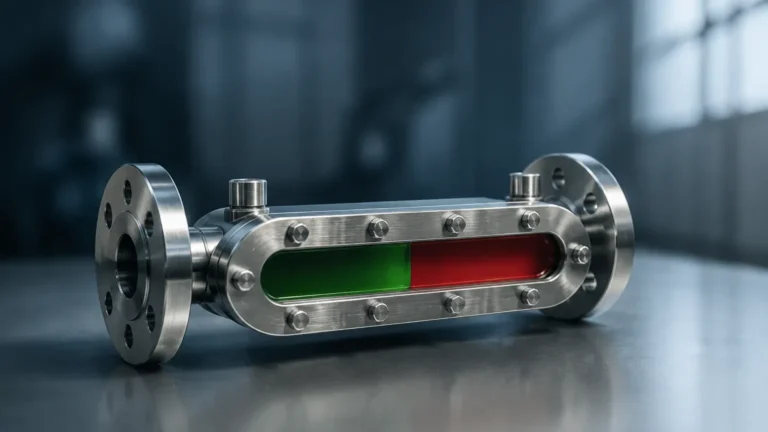
In the field of industrial process control, the term "r gauges" is frequently used as shorthand for reflex level gauges. These instruments represent one of the most established methods for local level indication in pressurized vessels and storage tanks. As a fundamental component of Magnetic & Local Level Gauges, reflex gauges provide a direct, visual representation of liquid levels without the need for complex electronics or external power sources.
Understanding the mechanical principles, material limitations, and application-specific requirements of r gauges is essential for plant engineers and maintenance teams. This guide explores the engineering behind reflex technology, compares it with magnetic alternatives, and provides a framework for selection and installation.
Understanding Reflex Measurement Principles
The operation of an r gauge (reflex gauge) is based on the optical laws of light refraction and reflection. Unlike transparent gauges, which use two pieces of clear glass to allow light to pass through the liquid, a reflex gauge utilizes a single piece of specialized glass with a distinct physical profile.
The Prism Effect
The side of the glass in contact with the medium is not flat; instead, it is molded with a series of longitudinal 90° prisms. The visual indication relies on the difference in the refractive index between the gas (or vapor) phase and the liquid phase within the chamber.
1. Gas/Vapor Phase: When light enters the glass from the outside and hits the prisms in the gas-filled portion of the chamber, it is reflected back toward the observer. This is due to the significant difference between the refractive index of the glass and the gas. This reflected light makes the gas-filled area appear bright, silvery, or white.
2. Liquid Phase: When the chamber contains liquid, the liquid fills the grooves of the prisms. The refractive index of the liquid is much closer to that of the glass than the gas is. Consequently, the light is refracted into the liquid rather than being reflected back. This absorption of light causes the liquid-filled area to appear dark or black.
This sharp contrast between the silvery vapor space and the dark liquid column allows operators to read the level accurately from a distance, even in poorly lit industrial environments.
Comparing R Gauges with Magnetic & Local Level Gauges
While reflex gauges are highly effective for many applications, they are part of a broader family of local level indicators. Choosing between a traditional reflex glass gauge and a magnetic level gauge depends on the process conditions and safety requirements.
Reflex Gauges (R Gauges)
* Visibility: High contrast (Black vs. Silver).
* Design: Simple, with fewer moving parts.
* Maintenance: Requires periodic cleaning of the glass and gasket replacement.
* Risk: Potential for glass breakage or leakage under extreme thermal shock or mechanical stress.
Magnetic Level Gauges
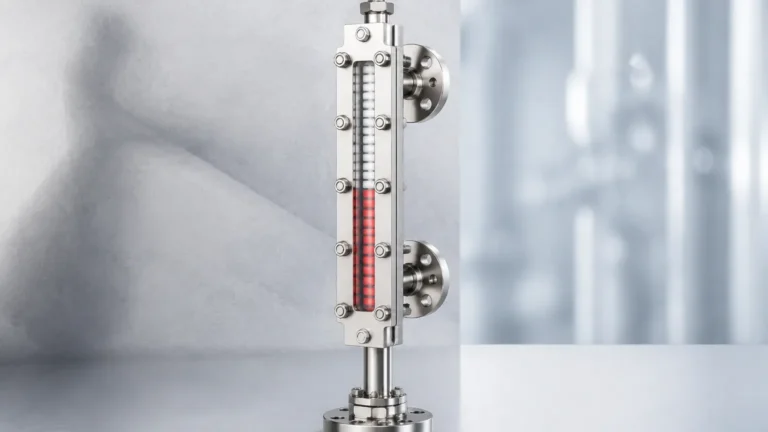
Magnetic & Local Level Gauges offer a different approach. Instead of a glass window, they utilize a stainless steel or plastic bypass chamber containing a magnetic float. As the float rises and falls, it actuates an external indicator (flaps or a follower).
* Safety: No glass in contact with the process media, making them ideal for toxic or flammable fluids.
* Pressure/Temperature: Often capable of higher ratings than glass gauges.
* Automation: Easily fitted with reed switches or transmitters for remote monitoring.
Selection Table: Reflex vs. Magnetic
| Feature | Reflex (R) Gauges | Magnetic Level Gauges |
| :— | :— | :— |
| Media Visibility | Direct visual contact | Indirect (via magnetic coupling) |
| Max Pressure | Typically up to 400 bar (40 MPa) | Up to 600+ bar (60 MPa) |
| Max Temperature | Up to 400°C (750°F) | Up to 540°C (1000°F) |
| Interface Measurement | Not suitable | Excellent for liquid-liquid interface |
| Dirty/Viscous Media | Prisms may become obscured | Float can be designed for high viscosity |
| Cost | Generally lower initial cost | Higher initial cost, lower maintenance |
Technical Specifications and Material Selection
The reliability of r gauges depends heavily on the quality of the glass and the integrity of the sealing system. Most industrial reflex gauges are constructed using borosilicate glass, which offers excellent thermal resistance and chemical durability.
Glass Standards
Reflex glasses must comply with international standards such as DIN 7081. This ensures the glass can withstand specific pressure-temperature gradients. Borosilicate glass is preferred over soda-lime glass because it has a much lower coefficient of thermal expansion, reducing the risk of cracking during rapid temperature changes.
Gaskets and Cushions
To prevent leaks and protect the glass from the metal housing, two types of seals are used:
* Sealing Gasket: Placed between the glass and the gauge body to contain the process fluid. Common materials include graphite, PTFE, or reinforced fiber.
* Cushion Gasket: Placed between the glass and the cover plate to distribute the bolting pressure evenly and prevent localized stress on the glass.
Body Materials
The gauge body (the chamber) is typically machined from carbon steel, 316/316L stainless steel, or exotic alloys like Monel or Hastelloy for highly corrosive environments. In the chemical industry, stainless steel is the standard to prevent rust contamination and ensure longevity.
Industrial Applications and Selection Criteria
R gauges are ubiquitous in several key industries due to their simplicity and reliability. However, they are not universal solutions. Engineers must evaluate the following criteria before specifying a reflex gauge.
Common Applications
* Boiler Steam Drums: Monitoring water levels in low-to-medium pressure boilers.
* Oil and Gas: Storage tanks for hydrocarbons where the liquid is clear and the interface is not required.
* Chemical Processing: Solvent tanks and reagent vessels where the media does not attack borosilicate glass.
* Water Treatment: Large filtration tanks and demineralized water storage.
When to Avoid R Gauges
1. High-Pressure Steam: In high-pressure steam applications (above 35 bar / 500 PSI), steam can erode the glass prisms, smoothing them out and rendering the "reflex" effect useless. In these cases, transparent gauges with mica shields or magnetic gauges are required.
2. Corrosive Media: Highly alkaline solutions or hydrofluoric acid will rapidly etch the glass.
3. Interface Measurement: R gauges cannot distinguish between two different liquids (e.g., oil and water) because both will typically absorb light into the prisms, appearing dark. A transparent gauge or a magnetic gauge with a weighted float is necessary here.

Installation Guidelines and Safety Considerations
Proper installation is critical for the safety of personnel and the accuracy of the reading. Because r gauges are pressure vessels, they must be handled with care.
Orientation and Support
Gauges should be installed vertically. For long spans exceeding 1.5 meters (approx. 5 feet), multiple gauge sections are often staggered to provide continuous coverage. Support brackets should be used to minimize vibration and mechanical strain on the piping connections.
Valve Manifolds
It is standard practice to install isolation valves (offset or straight-through) between the vessel and the gauge. These valves often include a "ball check" safety feature. If the glass breaks, the high-velocity flow of the escaping fluid pushes a stainless steel ball against a seat, automatically shutting off the flow.
Commissioning and Bolting
When commissioning a new r gauge:
1. Check Bolt Torque: Use a torque wrench to ensure all cover bolts are tightened to the manufacturer’s specifications in a cross-pattern. Uneven torque is a leading cause of glass failure.
2. Pre-heating: For high-temperature applications, the gauge should be warmed up slowly by cracking the valves open slightly to avoid thermal shock.
3. Leak Testing: Perform a pressure test at ambient temperature before introducing hazardous process fluids.
Limitations and Operational Risks
While r gauges are robust, they have inherent limitations that must be managed through regular inspection protocols.
* Fouling: If the process liquid is dirty, contains suspended solids, or is highly viscous, the prisms can become coated. Once the prisms are filled with debris, the light reflection is lost, and the gauge will appear dark regardless of the actual level.
* Glass Thinning: Over time, certain chemicals can cause the glass to thin. This is not always visible to the naked eye. Maintenance schedules should include measuring glass thickness during shutdowns.
* Visibility Range: The visible length of a single reflex glass is typically limited to about 340 mm (13.4 inches). For taller tanks, multiple sections must be joined, which increases the number of potential leak points compared to a single-chamber magnetic level gauge.
Frequently Asked Questions (FAQs)
Q: Can r gauges be used for refrigerated liquids or cryogenics?
A: Yes, but they require a non-frosting extension. This is a clear acrylic block attached to the face of the glass that prevents ice from forming over the viewing area, which would otherwise block the visual indication.
Q: How often should the gaskets in a reflex gauge be replaced?
A: Gaskets should be replaced every time the gauge is disassembled for cleaning or inspection. Reusing gaskets is a common cause of leaks because the material takes a "set" under pressure and will not reseal effectively a second time.
Q: What is the difference between a "Reflex" and a "Transparent" gauge?
A: A reflex gauge uses one glass with prisms to create a high-contrast black/silver image. A transparent gauge uses two flat glasses on opposite sides, allowing the operator to look through the liquid. Transparent gauges are better for dirty liquids, interface measurement, and high-pressure steam (when used with mica shields).
Q: Can I automate an r gauge?
A: Reflex gauges are purely mechanical. To get an electronic signal, you would need to add an external sensor like a guided wave radar or switch to a magnetic level gauge system that supports transmitters.
By following these engineering principles and selection guidelines, industrial facilities can ensure that their use of r gauges—and broader Magnetic & Local Level Gauges—contributes to a safe, efficient, and well-monitored process environment.