T Level Gauge
T Level Gauge
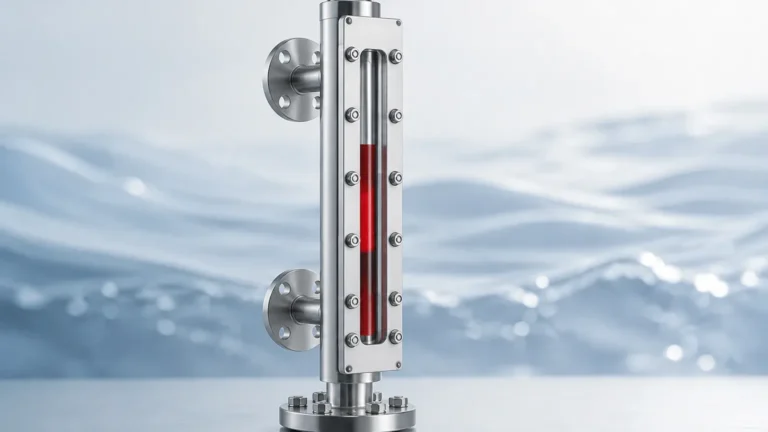
In industrial process control, the ability to visually verify liquid levels remains a critical safety and operational requirement. While electronic sensors provide remote data, the T level gauge—referring primarily to transparent and tubular local level indicators—serves as the primary manual reference point. These instruments allow operators to observe the actual fluid inside a vessel, providing a fail-safe verification method that does not rely on power or complex circuitry.
As a professional manufacturer, Welk provides a comprehensive range of Magnetic & Local Level Gauges designed to withstand the rigorous demands of water treatment, chemical processing, and oil and gas applications. Understanding the specific mechanics and selection criteria for these gauges is essential for maintaining plant safety and accuracy.
Measurement Principles of Local Level Gauges
The fundamental principle behind a T level gauge is the law of communicating vessels. When a gauge is connected to the side of a tank via top and bottom process connections, the liquid level in the gauge naturally equalizes with the level inside the tank.
Transparent (T-Type) Principle
Transparent level gauges utilize two pieces of high-strength borosilicate glass plates mounted on opposite sides of a metal chamber. This "see-through" design allows light to pass through the medium. If the liquid is clear, the operator can see the interface; if the liquid is colored or contains solids, the contrast against the background makes the level obvious. For high-pressure steam applications, mica shields are often placed between the glass and the medium to prevent the glass from eroding.
Tubular Principle
Tubular level gauges are the simplest form of local level measurement. They consist of a glass or plastic tube connected to the vessel. The liquid rises within the tube to match the tank level. While highly cost-effective, they are generally limited to lower pressure and temperature applications compared to their metal-armored transparent counterparts.
Key Types of Local Level Gauges
When selecting a T level gauge, engineers must choose between several configurations based on the visibility requirements and the nature of the fluid.
1. Transparent Level Gauges: These are the standard for observing fluid interface (the line between two different liquids) or fluid color. They are robust and can be fitted with illuminators for dark environments.
2. Reflex Level Gauges: Unlike transparent gauges, reflex gauges use a single piece of glass with longitudinal grooves. The principle of light refraction makes the liquid appear dark and the gas space appear bright, providing a high-contrast reading even for colorless liquids. However, they cannot be used to see the interface or the color of the liquid.
3. Tubular Level Gauges: These are used for atmospheric or low-pressure tanks. They offer 360-degree visibility but lack the protective metal housing required for hazardous or high-pressure chemicals.
Technical Selection Criteria
Selecting the correct gauge requires a detailed analysis of the process conditions. The following table provides a general guideline for the selection of Magnetic & Local Level Gauges and their transparent/tubular counterparts.
| Feature | Tubular Level Gauge | Transparent Level Gauge | Magnetic Level Gauge |
| :— | :— | :— | :— |
| Max Pressure | Up to 1.6 MPa (16 bar) | Up to 25 MPa (250 bar) | Up to 42 MPa (420 bar) |
| Max Temperature | Up to 150°C | Up to 400°C | Up to 450°C |
| Visibility | 360° Clear Tube | Through-glass (2 sides) | External Indicator (Flaps) |
| Fluid Type | Non-hazardous/Clean | Corrosive/Steam/Interface | High Hazard/Extreme Temp |
| Maintenance | High (Glass cleaning) | Moderate (Glass/Gaskets) | Low (No glass) |
Material Compatibility
The body of the gauge must be compatible with the process medium. Welk offers bodies in Carbon Steel, SS304, SS316, and specialized alloys like Hastelloy or PTFE-lined chambers for highly aggressive acids. The glass is typically thermally toughened borosilicate, which offers excellent thermal shock resistance.
Installation Considerations
Proper installation of a T level gauge is paramount to ensuring accurate readings and operator safety.
Orientation and Alignment
The gauge must be installed perfectly vertical. Any tilt can lead to inaccurate level readings or put mechanical stress on the glass, leading to premature failure. The center-to-center distance (C-to-C) between the tank nozzles must match the gauge dimensions precisely.
Valve Configurations
Most industrial installations require isolation valves (gauge cocks) at the top and bottom connections.
* Offset Valves: These allow for easier cleaning of the gauge glass without removing the entire unit from the tank.
* Safety Ball Checks: A critical safety feature. If the glass tube or plate breaks, the sudden rush of fluid pushes a stainless steel ball against a seat, automatically sealing the gauge and preventing a major leak.
Thermal Expansion
In high-temperature applications, the metal body of the gauge and the tank will expand at different rates. Expansion loops or flexible mounting arrangements may be necessary to prevent the gauge from being subjected to bending moments that could shatter the glass.

Limitations and Risks
While T level gauges are reliable, they have inherent limitations that must be managed:
* Glass Fragility: Even toughened borosilicate glass is susceptible to mechanical impact and thermal shock. In hazardous areas, magnetic level gauges are often preferred because they contain the fluid within a metal pressure chamber.
* Fouling and Scaling: If the liquid is dirty or prone to crystallization, the glass will become obscured. This requires regular cleaning, which involves isolating the gauge and potentially exposing maintenance personnel to the process fluid.
* Visibility Issues: For clear liquids in transparent gauges, it can sometimes be difficult to distinguish between a full gauge and an empty one. In such cases, adding a floating ball or switching to a reflex-type gauge is recommended.
Maintenance and Safety Procedures
Regular maintenance ensures the longevity of the instrument and the safety of the plant.
1. Gasket Replacement: Gaskets should be replaced whenever the gauge is disassembled for cleaning. Reusing gaskets often leads to leaks once the system is repressurized.
2. Torquing Sequence: When installing transparent glass plates, bolts must be tightened in a specific cross-pattern sequence using a torque wrench. Uneven pressure is the leading cause of glass breakage during startup.
3. Steam Cutting: In steam boiler applications, even small leaks can lead to "steam cutting," where the high-velocity vapor erodes the metal sealing surfaces. Leaks must be addressed immediately.
Frequently Asked Questions (FAQs)
Q: Can a T level gauge be used for cryogenic applications?
A: Yes, but it requires a non-frosting acrylic extension. This extension prevents ice from building up over the glass, which would otherwise obscure the view of the liquid level.
Q: What is the difference between a T level gauge and a magnetic level gauge?
A: A T level gauge (transparent or tubular) allows you to see the actual liquid through glass. A magnetic level gauge uses a float inside a metal chamber that moves an external indicator. Magnetic gauges are safer for high-pressure or toxic fluids as there is no glass in contact with the process.
Q: How often should the glass be inspected?
A: In corrosive services, glass should be inspected every 6 to 12 months for signs of thinning or "clouding." If the glass loses its transparency or shows surface pitting, it must be replaced immediately.
Q: What are the standard connection sizes?
A: Most industrial gauges use DN20 or DN25 (3/4" or 1") flanged connections, though NPT or socket weld connections are available for specific applications.
Conclusion
The T level gauge remains a staple in industrial automation and process safety. Whether utilized as a primary indicator or a secondary backup to radar or ultrasonic sensors, its simplicity and reliability are unmatched for local visual verification. By selecting the appropriate materials and adhering to strict installation standards, operators can ensure long-term accuracy and safety in their level measurement tasks.
For complex applications involving high pressures or hazardous chemicals, exploring the full range of Magnetic & Local Level Gauges is recommended to find the most robust solution for your specific project requirements.