55 Gallon Drum Level Sensor
55 Gallon Drum Level Sensor
In industrial environments, the 55-gallon drum (approximately 208 liters) remains the standard vessel for storing, transporting, and dispensing chemicals, lubricants, fuels, and food-grade ingredients. Efficiently managing these inventories requires precise measurement to prevent process interruptions, avoid hazardous overflows, and optimize supply chain logistics. Selecting the appropriate 55 gallon drum level sensor involves understanding the physical properties of the liquid, the container's geometry, and the specific requirements of the industrial application.
Industrial level measurement instruments, such as those featured on the Welk Main Page, provide the accuracy and reliability necessary for these tasks. This guide examines the primary measurement principles, selection criteria, and installation best practices for drum level monitoring.
Measurement Principles for Drum Level Monitoring
Before selecting a sensor, it is essential to understand the physics behind the most common measurement technologies used in small-vessel applications.
Ultrasonic Level Measurement
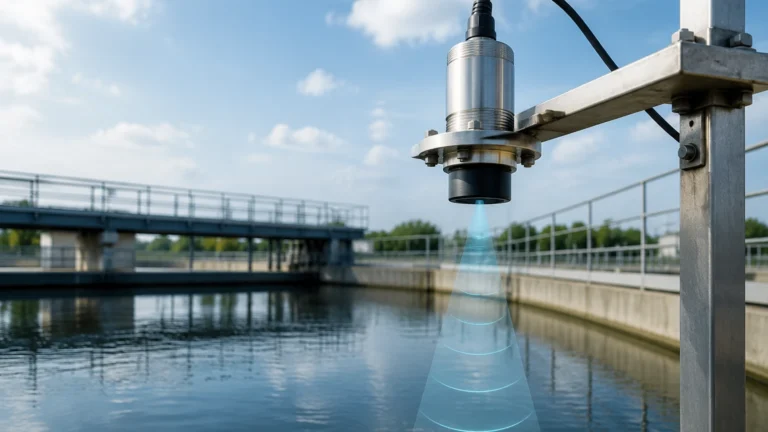
Ultrasonic sensors operate on the Time-of-Flight (ToF) principle. The sensor emits a high-frequency sound pulse that travels through the air, reflects off the liquid surface, and returns to the transducer. The device calculates the distance based on the time elapsed and the speed of sound.
For a 55-gallon drum, which typically stands about 880 mm (34.6 inches) tall, ultrasonic sensors are popular because they are non-contact. However, they are sensitive to surface foam, heavy vapors, and extreme temperature fluctuations which can alter the speed of sound.
Radar (Microwave) Level Measurement
Radar sensors also use the ToF principle but employ electromagnetic waves instead of sound. High-frequency radar (such as 80 GHz) is particularly effective for drums because the narrow beam angle minimizes interference from the drum walls. Unlike ultrasonic waves, radar signals are unaffected by vacuum, pressure, or temperature changes, making them suitable for volatile chemicals stored in drums.
Hydrostatic Pressure Measurement
Hydrostatic sensors measure the pressure exerted by the liquid column at the bottom of the drum. The pressure is directly proportional to the liquid's height and density (P = ρgh). These sensors can be submersible (dropped to the bottom of the drum) or mounted externally via a bottom bung if the drum is configured for gravity dispensing. This method is highly reliable for liquids with constant density.
Capacitance Level Measurement
Capacitance sensors detect changes in the electrical capacitance between two electrodes (or one electrode and the tank wall) as the liquid level rises. This is an effective solution for non-conductive liquids like oils. However, it requires the sensor probe to be in physical contact with the media, which may not be ideal for highly corrosive or sticky substances.
Magnetic Float and Reed Switches
For simple point-level detection (e.g., "drum full" or "drum empty" alerts), magnetic float switches are a cost-effective mechanical solution. A float containing a magnet moves along a stem, triggering reed switches at specific heights. While reliable for discrete alerts, they do not provide the continuous level data required for inventory management.
Comparison of Sensor Technologies
The following table provides a comparative overview of the most common technologies used for a 55 gallon drum level sensor.
| Technology | Contact Type | Accuracy | Best For | Limitations |
| :— | :— | :— | :— | :— |
| Ultrasonic | Non-contact | ±0.25% to 0.5% | Water-based liquids, general chemicals | Foam, heavy vapors, dead zones |
| Radar (80 GHz) | Non-contact | ±2 mm | Volatile liquids, high precision | Higher initial cost |
| Hydrostatic | Contact | ±0.1% to 0.5% | Oils, fuels, consistent density liquids | Density changes affect accuracy |
| Capacitance | Contact | ±1% | Non-conductive oils, solids | Requires calibration for different media |
| Float Switch | Contact | N/A (Point) | High/Low alarms, pump control | Moving parts, buildup risk |
Selection Criteria for 55 Gallon Drum Level Sensors
Choosing the right 55 gallon drum level sensor requires a detailed analysis of the operational environment. Engineers should consider the following factors:
1. Chemical Compatibility
Drums often contain aggressive chemicals. Sensors must be constructed from materials that resist corrosion. Common materials include PVDF (Polyvinylidene fluoride) or PTFE (Teflon) for non-contact sensor faces, and 316L Stainless Steel or Hastelloy for contact-based probes. Always cross-reference the liquid's Material Safety Data Sheet (MSDS) with the sensor's wetted materials.
2. The "Dead Zone" or Blocking Distance
Every non-contact sensor (ultrasonic and radar) has a "dead zone" immediately below the transducer where measurement is impossible. For a standard 208-liter drum, a dead zone of 100 mm to 200 mm means the sensor cannot measure the top 10-20% of the drum. If the application requires monitoring the drum until it is completely full, a sensor with a minimal dead zone or a different measurement principle (like hydrostatic) is required.
3. Mounting and Connection Size
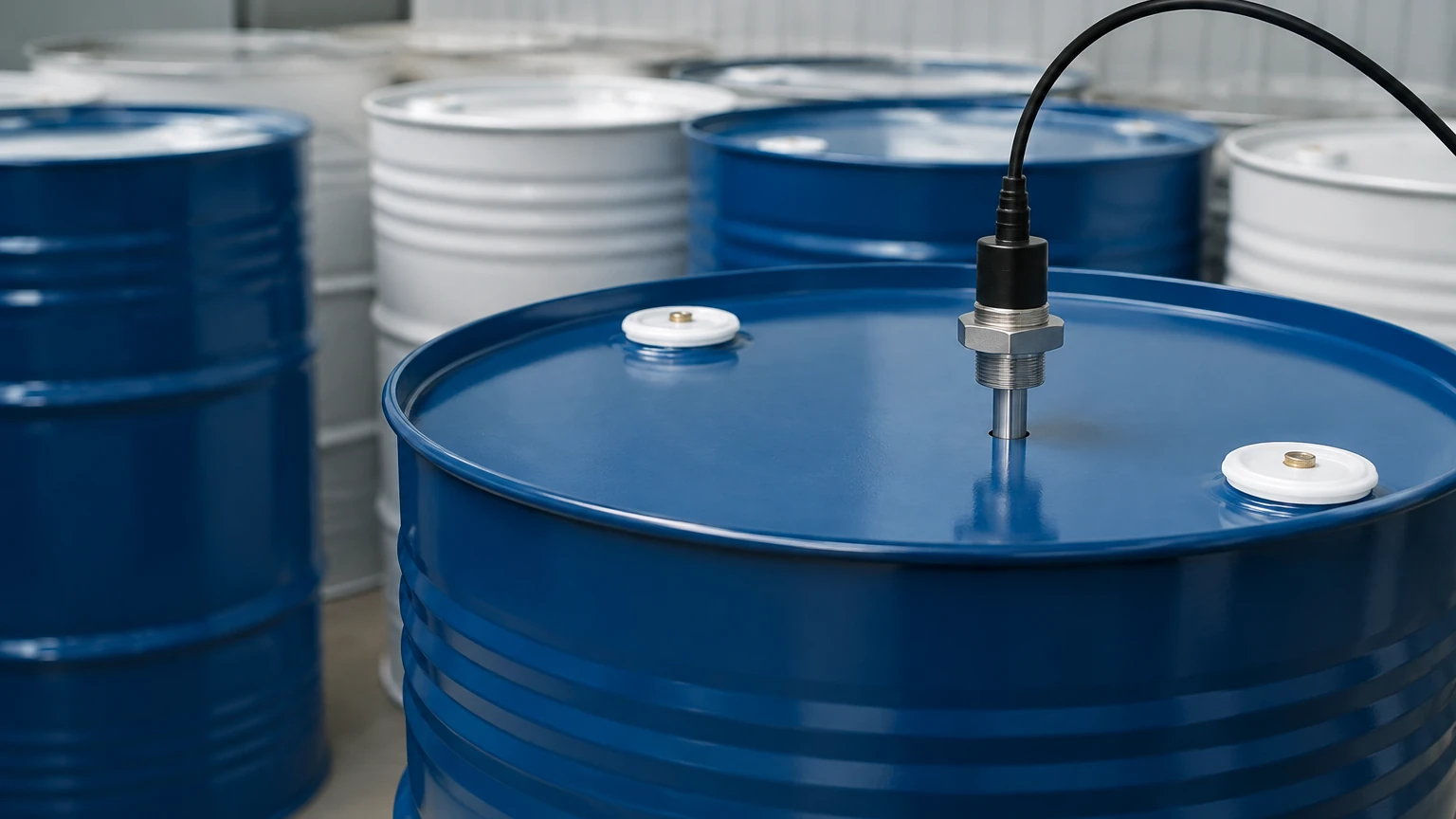
Standard industrial drums typically feature two openings (bungs): a 2-inch NPT/BSP thread and a smaller 3/4-inch NPT/BSP thread. Most professional-grade sensors are designed to fit the 2-inch bung. It is critical to ensure the sensor's threading matches the drum's bung to maintain a seal, especially if the liquid emits hazardous vapors.
4. Output Signal and Integration
For B2B industrial automation, the sensor must communicate with a PLC (Programmable Logic Controller) or a cloud-based monitoring system. Common outputs include:
* 4-20 mA Analog: Standard for long-distance signal transmission.
* RS485/Modbus: Ideal for digital integration and multi-sensor networks.
* Wireless (LoRaWAN/NB-IoT): Preferred for remote warehouse monitoring where wiring is impractical.
Installation Guidelines and Best Practices
Proper installation is as critical as sensor selection for ensuring long-term accuracy and safety.
1. Vertical Alignment: Non-contact sensors must be mounted perfectly vertical. If the sensor is tilted, the signal may reflect off the side walls of the drum rather than the liquid surface, leading to false readings.
2. Avoid Obstructions: Ensure the sensor's signal path is clear of suction pipes, agitators, or the drum's internal seams. In a narrow 55-gallon drum, the beam angle of the sensor is a vital specification; a narrower beam (e.g., 3° to 8°) is less likely to hit the side walls.
3. Venting Requirements: If using a non-contact sensor on a sealed drum, ensure there is adequate venting. A vacuum or pressure buildup during dispensing can distort the drum's shape or, in the case of ultrasonic sensors, change the air density and affect accuracy.
4. Submersible Cable Securing: When using hydrostatic submersible sensors, ensure the cable is secured at the top of the drum to prevent the sensor from shifting. The vent tube within the cable must remain unobstructed to allow for atmospheric pressure compensation.
Limitations and Technical Constraints
While modern sensors are highly advanced, certain constraints apply to 55-gallon drum applications:
* Agitation and Turbulence: If the drum is being stirred or if liquid is being pumped in at high velocity, the surface may become turbulent. This can cause erratic readings in ultrasonic and radar sensors. Using a stilling well (a pipe inside the drum that dampens surface movement) can mitigate this.
* Viscosity: High-viscosity liquids (like heavy resins or honey) can cling to contact-based probes (capacitance or floats), causing "hang-up" errors where the sensor indicates a higher level than actually exists.
* Environmental Noise: Ultrasonic sensors can be affected by high-frequency acoustic noise from nearby machinery. In such environments, radar is generally the superior choice.
Frequently Asked Questions
Q: Can I use one sensor for different types of liquids?
A: It depends on the technology. Radar and ultrasonic sensors are generally versatile across different liquids as long as they are non-foaming. Hydrostatic and capacitance sensors require recalibration if the liquid's density or dielectric constant changes significantly.
Q: How do I monitor drums in a hazardous (Ex) area?
A: You must use sensors with Intrinsic Safety (IS) or Explosion-Proof ratings (such as ATEX or IECEx). These sensors are designed to operate with limited electrical energy to prevent the ignition of flammable vapors.
Q: Is it possible to measure the level without opening the drum?
A: Yes, certain high-frequency radar sensors can measure through plastic (HDPE) drum lids. However, this is not possible with metal drums. For metal drums, the sensor must be installed through a bung hole.
Q: What is the typical lifespan of a 55 gallon drum level sensor?
A: In a well-maintained environment with compatible media, a high-quality solid-state sensor (radar or ultrasonic) can last 10 years or more. Contact-based sensors may require more frequent cleaning or replacement depending on the corrosivity of the liquid.
Conclusion
Implementing a reliable 55 gallon drum level sensor solution is a foundational step in modern industrial inventory management. By understanding the nuances of ultrasonic, radar, and hydrostatic technologies, facilities can reduce waste, improve safety, and ensure process continuity. For organizations seeking specific technical specifications or customized measurement solutions, exploring the comprehensive range of instruments on the Welk Main Page provides the necessary engineering data to make an informed procurement decision.