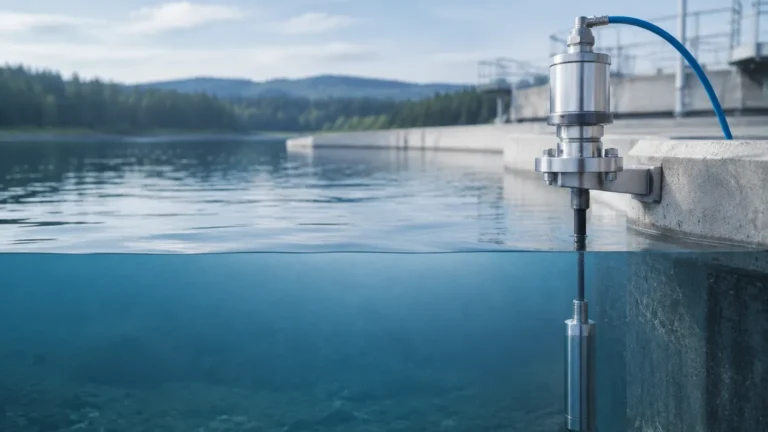
Ammonia Analyzer
Ammonia Analyzer
In industrial process control and environmental monitoring, the ammonia analyzer serves as a critical instrument for ensuring safety, efficiency, and regulatory compliance. Ammonia (NH₃) is a versatile yet hazardous chemical used extensively in refrigeration, fertilizer production, chemical synthesis, and NOx reduction systems (SCR/SNCR). However, monitoring ammonia is rarely a standalone task; in B2B industrial environments, concentration analysis must be paired with precise inventory management. For engineers and plant managers, understanding the synergy between chemical analysis and level measurement is essential for maintaining a stable process.
While an ammonia analyzer quantifies the presence of the gas or liquid concentration, industrial level measurement instruments ensure that the storage tanks containing these substances are monitored for volume, preventing overfills and ensuring a continuous supply. This guide explores the measurement principles of ammonia analyzers, their integration with level measurement technologies, and the practical considerations for selecting the right equipment for harsh industrial environments.
Measurement Principles of Ammonia Analyzers
Ammonia analyzers are categorized based on the phase of the medium they monitor—either gas-phase ammonia (often in flue gases or ambient air) or aqueous ammonia (dissolved in water). Each application requires a specific sensing technology to provide accurate data.
1. Tunable Diode Laser Absorption Spectroscopy (TDLAS)
TDLAS is a leading technology for gas-phase ammonia analysis, particularly in Selective Catalytic Reduction (SCR) systems. It works by emitting a laser beam at a specific wavelength that corresponds to the absorption line of the ammonia molecule. As the laser passes through the gas, the intensity of the light decreases in proportion to the ammonia concentration.
* Advantages: High selectivity, rapid response time (seconds), and non-contact measurement which reduces maintenance in dusty or corrosive flue gases.
* Applications: Stack monitoring, slip ammonia detection in power plants.
2. Electrochemical Sensing
Electrochemical ammonia analyzers utilize a gas-diffusion electrode. When ammonia gas permeates the membrane, a chemical reaction occurs at the electrode, generating an electrical current proportional to the gas concentration.
* Advantages: Compact, relatively low cost, and ideal for portable leak detection or ambient air monitoring.
* Limitations: The sensors have a finite lifespan and can be "poisoned" by high concentrations of ammonia or other cross-sensitive gases.
3. Colorimetric (Wet Chemistry)
For liquid-phase ammonia (NH₃-N) in wastewater treatment, colorimetric analyzers are common. These systems automate the phenate or salicylate method, where reagents are added to a water sample to produce a color change. The intensity of the color is measured photometrically.
* Advantages: Highly accurate for low-level detection in water.
* Limitations: Requires a steady supply of chemical reagents and regular cleaning of the fluidic pathways.
The Role of Level Measurement in Ammonia Storage
Monitoring the concentration via an ammonia analyzer is only one half of the safety equation. Ammonia is frequently stored as anhydrous ammonia (a liquefied gas under pressure) or aqueous ammonia (ammonium hydroxide). In both cases, the storage vessels require robust level measurement to prevent hazardous incidents.
Radar Level Measurement
Non-contact radar (typically 80GHz) is the preferred method for ammonia storage. Radar sensors emit high-frequency microwave pulses that reflect off the liquid surface. Because ammonia has a relatively low dielectric constant (εr ≈ 15 to 25 depending on temperature), high-frequency radar provides the necessary sensitivity to detect the surface reliably.
Guided Wave Radar (GWR)
In applications where the ammonia may boil or create heavy foam, Guided Wave Radar is utilized. A physical probe guides the microwave signal to the liquid surface. This technology is less affected by vapor space turbulence and changes in gas composition above the liquid.
Hydrostatic Level Transmitters
For atmospheric aqueous ammonia tanks, hydrostatic pressure sensors provide a cost-effective solution. By measuring the pressure exerted by the liquid column, the level can be calculated based on the known density of the ammonia solution. However, for pressurized anhydrous ammonia, differential pressure (DP) transmitters with chemical seals are required to compensate for the high headspace pressure.
Selection Table: Ammonia Analysis and Level Technologies
The following table provides a comparison of common technologies used in ammonia-related applications to assist in the selection process.
| Technology | Application Type | Primary Benefit | Key Limitation |
| :— | :— | :— | :— |
| TDLAS Analyzer | Gas (Stack/Process) | No contact with gas; high precision | Higher initial capital cost |
| Electrochemical | Gas (Safety/Leak) | Portable and low cost | Sensor drift; requires calibration |
| Colorimetric | Liquid (Wastewater) | High sensitivity for NH₃-N | High maintenance; reagent use |
| 80GHz Radar | Level (Storage Tank) | Non-contact; ignores vapor | Requires minimum dielectric constant |
| Guided Wave Radar | Level (Process Vessel) | Handles foam and turbulence | Probe must be compatible with NH₃ |
| Hydrostatic | Level (Aqueous Tank) | Simple installation | Density changes affect accuracy |
Installation Considerations for Ammonia Systems
Installing an ammonia analyzer or a level meter in an ammonia environment requires strict adherence to material science and safety standards. Ammonia is highly corrosive to copper, brass, and zinc-based alloys. Therefore, all wetted parts must be constructed from compatible materials.
1. Material Compatibility: Use 316L Stainless Steel, Hastelloy, or PTFE (Teflon) for all sensors, probes, and seals. Avoid any yellow metals in the vicinity of the ammonia source.
2. Hazardous Area Certification: Ammonia is flammable under specific conditions and is highly toxic. Instruments should carry ATEX, IECEx, or UL/CSA explosion-proof certifications for Zone 0 or Zone 1 environments.
3. Vapor Management: In anhydrous ammonia tanks, the vapor space is often saturated. For radar level meters, this can lead to condensation on the antenna. Selecting a sensor with a PTFE drip-off antenna or a purging connection is vital to prevent signal loss.
4. Temperature Compensation: Ammonia density changes significantly with temperature. If using hydrostatic level measurement, integrated temperature compensation is necessary to maintain accuracy within ±0.5% of the span.

Practical Limitations and Risks
When deploying an ammonia analyzer or level sensor, engineers must account for several physical risks:
* The "Cold Wall" Effect: In refrigerated ammonia storage (typically at -33°C), the temperature difference between the tank and the ambient air can cause heavy frost or ice buildup on external sensor components. Insulation and heat tracing of the mounting nozzle may be required.
* Gas Cross-Sensitivity: In gas-phase analysis, other nitrogen-based gases or moisture can interfere with electrochemical sensors. TDLAS is generally immune to this, making it the preferred choice for complex gas matrices.
* Low Dielectric Constant: Anhydrous ammonia's low dielectric constant means the radar signal reflection is weaker than that of water. Ensuring the radar beam is focused and avoiding internal tank obstructions (like ladders or agitators) is critical for a stable signal.
Frequently Asked Questions (FAQs)
Q: Can I use an ultrasonic level sensor for anhydrous ammonia?
A: It is generally not recommended. Ultrasonic signals are significantly affected by the high-density ammonia vapors and pressure variations in the tank headspace, which can lead to signal attenuation or false readings. Radar is a more reliable choice.
Q: How often should an ammonia analyzer be calibrated?
A: For electrochemical safety sensors, calibration should occur every 3 to 6 months. TDLAS systems are more stable and may only require a calibration check annually. Always follow the manufacturer’s specific maintenance protocol.
Q: Is aqueous ammonia easier to measure than anhydrous ammonia?
A: Yes, from a level measurement perspective. Aqueous ammonia is typically stored at lower pressures and ambient temperatures, allowing for standard hydrostatic or non-contact radar sensors, provided the materials are corrosion-resistant.
Conclusion
Successful ammonia management requires a multi-faceted approach. While the ammonia analyzer provides the chemical data necessary for process optimization and environmental compliance, reliable level measurement ensures the physical security of the supply chain. By understanding the measurement principles of both systems and selecting materials that can withstand the corrosive nature of NH₃, industrial operators can achieve long-term accuracy and safety.
For more information on selecting the appropriate instrumentation for your facility, you can Review product options and application support to find solutions tailored to the specific demands of ammonia handling and industrial automation. Whether you are managing an SCR system or a large-scale chemical storage farm, the integration of high-precision analysis and level monitoring is the foundation of modern process excellence.