Auto Sampler
Auto Sampler
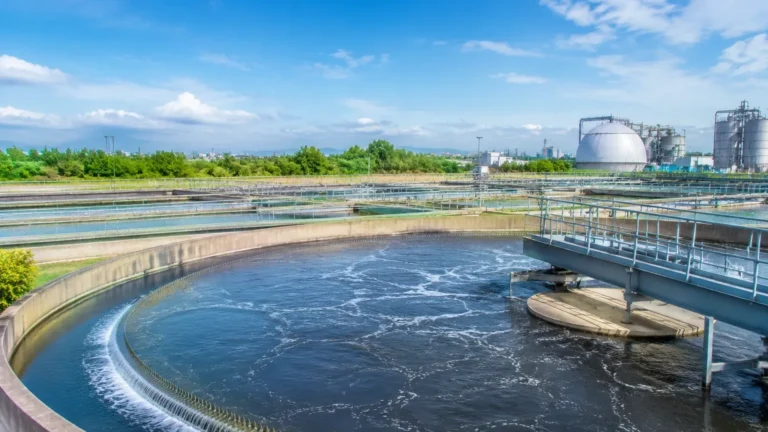
In industrial process monitoring and wastewater management, the accuracy of laboratory analysis depends entirely on the representativeness of the collected sample. An auto sampler (automatic sampler) is a specialized instrument designed to collect liquid samples from a source—such as a tank, open channel, or pipe—at predetermined intervals or in response to specific process triggers. By removing human error and ensuring consistency, these devices are essential for regulatory compliance, process optimization, and environmental protection.
For engineers and plant managers, the auto sampler is rarely a standalone tool. Its effectiveness is deeply intertwined with level measurement technologies. Accurate sampling often requires precise data from radar level meters or ultrasonic sensors to determine flow rates or tank volumes, ensuring that the samples collected reflect the true state of the process. This guide explores the principles, selection criteria, and integration of auto samplers within industrial level measurement frameworks.
Measurement Principles and Triggering Mechanisms
Before selecting an auto sampler, it is vital to understand the principles that govern how and when a sample is taken. Sampling is generally categorized into three main methodologies, two of which rely heavily on external instrumentation like those found on the Main Page of industrial measurement catalogs.
Time-Proportional Sampling
This is the simplest form of automation. The auto sampler is programmed to collect a fixed volume of liquid at regular time intervals (e.g., 100 ml every 30 minutes). While easy to implement, it does not account for variations in flow rate, which can lead to skewed data if the concentration of pollutants changes during high-flow events.
Flow-Proportional Sampling
In most industrial wastewater applications, flow-proportional sampling is the gold standard. Here, the sampler takes a volume of liquid that is proportional to the total flow volume. To achieve this, the auto sampler must receive a signal from a flow meter or a level transmitter.
For example, an ultrasonic level sensor mounted over a weir or flume measures the head height. The level meter converts this height into a flow rate using pre-programmed hydraulic formulas. The level meter then sends a pulse (e.g., one pulse per 1,000 liters) or a 4-20mA analog signal to the auto sampler. The sampler uses this data to ensure that more samples are taken during peak flow periods and fewer during low flow, providing a truly representative composite sample.
Event-Based Sampling
Event-based sampling is triggered by specific conditions, such as a pH spike, a temperature threshold, or a sudden rise in liquid level. High-accuracy radar level meters are often used to detect rapid level changes in storm basins. When the level exceeds a set point, the auto sampler is activated to capture the initial "first flush" of runoff, which often contains the highest concentration of contaminants.
Key Components of an Auto Sampler System
An industrial auto sampler consists of several critical subsystems that must work in harmony to maintain sample integrity:
1. The Controller: The "brain" of the unit that handles programming, sensor inputs (from level or flow meters), and data logging.
2. The Intake System: Usually a peristaltic pump or a vacuum-compression system. Peristaltic pumps are preferred for their ability to handle suspended solids without cross-contamination, as the liquid only touches the internal tubing.
3. Sample Distribution: A motorized arm that directs the sample into either a single large composite container or a series of discrete bottles (e.g., 24 bottles for hourly analysis).
4. Cooling System: To prevent biological degradation or chemical changes, samples must often be kept at 4°C (±2°C). Stationary samplers use compressor-based refrigeration, while portable units may use ice or thermoelectric cooling.
Technical Comparison: Portable vs. Stationary Samplers
Choosing between a portable and a stationary auto sampler depends on the application environment and the duration of the monitoring project.
| Feature | Portable Auto Sampler | Stationary Auto Sampler |
| :— | :— | :— |
| Power Source | Battery or Solar | Mains Power (110V/220V) |
| Cooling | Passive (Ice) or Active (Battery) | Active Refrigeration (Compressor) |
| Housing | Lightweight Plastic/NEMA 4X/6 | Stainless Steel or Heavy-duty Plastic |
| Typical Use | Site audits, temporary monitoring | Permanent discharge points, WWTP |
| Sample Capacity | Limited (e.g., 1 x 10L or 24 x 500ml) | High (e.g., 1 x 20L or 24 x 1L) |
| Integration | Wireless or simple pulse input | Full PLC integration, 4-20mA, Modbus |
Integration with Level Measurement Instruments
As a professional manufacturer of industrial level measurement instruments, Welk emphasizes the synergy between level sensors and sampling accuracy. When configuring a system, the following level measurement technologies are typically paired with an auto sampler:
Ultrasonic Level Sensors
Non-contact ultrasonic sensors are the most common choice for open-channel flow monitoring. They are cost-effective and provide the necessary accuracy for triggering flow-proportional samplers in flumes and weirs. However, they can be affected by heavy foam or steam.
Radar Level Meters
For more challenging environments where steam, dust, or fluctuating temperatures exist, 80GHz high-frequency radar level meters offer superior precision. These sensors provide a stable signal to the auto sampler, ensuring that sampling triggers are based on actual level changes rather than environmental noise. You can review these advanced sensor options on the Main Page.
Hydrostatic Level Transmitters
In deep wells or pressurized tanks where top-down non-contact measurement is not feasible, hydrostatic pressure sensors provide reliable level data. These are often used in tank farm applications to trigger sampling when a specific volume is reached during a mixing or transfer process.

Installation Considerations and Best Practices
To ensure the longevity of the auto sampler and the accuracy of the samples, follow these installation guidelines:
* Suction Head and Lift: The vertical distance between the liquid surface and the sampler pump (suction lift) should ideally be kept under 6 meters (approx. 20 feet). While some pumps can handle 8 meters, the strain on the motor increases, and the transport velocity may drop below the required 0.5 m/s needed to keep solids in suspension.
* Intake Placement: The intake strainer should be placed in the center of the flow stream, at approximately 60% of the liquid depth. Avoid placing it too close to the bottom to prevent sucking up heavy grit, and avoid the very top to prevent capturing floating oils or debris.
* Tubing Slope: Ensure the suction line has a continuous downward slope toward the source. This allows the line to drain completely between samples, preventing cross-contamination and freezing in cold climates.
* Signal Calibration: Ensure the 4-20mA output from your level meter is correctly scaled to the input of the auto sampler. A mismatch here will result in sampling that is not truly proportional to the flow.
Limitations and Common Risks
While auto samplers are robust, they are not without limitations:
1. Suspended Solids: Very large particles or fibrous materials can clog the intake strainer or the internal tubing. In these cases, a wide-bore intake and specialized strainers are required.
2. Volatile Organic Compounds (VOCs): Standard peristaltic sampling can cause "off-gassing" of volatile compounds due to the vacuum created during suction. If VOC analysis is the primary goal, specialized bladder pumps or vacuum-compression samplers may be necessary.
3. Maintenance Neglect: The most common cause of failure is the degradation of the pump tubing. Peristaltic tubing is a consumable and must be replaced regularly to maintain consistent sample volumes.
Frequently Asked Questions (FAQ)
Q: How often should I calibrate my auto sampler?
A: The volume accuracy should be checked monthly. However, the level meter or flow meter triggering the sampler should be calibrated at least every six months to ensure the flow-proportional logic remains accurate.
Q: Can one auto sampler monitor multiple channels?
A: Standard units are designed for one source. However, some advanced stationary models can be equipped with multiple intake valves, though this increases the risk of cross-contamination and requires rigorous purging cycles.
Q: What material should the sample bottles be?
A: This depends on the analytes. Polyethylene (PE) is standard for most general parameters and metals. Glass bottles are required for organic compounds, pesticides, and oil/grease analysis to prevent the plastic from leaching into or absorbing the sample.
Q: How does the auto sampler handle a power failure?
A: Most modern controllers have internal battery backups to retain programming. For the actual sampling and refrigeration, a stationary unit will require an Uninterruptible Power Supply (UPS) if continuous operation is critical during outages.
Conclusion
The auto sampler is a vital link between the physical process and laboratory analysis. By integrating these devices with high-quality level measurement instruments, such as the radar and ultrasonic sensors provided by Welk, industrial operators can ensure their sampling programs are both accurate and compliant. Whether for municipal wastewater, chemical processing, or environmental monitoring, the combination of precise level detection and automated sampling remains the industry standard for process transparency. For more information on the level sensors that drive these systems, visit the Main Page to explore technical specifications and application support.