Ammonia Sensor for Water
Ammonia Sensor for Water
In industrial and municipal water treatment, the measurement of nitrogen compounds is a critical requirement for both process control and environmental compliance. Among these compounds, ammonia ($NH_3$) and its ionized form, ammonium ($NH_4^+$), serve as primary indicators of water quality. Selecting the appropriate ammonia sensor for water requires a deep understanding of the chemical equilibrium of nitrogen, the specific demands of the application environment, and the integration of these sensors with broader process automation systems.
This guide explores the underlying principles of ammonia measurement, provides technical criteria for sensor selection, and discusses how chemical sensing integrates with physical parameters like liquid level to ensure comprehensive process safety and efficiency.
Understanding Ammonia Chemistry in Water
Before selecting a sensor, it is essential to understand that "total ammonia" in water exists in two forms: un-ionized ammonia ($NH_3$) and the ammonium ion ($NH_4^+$). The relationship between these two is a dynamic equilibrium governed primarily by pH and temperature.
At a neutral pH of 7.0 and a temperature of 20°C, nearly all ammonia exists as the ammonium ion ($NH_4^+$). As the pH rises (becoming more alkaline), the equilibrium shifts toward the un-ionized form ($NH_3$). This distinction is vital because $NH_3$ is highly toxic to aquatic life, whereas $NH_4^+$ is generally less harmful. Most electronic sensors measure the ammonium ion ($NH_4^+$) and then use integrated pH and temperature data to calculate the concentration of toxic $NH_3$ or the Total Ammonia Nitrogen (TAN).
Principal Technologies for Ammonia Sensing
There are three primary methods used in modern industrial ammonia sensors for water. Each has distinct advantages depending on the turbidity, chemical background, and maintenance capabilities of the facility.
1. Ion-Selective Electrodes (ISE)
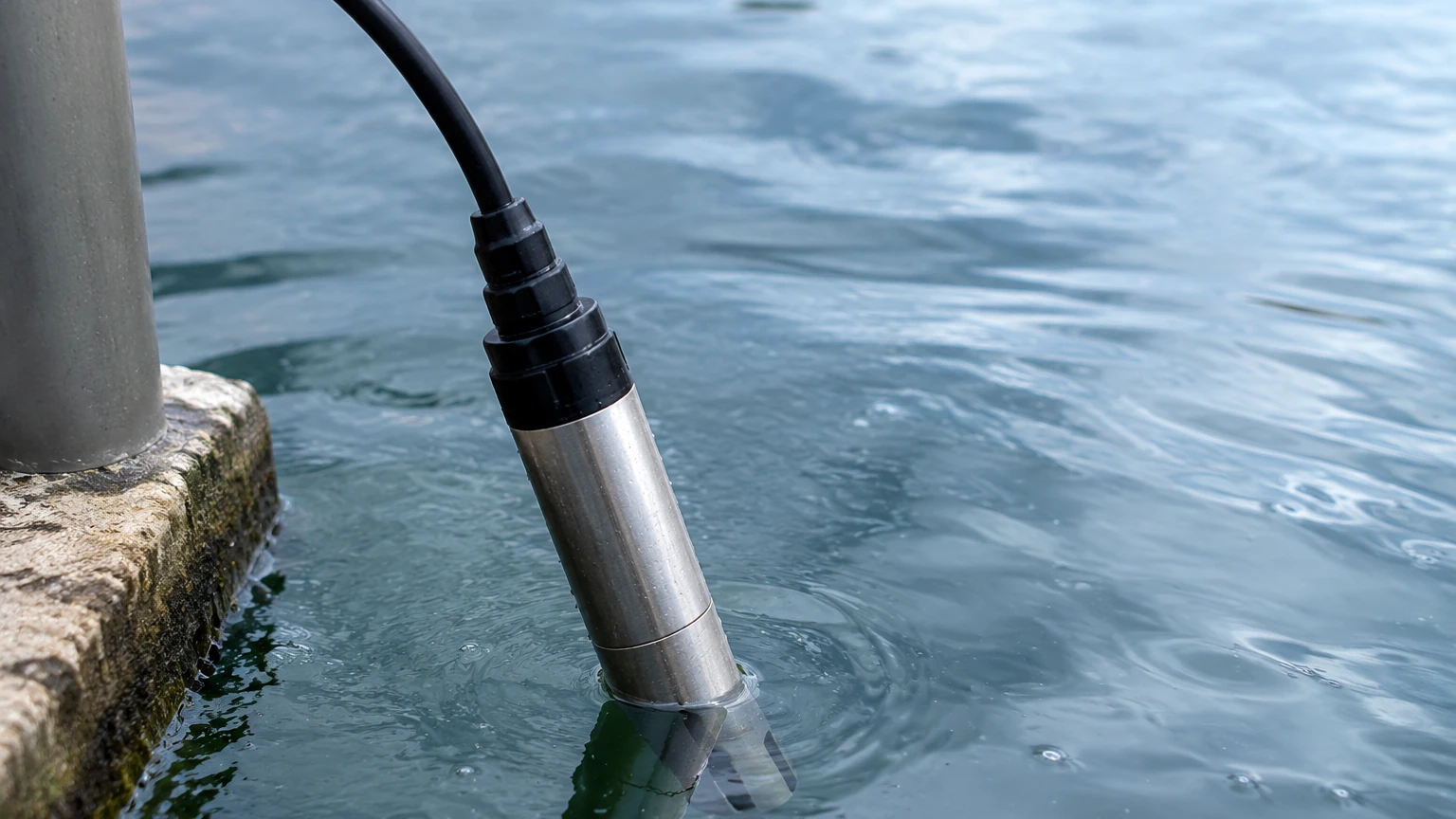
ISE technology is the most common method for continuous, in-line monitoring. These sensors utilize a specialized membrane that is selectively permeable to ammonium ions. When the sensor is submerged, a potential difference is created across the membrane, which is proportional to the log of the ammonium ion activity in the water.
* Advantages: Fast response times, relatively low initial cost, and the ability to be installed directly in tanks or pipes.
* Limitations: ISE sensors are susceptible to interference from other cations, particularly potassium ($K^+$), which has a similar ionic radius to ammonium. They also require frequent calibration and replacement of the electrode cartridge (typically every 6 to 12 months).
2. Colorimetric Analyzers
Colorimetric sensing involves mixing a water sample with specific chemical reagents (such as Nessler’s reagent or the Phenate method) to produce a color change. The intensity of the color is measured photometrically to determine the ammonia concentration.
* Advantages: Extremely high accuracy and precision, making them the gold standard for regulatory reporting. They are less affected by ionic interference compared to ISE.
* Limitations: High maintenance requirements due to the need for reagent replenishment and the management of chemical waste. These are typically "cabinet-style" analyzers rather than simple probe-style sensors.
3. Amperometric Gas-Sensing Probes
These sensors use a gas-permeable membrane to separate the water sample from an internal electrolyte solution. By raising the pH of the sample at the membrane interface (often using a caustic addition), the ammonium is converted to ammonia gas, which diffuses through the membrane and causes a change in the electrolyte's pH or current.
* Advantages: Highly specific to ammonia and less prone to interference from dissolved solids or metal ions.
* Limitations: More complex mechanical design and slower response times compared to ISE.
Critical Selection Criteria for Industrial Sensors
Choosing the right ammonia sensor for water involves balancing the need for accuracy with the operational realities of the site. Use the following table to compare the primary technologies based on common industrial requirements.
Technology Comparison Table
| Feature | Ion-Selective Electrode (ISE) | Colorimetric Analyzer | Amperometric Gas Sensor |
| :— | :— | :— | :— |
| Measurement Range | 0.1 – 1,000 mg/L | 0.01 – 100 mg/L | 0.05 – 500 mg/L |
| Accuracy | ±5% of reading | ±2% of reading | ±3% of reading |
| Response Time | < 2 minutes | 10 – 15 minutes | 5 – 10 minutes |
| Maintenance Frequency | Bi-weekly/Monthly | Weekly (Reagents) | Monthly |
| Interference Risk | High (Potassium) | Low | Low |
| Installation Type | Immersion / In-line | Bypass / Sampling | Immersion / Bypass |
Key Evaluation Factors
1. Concentration Range: For wastewater influent, sensors must handle high concentrations (30–100 mg/L), whereas effluent monitoring requires high sensitivity at low levels (<1 mg/L).
2. Water Matrix: In aquaculture, water is relatively clean, making ISE a viable choice. In industrial wastewater with high salinity or complex chemical backgrounds, colorimetric or gas-sensing methods are preferred to avoid interference.
3. Compensation Requirements: Ensure the sensor system includes high-quality pH and temperature probes. Without accurate compensation, an ammonium reading cannot be reliably converted to Total Ammonia Nitrogen.
Installation and Calibration Protocols
Proper installation is as critical as the sensor technology itself. Inaccurate readings are often the result of poor placement rather than sensor failure.
Positioning and Flow
Sensors should be installed in areas with representative flow. In large aeration basins, avoid "dead zones" where ammonia may accumulate or areas directly adjacent to chemical dosing inlets. For ISE sensors, a minimum flow velocity (typically 0.1 m/s to 0.5 m/s) is often required to prevent the depletion of ions at the membrane surface, though excessive turbulence should be avoided to prevent air bubble interference.
Cleaning Systems
Biofouling is the primary cause of drift in ammonia sensors for water. In B2B and industrial contexts, it is highly recommended to select sensors equipped with automated cleaning systems. These may include:
* Compressed Air Blast: Periodically clears debris and biofilm from the sensor head.
* Mechanical Wipers: Physically scrub the membrane surface (common in ISE and optical sensors).
* Chemical Cleaning: Uses a mild acid or detergent to dissolve mineral scaling.
Calibration Frequency
Industrial sensors typically require a two-point calibration. The frequency depends on the stability of the water matrix. In stable municipal processes, monthly calibration may suffice. In volatile industrial applications, weekly verification against a laboratory standard is recommended.
The Role of Level Measurement in Ammonia Control
While the ammonia sensor for water provides the chemical concentration, effective process control requires knowing the volume of the medium being treated. This is where chemical sensing intersects with industrial level measurement.
In applications such as batch reactors or chemical dosing skids, the ammonia concentration reading is used to calculate the mass of nitrogen present. To perform this calculation, the system must know the exact liquid level to determine the total volume. For instance, in a denitrification tank, the dosage of carbon sources is proportional to the total mass of nitrogen. If the level measurement is inaccurate, the dosing will be incorrect, leading to either wasted chemicals or regulatory non-compliance.
Reliable level instrumentation, such as the radar and ultrasonic transmitters featured on the Main Page of professional measurement providers, ensures that these volumetric calculations are precise. Welk’s range of hydrostatic and non-contact radar level meters provides the foundational data needed to turn a concentration (mg/L) into a controllable mass (kg), allowing for fully automated and optimized water treatment cycles.
Maintenance and Overcoming Common Challenges
Maintaining an ammonia sensor for water requires a proactive schedule to combat the harsh environments typical of wastewater and industrial processing.
Managing Ionic Interference
As mentioned, potassium ($K^+$) is the primary interferent for ISE sensors. If your process involves high potassium levels, you must use a sensor that allows for potassium compensation. This involves adding a potassium-selective electrode to the same controller, which then mathematically subtracts the potassium "noise" from the ammonium signal.
Membrane Integrity
Membranes are the most fragile part of the sensor. In abrasive environments (e.g., water with high grit content), membranes can become pitted or torn. Regular visual inspections are necessary. A sudden jump to the sensor's maximum output often indicates a ruptured membrane, allowing the internal electrolyte to come into direct contact with the process water.
Temperature Extremes
Ammonia sensors are sensitive to temperature. While electronic compensation handles the equilibrium shift, physical temperature limits of the sensor body must be respected. Most industrial probes are rated for 0°C to 50°C. In colder climates, sensors installed in outdoor basins may require immersion heaters or protective housings to prevent freezing and damage to the internal reference elements.
Frequently Asked Questions
Q: How often should I replace the membrane in an ISE ammonia sensor?
A: In typical municipal wastewater applications, membranes last between 6 and 12 months. However, in high-fouling industrial environments or water with extreme pH levels, replacement may be required every 3 to 4 months.
Q: Can I use an ammonia sensor in saltwater or brine?
A: Standard ISE sensors struggle in high-salinity environments due to the massive interference from sodium and other ions. For saltwater applications, colorimetric analyzers or specialized gas-sensing probes are the only reliable options.
Q: What is the difference between $NH_3$-N and $NH_4^+$?
A: $NH_3$-N (Ammonia-Nitrogen) refers to the weight of the nitrogen atom within the ammonia molecule. This is the standard unit used for regulatory reporting. $NH_4^+$ is the ammonium ion itself. Most sensors measure $NH_4^+$ but are calibrated to display the result as $NH_3$-N.
Q: Does turbidity affect ammonia sensors?
A: ISE and gas-sensing probes are generally unaffected by turbidity (suspended solids) because they rely on ionic or gas diffusion. However, colorimetric analyzers require a filtered or settled sample, as high turbidity will interfere with the optical measurement of the color change.
By integrating high-quality chemical sensing with robust level measurement solutions from the Main Page of your instrumentation suite, plant operators can achieve a level of process transparency that reduces operational costs and ensures environmental safety.