Automatic Wastewater Sampler
Automatic Wastewater Sampler
In industrial and municipal water management, the ability to obtain representative liquid samples is critical for regulatory compliance, process control, and environmental protection. An automatic wastewater sampler is a programmable instrument designed to collect water samples from a source—such as an open channel, tank, or pipe—at specific intervals or in response to specific triggers. Unlike manual grab sampling, which provides only a snapshot of water quality at a single point in time, automated systems ensure that the collected data reflects the true variability of the waste stream over a 24-hour period or a specific process cycle.
For engineers and plant managers, selecting the right sampling technology requires an understanding of both the fluid dynamics of the wastewater and the electronic triggers provided by level and flow measurement instruments. This guide explores the technical principles, selection criteria, and installation requirements for integrating an automatic wastewater sampler into a modern industrial automation framework.
Operating Principles of Automatic Sampling
The primary function of an automatic wastewater sampler is to pull a precise volume of liquid from a source and deposit it into one or more collection bottles. The reliability of this process depends on the sampling mechanism and the logic used to trigger the sample.
Sampling Mechanisms
There are two dominant mechanical methods used in modern samplers:
1. Peristaltic Pump Systems: This is the most common technology. A rotating roller assembly compresses a flexible tube, creating a vacuum that draws the liquid up the suction line. Peristaltic pumps are preferred because the liquid never touches the mechanical parts of the pump, reducing the risk of cross-contamination and making the system easier to clean. They are capable of achieving a vertical lift of approximately 6 to 8 meters (20 to 26 feet).
2. Vacuum-Pressure Systems: These systems use a vacuum pump to draw the sample into a calibrated chamber. Once the chamber is full, the vacuum is released, and the sample is pressurized into the collection bottle. These systems are often used when high-speed intake is required to ensure that heavy solids do not settle out of the sample during the draw phase.
Sampling Logic and Triggers
An automatic wastewater sampler can be programmed to operate based on different mathematical models:
* Time-Proportional Sampling: The sampler collects a fixed volume of liquid at regular time intervals (e.g., every 30 minutes). This is suitable for stable flows where the chemical composition is the primary concern.
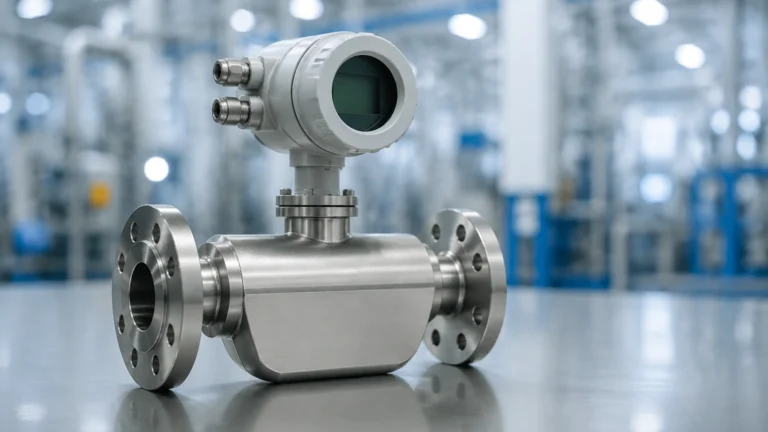
* Flow-Proportional Sampling: This method is essential for streams with fluctuating flow rates. The sampler is linked to a flow meter (often utilizing an ultrasonic or radar level sensor). For every set volume of water that passes through a flume or weir (e.g., every 1,000 liters), the sampler takes one aliquot. This ensures that the final composite sample is a true representation of the total mass loading.
* Event-Based Sampling: The sampler is triggered by an external signal, such as a pH spike, a temperature threshold, or a sudden change in level detected by a level switch.
The Role of Level Measurement in Sampling Accuracy
To achieve accurate flow-proportional sampling, the automatic wastewater sampler must receive precise data from level measurement instruments. In open-channel applications, such as Parshall flumes or V-notch weirs, the flow rate is calculated based on the height (head) of the water.
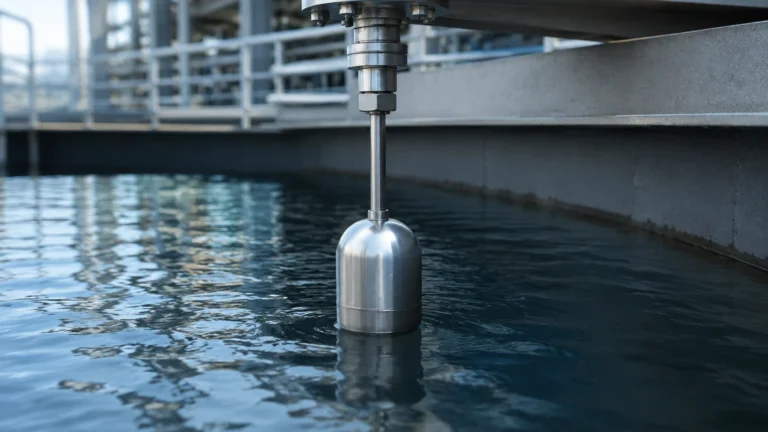
Instruments such as ultrasonic level sensors and radar level meters are frequently used to provide this data. Ultrasonic sensors are cost-effective for standard water applications, while radar level meters offer non-contact measurement that is unaffected by steam, foam, or surface turbulence. For closed-pipe systems or pressurized tanks, hydrostatic level transmitters may be used to monitor the head pressure.
Integrating these sensors with the sampler controller allows for a seamless automation loop. For a comprehensive look at the various sensing technologies that support these systems, engineers can Review product options and application support on the Welk Main Page, which details the technical specifications of radar and ultrasonic transmitters used in industrial automation.
Key Evaluation Criteria for Selection
When specifying an automatic wastewater sampler, several technical factors must be evaluated to ensure the equipment survives the operating environment and provides valid data.
Selection Table: Portable vs. Stationary Samplers
| Feature | Portable Sampler | Stationary Sampler |
| :— | :— | :— |
| Power Source | Internal Battery / Solar | AC Mains (110V/220V) |
| Housing Material | Heavy-duty Plastic (LLDPE) | Stainless Steel or GRP |
| Cooling | Ice / Passive Insulation | Active Refrigeration (4°C) |
| Portability | High (Wheeled or Backpack) | Fixed Installation |
| Best Use Case | Short-term studies, remote sites | Permanent compliance monitoring |
| Sample Capacity | Single 10L or 24 x 1L bottles | Large composite or multi-bottle |
Environmental and Regulatory Requirements
* Refrigeration: Many environmental regulations require samples to be stored at 4°C (39.2°F) to inhibit biological activity and chemical degradation. Stationary samplers often include integrated compressor-based cooling, whereas portable units rely on ice packs.
* Wetted Materials: The suction line and internal tubing must be compatible with the wastewater chemistry. While PVC is standard, Teflon-lined tubing may be required for sampling volatile organic compounds (VOCs).
* Intake Velocity: To ensure a representative sample of suspended solids, the sampler must maintain an intake velocity of at least 0.6 to 0.9 meters per second (2 to 3 feet per second). This prevents heavier particles from falling out of the stream before they reach the bottle.
Installation and Engineering Best Practices
Proper installation is as important as the device selection itself. A poorly positioned intake can lead to biased samples and frequent maintenance issues.
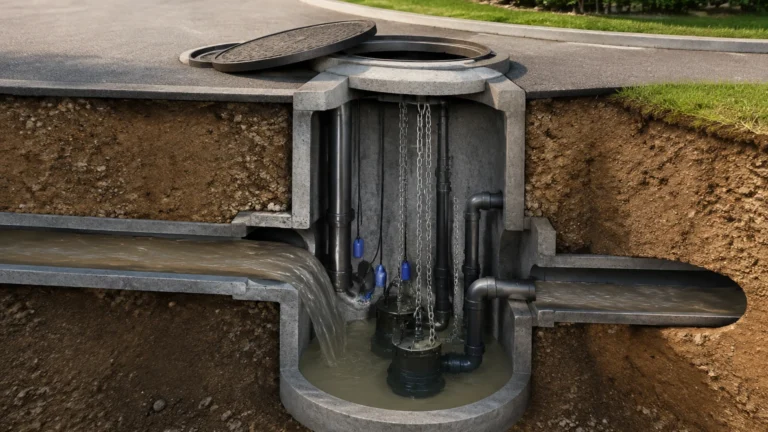
1. Intake Placement: The suction strainer should be placed in a representative part of the flow—typically in the center of the stream and at a depth where it will not draw in bottom sediments or surface oils/scum.
2. Suction Line Slope: The tubing should have a continuous downward slope toward the source. This allows the line to drain completely between samples, preventing cross-contamination and reducing the risk of freezing in cold climates.
3. Lift Height Considerations: While most peristaltic samplers can lift up to 8 meters, efficiency drops as the lift height increases. It is best practice to minimize the vertical distance between the sampler and the water surface to reduce strain on the pump and ensure consistent volumes.
4. Power and Signal Isolation: If the sampler is triggered by a level meter, ensure that the signal cables (typically 4-20mA or RS485 Modbus) are shielded and separated from high-voltage power lines to prevent electromagnetic interference.

Common Risks and Operational Limitations
Despite their automation capabilities, these systems are not "set and forget." Engineers should be aware of the following limitations:
* Suction Line Clogging: In wastewater with high fibrous content (e.g., textile or paper mill waste), the intake strainer can become blinded. Regular inspection and the use of "back-flush" cycles, where the pump reverses to blow air through the line before sampling, can mitigate this.
* Tube Wear: Peristaltic pump tubes are consumables. Over time, the constant squeezing weakens the wall of the tube, leading to a decrease in vacuum and eventual failure. A preventative maintenance schedule should include tube replacement every 500 to 1,000 samples, depending on the material.
* Battery Management: For portable units in remote areas, battery life is a critical failure point. If the sampler is connected to a high-accuracy radar level meter for triggering, the combined power draw must be calculated to ensure the solar or battery system can sustain the load over the desired duration.
Frequently Asked Questions (FAQ)
Q: How often should I calibrate the sample volume?
A: Calibration should be performed during initial installation and whenever the suction line length or lift height is changed. Most modern samplers have an automated calibration routine where the user enters the desired volume, and the machine measures the actual delivery to adjust the pump timing.
Q: Can an automatic wastewater sampler handle hazardous environments?
A: Yes, but you must specify an ATEX or Class I, Div 1/2 rated unit. This involves explosion-proof enclosures and intrinsically safe electronics, especially if the sampler is located near a wet well where methane gas may accumulate.
Q: What is the difference between a composite sample and a discrete sample?
A: A composite sample combines multiple aliquots into a single large container over a period of time, providing an average concentration. A discrete (or sequential) sample places each aliquot into a separate bottle, allowing the lab to see how the water quality changed hour-by-hour.
Q: How does the sampler know if a sample was missed?
A: Most industrial-grade samplers include a liquid sensor (often conductive or ultrasonic) at the pump head. If the pump runs but no liquid is detected, the controller will log a "sample missed" error and can be programmed to retry the cycle.
Conclusion
The integration of an automatic wastewater sampler with reliable level measurement technology is the cornerstone of modern industrial water management. By understanding the mechanical principles of peristaltic and vacuum systems, and by correctly configuring flow-proportional triggers via radar or ultrasonic sensors, facilities can ensure they remain in compliance with environmental standards while optimizing their treatment processes. For those in the planning stages of a water monitoring project, referring to specialized resources on the Main Page will provide the necessary technical foundation for selecting compatible instrumentation.